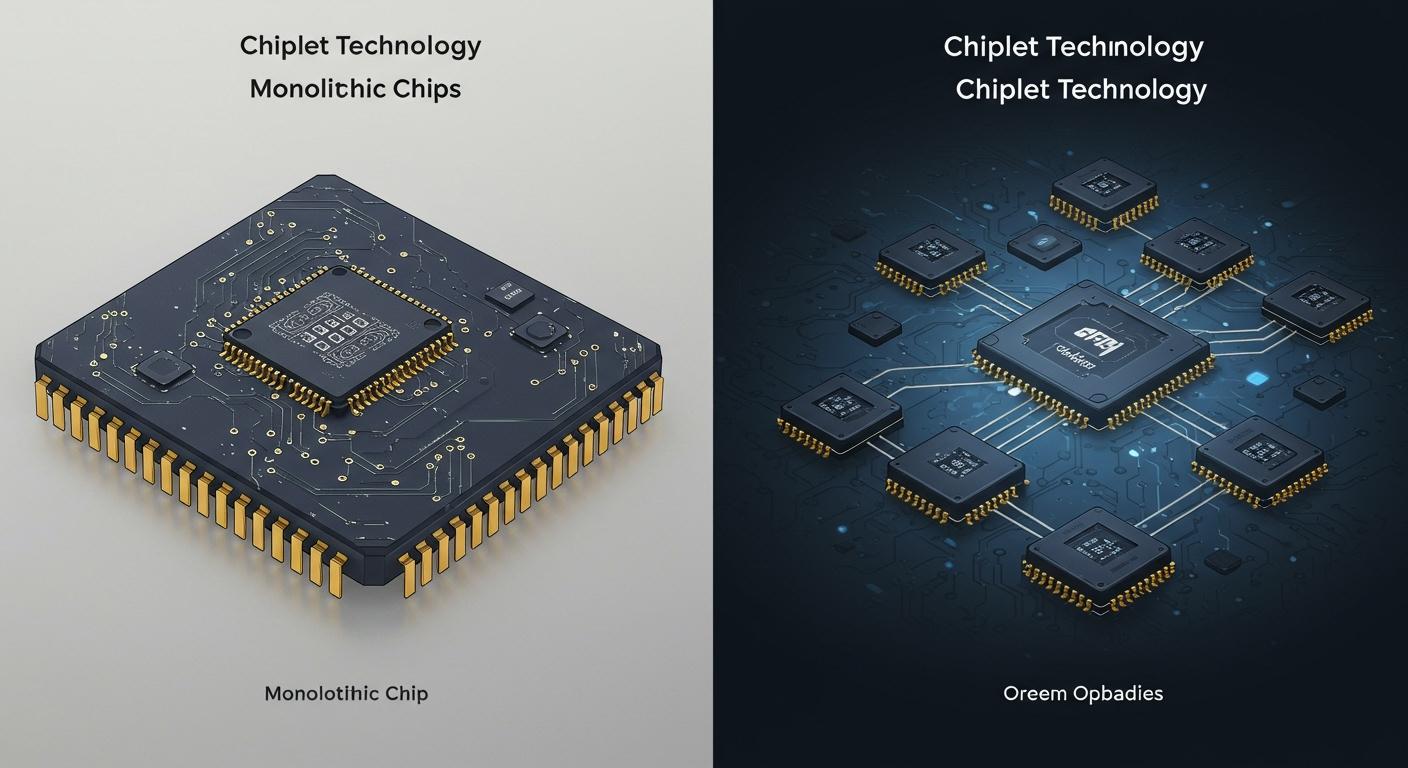
You may ask which is better for joining semiconductors: chiplet technology or monolithic chips. The right choice depends on what you need for speed, price, how easy it is to change, and what you want to use it for. Both choices have special good points. > Learning about these technologies helps you pick the best one for your work.
Key Takeaways
Chiplet technology lets you use small chiplets for many jobs. This makes it flexible and saves money.
Monolithic chips work faster because all parts are close. This helps lower delays and uses less power.
You can upgrade or swap one chiplet without changing the whole chip. This saves both time and money.
Chiplet technology can make less waste and cost less. Small chiplets are easier to make and handle.
You pick chiplet technology or monolithic chips based on your project. Think about speed, flexibility, and cost.
Quick Comparison
Chiplet Technology
Chiplet technology uses small pieces called chiplets to build chips. Each chiplet does a special job like processing, graphics, or memory. You can put different chiplets together to make a chip that works for you. This way gives you more choices and can save money. You can pick the best chiplet for each part.
Chiplet technology lets you change or upgrade parts without making a new chip. This helps you use new technology and fix problems fast.
Here are some important things about chiplet technology:
You can make chips bigger or different by adding or changing chiplets.
You can work on many chiplets at once, so it is faster.
If one chiplet breaks, you only need to change that part.
You can use different ways to make each chiplet, which can help performance and cost.
Many companies use chiplet technology for IoT devices because it is cheap and flexible.
The table below shows how chiplet designs and monolithic designs are different:
Aspect | Chiplet-Based Designs | Monolithic Designs |
|---|---|---|
Modularity | Easy to make bigger or different chips | All parts are close for better performance |
Development Speed | Can build chiplets at the same time | Takes longer because it is more complex |
Can save money for advanced chips | Small chips can cost more to make | |
Yield Rate | More good chips; one bad chiplet is easy to fix | Depends on how hard the chip is to make |
Performance Optimization | Special chiplets for special jobs | Lower wait time and better speed |
Power Efficiency | Depends on which chiplets you use | Good for saving power |
Interconnectivity | Needs good links between chiplets | Faster talking between parts |
Application Focus | Can be used for many things and changed easily | Best for jobs that need high speed and tight parts |
Future Compatibility | Can use smaller chiplets for better speed | Gets better as chips get smaller |
Monolithic Chips
Monolithic chips use one big piece of silicon for all parts. Processing, memory, and input/output are all together in one block. This makes everything close, so the chip can be faster and use less power.
Monolithic chips are best when you need very fast speed and good power use, like in strong computers.
Here are some facts about monolithic chips:
Parts talk to each other quickly because they are close.
The design is harder, so it can take longer to make.
If one part breaks, you may have to throw away the whole chip.
Big monolithic chips cost more, especially with more transistors.
Monolithic chips are good for jobs that need high speed and close parts, like servers or game consoles.
Look at this table to see how cost and size are different:
Aspect | Chiplet Technology | Monolithic Chips |
|---|---|---|
Manufacturing Cost | Lower (small modular dies) | High (large single die) |
Scalability | Very easy to make bigger | Hard to make bigger chips |
When monolithic chips get bigger and harder, they cost more and are harder to make. This means more chips may have problems and cannot be used. Chiplet technology helps by letting you build big systems from small, easy pieces.
Chiplet Technology Overview
What Are Chiplets
Chiplets are like small blocks used to build computer chips. Each chiplet does a special job, like processing or memory. Instead of one big chip, you use many chiplets together. You connect them to make the chip work. This way, you can choose the best chiplet for each job.
Here is a table that shows how chiplets and traditional system-on-chip (SoC) designs are different:
Feature | Chiplets | Traditional SoC |
|---|---|---|
Design Approach | Modular, smaller specialized chips | Integrated, single large chip |
Manufacturing Flexibility | Different processes for each chiplet | Same process for the whole chip |
Cost | Lower for smaller companies | Higher due to full chip design |
Scalability | Easy to add new features | Hard to scale without redesign |
Performance Overhead | Possible delay from connections | Fast, all parts close together |
Debugging Complexity | Harder due to many parts | Easier, all in one place |
Chiplet Integration
When you make a chip with chiplets, you join different pieces. You can use the best way to make each chiplet. This helps the chip work better and saves money. Smaller chiplets mean you waste less silicon. More good chiplets come from each wafer, so you throw away less.
Tip: Chiplet technology lets you swap parts. You can upgrade or change one chiplet, not the whole chip.
Chips made this way are more reliable. If one chiplet breaks, you only replace that part. Many companies use chiplets that already work well. This makes the final chip safer and more trusted.
Chiplet Pros & Cons
There are many good things about chiplet technology:
You can mix chiplets to fit what you need.
You save money by reusing chiplets and picking the best way to make each one.
You can add new things fast.
You waste less silicon, which is good for the earth.
You can fix or upgrade one part without changing the whole chip.
But there are some problems too:
Connecting chiplets can slow things down and use more power.
Making sure all chiplets talk to each other is hard.
Fixing problems is harder because there are many parts.
Chiplet technology gives you more choices and saves money, but it can be more complicated.
Monolithic Chips Overview
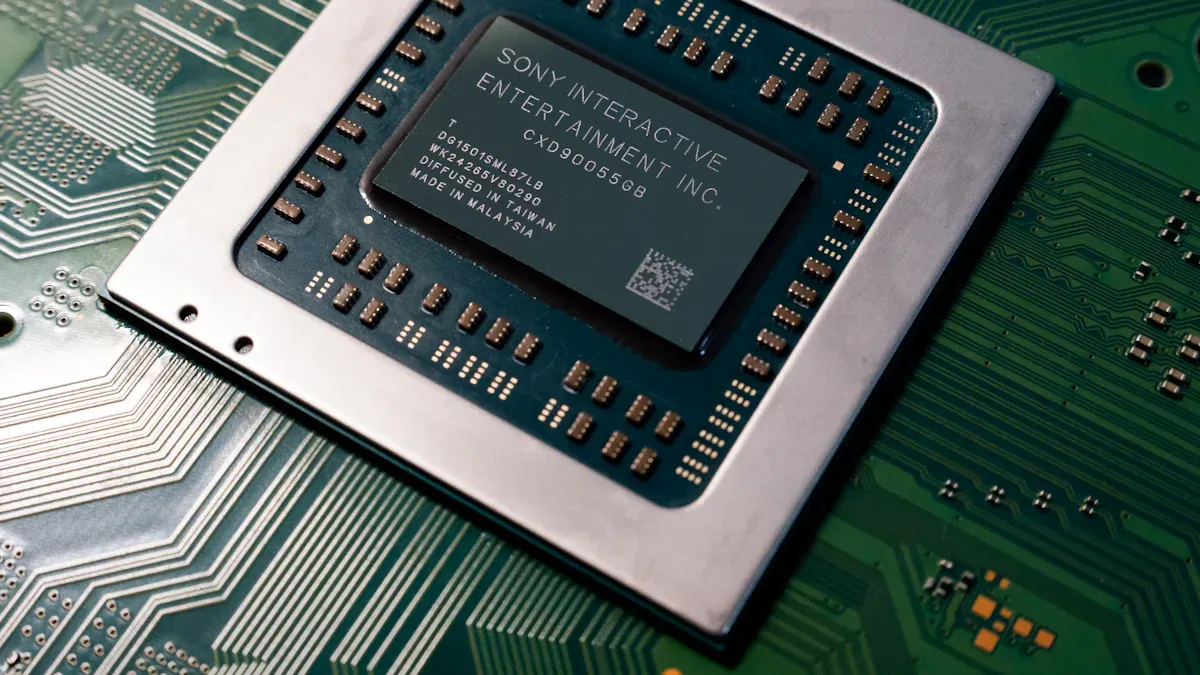
What Are Monolithic Chips
Monolithic chips are found in many strong devices. These chips use one piece of silicon for all their parts. Processing, memory, and input/output are all together. All the parts sit close, so the chip works fast. It also uses less power. The design is small and neat. Parts can talk to each other quickly and easily.
Here are the main features of monolithic chips:
Characteristic | Description |
|---|---|
Single Codebase | Everything is managed in one place. This makes updates simple. |
Tight Coupling | All parts are close and share data right away. |
Shared Memory | Every part uses the same memory, so they talk fast. |
Centralized Database | All data is kept in one spot, so it is easy to find. |
Layered Structure | The chip has layers for different jobs, like logic or display. |
Limited Scalability | You must make the whole chip bigger, which can waste resources. |
Monolithic Integration
When you make a monolithic chip, you put all jobs on one die. This gives you fast speed and strong reliability. Signals move only a short way, so there are no big delays. The chip uses less power, so devices last longer.
Monolithic chips are best when you need top speed and control.
But there are some hard problems as chips get smaller. Making these chips costs more money. Small mistakes can ruin the whole chip. More power in a small space makes heat problems. The design gets harder with more features. You cannot change or upgrade parts after you finish.
Here are some common problems:
Challenge | Description |
|---|---|
Escalating Manufacturing Costs | Big chips cost more, and mistakes mean fewer good chips. |
Diminishing Yields | Small chips are better, but big chips have more mistakes. |
Design Complexity | More features make the design harder and slower. |
Thermal Management Challenges | More power in one spot makes heat that is hard to handle. |
Lack of Flexibility | You cannot change parts after the chip is made. |
Process Node Optimization | All parts must use the same new tech, even if not needed. |
Monolithic Pros & Cons
Monolithic chips have strong good points, but also some limits. They give high speed, low power use, and a small size. All parts work well together, so they are reliable.
Advantages | Disadvantages |
|---|---|
Compact Size | Not easy to change |
High Reliability | Costs more money |
Low Power Consumption | Hard to add new things |
High Performance | Can be hurt by heat or mistakes |
Pick monolithic chips if you want speed, power savings, and a simple design. If you need more choices or lower cost, you may want something else.
Performance & Efficiency
Latency & Speed
When you look at chiplet technology and monolithic chips, you see they work differently. Monolithic chips have all their parts close together. This makes signals move a short way. Data moves fast and there is little delay. Chiplet technology lets you use different chiplets for each job. But chiplets must talk through tiny links. These links can slow things down.
Chiplet systems can have delays for a few reasons:
Extra steps are needed to change data.
Signals take longer to go between chiplets.
Waiting happens because of rules and timing.
Data may sit in buffers before it moves.
If you use lots of memory, chiplet systems can be 15–40% slower than monolithic chips. New chiplet links can move data from 2 to 32 GT/s in each lane. Fast systems use 8 to 64 lanes for every link. You get good speed, but you need to watch for extra delay.
Tip: Monolithic chips are best if you want the fastest speed and lowest delay. Chiplet technology gives you more choices, but it can be slower.
Power Consumption
Power use is important when you pick a chip. Monolithic chips use less power because signals move a short way. This saves energy. Chiplet technology can use more power. Signals must cross chiplet borders. This needs extra energy. More circuits are needed to help chiplets talk.
Here is a simple table to help you compare:
Feature | Chiplet Technology | Monolithic Chips |
|---|---|---|
Latency | Higher (due to links) | Lower (parts close) |
Data Speed | High, but can slow down | Very high |
Power Use | Can be higher | Lower |
Think about what you need. Monolithic chips give you the lowest power and fastest speed. Chiplet technology lets you change and upgrade parts, but it may use more power.
Scalability & Flexibility
Customization
You can shape your chip design to fit your needs with both chiplet technology and monolithic chips, but they do this in different ways. Chiplet technology gives you more freedom. You can pick and choose chiplets for each job. For example, you might want a strong processor, a special graphics chiplet, and a memory chiplet. You can mix these together to build a chip that matches your project.
Monolithic chips do not offer this level of choice. You get one big chip with all parts fixed in place. If you want to change one part, you must redesign the whole chip. This takes more time and money. Chiplet technology lets you upgrade or swap out just one chiplet. You can keep up with new tech without starting over.
Tip: If you want to build a chip for a special job, chiplet technology makes it easier and faster.
Here is a quick comparison:
Feature | Chiplet Technology | Monolithic Chips |
|---|---|---|
Easy to Upgrade | Yes | No |
Mix Components | Yes | No |
Design Speed | Faster | Slower |
Material Efficiency
You can save materials and money with chiplet technology. Smaller chiplets mean you waste less silicon. When you make a big monolithic chip, even one small defect can ruin the whole chip. With chiplets, if one piece has a problem, you only replace that part.
You can save up to 30% in costs because smaller chiplets have fewer defects.
You can use less power, sometimes up to 20% less, by picking chiplets made for each job. For example, you might use a simple chiplet for safety and a fast one for AI.
You get more good chips from each batch. If you make ten small chiplets, you might only lose one to defects, while a big chip could have a much higher defect rate.
Note: Chiplet technology helps you use resources wisely and makes your chip designs more reliable.
You can see that chiplet technology gives you more ways to save money, use less power, and waste fewer materials. This makes it a smart choice for many projects.
Cost & Yield
Manufacturing Cost
When you look at chiplet technology and monolithic chips, you see they cost different amounts to make. Chiplet systems use many small pieces. Monolithic chips use one big piece of silicon. This changes how much you pay.
Chiplet systems need more money for testing and packaging. You test each chiplet alone. This takes extra time and costs more.
Even with these steps, chiplet systems can save money sometimes. If you use big dies with new tech, chiplet systems often cost less. You get more good chips and waste fewer wafers, which are expensive.
Chiplet designs help lower special engineering costs. You can use the same chiplets in many products. You do not need to make a new chip every time.
The ODSA’s open-source chiplet cost model shows chiplet systems can be cheaper than monolithic chips, especially for big, advanced chips.
Here is a table to show the main cost differences:
Factor | Chiplet Technology | Monolithic Chips |
|---|---|---|
Probe & Packaging Cost | Higher | Lower |
Yield | Better for large dies | Lower for large dies |
NRE Cost | Lower (reusable chiplets) | Higher (new design) |
Wafer Waste | Less | More |
Failure Impact
You should think about what happens if something breaks while making chips. In monolithic chips, one small mistake can ruin the whole chip. You have to throw away the whole thing. This wastes money and materials.
Chiplet technology works in a different way. If one chiplet breaks, you only change that part. You do not lose the whole chip. This makes chiplet systems more reliable and less costly when things go wrong.
You get more good chips from each batch.
You save money because you waste less silicon.
You can fix or upgrade just one chiplet, not the whole chip.
Chiplet technology helps you control risk and cost better. Your factory can keep working, even if some chiplets have problems.
Market Trends
Industry Adoption
The chip industry is changing very quickly. Many companies now use chiplet technology to keep up. This helps them make chips for things like AI and data centers. Here are some things happening in the market:
The chiplet market is getting much bigger. Experts think it will be $148 billion by 2028. It was only $6.5 billion in 2023. That is a big increase in five years.
Companies like chiplets because each part can do a special job. Monolithic chips have all parts together in one piece.
Chiplets let you make new products faster and with more choices.
Big companies are leading in this area. Here is a table that shows what some have done:
Company | Reported Outcomes |
|---|---|
Intel | Built new packaging plants and proved chiplet manufacturing works well. |
Nvidia | Released GPUs that use chiplets for better speed. |
AMD | Bought Xilinx to make chiplets stronger and more efficient. |
These companies spend billions of dollars to make chiplet production better.
Future Outlook
Chiplet technology will be even more important soon. The market could be $411 billion by 2035. This is because people want faster and smarter chips for many things, like:
Servers and data centers
Phones and computers
Cars and other vehicles
Telecommunications
Chiplet technology gives more choices and costs less than old designs. More companies will use chiplets to make special chips for their needs. As people want better computers, chiplets will help meet new challenges and trends.
Choosing the Right Solution
Application Fit
You must pick the right chip for your project. Chiplet technology and monolithic chips are good for different things. Chiplet technology is best if you want to change or upgrade parts. You can use different chiplets for each job. This is helpful when you need special features.
Chiplet technology works well in these areas:
Automotive computing
Advanced driver assistance systems (ADAS)
Infotainment systems
Special computers for cars
Chiplets give you better performance and more ways to design. They also help you save money and keep chips cool. If your project changes a lot or needs custom features, chiplets help you work faster.
Monolithic chips are best for top speed and low power use. You find these chips in strong computers, game consoles, and servers. All parts are close, so data moves quickly. You get strong performance and easy power control.
Tip: Think about what your project needs most. Chiplets are good for saving money and making changes. Monolithic chips are good for speed and using less power.
Decision Factors
You have many things to think about when you pick a chip. Each thing changes how your chip works and how much it costs. Use this table to compare the main points:
Factor | Chiplet Technology | Monolithic Chips |
|---|---|---|
Yield Impact on Cost | Better yield; one bad chiplet does not ruin all. | Lower yield; one defect can waste the whole chip. |
Manufacturing Complexity | Easier to make; modular design gives more choices. | Harder to make; needs special tools and bigger factories. |
Testing and Quality Control | Higher testing cost per chiplet, but you can swap bad ones. | Lower testing cost, but one bad part means you lose the whole chip. |
You should also look at these important ideas:
Key Insights | Description |
|---|---|
Cost Comparison | Chiplets save money if big chips have more defects than many small ones. |
Monolithic SoC | Monolithic chips are best for small batches or when you do not need many versions. |
Packaging Reuse | Reusing packaging helps if you use it for many chips. |
Cost Advantages | Some systems save more with chiplets, especially if you need many types of chips. |
Chiplet Reuse | You can build more systems with fewer chiplets if you have many needs. |
Ask yourself these questions:
Is cost very important for your project?
Do you need to change or upgrade parts often?
Will you make many chips or just a few?
Does your project need special features or high speed?
Can you handle harder testing and assembly?
Note: The best choice matches your needs to what each chip offers. Chiplet technology gives you more choices and cost control. Monolithic chips give you speed and simple design. Your project goals help you decide.
You learned that chiplet technology helps you save money and gives you more choices. Monolithic chips are good if you want fast speed and use less power. To pick the best one, experts say you should do a few things. First, make a good plan for getting and using chiplet parts. Next, change how you buy chiplet pieces. You should also make your factory and quality checks better. Give clear jobs to people who handle chiplets. Update how you keep track of costs.
In the future, new ways to put chips together will be important:
Trend | Key Implication |
|---|---|
Advanced Packaging Technologies | Chips will have more connections for AI and IoT. |
Standardized Chiplet Interfaces | Teams can work faster and make new things. |
AI-Driven Design Automation | Engineers can design chiplets more easily. |
Focus on Energy Efficiency | Chips will use less power in wearables and data centers. |
Expanding Applications of Chiplets | More chips will be made for many different jobs. |
As technology gets better, you will see more smart chips and more options.
FAQ
What is the main difference between chiplet technology and monolithic chips?
Chiplet technology uses small pieces for each job. Monolithic chips use one big piece for all jobs. Chiplets let you change things more easily. Monolithic chips are faster.
Can you upgrade a chiplet-based chip easily?
Yes, you can change or upgrade one chiplet. You do not need to change the whole chip. This helps you use new technology and fix problems fast.
Do chiplet-based chips cost less to make?
Chiplet-based chips often cost less to make. Small chiplets waste less material. You can use chiplets in many products. Monolithic chips can cost more if they are big.
Which type is better for high-performance computers?
Monolithic chips are best for high-performance computers. All parts are close, so data moves quickly. You get fast speed and low power use.