Have you ever thought about how gadgets keep shrinking and improving? The answer is often in their circuit boards. HDI PCBs, or high-density interconnect boards, have changed how electronics are made. These boards fit more connections into smaller spaces. This makes them great for tiny devices like phones, smartwatches, and medical tools. Plus, HDI boards work better, giving faster speeds and more reliable performance.
HDI technology is growing fast. The global HDI PCB market might rise from $12.5 billion in 2023 to $23.8 billion by 2032. That’s a yearly growth rate of 7.1%, and some reports say it could grow even faster, over 10%. This shows that industries love HDI for its advanced features. But HDI isn’t perfect—it costs more and is harder to make. So, is HDI the right choice for your next project? Let’s explore and find out.
Key Takeaways
HDI PCBs are smaller and work better, perfect for small devices like phones and medical tools.
They give better electrical performance with fewer signal problems, important for fast and dependable electronics.
HDI boards let designers create unique and complex setups, helping advanced technology in many fields.
Even with their advantages, HDI PCBs cost more and are harder to make than regular PCBs, so they may not fit simple projects.
Picking between HDI and regular PCBs depends on your project’s needs, cost, and design difficulty.
Advantages of HDI PCBs
Small Size and Compact Design in HDI Boards
HDI boards are made to do more in less space. They fit a higher component density into tiny areas, making them ideal for gadgets like smartphones and smartwatches. With thin layers and advanced designs, HDI boards hold more parts without getting bigger.
Tip: If you’re building small devices, HDI PCBs are a great choice. They offer setups like 1+N+1 or Ultra HDI, letting you design lightweight and compact boards.
Here’s a simple comparison showing how HDI boards are better for small designs:
Advantage | HDI PCBs | Traditional PCBs |
|---|---|---|
Miniaturization | Fits more parts in smaller spaces | Fewer parts in larger spaces |
Design Flexibility | Ultra HDI allows compact, creative designs | Less flexible for small designs |
This ability to stay small while keeping high performance is why HDI boards are popular in electronics and medical tools.
Better Electrical Performance with HDI PCBs
HDI PCBs don’t just save space—they also improve electrical performance. With thinner paths and shorter signals, they reduce noise and signal loss. This makes them perfect for fast devices needing strong signal quality.
Here’s why HDI boards work better than traditional ones:
Less signal interference.
Lower electrical noise.
Stronger signals for fast devices.
HDI boards also handle high-speed signals well. They use advanced features like tiny laser-drilled holes and precise trace sizes. These help keep voltage steady and reduce electromagnetic interference (EMI).
Note: If your project needs fast data or sensitive electronics, HDI PCBs are reliable and perform well.
More Design Options with HDI Boards
HDI technology allows for creative and complex designs. With 3D connections and advanced methods, you can make designs that regular PCBs can’t achieve.
The flexible PCB market is growing fast, thanks to new ideas like Copper Clad Stretch (CCS) technology. This makes HDI boards light, strong, and able to fit unique shapes. Whether for cars, planes, or communication devices, HDI boards meet tough design needs.
Fun Fact: The flexible PCB market is expected to grow a lot by 2032, showing the demand for small and versatile designs.
HDI boards also support complex setups, making them key for advanced systems like smart car features and medical implants.
Better Thermal Management in HDI Technology
Heat can harm electronics and cause them to fail. Devices with powerful parts make lots of heat. If heat isn’t controlled, it can hurt performance. HDI technology helps by managing heat better.
HDI PCBs use special materials to spread heat evenly. These boards have tightly packed parts, which can create hot spots. Thin layers and smart designs help move heat away from these areas. This keeps devices working well and prevents overheating.
Did you know? Engineers study heat flow in HDI boards. They check how heat moves through layers and solder points. This helps them design boards that stay cool during heavy use.
Why HDI boards handle heat well:
They use materials that spread heat better.
Layer designs move heat across the board.
Smart setups stop hot spots from forming.
If your project has powerful parts, HDI boards are a good choice. They keep devices cool and working smoothly. Whether it’s a phone, medical tool, or car system, HDI boards manage heat and improve performance.
Applications of HDI PCBs in Advanced Technologies
HDI PCBs are used in many advanced gadgets. Their small size and strong performance make them popular in high-tech industries.
Where HDI boards are used:
Consumer Electronics: Phones and tablets are thinner and faster with HDI boards. They also help batteries last longer.
Automotive Systems: Modern cars use HDI boards for safety features and navigation. These boards handle fast signals for smart systems.
Medical Devices: HDI boards make medical tools smaller and easier to carry. This helps patients and improves care.
Telecommunications (5G): HDI boards support fast data and reliable connections for 5G networks.
Aerospace and Defense: Spacecraft and military tools need small, tough boards. HDI boards meet these needs.
Pro Tip: HDI boards are great for IoT devices. They make tiny sensors for smart homes and other uses.
From wearables to fast computers, HDI boards are key to modern tech. Their mix of small size and strong performance drives innovation everywhere.
Disadvantages of HDI PCBs
HDI boards have great benefits but also some downsides. These issues can affect your choice, especially if money is tight or designs are simple. Let’s look at the main problems with HDI PCBs.
Higher Manufacturing Costs of HDI Boards
HDI boards cost more to make than regular PCBs. They need special tools and materials, which increase expenses. Here’s why:
Thicker traditional boards cost more as thickness grows. HDI boards have extra cost factors.
Smaller holes in HDI boards take longer to drill. This wears out tools faster, raising costs.
HDI boards have more layers and parts, making production harder and pricier.
Making tiny holes and keeping exact measurements need skilled workers and advanced machines. These things make HDI boards much more expensive than regular ones. If saving money is important, this is worth thinking about.
Tip: HDI boards are a smart buy for projects needing top performance and small designs. But for simpler projects, regular PCBs might save money.
Complex Manufacturing Process of HDI Boards
Making HDI boards is harder than making regular PCBs. This is because they need to be very precise and packed with parts. Here’s a breakdown:
Metric | What It Means |
|---|---|
Component Density (Cd) | Counts how many parts fit in one square inch. |
Assembly Density (Ad) | Counts how many leads fit in one square inch. |
Component Complexity (Cc) | Measures how many leads each part has, showing how advanced the parts are. |
Trace Density (Wd) | Measures how long the paths are in one square inch, showing how detailed the board is. |
These numbers show why HDI boards are tricky to make. More parts and paths mean careful planning and placement. Keeping signals strong and heat under control adds more challenges.
Special methods like laser imaging and microvia drilling make the process even harder. These need expensive tools and trained workers. Because of this, HDI boards take more time and effort to produce than regular ones.
Limited Availability of HDI PCB Makers
Not many companies make HDI boards. Regular PCBs are easy to find, but HDI boards need special tools and skills. For example, laser imaging is needed for tiny lines and close parts. But this equipment is costly, and only a few companies have it.
This makes HDI boards harder to get and more expensive. Fewer makers mean longer wait times and higher prices. New companies face challenges entering the HDI market, keeping options limited. If you want HDI boards, plan ahead and choose a reliable supplier.
Note: More companies are starting to make HDI boards, but they’re still less common than regular PCBs. Think about this when planning your project’s time and cost.
Comparison Table
Main Differences Between HDI PCBs and Traditional PCBs
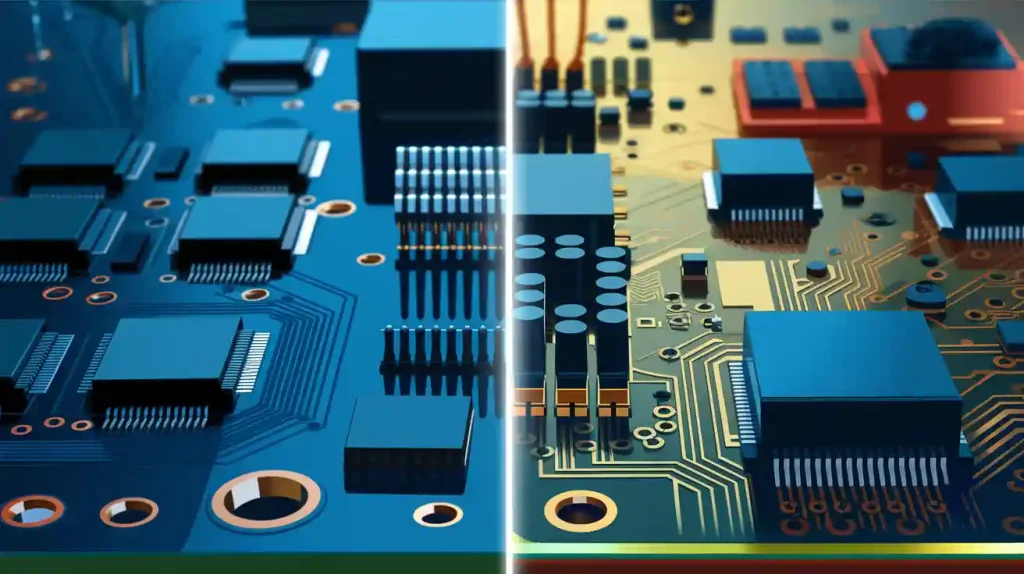
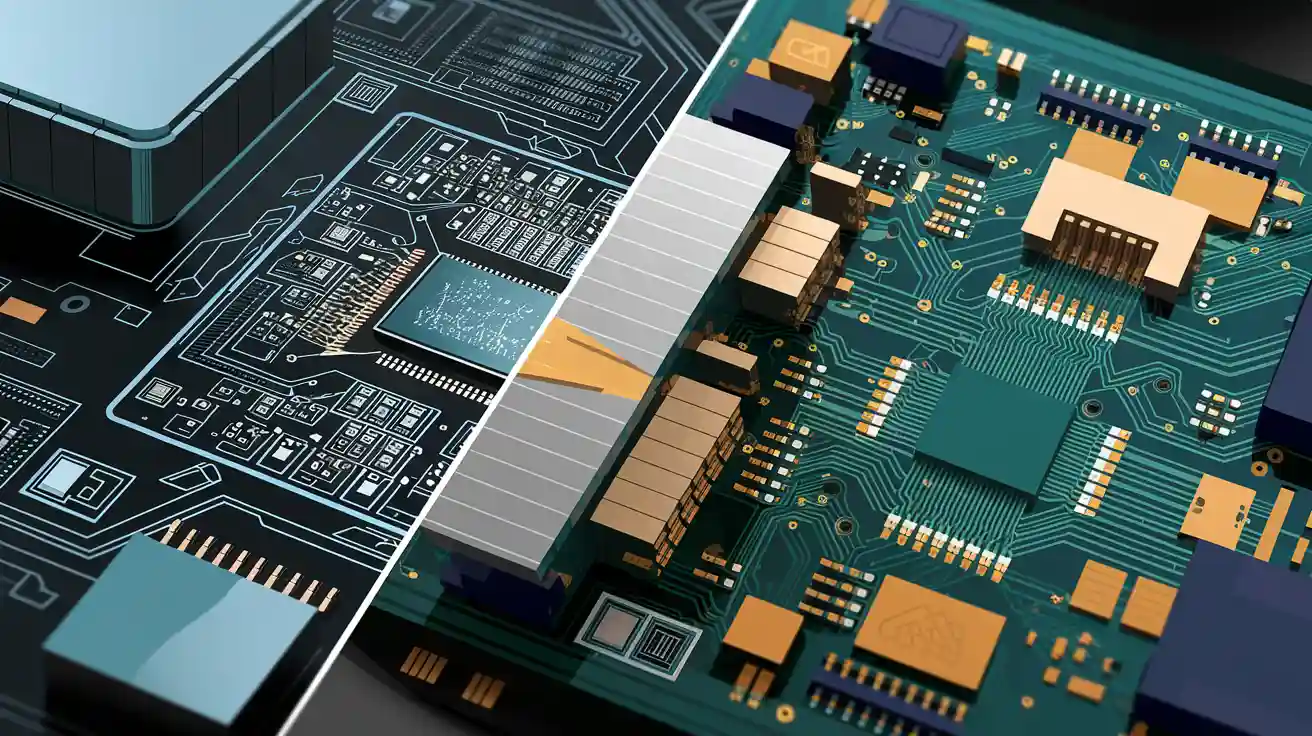
Choosing between HDI PCBs and traditional boards depends on your project. HDI PCBs are great for advanced devices, while traditional boards work well for simpler needs. Here’s a quick comparison to help you decide:
Feature | HDI PCBs | Traditional PCBs |
|---|---|---|
Line and Space Width | Thinner lines (50-100 µm) | Thicker lines (100-125 µm) |
Via Size | Tiny vias (50-150 µm) | Bigger vias (300-400 µm) |
Layer Count | More layers (6-20+) | Fewer layers (4-8) |
Via Structures | Uses blind/buried vias | Mostly through-hole vias |
Manufacturing Process | Complex steps | Easier steps |
Circuit Density and Performance | Higher density, better performance | Lower density, basic performance |
Electrical Properties | Stronger signals, less interference | Weaker signals, more interference |
Thermal Conductivity | Spreads heat evenly, better cooling | Less effective at cooling |
Design | Compact, fits more parts in small spaces | Larger, uses more space |
Applications | Best for smartphones, medical tools | Good for home gadgets, factory machines |
Cost | Expensive due to advanced methods | Cheaper with simpler methods |
Tip: Use HDI PCBs for high-tech, compact projects. For basic or budget-friendly designs, traditional boards are better.
HDI PCBs are excellent for fast, small devices like phones and medical tools. They handle heat well and keep signals strong. Traditional boards cost less and are good for everyday electronics and machines.
Think about your project’s needs to pick the right type of board.
Application of HDI PCB
HDI PCBs are used in many modern technologies. Their small size and strong performance make them important for industries like electronics, cars, and healthcare. Let’s see how HDI PCBs are changing these areas.
Consumer Electronics
Smartphones and Tablets
Ever wonder how phones stay slim but powerful? HDI PCBs make this happen. These boards fit a lot of parts into small spaces. This helps devices stay light and compact. Features like microvias and advanced stack-up of HDI PCB improve signal flow and reduce noise. This means faster speeds and better signal strength for apps and games.
HDI technology also helps make smaller electronic parts. This lets companies add more features to tiny devices. From great cameras to long-lasting batteries, HDI PCBs power today’s phones and tablets.
Wearable Devices
Wearables like smartwatches need HDI PCBs for their small size and good performance. These boards handle complex circuits in tiny spaces. They keep devices light and working well. HDI also manages heat and power, making it perfect for wearables that run all day.
Fun Fact: The HDI PCB market is growing fast because of demand for small, high-tech devices like wearables.
Automotive Industry
Advanced Driver Assistance Systems
Cars are getting smarter, thanks to HDI PCBs. Systems like lane-keeping and collision alerts use HDI boards to process data quickly. These boards handle fast signals, helping cars respond accurately.
HDI PCBs also allow for compact designs. This helps fit advanced systems into small spaces, which is important for modern cars focused on safety and tech.
Electric Vehicle Components
Electric cars (EVs) rely on HDI PCBs for their electronics. From battery systems to screens, these boards ensure smooth operation. HDI’s heat and power control is key for EVs, where reliability matters most.
Did you know? The self-driving car market could reach $556 billion by 2035, showing the rising need for HDI PCBs in vehicles.
Medical Devices
Diagnostic Equipment
HDI PCBs are crucial for medical tools like MRI machines. These devices need precise and reliable circuits. HDI boards provide the density needed for accurate results and smooth use.
Their small size also makes diagnostic tools more portable, improving healthcare access.
Implantable Devices
Medical implants like pacemakers use HDI PCBs for their small size and high performance. These boards make devices tiny enough to fit inside the body. HDI’s heat and power control is vital for these life-saving tools.
Pro Tip: HDI PCBs are perfect for healthcare tools where small size and reliability are critical.
Telecommunications
Network Infrastructure
HDI PCBs are important for today’s network systems. They help make internet faster and devices smaller. HDI boards fit more parts into tiny spaces. This lets networks handle more data without losing reliability.
For example, HDI boards improve how signals move. They cut down on signal loss and interference. This is crucial for routers and data centers that process lots of information quickly. HDI boards also work well with high frequencies, making them great for 5G technology.
Here’s how HDI PCBs help network systems:
Metric | Description |
|---|---|
Wiring Density | Fits more parts into small spaces for compact designs. |
Electrical Performance | Better signal flow supports fast data transmission. |
Frequency Handling | Handles high frequencies needed for advanced tech like 5G. |
Application in 5G | Key for 5G networks, which need fast and reliable boards. |
Miniaturization Trend | Helps make smaller devices with flexible designs. |
Tip: Use HDI PCBs for projects involving 5G or fast networks. They offer strong performance and small designs.
High-Speed Data Transmission
HDI PCBs make fast data transfer possible. They help with streaming videos and downloading big files. Their design reduces signal problems, keeping data flow smooth and quick.
HDI boards also allow smaller designs, which is useful for modems and fiber-optic tools. Tiny boards leave room for new ideas, helping create faster communication devices.
Fun Fact: The need for HDI PCBs is growing fast because of 5G and faster internet demands.
Aerospace and Defense
Satellite Technology
Satellites face tough conditions like extreme heat and cold. HDI PCBs are made to handle these challenges. They use special materials that work in temperatures from -150°C to +120°C. This keeps satellites running in space.
HDI boards also help make satellites smaller. Engineers can fit more tech into compact designs. This is important for modern satellites that need to be light and efficient.
Did you know? HDI PCBs are vital for the growing satellite market, which needs small and reliable electronics.
Military Communication Systems
Military tools need to be precise and dependable. HDI PCBs provide both. They manage complex circuits and fast signals, making them perfect for advanced communication devices.
HDI boards are lightweight, which is great for portable military tools. They are also tough, working well in harsh places like deserts or high altitudes.
Why HDI PCBs are key for aerospace and defense:
They survive extreme conditions like radiation and temperature changes.
They allow small designs for advanced systems.
The demand for aerospace and defense PCBs is rising due to lightweight and complex tech needs.
Pro Tip: For satellite or military projects, HDI PCBs give the durability and performance required.
Choosing between HDI PCBs and traditional PCBs depends on your project’s needs. HDI PCBs are best for small, advanced devices like phones or satellites. They work well when you need high performance and compact designs. On the other hand, traditional PCBs are better for simple designs and tight budgets.
Here’s a quick comparison to guide your decision:
Criteria | HDI PCBs | Traditional PCBs |
|---|---|---|
Design Complexity | Handles detailed, multi-layer designs | Works for basic, single-layer designs |
Component Density | Fits more parts with microvias | Fits fewer parts, good for simple uses |
Signal Integrity | Stronger signals, better for fast devices | Weaker signals, struggles with high speeds |
Manufacturing Process | Needs advanced tools like laser drills | Uses standard tools and methods |
Design Flexibility | Allows creative, intricate layouts | Limited to basic layouts |
If your project needs detailed designs and top performance, go with HDI PCBs. For simpler tasks, traditional PCBs are cheaper and easier to use.
Tip: Think about your budget, design needs, and project goals before deciding.
FAQ
What makes HDI PCBs better than traditional PCBs?
HDI PCBs fit more parts into smaller spaces. This makes them great for small gadgets. They also improve signals and manage heat well. For advanced or fast electronics, HDI PCBs give better performance and flexible designs.
Are HDI PCBs worth the higher cost?
Yes, if your project needs top performance or tiny designs. HDI PCBs cost more because they are harder to make. But they work best for modern devices like phones, medical tools, and 5G systems.
Can I use HDI PCBs for simple projects?
You can, but it’s not always the best choice. For easy or low-cost projects, regular PCBs are fine. HDI PCBs are better for complex designs where space and efficiency are important.
Why are HDI PCBs harder to manufacture?
HDI PCBs need special tools like laser drills to make tiny holes. They also require careful techniques and skilled workers. This makes the process more difficult and costly than regular PCBs.
Where can I find reliable HDI PCB manufacturers?
Look for companies with HDI experience. Check their reviews, certifications, and past work. Since HDI needs advanced tools, picking a trusted maker ensures good quality and on-time delivery.
Tip: Start looking early to avoid delays in your project.