
Electric Bicycles Solution
Optimizing performance, safety, and user experience through cutting-edge electronics for your E-Bike
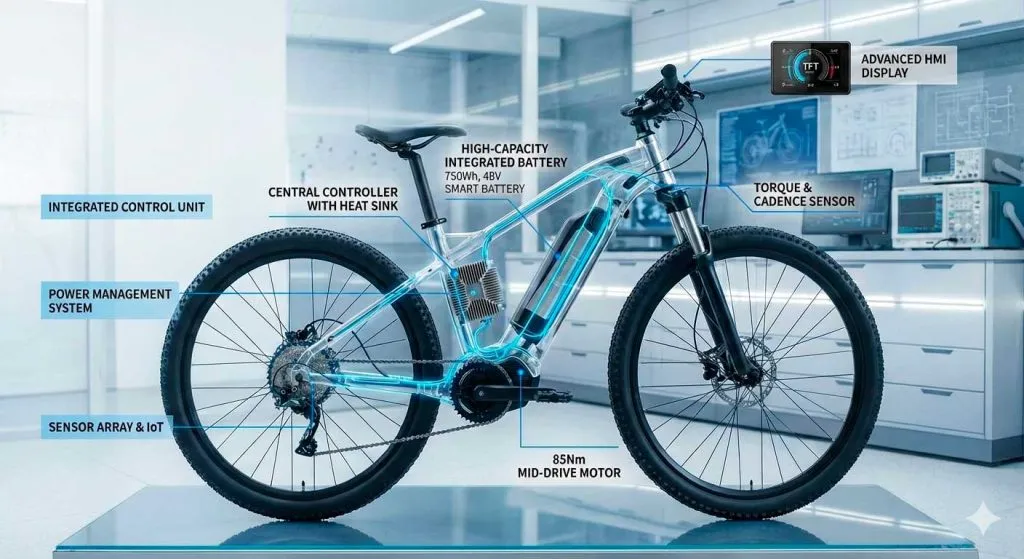
Key Electronic Components and Features
Motor Controller of E-Bike
Function: Efficient power management and smooth acceleration
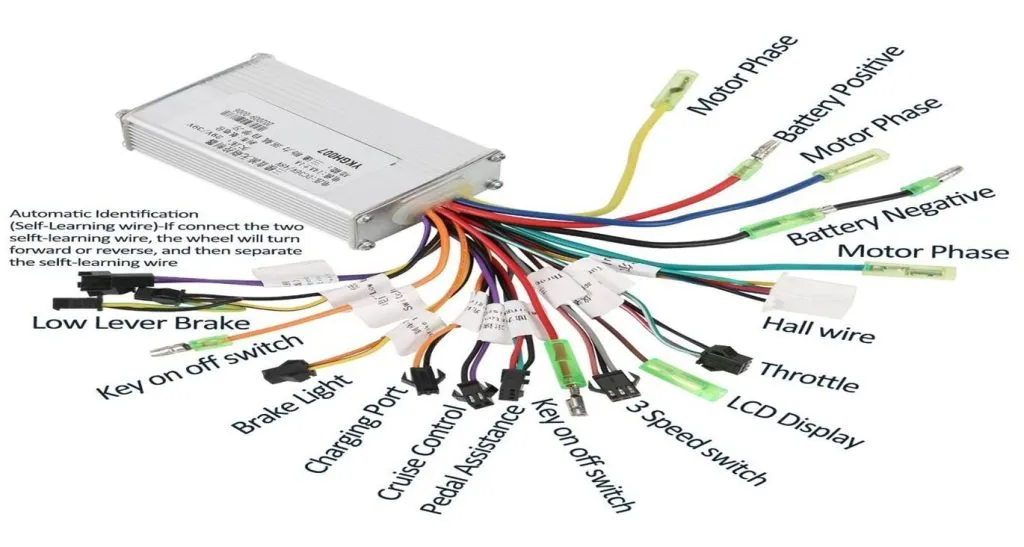
The motor controller is an efficient power manager that converts rider input (throttle/pedal assist) into precise electrical signals controlling the motor. It regulates current flow from the battery to the brushless DC motor using pulse-width modulation (PWM), ensuring smooth acceleration, optimal torque delivery, and energy-efficient operation across all speed ranges. Advanced controllers feature regenerative braking capability, thermal protection, and programmable power curves. Typical specifications: 36V-48V systems, 15A-40A continuous current rating depending on motor power (250W-1000W).
Battery Management System (BMS) of E-Bike
Function: Safety and battery life optimization
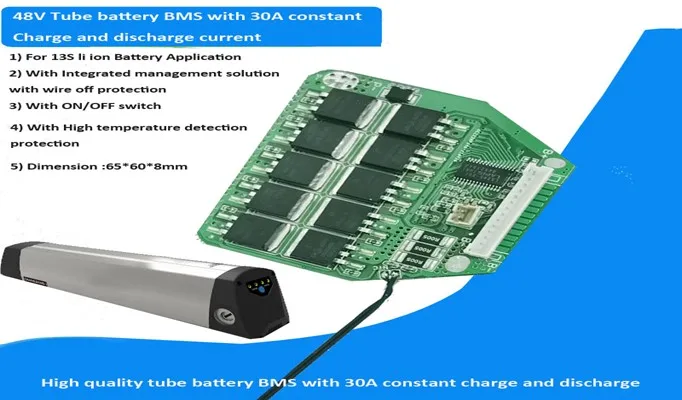
The BMS is the critical safety guardian protecting the lithium-ion battery pack from damage while maximizing lifespan. It monitors individual cell voltages, temperatures, and current flow in real-time, preventing overcharge (>4.2V per cell), over-discharge (<2.5V per cell), overcurrent, and thermal runaway conditions. The BMS performs active cell balancing during charging to equalize cell voltages, extending pack longevity. Modern smart BMS units communicate via CAN bus, Bluetooth, or UART protocols, enabling diagnostics through smartphone apps. Key features include: 13S-14S configuration (48V packs), 30A-50A continuous discharge, temperature monitoring from multiple sensors, and automatic protection cutoffs.
Sensors (Speed, Torque, Brake) of E-Bike
Function: Real-time performance monitoring and safety
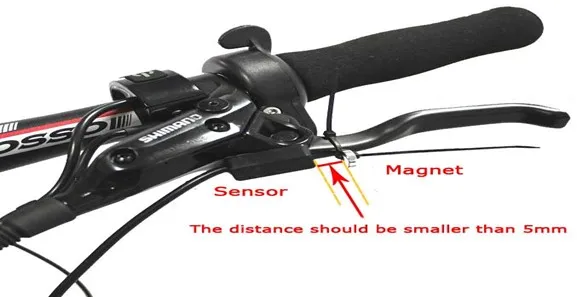
Multiple sensor types work together to optimize performance and safety. Hall-effect speed sensors detect wheel rotation speed, providing accurate speedometer readings and enabling speed-based assistance cutoffs. Torque sensors measure pedaling force at the crank or bottom bracket, enabling sophisticated pedal-assist systems that proportionally amplify rider effort (PAS levels 1-5). Brake sensors (ebrake cutoffs) use magnetic reed switches or hall sensors to instantly detect brake lever engagement, cutting motor power within milliseconds for safe braking. Additional sensors may include cadence sensors (pedal rotation speed), throttle position sensors (hall-based), and temperature sensors for motor/controller monitoring.
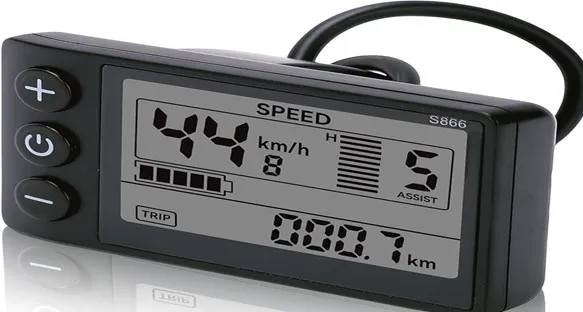
Display Panel of E-Bike
Function: User interface for speed, battery status, and modes
The display panel serves as the rider’s dashboard and control interface, typically featuring LCD or OLED screens mounted on the handlebars. It displays critical real-time information: current speed (km/h or mph), remaining battery percentage or voltage, distance traveled (trip/total odometer), pedal assist level (1-5 or Eco/Normal/Sport modes), and error codes for diagnostics. Control buttons allow riders to switch assistance levels, activate lights, view trip statistics, and access settings menus. Advanced displays integrate USB charging ports, Bluetooth connectivity for smartphone pairing, GPS navigation displays, and customizable data screens. Communication with the controller typically uses 5-pin connectors carrying power (5V), ground, and TX/RX data lines.
Wireless Connectivity of E-Bike
Function: Bluetooth or app integration for diagnostics and settings
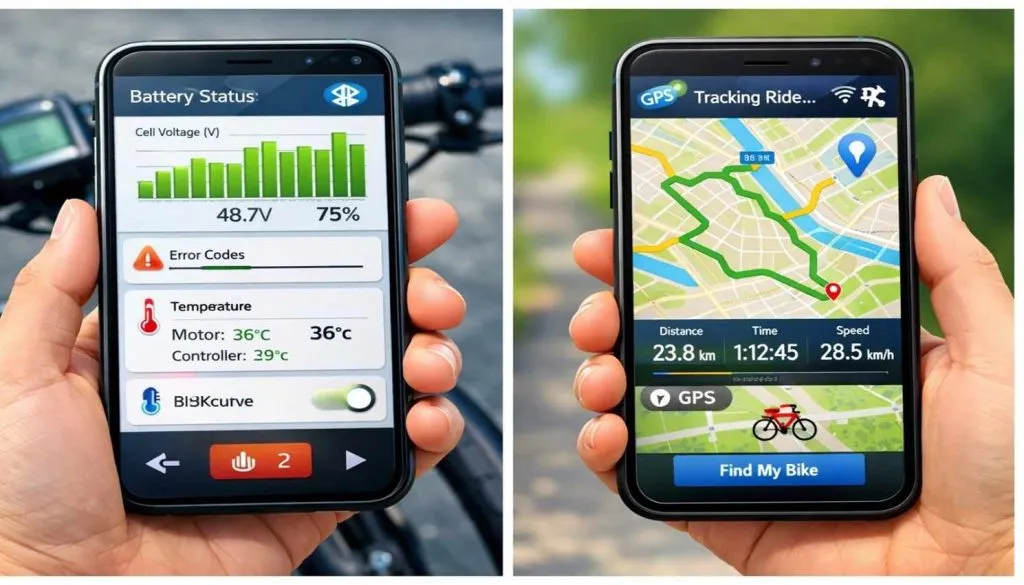
Modern e-bikes increasingly feature wireless connectivity through Bluetooth Low Energy (BLE) modules or integrated controllers. Smartphone apps enable remote diagnostics (viewing error codes, cell voltages, temperature data), ride tracking (GPS routes, elevation, calories), performance tuning (adjusting max speed limits, acceleration curves, PAS response), firmware updates over-the-air (OTA), and anti-theft features (GPS tracking, remote disable). Some systems support ANT+ protocols for integration with cycling computers and fitness devices. Cloud connectivity allows fleet management for shared e-bike services. Communication protocols include UART serial, CAN bus for industrial applications, and proprietary encrypted protocols for security.
Design Challenges and Solutions of E-Bike
| Common Design Challenges | Advanced Solutions |
|---|---|
| Heat Dissipation: Controllers handling 30A-50A continuous current generate significant heat (50W-100W). Power MOSFETs and voltage regulators require effective thermal management. Without proper cooling, components overheat causing thermal throttling, reduced efficiency, or permanent failure. E-bikes operate in enclosed frames with limited airflow, unlike ventilated automotive electronics. | Advanced PCB Design and Thermal Management: Multi-layer PCBs (4-6 layers) with dedicated power planes reduce resistance and improve current distribution. Heavy copper (2-3oz) on power layers handles high currents without excessive heating. Thermal vias transfer heat from MOSFETs to ground planes, spreading heat across the PCB. Aluminum-backed PCBs (IMS/MCPCB) directly bond to heat sinks. Controllers use thermally conductive enclosures as passive heat sinks. Conformal coating protects components while maintaining thermal transfer. |
| Compact Size Constraints: E-bike electronics must fit within tight spaces controller boxes (120×80×40mm typical), battery pack enclosures, and handlebar-mounted displays. Multi-layer PCB designs become necessary but increase manufacturing complexity and cost. Component height restrictions (<15mm) limit heat sink options. Cable routing must accommodate bike geometry and rider movement. | Intelligent Component Selection: Low RDS (on) MOSFETs minimize conduction losses. High-efficiency buck converters (>95%) for 5V/3.3V rails. Low-power MCUs (ARM Cortex-M series) with sleep modes. SMD components reduce PCB footprint. Careful power supply filtering prevents EMI issues. Automotive-grade components (-40°C to +125°C) handle temperature extremes. Proper component derating ensures reliability. |
| Waterproofing and Environmental Protection: E-bikes face rain, road spray, humidity, mud, and occasional submersion (crossing streams). Electronics require IP65 or IP67 ratings minimum. Water ingress causes short circuits and corrosion. Connectors are vulnerable entry points. Vibration from rough terrain loosens connections and cracks solder joints. Temperature extremes (-20°C to +60°C) stress components and battery performance. | Robust Waterproofing Techniques: Sealed aluminum or polycarbonate enclosures with gaskets achieve IP67 rating. Cable glands with compression seals prevent water entry. Conformal coating (acrylic/silicone/urethane) protects PCBs. Potting compounds fully encapsulate sensitive circuits. Waterproof connectors (XT60, Anderson Powerpole) for high-current connections. Stainless steel hardware resists corrosion. Design eliminates water traps and incorporates drainage holes. |
| Energy Efficiency Optimization: Battery capacity is precious. Every waste reduces range. Controller efficiency (typically 92-96%) directly impacts range. Switching losses in MOSFETs, voltage regulator quiescent current, display power consumption, and sensor power all reduce available energy. Regenerative braking can recover 5-15% energy but requires sophisticated control algorithms. Balancing performance (responsiveness) against efficiency (range) requires careful tuning. | Efficiency-Optimized Firmware and Hardware: Synchronous rectification reduces voltage drop. Adaptive PWM frequency optimization balances switching losses. Smart power management puts unused peripherals into sleep modes. Efficient motor control algorithms (Field-Oriented Control, sensor less operation) maximize motor efficiency. Low-quiescent-current regulators. Energy-aware assist algorithms provide responsive feel while maximizing range. Real-time efficiency monitoring enables adaptive power delivery strategies. |
what makes us different
Benefits of Our Electronic Design Services
Wonderful PCB brings deep expertise in electric bicycle electronics to every project, combining cutting-edge design capabilities with practical manufacturing knowledge. Our comprehensive service offering ensures your e-bike electronics achieve optimal performance, safety, and manufacturability.
Customization to Client Needs
Every e-bike design has unique requirements—power levels, form factors, battery configurations, feature sets, and cost targets. We don't offer one-size-fits-all solutions. Our engineering team works closely with clients through iterative design reviews to create bespoke electronic architecture perfectly matches your specific product vision. Whether you need a minimalist 250W city bike system or a high-performance 1000W mountain e-bike controller, we design voltage levels (36V/48V/52V), current ratings (15A-60A), sensor interfaces, communication protocols, and firmware features to your exact specifications.
High Reliability and Safety Standards
Safety is non-negotiable in e-bike electronics. Our designs integrate multiple protection layers: hardware-based over-current protection, independent over/under-voltage monitoring, redundant temperature sensors with fail-safe cutoffs, brake cutoff redundancy, and fault-tolerant firmware architectures. We design relevant safety standards (EN 15194, UL 2849, IEC 62133) with documentation supporting certification. Rigorous FMEA (Failure Mode Effects Analysis) during design phase identifies potential failure modes. All designs undergo accelerated life testing (ALT), environmental stress screening (ESS), and electromagnetic compatibility (EMC) validation before production release. Field failure rates are consistently below 0.5% across client products.
Fast Prototyping and Manufacturing
Time-to-market is critical in the competitive e-bike industry. Our rapid prototyping capabilities deliver functional prototypes in 2-3 weeks from design freeze. In-house PCB fabrication and assembly accelerate iteration cycles. Design for Manufacturability (DFM) reviews occur concurrently with schematic design, catching production issues early. Our established supply chain relationships ensure component availability, with strategic stocking of long-lead-time parts. Smooth transition from prototype to mass production through comprehensive manufacturing documentation, assembly work instructions, and automated optical inspection (AOI) programming. Volume production ramp-up in 4-6 weeks post design validation.
End-to-End Support from Design to Production
Our service extends far beyond circuit design. We provide complete turnkey solutions including: Initial consultation and requirements analysis → Schematic design and component selection → PCB layout with impedance control and thermal analysis → Firmware development for motor control, BMS, and communication → 3D enclosure design with thermal and mechanical simulation → Prototype assembly and bring-up → Design validation testing (functional, environmental, EMC) → Production file generation (Gerber, BOM, assembly drawings) → DFM review and optimization → Supply chain management and component procurement → Mass production support and quality monitoring → Field failure analysis and continuous improvement.
Ready to Transform Your E-Bike Electronics?
Contact Wonderful PCB today for a free consultation on your electric bicycle electronic design project. Our experienced team is ready to help you create innovative, reliable, and cost-effective e-bike electronics that set your product apart in the market.
Wonderful PCB
Emial: [email protected]
Whatsapp: 008619129538762
Phone: 0086 0755-86229518
Address: Nanyuan Industrial Park, Nanshan District, Shenzhen City, Guangdong, China