Overview of STM32 Microcontrollers
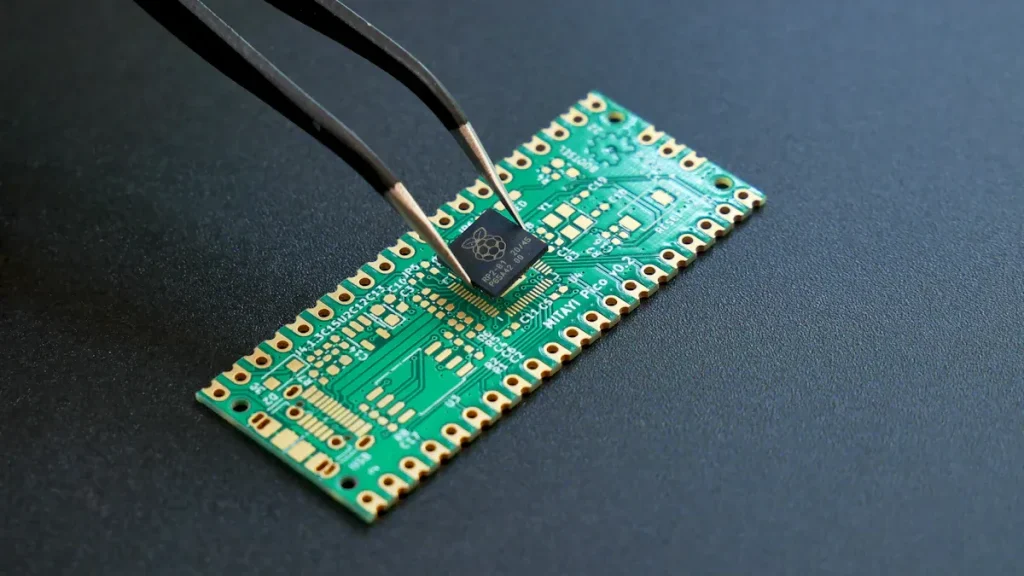
STM32 microcontrollers lead industrial, automotive, and consumer electronics devices worldwide. You find these ARM Cortex-M based microcontroller units in motor control systems, building automation, programmable logic controllers (PLCs), medical devices, and countless IoT applications. Their combination of performance, power efficiency, and extensive peripheral choices make them the go-to choice for embedded systems designers.
Common applications extend across industries. Industrial automation depends on STM32 for real-time control and communication protocols. Automotive systems utilize them for body control modules, dashboard displays, and sensor interfaces. Consumer products including smart home devices, wearables, and appliances incorporate STM32 microcontrollers for their processing needs.
Firmware protection exists for legitimate security reasons. Manufacturers protect their intellectual property from unauthorized copying and competitive analysis. Security-sensitive applications require protection against tampering and malicious code injections. However, legitimate needs for firmware access arise when you maintain legacy equipment, recover lost development files, or perform authorized system analysis. Understanding reading protection mechanisms helps you navigate these scenarios properly.
STM32 Read Protection (RDP) Levels
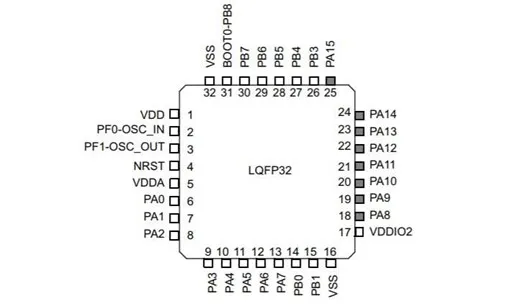
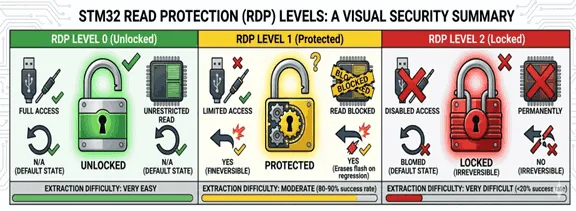
STM32 microcontrollers implement three distinct read protection levels that regulate firmware access. You encounter these protection states when attempting to read flash memory or debug code through standard interfaces like SWD (Serial Wire Debug) or JTAG. Understanding each level facilitates you assess firmware extraction feasibility for your specific situation.
RDP Level 0 (No Protection) represents no protection at all. The microcontroller ships from the factory in this position. You connect a standard ST-Link programmer and read flash memory contents directly without constraints. Debug access works completely with breakpoints, memory inspection, and all development tools functioning typically. This open state suits development environments but leaves production devices critical to unauthorized access. Most manufacturers immediately upgrade to Level 1 before delivering products.
RDP Level 1 (Read Protection) allows memory reading protection while maintaining programming capability. You cannot read flash memory through the debug user interface. The microcontroller stops all attempts to leave firmware directly. However, you can still erase and reprogram the chip.
Critical Vulnerability: Downgrading from Level 1 to Level 0 triggers automatic flash erase, but a brief window exists where SRAM content remains reachable.
RDP Level 2 (Permanent Protection) implements permanent chip-level lock with no recovery option. Once set, this protection level cannot be reversed through any ordinary means. Debug interfaces become permanently restricted. Even the device manufacturer cannot restore access. Flash memory remains locked for the chip’s entire lifespan. This irreversible nature enables Level 2 suitable only for high-security applications. Firmware extraction from Level 2 devices requires invasive techniques like die decapsulation and microprobing—expensive processes costing thousands of dollars with uncertain success rates.
| Protection Level | Debug Access | Flash Read | Reversibility |
| RDP Level 0 | Full access | Unrestricted | N/A (default state) |
| RDP Level 1 | Limited | Blocked | Yes (erases flash) |
| RDP Level 2 | Disabled | Permanently blocked | No (irreversible) |
| Extraction Difficulty | Very easy | Moderate (80-90%) | Very difficult (<20%) |
Why Firmware Extraction & IC Unlock May Be Required
Recovering firmware for legacy devices shows the most common legitimate method. You keep industrial equipment that survived its original manufacturer. The company discontinued support years ago. Technical documentation disappeared when engineers retired. When components fail, you need firmware approach to program replacement microcontrollers. Without this capability, functional device becomes scrap metal despite having only minimal electronic failures.
Lost source code recovery affects many organizations. Development teams faced hard drive failures, ransomware attacks, or inadequate backup procedures. The working product exists but original code disappeared. You need firmware extraction to recover your own intellectual property from production units. Device migration or upgrade projects need firmware access for compatibility analysis. You redesign PCBs with updated components while maintaining current functionality. The microcontroller remains the same but other circuits are modified.
IC unlock acts as a professional tool to recover access under authorized conditions. You legally own the devices requiring firmware extraction. Written authorization from equipment owners required for service work. Corporate policy allows reverse engineering for maintenance purposes. These legitimate situations explain professional firmware extraction services that respect intellectual property rights while resolving real business problems.
Technical Challenges in Firmware Extraction
Flash memory security mechanisms represent the primary technical obstacle. STM32 microcontrollers implement several protection layers beyond simple read protection. Writing protection avoids modification of specific flash sectors. Proprietary flash controller commands need knowledge of undocumented features. Memory mapping complexity differs between STM32 families, what works for STM32F1 may fail completely on STM32F4 or STM32H7 series.
Debug port restrictions limit standard access techniques. SWD and JTAG interfaces become partially or completely disabled under read protection condition. Authentication requirements prevent unauthorized debug session establishment. Some STM32 variants implement secure boot loaders that verify firmware signatures. Bypassing these restrictions requires utmost understanding of ARM Cortex-M architecture and STM32-specific implementation details.
RDP fuse and lock bits detect protection state permanently in some cases. One-time programmable (OTP) memory saves security features that cannot be reversed. Understanding which bits are OTP versus reprogrammable shows critical mistakes. Option byte manipulation requires precise timing and voltage conditions. Incorrect procedures corrupt configuration data that make the microcontroller unusable.
Risk of bricking or data loss without proper procedure makes DIY attempts risky. Power interruptions during option byte modification destroy chips. Incorrect voltage levels on debug pins causes permanent damage. Attempting Level 2 downgrade (which is impossible) wastes time and may harm the device. Professional firmware extraction services reduce these risks through experience, proper equipment, and established techniques that protect your valuable hardware.
IC Unlock Techniques in a Professional Context
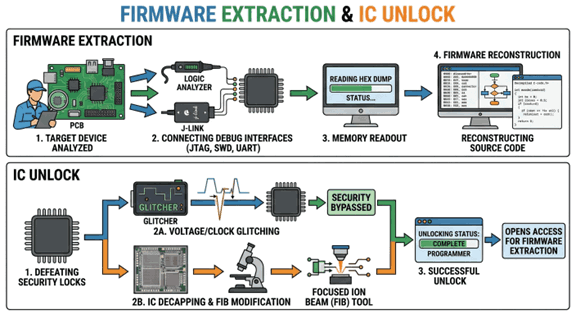
Authorized unlocking methods for RDP Level 1 devices require documented and undocumented features. Standard approach involves triggering the mass erase sequence while checking SRAM contents during the brief window before erasure completes. Timing analysis determines the precise microsecond window. High-speed memory capture equipment tracks SRAM data containing recently executed code. Voltage glitching introduces controlled faults that cause security checks to fail. Each STM32 family needs specific techniques as no universal solution exists across all devices.
Hardware-level diagnostics for locked MCUs employ specialized test equipment. Logic analyzers monitor debug interface signals to understand protection responses. Oscilloscopes verify voltage levels and timing requirements. Dedicated fault injection tools apply precise voltage or clock glitches. Chip programming devices with voltage manipulation capabilities enable advanced unlocking procedures. This equipment characterizes considerable investments of thousands of dollars for professional grade tools. Verifying access without violating IP rights requires careful documentation. You keep chain of supervision showing device ownership. Authorization letters from equipment owners stay on file.
Tools used like ST-Link and J-Link debug adapters for standard communication, specialized test equipment for voltage glitching and fault injection, high-speed logic analyzers and oscilloscopes for timing analysis. Professional teams link these tools with deep knowledge of ARM architecture and STM32 specific implementation to achieve high success rates on Level 1 devices while keeping the complete procedural integrity.
Combining Firmware Analysis with PCB Reverse Engineering
Extracted firmware allows accurate schematic reconstruction during PCB reverse engineering. You analyze initialization code to find which microcontroller pins connect to specific peripherals. Peripheral configuration shows SPI, I2C, UART, and other interface connections. GPIO features show which pins control external circuits. This information guides PCB engineers and experts. You know which signals to follow and what functions they serve. The combination of physical board analysis and firmware understanding makes more accurate results than using only one technique.
IC Unlock assists legacy system upgrades by providing complete system understanding. You see how original designers used control algorithms, communication protocols, and safety features. You maintain compatibility with current systems while improving performance or replacing obsolete components. Firmware analysis represents timing critical sections requiring careful protection during hardware updates.
Improving PCB designs based on extracted firmware creates a complete development method. You clone the PCB using reverse engineering techniques. Firmware extraction gives the operating code. Combining, these deliverables enable exact reproduction or informed redesign. You can change hardware knowing specifically how firmware will interact with changes. This integrated methodology matches complex embedded systems where hardware and software interdependence run deep.
Full end-to-end workflow demonstrates comprehensive capability. Reverse engineering recreates printed circuit boards layouts and schematics. IC unlock extracts firmware from protected microcontrollers. Analysis combines hardware and software understanding. Prototype development creates updated designs incorporating improvements. Manufacturing provides production quantities of cloned or enhanced systems. This complete service from reverse engineering through manufacturing differentiates professional providers from simple PCB copying services.
Legal and Ethical Considerations
Ensuring IC unlock and firmware access is authorized way that represents your primary legal responsibility. You must own the devices that need extraction or possess written authorization from the legal owner. Service providers legitimately require proof of ownership before accepting projects. This documentation keeps everyone involved from intellectual property disputes. Equipment manufacturers, repair organizations, and research institutions all need clear authorization. Without proper documentation, firmware extraction may establish unauthorized access to protected systems, which is a serious legal matter in most areas.
Protecting intellectual property extends both directions. Your firmware represents valuable intellectual property requiring protection from unauthorized extraction by others. Simultaneously, you must value others’ IP rights when extracting firmware. Use extracted code only for authorized purposes like repair, maintenance, compatibility analysis, or your own product development when you own the original design. Do not reorganize firmware, incorporate it into competing products without license, or violate patents or copyrights. Professional ethics and legal compliance go together in firmware extraction work.
Confidentiality in industrial applications requires strict data handling methodologies. Control algorithms represent years of development investment. Professional service providers sign non-disclosure agreements before observing your firmware. They implement secure data control, avoiding unauthorized access. After project completion all firmware copies are destroyed by agreement. This confidentiality proves critical in competitive industries where product advantages come from proprietary embedded software.
Avoiding RDP Level 2 cases require careful verification before any security modifications. Once a device reaches Level 2 protection, no standard recovery method exists. You permanently lose firmware access even with full legal authorization. Always verify existing protection levels before attempting extraction procedures. Keep backup devices when possible. Never modify option bytes without complete understanding of outcomes. Professional firmware extraction services decline Level 2 downgrade attempts because they simply cannot succeed that saving you from costly mistakes.
Why Work with a Professional Reverse Engineering Team
Embedded system expertise specific to STM32 and similar microcontrollers makes a significant difference. Professional teams work with these devices daily across multiple industries and applications. They identify major differences between STM32 families. Experience with hundreds of firmware extraction projects shows which method work efficiently for specific chip variants. This deep knowledge base avoids expensive mistakes and accomplishes higher success rates than typical practitioners could match.
Secure workflow for IC unlocks and firmware recovery saves your intellectual property throughout the entire process. Professional service providers follow documented procedures for data security, device handling, and confidentiality maintenance. You receive detailed documentation showing specifically what was extracted, how analysis proceeded, and what results were generated. Secure data destruction takes place after project completion per your requirements. This systematic approach offers audit tracks for internal compliance purposes.
Integration with PCB copying and PCBA services makes seamless project execution. One team works on PCB reverse engineering, firmware extraction, combined analysis, redesign, prototyping, and manufacturing. Timeline compression happens because hardware and firmware analysis proceed simultaneously. You receive complete solutions like documented designs, extracted code, working prototypes, and manufacturing support from a single professional relationship.
Industrial application tools and risk management protect your valuable hardware. Professional equipment worth tens of thousands of dollars enable reliable firmware extraction. Experienced technicians and experts reduce bricking risks through demonstrated techniques. This risk mitigation verifies especially valuable for unique equipment where replacement cost far exceeds firmware extraction fees.
Frequently Asked Questions
Can you extract firmware from any STM32 microcontroller?
We successfully extract firmware from most STM32 devices with RDP Level 1 protection (80-90% success rate). RDP Level 0 devices are straightforward.
Is STM32 firmware extraction legal?
Yes, when you own the device or have written approval from the device owner. Legitimate uses include recovering lost source code and authorized system analysis. We require proof of ownership or authorization/approval documentation before accepting any project.
How long does STM32 IC unlock take?
Simple RDP Level 1 extraction usually takes 3-7 days including analysis and verification. Complex devices or those requiring special procedures may need 7-14 days. We provide realistic timelines after reviewing your specific microcontroller model and protection (RDP) level.
Will firmware extraction damage my STM32 chip?
Our professional extraction methods are risk mitigated. RDP Level 0 and Level 1 extractions are non-destructive and efficient when performed accurately. The chip remains fully functional after extraction.
Do you provide PCB Reverse engineering with firmware extraction?
Yes, we offer complete integrated services, i.e. STM32 firmware extraction with PCB reverse engineering. This contains both hardware schematics and software code for complete system understanding.
Conclusion
Secure and professional STM32 firmware extraction and IC unlock solutions act as legitimate business needs across industries. You recover lost firmware, maintain legacy equipment, and examine systems you legally own. Professional services combine technical expertise with strict obedience to legal and ethical requirements. The result is authorized firmware access that values intellectual property rights while solving real problems.
Firmware extraction and IC Unlock success require more than technical capability alone. You need professional teams who have knowledge about both embedded systems and the legal framework surrounding firmware extraction. Complete services integrating firmware recovery with PCB reverse engineering deliver complete solutions. Proper techniques protect your hardware, intellectual property and business interests throughout the process.
Ready for authorized MCU analysis and PCB reverse engineering? We offer professional STM32 firmware extraction services with extreme confidentiality and legal compliance. Our integrated procedures combine firmware recovery, IC Unlock with complete PCB reverse engineering and manufacturing support.
Note: For all firmware extraction services we require proof of ownership or written authorization from the device owner. We strictly follow intellectual property laws and maintain complete confidentiality.