PCB boards are considered a building block of electronic projects and manufacturing since they affect the overall cost of electronic manufacturing and projects. There are many factors included in PCB manufacturing that define the value of PCB and complete project assembly. The size and materials for certain manufacturing processes affect cost. The knowledge of different factors for PCB board manufacturing can help to make our complete board assembly and PCB manufacturing. Here we will cover different factors you must know to get the board in good quality with reasonable expenses. Every electronic engineer must know these factors to make PCBs economically with quality. You will learn what influences the calculation of the quote you get from the manufacturer. Let’s get started.
Factors Influencing PCB Prices and Quote

PCB Dimensions and Shape
- The PCB board size and shape affect the overall board cost since certain dimensions of the board and shape use different materials for board manufacturing that affect the cost. The larger-sized board needed more materials and a more time-consuming process for making the final assembly, and finally, it will raise prices. The board prices increase in direct proportion to the surface area of the PCB, which helps to find how much extra charges we will pay for extra size.
Number of Layers
- The number of layers for the PCB board has certain prices; single-layer boards are lower cost than multiple-layer boards. The multilayer board involves not only more layers but also uses more materials and complex processes that make it high cost.
- The multiple layers for boards also increase the chances of board errors at the time of testing, and so manufacturers added these prices as well for quotes for board requests. Each layer’s inspection increases the board’s overall costs.
- Normally, one- to two-layer boards are low cost, but boards with 2 to 4 or more layers will charge an extra 35 to 40 percent.
- The other reason for multi-layer boards high cost is that these boards use advanced manufacturing techniques and instruments for making proper connections between layers and accurate alignment. There is also a need for stable signal transmission between layers which makes costs higher.
Material Selection
- There are different types of substrate materials used for board manufacturing that affect board cost. Normally used substrate materials for PCB boards are FR4, FR1, CEM1, and CEM3, and each comes with a certain cost.
- FR4 fiberglass composite is low cost as compared to HF materials such as PTFE. So each material has its effect on the board’s overall cost.
- There are some special types of substrates, such as RO4350B, that are common high-frequency substrate materials that are high cost and make boards costly. Not only do the types of materials affect board cost, but also the thickness of the materials affects the board; high-thickness board material has a high cost.

Trace Width and Spacing
- Small tracer widths and spacing need a fine and accurate manufacturing process and advanced-level instruments. There is a high cost involved for small trace widths and spaces since refined lithography techniques and highly accurate drilling processes are involved.
- There is a difficult process for small trace widths and spaces and a time-consuming process that increases the cost of manufacturing.
- The small traces also cause high costs due to high losses of yield at the time of the manufacturing process. Since more scrap or error occurs at the time of production,, that increases since more features are needed for controlling scrap rates, like inspection frequency, which increases cost.
Solder mask and silkscreen
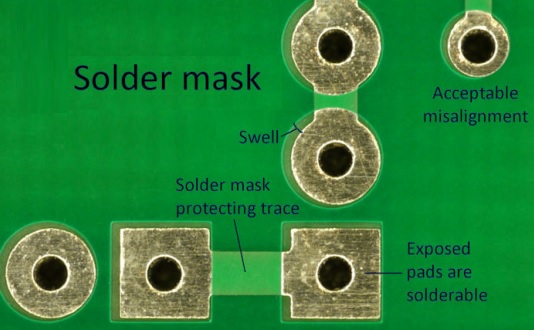
- Solder masks and silkscreen also affect PCB board manufacturing costs. The ink used for solder mask cost is defined based on types and brands of ink. Some manufacturers have these services free, but most of them charge for those features, which will increase your board’s overall cost.
Drill Hole Size
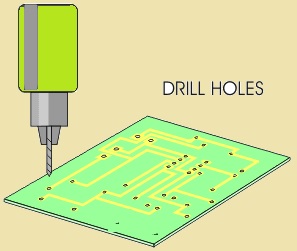
- Small-size drilling holes need more accurate drilling devices and fine drill bits that make the process difficult and increase the cost. The small-size drill holes are a time-consuming process and need more steps that make high-cost boards.
- There is a special process used for making specialized board features such as buried vias, blind vias, or controlled depth holes, and for these features, a special type of drilling is used that makes the process costly since it involves complicated operations steps.
- During the drilling process, there are material losses that occur. The larger number of drilling holes removed more materials and increased material loss rates. For high-density boards, more drilling holes are used for making complicated circuit designs, and it also increases material loss rates.
Surface Finish
- There are different types of surface finishing used for PCB boards, and each comes with different prices. The HASL, or hot air solder leveling, is low cost, and ENIG is a high-cost finish type that defines board cost. The uses of different surface treatment techniques affect board cost. Some other types of surface finish are Imm Ag and Imm SN, which affect board cost. The type of finish with several layers also affects board cost.
Circuit Complexity
- The circuit complex design also affects the PCB board’s overall cost. Since complicated circuits need more steps for manufacturing and use more components that can cause high procurement costs, as well as final assembly charges. The complicated circuit design covers more PCB board area for the connection of more components on boards and traces and will increase the cost.
PCB Lead Time and Delivery
- If any users need urgent board delivery in a short time, PCB manufacturers work overtime and get services of extra shifts from employees that will charge more for customers delivery requirements on the given time. So overall, labor costs and the use of manufacturing instruments make final PCB manufacturing costly.
- To fulfill customers’ urgent order demands, special logistics methods are used for online delivery, such as express delivery services. These special logistics increase costs, add more transportation charges and increase overall board costs.
- The short delivery time also affects manufacturers’ manufacturing schedules and processes for a given time of order completion. It also comes with rearranging production lines or accelerating working speed, which also affects cost.
Copper Thickness
- PCB board cost is also based on copper foil, which is the main component of the board; its value is based on thickness. Thick copper foil uses larger copper, and as a result, material costs for the board increase.
- For processing thick copper, more processing steps are involved, and more instruments are used for making quality boards. Such durable drill bits used for proper drilling and etching also take time. So all these factors make boards costly.
PCB Quantity and Order Factors
- The other main factor that can affect PCB cost is the quantity of boards. If you are ordering a larger number of boards, that also increases your cost since it will take more time to complete and more materials will be used, which makes it costly.
- However, some manufacturers have some discounts for bulk orders for PCBs that can help to reduce your cost for a larger number of PCBs. Since the cost for tooling, setup charges, and design expenses is applied for a larger number of units at the same time, that helps to reduce the cost for bulk orders.
- There is some PCB supplier that has a minimum order limit that also increases the cost for low orders since small unit costs increase so bulk orders can be economically costly based on limited services or manufacturers. You can choose Wodreful PCB for getting your PCB board with good quality.
Regional and Supplier Factors
- The location of your PCB supplier also affects your board manufacturing cost since getting services of PCB manufacturing from suppliers that are in your area’s nearest locations will reduce shipment costs and also reduce delivery time. But if you choose another regional supplier, that makes your board costly, and maybe you will not get an order on the given time.
Some other cost factors of PCBs
Prototype and Testing Costs:
- Before making the final PCB board, a prototype is made, and different tests are performed to fulfill the requirements for design features and demand. This process takes time and uses some sources that affect the final board assembly cost.
Assembly and Testing Expenses
- After completion of the manufacturing process, there are different tests performed for assembly to check accurate working. It is a time-consuming process and uses different equipment which makes the process costly, and PCB assembly expenses increase.
Quality Control Cost
- To fulfill the PCB quality standards, there is extra testing and certification needed, such as electrical testing, environmental testing, and safety certification. These extra processes also affect board costs if they need different certifications.
How to Calculate Custom PCB Cost by Size
For finding the cost of a custom PCB board, use simple techniques that are area-based pricing calculation methods that are normally employed for small productions as well as prototypes.
In this method, PCB manufacturers give cost ideas based on the dimensions of the boards, which is an easy way to find custom board costs.
- The area-based pricing techniques help PCB board manufacturers calculate the unit cost per square centimeter according to the number of layers and production process used for the board.
- In this process, manufacturers need accurate dimensions from customers and final expenses will be found through the product of the board area with an already defined cost of units.
- Let’s suppose that manufacturers have set a price for 2 layers of board at $0.05 per square centimeter, and your custom board dimensions are 15 cm x 20 cm.
- PCB board area will be 15 cm x 20 cm = 300 sq. cm.
- The cost for custom board will be= 300 sq. cm x 0.05sq.cm = $15.
How to Reduce PCB Manufacturing Costs?
Different parameters must be followed for reducing the overall board assembly cost.
Circuit Design
- If your circuit design is simple and does not have many complications, it can help to reduce the overall board cost. The simple design uses fewer components, and it affects the reduction of the procurement and assembly charges. The simple design also uses a low number of layers and reduces process as well as materials expenses for the board.
Layer Numbers:
- Above, we discussed the number of layers for the board having the main effect on the cost. If you use fewer layers for boards, it will lower material costs, reduce your process costs, and finally lower board prices.
Standard Components
- For custom board use, the use of standard components also affects board prices. Since standard components are easy to access and also have a lower cost than special components. The use of standard components makes the design simple and minimizes the number of layers for the board and final product cost.
Optimized PCB Size
- We can also reduce PCB costs by making some optimizations in board size and shape. The small board uses low materials and needs less process to control manufacturing expenses. With that PCB that has a simple shape, fewer steps and instruments are needed for making the board and reducing costs.
Manufacturability (DFM) applications
- If we use DFM principles, they will also help to manage board design in a proper way and make our final manufacturing low-cost. DFM for PCB design not only reduces manufacturing costs but also increases quality and makes reliable boards. Such as with the use of DFM features, we use proper line widths and spacings to help to use several drill holes, and in the end, we get low-cost boards.
Conclusion
The calculation of prices for PCB boards is based on different factors such as board features, material types, manufacturing processes, and manufacturing volumes. The importance of all these factors and their proper knowledge helps us to make a good working and high-quality board with a budget-friendly final PCB project. There are different techniques used for the calculation of PCB prices, such as area-based cost calculation for prototypes, detailed cost determination for bulk volumes,, and the use of some tools, but each has its requirements.
Ultimately, selecting the best and most reliable PCB manufacturer is very essential in the case of high-voltage PCB design and assembly. The selection of accurate suppliers that have proper knowledge of the calculation of PCB cost helps to make quality boards at a good cost. If you’re are looking for reasonable and cost-effective PCB manufacturers, then WoderFulPCB is the best option for you. That is leading PCB manufacturers and providing high-quality PCB prototyping, production,, and assembly services at good prices. The risk of accidents and fatalities increased in systems with poor quality and inadequate considerations of high-voltage PCBs. PCB designers should carefully consider creepage and clearance distances to reduce arcing and maintain the proper electrical isolation required.