There are many aspects to the cost of PCBA manufacturing. The core components mainly include the materials for the PCB bare board, the cost of SMT processing, and the cost of components. In addition to these core components, several other processes directly impact the cost of PCBA. Some of these factors are often overlooked, including other materials, testing, labor, assembly, design and PCB process optimization, and SMT patch process optimization.
Affecting the Cost of the Bare Board (PCB) Part
Board Cost
Different types of boards come with varying costs, depending on material and design specifications.
Drilling Cost
The number of holes and the size of the hole diameter directly impact the drilling cost. More holes or larger diameters will increase the cost.
Process Cost
The process requirements of the board, such as specialized coatings or complex designs, lead to different production difficulties, resulting in varying prices.
Labor, Water, Electricity, and Management Costs
These costs depend on the cost control and overall management system of each factory.
Affecting the Cost of the PCB Assembly (SMT) Part
Steel Mesh Cost
Steel meshes are used for PCB assembly and vary in cost depending on the size of the PCB board. Larger PCBs require more expensive meshes.
Start-Up Cost
When processing a single batch of single-model PCBA, the start-up cost includes the time spent debugging the placement machine and creating the first prototype.
SMT Processing Fee
SMT processing fees vary according to the complexity of the board, programming time, and the machine transfer time required.
DIP Processing Fee
DIP (Dual In-line Package) processing costs are calculated based on the number of solder joints. Wave soldering and hand soldering can have different unit prices.
How DFM Can Help Reduce PCBA Costs
When calculating PCBA manufacturing costs, using WonderfulPCB DFM can provide critical data for cost accounting and help reduce overall production costs. Below are the specific cost reduction features and case studies for WonderfulPCB DFM.
DFM Features for Cost Reduction
1. Board Layers
WonderfulPCB DFM automatically identifies the number of board layers (single-sided, double-sided, or multi-layer). The price difference is significant: a 4-layer board costs twice as much as a double-sided board.
2. Board Size
The board size affects the production area. WonderfulPCB DFM accurately detects the file size, and even a small difference of 1mm can impact the production area, resulting in a significant cost difference.
3. Line Width and Line Spacing
Smaller line widths and spacings complicate production, lowering yield and increasing costs. WonderfulPCB DFM accurately detects these elements and suggests suitable production processes to mitigate cost escalation.
4. Gong Length Analysis
The price of the forming gong plate is calculated based on its length. If this length is not identified, cost calculations will be inaccurate. WonderfulPCB DFM calculates the correct gong knife and plate lengths, ensuring accurate cost estimations.
5. Immersion Gold Area
Gold is a costly material, and if the area that needs immersion gold is miscalculated, it can greatly inflate production costs. WonderfulPCB DFM calculates the immersion gold area to minimize gold wastage.
6. Flying Needle Point Count
Flying needle points, used to test solder joints, increase the testing time and the cost of setting up testing equipment. WonderfulPCB DFM accurately calculates the number of test points based on the solder joints, optimizing the testing process.
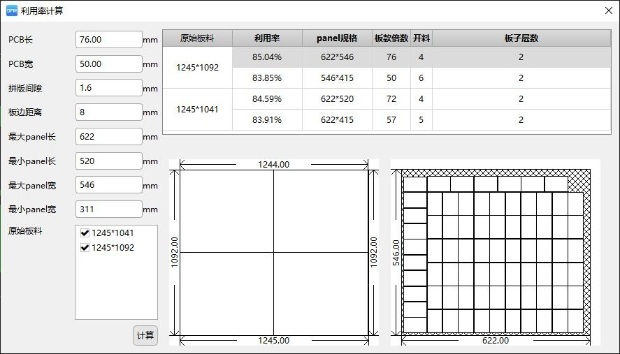
7. Board Utilization Rate
Board utilization is a critical factor that affects production costs. Increasing utilization by just a few percentage points can significantly reduce the production area, thereby lowering the overall production cost. WonderfulPCB DFM calculates the highest possible utilization rate, optimizing the board cutting process.
8. Hole Density
Hole density refers to the number of holes per square meter. Higher hole density increases production time and costs. WonderfulPCB DFM calculates the hole density accurately to prevent designs that may drive up production time and costs unnecessarily.
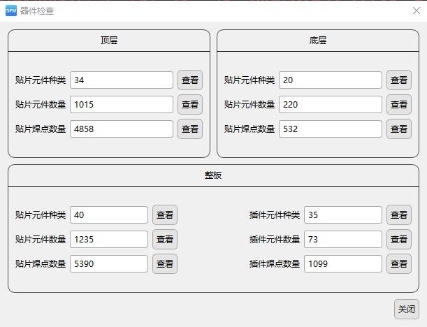
9. Device Solder Joints
The cost of SMT and DIP solder joints is calculated based on the number of solder joints. More solder joints mean higher costs. WonderfulPCB DFM calculates the number of SMT pads and DIP plug-in pads to help manage the solder joint count and reduce unnecessary costs.
10. BOM Check
Errors in the Bill of Materials (BOM) can lead to the purchase of incorrect or excessive components, leading to financial losses. WonderfulPCB DFM’s BOM check function helps verify BOM data, reducing the risk of purchasing errors.
Case Sharing: How DFM Helps Lower Costs
1. Minimum Line Width and Line Spacing
Smaller line widths and spacings negatively impact yield, leading to higher scrap rates. Higher scrap rates require more production to meet delivery quotas, which increases costs. By using WonderfulPCB DFM, designers can evaluate the cost implications of their designs in advance and adjust line widths and spacing to optimize cost efficiency.

2. Solder Point Statistics
The number of solder points affects the manufacturing cost. The cost of solder points can vary: leaded solder paste is cheaper, while lead-free solder paste is more expensive. Additionally, the cost of red glue environmentally-friendly SMT processing is lower than other methods. WonderfulPCB DFM helps track solder points and select the most cost-effective soldering method.
3. Groove Analysis
The cost of grooving is typically calculated by the length of the groove. The thickness and material of the board have little effect on efficiency, so the main cost factor is the length of the groove. WonderfulPCB DFM accurately calculates the groove length, ensuring precise and cost-efficient quotations for grooved boards.
Calculating the Utilization Rate
Calculating the utilization rate during PCB cutting is essential for maximizing efficiency and profitability. Improper cutting can lead to low utilization rates, thereby reducing production capacity and profitability. WonderfulPCB DFM helps calculate the optimal utilization rate, ensuring that the cutting process is both efficient and cost-effective.
By leveraging WonderfulPCB DFM’s advanced functions, manufacturers can optimize their designs and processes, leading to significant cost savings in PCBA production. The tool not only helps detect inefficiencies early in the design phase but also provides actionable insights that improve production efficiency and lower overall costs.