The electronic manufacturing process is key to making electronics. These include items like smartphones and medical tools you use daily. It makes sure every step, from design to building, is planned well. This helps work faster and makes better products. For example, using clear plans like Bills of Materials (BOMs) lowers mistakes. It also helps manage supplies and saves money. Companies using these methods see 20% fewer defects. They also cut production time by 10%. This shows how good planning improves results. By staying precise and organized, manufacturers can make reliable products.
Key Takeaways
Planning well in electronics makes fewer mistakes and saves money. Using tools like Bills of Materials (BOMs) can lower errors by 20%.
Design for Manufacturability (DFM) makes products better. Focus on PCB pad design, trace size, and heat control to make them last longer.
Testing is very important to check how products work. Functional and burn-in tests find problems early, making electronics more reliable.
Picking the right suppliers is very important. Check costs, delivery times, and order sizes to keep production smooth.
Using the same assembly steps reduces mistakes. Doing things the same way makes products safer and better, with fewer problems.
Design for Manufacturability (DFM)
Key areas in DFM: PCB pad design, trace width, and thermal management
Design for Manufacturability (DFM) makes electronics easier to build and keeps quality high. When designing PCBs, three important things to focus on are pad design, trace width, and thermal management.
PCB Pad Design: Good pad design stops soldering problems and makes strong connections. For example, thermal relief pads help spread heat in through-hole parts. Avoid sharp angles in traces to stop acid traps during etching.
Trace Width: Following trace/space rules like 3/3 mil avoids etching mistakes. This helps the PCB handle current without overheating or breaking.
Thermal Management: Managing heat well stops parts from overheating and breaking. Using copper balancing spreads heat evenly, preventing warping during production.
Metric | Description |
|---|---|
Minimum Trace/Space Rules | Follow guidelines like 3/3 mil to avoid etching mistakes. |
Acute Angles | Skip sharp angles in traces to stop acid traps. |
Copper Balancing | Spread copper evenly to avoid warping during production. |
Thermal Relief Pads | Use spoke-shaped pads to spread heat in through-hole parts. |
Stiffeners | Add stiffeners to stop solder joints from cracking under stress. |
By focusing on these areas, you can make PCB designs that work well and last long.
Benefits of DFM: Minimizing errors and optimizing production
DFM gives big benefits in making electronics. Bad designs can cause problems like more rework and lower yield. These issues raise costs and slow production. Fixing problems early saves time and money while improving product quality.
Saves time and money by fixing problems early.
Makes products better with smarter design choices.
Speeds up production and makes it more efficient.
Strategy | Description |
|---|---|
Reducing processing steps | Simplify production to save time and money. |
Reducing redundant features | Remove extra design parts to make production easier. |
Modular designs | Create parts that can do many jobs to cut complexity. |
Off-the-shelf components | Use ready-made parts to save money and time. |
Simplifying assembly | Make products easier to put together to lower labor costs. |
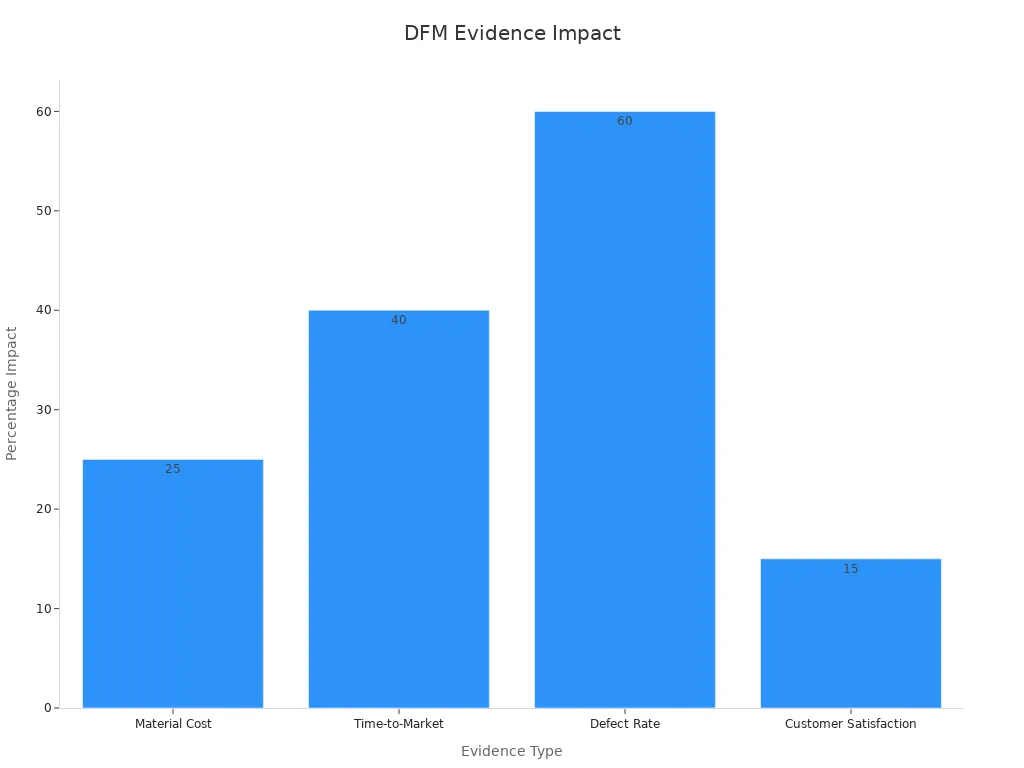
For example, a medical device company cut defects by 60% using DFM. An auto parts maker sped up production by 40% with DFM methods.
Practical tips for effective DFM implementation
To use DFM well, start early in the design process. This helps find and fix problems before they grow. Teams with designers, engineers, and quality experts can make better plans.
Here are some helpful tips:
Use simulation tools to check if designs are easy to make.
Keep part shapes simple to avoid problems.
Test designs often and improve them based on feedback.
Hold regular meetings to share ideas and solve issues.
Train teams to make better decisions and improve systems.
Learn to handle complex design challenges.
Focus on details to avoid mistakes.
Use “what if” tools to predict results.
By following these tips, you can make PCB designs easier to produce, reduce mistakes, and improve efficiency.
Sourcing PCBs and Components
How the Bill of Materials (BOM) Helps Choose Materials
A Bill of Materials (BOM) is a key tool for picking materials. It lists all the parts needed to make a product. This document helps every team in the process stay on the same page. It stops delays caused by missing parts or wrong information.
A BOM makes production easier and reduces mistakes.
It ensures materials are ready when needed.
It speeds up work and cuts costs by organizing material choices.
For example, a clear BOM shows how to build a product step by step. Checking it often keeps things running smoothly and gets products to market faster.
Picking Suppliers: Cost, Delivery Time, and Order Size
Choosing good suppliers is important for making products. Look at their prices, delivery speed, and minimum order size (MOQ). Price matters, but fast delivery and matching order sizes are also key.
For long-lasting products, price and quality are most important. For trendy items, speed and service matter more. Balancing these factors helps you find the right suppliers for your needs.
Ways to Avoid Supply Chain Problems
Supply chain problems can slow down production, but smart planning helps. Use multiple suppliers, new technology, and regular checks to stay prepared.
Company | Problem Faced | Solutions Used | Results |
|---|---|---|---|
Apple | Too dependent on a few suppliers in Asia. | Added more suppliers, did regular checks. | Stronger and more stable supply chain. |
Toyota | Natural disasters hurt their “just-in-time” system. | Improved risk checks, used local suppliers. | Faster recovery and better stability. |
Dell | Trouble seeing and reacting to supply chain issues. | Used advanced supply chain software. | Better speed and efficiency. |
The PCB market is growing fast with new tech and electric cars. This shows why finding good parts is so important. By using these tips, you can keep your supply chain strong and efficient.
PCB Assembly in the Electronic Manufacturing Process

Overview of assembly methods: reflow soldering, wave soldering, and manual soldering
PCB assembly uses different ways to attach parts to boards. Each method has its own benefits and is picked based on the project’s needs.
Reflow Soldering: This is the most popular method today. Solder paste is added to the PCB, then heated in a reflow oven. The heat melts the solder, making strong connections. It works well for large batches and gives steady results.
Wave Soldering: This method is best for through-hole parts. The PCB moves over a wave of melted solder, which sticks the parts to the board. It’s good for simple designs but can leave more residue than reflow soldering.
Manual Soldering: This is done by hand for repairs or small projects. A person uses a soldering iron to attach parts. It’s flexible but takes more time and isn’t great for big jobs.
Studies show reflow soldering leaves the least residue. Wave soldering can leave more, which might cause problems like blistering in humid conditions. Picking the right method helps make better connections and fewer mistakes.
Importance of standardization for manufacturability and safety
Standardizing PCB assembly keeps quality and safety high. Following set rules makes the process smoother and reduces errors. For example, using the same soldering steps and checks lowers defects and improves reliability.
Tip: Standardizing not only saves time but also makes products safer by avoiding mistakes during assembly.
Keeping things clean is also very important. Dirt or residue can cause shorts or rust. A clean workspace and good materials help stop these problems. Careful handling and checking of PCBs also prevent damage during assembly.
With over 50 steps in PCB assembly, mistakes can be costly. Standardization avoids these issues, making the process easier and the product more dependable.
Types of PCB assembly: single-sided, double-sided, and mixed mounting
PCB assembly is grouped into three types based on where parts are placed:
Single-Sided Assembly: Parts are only on one side of the PCB. This is cheaper and works for simple devices like remotes or calculators.
Double-Sided Assembly: Parts are on both sides of the PCB. This allows for more complex designs, like in laptops or smartphones.
Mixed Mounting: This uses both surface-mount and through-hole parts on the same PCB. It’s great for advanced devices needing both small size and strength.
Each type has its own uses and advantages. Single-sided boards are easier to make. Double-sided and mixed mounting are better for complex designs. Correct part placement and soldering are key for all types to ensure good quality.
The assembly process includes steps like adding solder paste, placing parts, reflow soldering, and testing. These steps make sure the PCB works well and lasts long. By following clear steps and picking the right assembly type, you can create reliable electronics.
Testing and Quality Assurance
Functional testing to check performance in real-life conditions
Functional testing makes sure electronics work as they should. It copies the real-life conditions the product will face. For example, you can test a PCB by using its normal voltage and current. This helps find design or manufacturing problems early.
It also checks if all parts, like resistors and capacitors, work well together. This ensures the product does what it’s supposed to do. Regular testing lowers the chance of problems after customers start using it.
Burn-in testing to find hidden problems with stress
Burn-in testing pushes electronics to their limits to find hidden issues. It runs the PCB at higher temperatures or voltages for a long time. For example, a PCB for industrial machines might be tested at very high heat to check its strength.
This testing finds weak parts that might break under stress. Fixing these problems during production makes products stronger and more reliable. Burn-in testing is very important for critical items like medical tools or space equipment.
Outgoing Quality Control (OQC) to check for defects before shipping
Outgoing Quality Control (OQC) makes sure products meet quality rules before leaving the factory. It involves checking each PCB for problems and ensuring it meets standards. OQC uses sampling plans and rules to keep quality high.
Term | Description |
|---|---|
Average Outgoing Quality (AOQ) | The highest percentage of defective products allowed after inspection. If defects are too high, all items must be checked. |
Acceptable Quality Level (AQL) | The maximum acceptable defect rate for a batch of products over time. |
Acceptance Number | A number used to decide if a batch passes or fails quality checks. |
Acceptance Sampling Plan | A plan that explains how many items to check and what counts as acceptable. |
OQC ensures only good products reach customers. This step reduces returns and keeps customers happy. It’s an important part of making high-quality products.
Packaging and Distribution in the Electronic Manufacturing Process
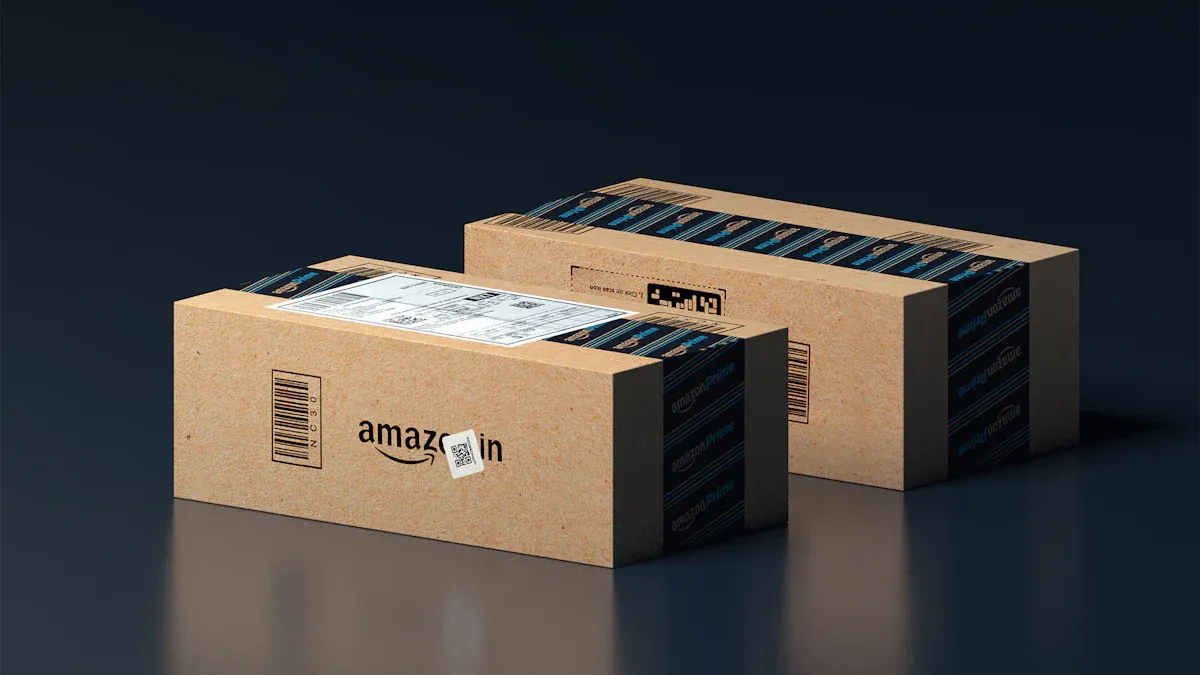
Custom packaging methods: moisture barrier bags, desiccants, and humidity cards
Custom packaging keeps electronics safe during storage and shipping. Moisture barrier bags, desiccants, and humidity cards are common tools for protection. Moisture barrier bags, like Dri-Shield®, block moisture and static electricity. These bags use strong polyester and metallic layers for extra safety. Desiccants, such as silica gel, soak up moisture to stop rust. Humidity cards show moisture levels, helping keep electronics in safe conditions.
Feature | Description |
|---|---|
Protection | Stops moisture, rust, and static electricity damage. |
Materials | Uses polyester for strength and metallic layers for shielding. |
Suitability | Works well with vacuum sealing and heat sealing methods. |
Using these tools together protects PCBs in places with changing humidity levels.
Purpose of packaging: protection against mechanical and environmental stresses
Packaging does more than look good; it protects electronics from damage. Compression tests check if packages can handle pressure without breaking. Drop tests show how well packages survive falls during shipping. Vibration tests check if products stay safe during movement. Temperature tests ensure materials work in extreme heat or cold.
Testing Method | Purpose |
|---|---|
Compression Testing | Checks if packages resist pressure without breaking. |
Drop and Impact Testing | Tests if packages survive falls and bumps. |
Vibration Testing | Ensures products stay safe during transportation movement. |
Temperature Testing | Confirms materials work in very hot or cold conditions. |
Strong packaging lowers damage risks and keeps electronics safe for customers.
Efficient distribution using automated tracking and smart technologies
Efficient distribution helps deliver products safely and on time. Automated tracking systems show where products are in real-time. This reduces mistakes and lost items. Smart tools improve inventory management by giving instant updates. These systems also cut human errors, making deliveries more accurate.
Real-time tracking shows product locations quickly.
Automated systems reduce mistakes and save time.
Smart tools help make faster and better decisions.
Using these technologies speeds up delivery and improves customer satisfaction. Accurate tracking ensures PCB products reach buyers without delays.
The electronic manufacturing process has many important steps. These include designing PCBs, assembly, and packaging. Each step helps make electronics work well and last long. Careful DFM checks and using good parts improve production. Standardized assembly makes the process smoother and reduces mistakes. Testing ensures products perform as expected. Working with experts can make the process easier and better. A clear plan lowers errors and meets industry rules. Start improving your manufacturing process now for great results.
FAQ
What is the most important step in the electronic manufacturing process?
All steps matter, but testing ensures products work correctly. Finding problems early saves time and money. It also helps deliver reliable electronics to customers.
How does Design for Manufacturability (DFM) improve production?
DFM makes designs easier to build and reduces mistakes. It speeds up production and cuts costs. Fixing design issues early leads to better results.
Why is supplier evaluation important in electronics manufacturing?
Picking good suppliers ensures you get quality parts on time. Checking costs, delivery speed, and reliability avoids delays and keeps production smooth.
What are the benefits of functional testing?
Functional testing checks if products work in real-life situations. It finds and fixes problems early, making products more reliable and keeping customers happy.
How does packaging protect electronics during shipping?
Packaging keeps electronics safe from moisture, static, and damage. Using special bags, desiccants, and tests ensures products arrive in great condition.