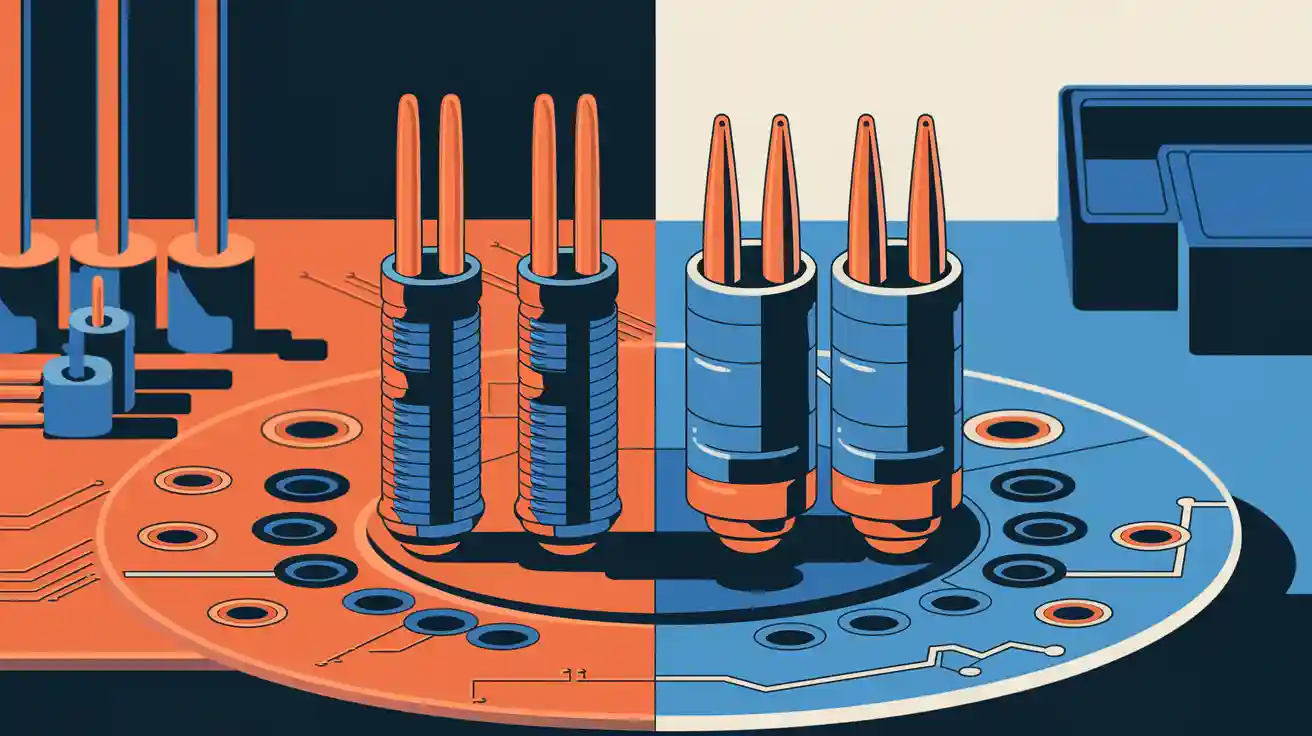
You may wonder about the difference between through-hole and surface mount technology. Through-hole parts have leads that pass through holes in a circuit board, while surface mount parts sit directly on the board’s surface. Your choice affects how easy your project is to build, how reliable it will be, and how much it costs. Think about your needs and goals to pick the right method.
Through-Hole Technology
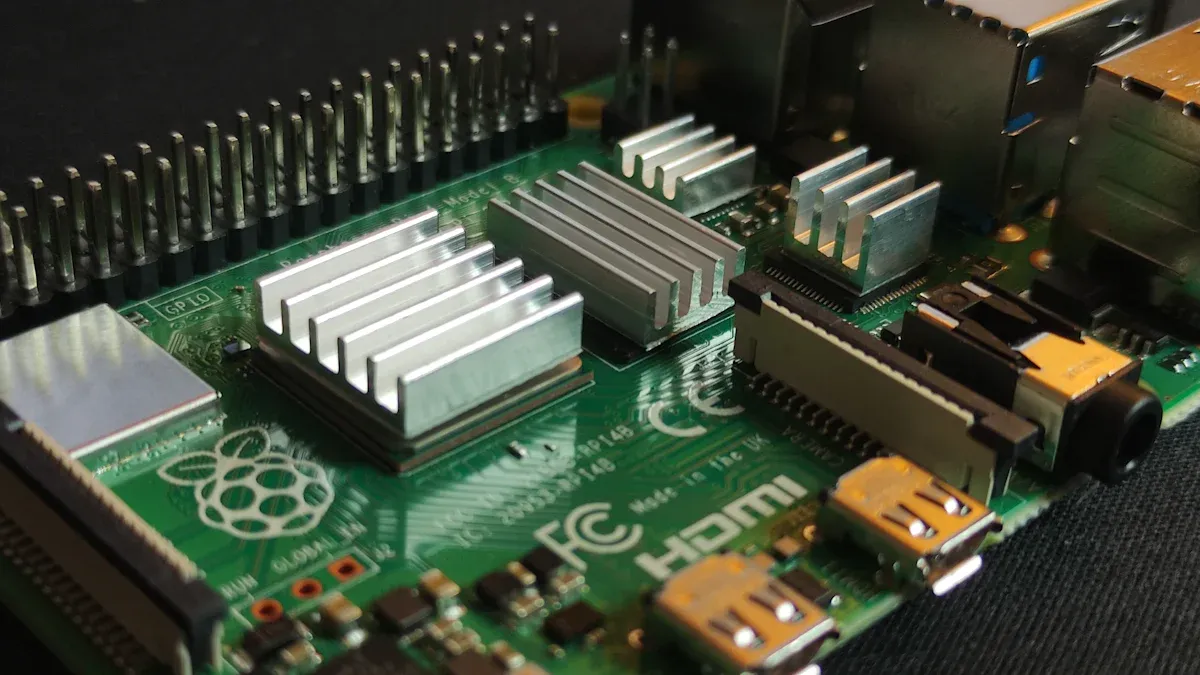
What Is Through-Hole?
You use through-hole technology when you want to attach electronic parts to a printed circuit board (PCB) by inserting their leads into holes. Through-hole mounting means you push the leads of each component through the board and then solder them on the other side. This method gives you strong mechanical bonds. Through-hole assembly works well for projects that need to handle stress or vibration. Many people choose through-hole mounting for prototypes and high-reliability products because it is easy to inspect and repair.
Tip: Through-hole technology helps you make sturdy connections that last a long time.
Through-Hole Assembly
Through-hole assembly starts with placing each component’s leads into the correct holes on the PCB. You can do this by hand or with a machine. After you finish placing the parts, you flip the board and solder the leads to pads on the bottom. Through-hole mounting makes it simple to check your work and fix mistakes. If you need to replace a part, you can remove it without damaging the board. Through-hole assembly is slower than some other methods, but it gives you more control. You often see through-hole assembly in power supplies, audio equipment, and other devices that need strong connections.
Steps in through-hole assembly:
Insert leads into holes.
Flip the board.
Solder leads to pads.
Inspect and test.
Axial vs. Radial Leads
You will find two main types of leads in through-hole technology: axial and radial. Axial leads run straight through the body of the component, so you bend them to fit into holes on the board. Radial leads both come out from the same side of the part, making them stand upright on the PCB. Through-hole mounting uses both types, but your choice depends on your project’s needs. Axial leads work well for tight spaces, while radial leads make assembly faster. Through-hole assembly lets you pick the best lead type for your design.
Surface Mount Technology
What Is Surface Mount?
Surface mount technology lets you put parts on top of a circuit board. You do not need to make holes in the board. You stick surface mount devices onto pads on the board. This way, you can use less space for more parts. Surface mount technology helps you make small and light electronics. You see surface mount parts in phones, computers, and new gadgets. Surface mounting is quick and works well for making lots of things.
Note: Surface mount technology changed how people build electronics. It helps make projects smaller and lighter.
Surface Mount Assembly
Surface mount assembly means putting and soldering parts onto the board. Machines called surface mount equipment can do this fast. First, you put solder paste on the pads. Next, you set the surface mount parts on the paste. Then, you heat the board in a special oven. The solder melts and sticks the parts to the board. Surface mount assembly is good for making many boards at once. This process saves time and money.
Common SMD Types
There are many kinds of surface mount devices, or SMDs. Each kind has its own shape and size. Here are some common surface mount packages:
SMD Type | Description |
|---|---|
1206 | Medium size, easy to hold |
0805 | Small, fits tight spots |
SOIC | Used for chips and ICs |
QFP | Flat, has many pins |
You choose surface mount devices by size and what they do. Surface mount technology gives you lots of choices for building good circuits that do not cost much.
Through-Hole vs. Surface Mount: Key Differences

Mounting Process
You will notice big differences in the mounting process for through-hole and surface mount technology. In through-hole, you push each lead through a hole in the PCB. You then solder the lead on the other side. This process takes more time because you must handle each part one by one. Surface mounting uses a different process. You place each part directly on the board’s surface. Machines can do this step very fast. The assembly process for surface mount works well for making many boards at once. You will find that the process for through-hole is slower but gives you strong connections.
Tip: If you want a fast and automated process, surface mounting is the better choice.
Size and Density
When you look at size and density, you see clear differences in assembly. Through-hole parts are bigger and need more space for each hole. This limits how many parts you can fit on your board. Surface mount parts are much smaller. You can place them close together on both sides of the board. This means you can make smaller and lighter devices. If you want to build a compact project, surface mounting gives you more options.
Feature | Through-Hole | Surface Mount |
|---|---|---|
Part Size | Larger | Smaller |
Board Density | Lower | Higher |
Double-Sided? | Rare | Common |
Assembly and Soldering
The assembly process for through-hole uses hand tools or simple machines. You insert each lead, flip the board, and solder. This process is easy to check by eye. Surface mount assembly uses machines to place parts and ovens to melt solder paste. The differences in assembly mean that surface mounting is faster and better for mass production. Through-hole assembly takes longer but lets you fix mistakes more easily. You should choose the assembly process that fits your project’s needs.
Through-hole: Good for small batches and repairs.
Surface mount: Best for large batches and speed.
Repairability
You will find that through-hole boards are easier to repair. You can remove and replace parts without much risk. The holes and leads make it simple to pull out a bad part and put in a new one. Surface mount boards are harder to fix. The small size and tight spacing make it tricky to remove parts. You may need special tools for surface repairs. If you want to fix your board often, through-hole is the better choice.
Reliability
Reliability is important for every project. Through-hole connections are strong because the leads go through the board. This makes them good for products that face stress or vibration. Surface mount parts stick to the surface only. They work well in most cases, but they may not handle heavy stress as well as through-hole. You should use through-hole for high-reliability needs, like aerospace or military gear. Surface mounting works well for most consumer electronics.
Space and Weight
Space and weight matter when you design modern electronics. Through-hole parts take up more space and add weight to your board. Surface mount parts are lighter and smaller. You can fit more features in less space. If you want a slim and light device, surface mounting is the best choice. Through-hole works better for larger, heavier products.
Note: Think about your project’s size and weight needs before you pick a component mounting method.
Pros and Cons
Through-Hole Pros and Cons
When you choose through-hole technology, you get strong and reliable connections. This method works well if you want to build something that can handle stress or vibration. You can repair or replace parts easily. Many people use through-hole for prototypes or projects that need to last a long time.
Pros:
Strong mechanical bonds
Easy to inspect and repair
Good for high-stress environments
Cons:
Larger parts take up more space
Slower assembly process
Not ideal for small or lightweight devices
If you need to fix your board often, through-hole makes repairs simple. However, the disadvantages of tht include bigger size and slower production.
Surface Mount Pros and Cons
Surface mount technology gives you many benefits. You can fit more parts on your board and make your device smaller and lighter. Machines can place surface mount parts quickly, which saves time and money. The advantages of smt help you build modern electronics like smartphones and tablets.
Pros:
High board density
Fast, automated assembly
Small and lightweight designs
Cons:
Harder to repair or replace parts
Needs special tools for assembly and repair
Not as strong as through-hole in high-stress uses
Small size makes handling tricky
The disadvantages of smt matter if you want to fix your board by hand or need strong connections. You should weigh the pros and cons before you pick a method. The advantages of smt work best for mass production, but the disadvantages of smt can make repairs harder.
Method | Pros | Cons |
|---|---|---|
Through-Hole | Strong, easy to repair | Large, slow, less compact |
Surface Mount | Compact, fast, efficient | Hard to repair, less strong, tricky |
Cost Comparison
Component Costs
There is a big cost difference between through-hole and surface mount parts. Through-hole parts usually cost more. They are bigger and need more material. Surface mount devices are smaller. Companies make lots of them at once. This makes surface mount parts cheaper for most projects. If you want to spend less, pick surface mount parts. You can fit more parts on a board with surface mount technology.
Component Type | Average Cost | Size |
|---|---|---|
Through-Hole | Higher | Larger |
Surface Mount | Lower | Smaller |
Tip: Surface mount parts help you spend less on your project.
Assembly Costs
Assembly costs also show a big difference. Through-hole assembly takes more time. You must put in each lead and solder it by hand or with simple tools. This means you pay more for labor. Surface mount assembly uses machines. They place and solder many parts at once. You finish boards much faster with surface mount technology. If you want to make lots of boards, surface mount saves you time and money.
Through-hole assembly: Slower, needs more workers
Surface mount assembly: Faster, uses machines, less work
Repair Costs
Repair costs depend on how easy it is to fix your board. Through-hole boards are easier to repair. You can take out and put in parts with simple tools. This keeps repair costs low. Surface mount boards are harder to fix. The parts are small and close together. You may need special tools and skills. This makes repairs cost more. If you need to fix boards often, through-hole helps you save money.
Note: Think about repair costs before you pick a mounting method.
Choosing the Right Technology
Application Factors
You need to think about several factors before you pick a mounting method for your project. Start by looking at your project’s size and weight. Small devices like smartphones need compact parts. Large machines can use bigger components. Check how many boards you want to make. If you plan to build many boards, you should look for a fast and automated process. Consider how often you will need to repair or replace parts. Some projects need strong connections that last a long time. Others need quick assembly and low cost.
Tip: Write down your project’s needs before you choose a mounting method. This helps you make a smart decision.
When to Use Through-Hole
You should use through-hole technology when you want strong and reliable connections. This method works well for products that face stress or vibration. If you need to repair your board often, through-hole makes it easy to remove and replace parts. You see this method in power supplies, audio equipment, and military devices. Choose through-hole for prototypes or projects that need to last many years.
Common uses for through-hole:
Prototypes and testing boards
High-reliability equipment
Products exposed to vibration or force
Projects that need easy repairs
When to Use Surface Mount
Surface mount technology fits best when you want small, light, and modern devices. You can place many parts close together and use both sides of the board. This method works well for mass production. Machines can assemble boards quickly and save you money. You see surface mount in phones, computers, and smart gadgets. Pick surface mount when you want to build many boards fast and keep costs low.
Use Case | Best Method |
|---|---|
Small devices | Surface mount |
Large machines | Through-hole |
Fast production | Surface mount |
Easy repair | Through-hole |
Note: Match your project’s needs with the right technology. This helps you build better electronics.
You have learned the main differences between through-hole and surface mount technology. Through-hole makes strong connections that you can fix easily. Surface mount helps you build devices that are smaller, faster, and cost less.
Quick Decision Guide:
Use through-hole if you want strength, simple repairs, or are making prototypes.
Use surface mount if you need small size, quick assembly, or want to make many devices.
Think about what your project needs. If you are not sure, ask an electronics expert for help.
FAQ
What is the main reason to choose through-hole over surface mount?
You should pick through-hole when you want strong, reliable connections. This method works best for projects that face stress or need easy repairs. Many people use through-hole for prototypes or heavy-duty equipment.
Can you mix through-hole and surface mount parts on one board?
Yes, you can use both types on the same PCB. This approach is called mixed technology. It lets you use the strengths of each method. You might see this in complex or custom electronics.
Do you need special tools for surface mount assembly?
You often need special tools for surface mount work. Machines place tiny parts quickly. For repairs, you may use tweezers, magnifiers, or hot air tools. Through-hole assembly usually needs only basic hand tools.
Which method is better for beginners?
Through-hole is easier for beginners. The parts are bigger and simpler to handle. You can see your work clearly and fix mistakes without much trouble. Surface mount parts are small and can be tricky to solder by hand.
Are surface mount devices less reliable than through-hole?
Surface mount devices work well in most cases. They may not handle heavy stress as well as through-hole parts. For everyday electronics, surface mount is reliable. For high-vibration or mission-critical uses, through-hole gives you extra strength.