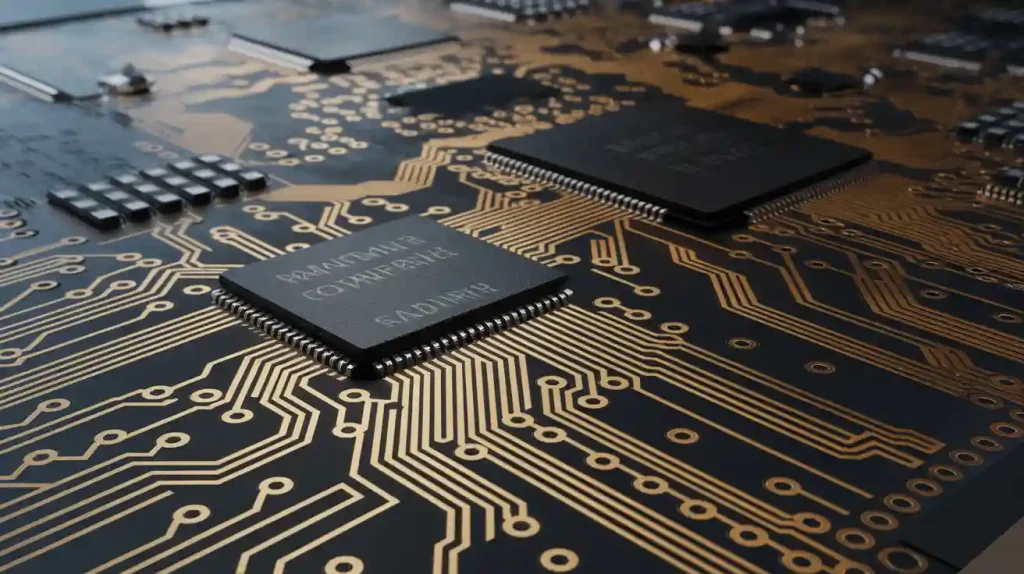
Surface-Mount Device (SMD) components are key in modern electronics. These small components stick directly to a printed circuit board (PCB), eliminating the need for old-style through-hole soldering. This design saves space on PCBs, helping create smaller, more efficient devices.
Using SMD components also simplifies manufacturing. For example:
Buying in bulk lowers the cost of each component.
Utilizing the same components in designs allows for bulk discounts.
Selecting components that machines can place easily speeds up production.
The various SMD package sizes make them extremely versatile. From tiny resistors to complex circuits, these sizes accommodate many applications. The global market for SMD components highlights their importance, growing from $10.5 billion in 2023 to an estimated $17.5 billion by 2033, with a yearly growth rate of 5.1%.
Key Takeaways
SMD parts save space on boards, making devices smaller and better.
Picking the right SMD size is important for working well; small sizes fit tiny gadgets, big ones handle more power.
SMD parts make building easier, saving money with bulk buying and faster making.
Tantalum capacitors and SMD transistors are key for today’s electronics, giving steady and good performance in many uses.
SMD connectors link parts on boards, giving strong and steady links in fast electronics.
SMD Package Sizes for Passive Components and Diodes

Overview of Resistors, Capacitors, and Diodes
Resistors, capacitors, and diodes are key parts of circuits. They are found in almost all devices, like phones and machines. Resistors manage how much current flows in a circuit. Capacitors hold and release energy when needed. Diodes let current move in only one direction. These parts come in different SMD packages, making them great for small designs.
SMD resistors and capacitors save space and work better in circuits. Diodes are often used to fix signals or protect circuits. The many SMD package options help you pick the right size and performance for your needs.
Common SMD Package Sizes for Resistors and Capacitors
Resistors and capacitors come in various SMD sizes for different uses. Tiny sizes, like 01005, fit small gadgets. Bigger ones, like 1206, handle more power. Here’s a table of common SMD sizes and their uses:
Size Code | Dimensions (mm) | Applications |
|---|---|---|
01005 | 0.4 x 0.2 | Very small devices |
0201 | 0.6 x 0.3 | Phones, wearables |
0402 | 1.0 x 0.5 | Home electronics |
0603 | 1.5 x 0.8 | Cars, factories |
0805 | 2.0 x 1.3 | Power systems |
1206 | 3.2 x 1.6 | High-power circuits |
For diodes, popular SMD sizes include SMA, DO-214, and SOD-123. These sizes are made for tasks like fixing signals or managing power. The chart below shows the sizes of common SMD diode packages:

Applications of Passive SMD Components
SMD resistors and capacitors are used in many devices. They are important in electronics, cars, and factory machines. For example:
Resistors: Help control voltage and limit current in circuits.
Capacitors: Store energy, filter signals, and connect circuits.
SMD diodes are crucial for fixing signals, controlling voltage, and protecting circuits. Smaller designs have made these parts even better. They are now used in smart devices and modern car systems.
The market for passive components is growing fast. Experts say it will hit $345.7 billion by 2034. This growth is due to IoT and the need for smaller, efficient parts. New packaging ideas also improve energy use and power control.
Tantalum Capacitors and Their SMD Package Sizes
Overview of Tantalum Capacitors
Tantalum capacitors are small and very reliable. They use tantalum metal, which stores a lot of charge in little space. These capacitors are popular in modern electronics because they last long and stay stable. They work great in low-voltage and high-frequency circuits. Unlike other types, they handle extreme conditions well. This makes them perfect for important uses.
Common Tantalum Capacitor Package Types and Dimensions
Tantalum capacitors come in different SMD package sizes. The most common ones are A, B, C, D, and E cases. Each size has unique dimensions and features. Here’s a simple table:
Package Code | Dimensions (mm) | Voltage Range | Applications |
|---|---|---|---|
A | 3.2 x 1.6 x 1.6 | 4V – 50V | Small gadgets |
B | 3.5 x 2.8 x 1.9 | 4V – 50V | Everyday devices |
C | 6.0 x 3.2 x 2.5 | 6V – 50V | Power systems |
D | 7.3 x 4.3 x 2.8 | 6V – 50V | Factory tools |
E | 7.3 x 4.3 x 4.1 | 10V – 50V | High-power machines |
These sizes help you pick the right capacitor. You can balance size, voltage, and performance for your project.
Applications in Consumer Electronics
Tantalum capacitors are important in electronics. Their small size and reliability make them great for tight spaces. They are used in phones, laptops, and tablets. They help with power filtering, decoupling, and smoothing. These tasks keep devices running smoothly.
In critical tools like pacemakers and medical machines, they are essential. They have low leakage current and high reliability. This ensures safety and accuracy in tough conditions. Picking the right SMD size improves performance and efficiency. Tantalum capacitors show how SMD parts meet modern tech needs.
SMD Transistor Packages
Small Outline Transistor (SOT) Packages
Small Outline Transistor (SOT) packages are very common for transistors. They are small, so they fit well in crowded PCB designs. SOT packages come in sizes like SOT-23, SOT-223, and SOT-89. Each size works best for certain tasks. For example, SOT-23 is great for low-power circuits. SOT-223 is better for handling more power.
SOT packages have great heat control. For instance, the HU3PAK package cools better than D2PAK and TO-LL. It keeps a lower temperature under the same power use. This reduces energy waste and boosts efficiency. SOT packages are a good choice for circuits needing good heat management.
Other Popular SMD Transistor Packages
Other SMD transistor packages include SOIC (Small Outline Integrated Circuit) and DFN (Dual Flat No-lead). SOIC packages are bigger than SOT but have more pins. This makes them useful for complex circuits like amplifiers and voltage regulators.
DFN packages are very small and have no leads, saving space on PCBs. They are great for tight designs like phones and wearables. These packages also touch the PCB directly, helping them stay cool. This keeps them working well, even in tough conditions.
Applications of SMD Transistors
SMD transistors are important in modern electronics. Their small size and smart design make them useful in many devices. They are used in cars, factories, and home gadgets. For example, they improve performance in low-noise amplifiers. In power circuits, they control voltage and current to keep devices running smoothly.
Tests show SMD transistors work well in real-life uses. For example, an X-band amplifier with SMD transistors showed great efficiency and heat stability. These features make SMD transistors a top choice for engineers building advanced circuits.
Integrated Circuit SMD Packages

Overview of IC SMD Packages
Integrated circuit SMD packages are crucial in modern electronics. They protect chips and connect them to circuit boards. Over time, these packages have improved for smaller and faster devices. Older designs used through-hole technology, which needed more space. This limited how well devices could perform. Today, high-density interconnect (HDI) technology is common. It allows for compact and powerful designs.
Here’s a simple timeline of IC SMD package advancements:
Key Development | Description | Impact |
|---|---|---|
Transition to HDI | Shifted from through-hole to HDI technology | Made devices smaller and more efficient |
Introduction of BGA | Used ball-grid arrays for connections | Reduced signal problems caused by inductance |
Chip-Scale Packages | Packages as small as the chip itself | Improved size and packaging efficiency |
Direct Chip Attachment | Leads placed directly on silicon | Boosted IC density and performance |
These changes made IC SMD packages essential for modern devices. They help create smaller gadgets without losing performance.
Common IC Package Types and Their Properties
IC SMD packages come in many types with different features. Picking the right one depends on size, pins, and heat control. Here’s a comparison of common types:
Package Type | Size Range (mm) | Pin Count Range | Pitch (mm) | Thermal Performance |
|---|---|---|---|---|
DIP | 6 x 4 to 64 x 14 | 8 to 64 | 2.54 | Low |
QFP | 4 x 4 to 40 x 40 | 32 to 256 | 0.4 to 1.0 | Moderate |
BGA | 5 x 5 to 50 x 50 | 100 to 1000+ | 0.5 to 1.27 | High |
CSP | 2 x 2 to 10 x 10 | 16 to 200 | 0.4 to 0.8 | High |
DIP packages are simple and easy to use but need more space. QFP and BGA packages are better for compact designs. BGA packages handle heat well, making them great for high-power uses. CSP packages are the smallest, perfect for phones and wearables.
Applications of IC SMD Packages
IC SMD packages are used in many industries. Their small size and efficiency make them very useful. In consumer electronics, they power phones, laptops, and gaming systems. In cars, they control sensors, entertainment, and engines.
In telecom, they process data in routers and switches. Medical tools like pacemakers and imaging machines depend on them for accuracy. Aerospace and defense systems use them for their toughness in harsh conditions.
Choosing the right IC SMD package improves performance, size, and cost. Whether for a simple gadget or a complex system, these packages offer flexibility and reliability.
SMD Connectors and Their Uses
Why SMD Connectors Matter in Electronics
SMD connectors are important for modern electronics. They help parts connect on a circuit board (PCB). These connectors make designs smaller but still work well. Their small size is perfect for crowded PCBs in phones, laptops, and IoT devices.
Picking the right connector prevents design mistakes. Work with suppliers early to match connectors to your needs. Some connectors must survive tough conditions, like chemicals or heat. Makers use strong materials and follow rules like RoHS and REACH. These rules stop harmful substances like lead and mercury. This keeps users and the planet safe.
SMA and SMB Connectors Overview
SMA and SMB connectors are common in high-frequency electronics. SMA connectors screw on tightly for a strong connection. They work well at microwave frequencies, up to 18 GHz. Some advanced SMA connectors handle up to 40 GHz. SMB connectors are smaller and snap on easily. They are good for frequencies up to 4 GHz.
Connector Type | Frequency Limit | Features |
|---|---|---|
SMA | Up to 18 GHz | Strong screw-on design, used in RF tools. |
SMB | Up to 4 GHz | Small snap-on design, used in testing gear. |
Both connectors are great for high-frequency and compact designs. They are key parts of modern electronics.
Uses in RF and Telecom Systems
SMD connectors like SMA and SMB are used in RF and telecom systems. SMA connectors are found in antennas, routers, and amplifiers. They work well in microwave systems up to 26/28 GHz or higher. As tech moves to 60 GHz, SMA connectors stay reliable and useful.
SMB connectors are used in testing tools. Their small size and easy use make them great for quick connections. They are also used in gadgets where saving space matters.
Choosing the right SMD connector improves how devices work. Whether for RF systems or telecom tools, these connectors offer flexibility and efficiency.
SMD parts are great for modern electronics. They are small and work well, making them perfect for tight designs. You can find them in gadgets, cars, and telecom systems. They handle high frequencies and have low resistance, which is great for 5G tech. These features also make them easy to install and very reliable.
When picking an SMD size, think about your project’s needs. Small sizes fit tiny devices, while big ones handle more power. Talk to suppliers early to choose the best size for your design.
FAQ
What does SMD mean in electronics?
SMD means Surface-Mount Device. These parts attach directly to a circuit board’s surface. Unlike older through-hole parts, SMDs save space and allow smaller designs.
How do I pick the right SMD size?
Think about your project’s needs. Tiny sizes, like 01005, fit small gadgets. Bigger ones, like 1206, handle more power. Check the datasheet for size and details to match your PCB.
Are SMD parts harder to solder than through-hole parts?
SMD parts are small and need careful soldering. Use tools like fine-tip soldering irons or reflow ovens to help. Beginners may find through-hole parts easier, but practice makes SMD soldering simpler.
Why are SMD parts common in modern electronics?
SMD parts are small, cheap, and work with machines. They reduce signal problems and allow dense PCB layouts. These features make them perfect for devices like phones and smartwatches.
Can I swap an SMD part for a through-hole part?
It depends on your circuit board. Through-hole parts need drilled holes, which SMD boards don’t have. Adapters might work but could lower performance. Always use parts that fit your board design.