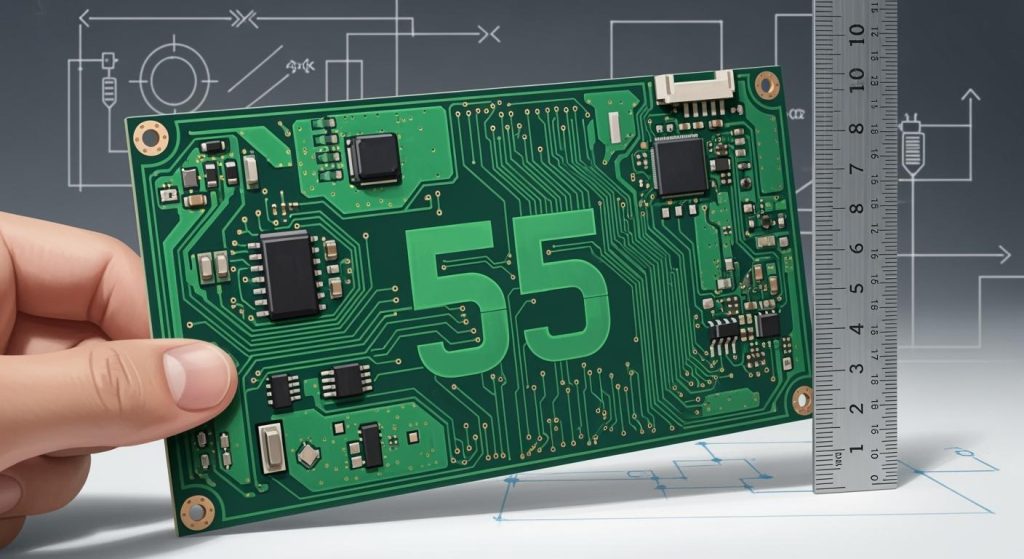
You have an important job when you pick the right substrate for semiconductor packaging. Your choice affects how well electricity moves, how heat is handled, and how small your devices can be. Today, abf substrates are a popular choice. These substrates have good electrical and thermal abilities. They work well with high frequencies. They also help make devices smaller. In 2022, abf made up about 83% of the total IC substrate market. More than 95% of FCBGA packages use abf. This shows abf is very useful for advanced uses.
Semiconductor Substrate Types
There are many substrate types in semiconductor packaging. Each one has special features and is good for different jobs. As technology gets better, more people use these materials. Let’s look at the main types you will find in this field.
ABF Substrate Overview
ABF substrate is important for advanced packaging. You see it in phones, electronics, and network gear. ABF lets you connect many parts in a small space. It also works with high-frequency signals. Devices can be thinner and smaller with ABF. You find ABF in cars, factories, hospitals, and even planes. This substrate gives strong electrical power and keeps heat steady. That is why many people pick ABF for their projects.
BT Substrate Overview
BT substrate helps manage heat and gives strong support. You use it in fast computers, network tools, and car electronics. BT substrate is also in home electronics, factory machines, and medical tools. It has a low dielectric constant and moves heat well. This keeps devices cool and working right. More industries want BT substrate because it is tough and can be used in many ways.
Key Properties | Common Uses |
|---|---|
Excellent thermal management | High-Performance Computing (HPC) |
Strong mechanical support | Networking Equipment |
Low dielectric constant | Consumer Electronics |
High thermal conductivity | Automotive Electronics |
Reliable electrical connectivity | Industrial and Aerospace Applications |
Ruggedness and reliability | Medical Devices |
Versatility in various industries | Data Storage |
Ceramic Substrate Overview
Ceramic substrate gives great electrical insulation and moves heat well. It is strong and does not react with chemicals. But ceramic can break easily and costs more to make. It is good for places that need careful work and steady parts. Still, it may not be right for every job.
Advantages | Disadvantages |
|---|---|
Exceptional Electrical Insulation | Brittleness |
High Thermal Conductivity | High Processing Costs |
Superior Mechanical Strength | Thermal Expansion Mismatch |
Strong Chemical Stability | High-Frequency Loss Limitations |
Precision Manufacturing | N/A |
Silicon Substrate Overview
Silicon substrate is still a top pick in this field. It gives good electrical results and handles heat okay. Big companies like Shin-Etsu Chemical and SUMCO Corporation make a lot of silicon substrates. Silicon works well for many normal uses.
Substrate Material | Thermal Conductivity (W/m-K) | Electrical Performance |
|---|---|---|
Silicon | 1.5-1.7 | Good |
Glass Substrate Overview
Glass substrate is very flat and smooth. It does not react with chemicals. You use glass for tiny devices and things with light. Glass keeps its shape in heat and does not expand much. But glass can break and is hard to work with. You may need new ways to stick parts together and better ways to handle heat if you use glass.
Advantages:
High flatness and low roughness
Excellent thermal stability
High dielectric constant and low loss
Strong chemical stability
High transparency
Environmentally friendly
Limitations:
Brittle and hard to process
Risk of breakage
Needs advanced bonding technology
Lower thermal conductivity
Higher costs
ABF Substrates vs. Other Materials
Electrical Performance
Modern semiconductor devices need strong electrical performance. ABF substrate helps signals stay clear and supports high-frequency signals. This makes your devices faster and more reliable. When you look at abf substrate and other materials, you notice big differences.
Material Type | Signal Integrity | High-Frequency Support | Applications |
|---|---|---|---|
ABF Substrates | Moderate | Good | Consumer electronics, IoT devices |
Inorganic Materials | Excellent | Excellent | High-performance computing, 5G |
ABF substrate is good for advanced packaging technology. It works well in consumer electronics and IoT devices. Inorganic substrates, like ceramics and silicon, have even better signal integrity and high-frequency support. These materials are used in high-performance computing and 5G. If you want lots of connections and low signal loss, abf substrate is a smart pick for ic substrate packaging.
Tip: ABF substrate can handle many pins and fast speeds. This makes it great for CPUs and GPUs.
Thermal Management
Thermal management keeps your devices safe and working right. ABF substrate has medium thermal conductivity and great dielectric properties. This means your ic substrate can handle heat and keep signals stable.
Material | Thermal Conductivity | Dielectric Properties | Applications |
|---|---|---|---|
ABF | Moderate | Excellent | High-density interconnects, CPUs, GPUs |
Ceramics | Exceptional | Good | High-power applications, RF modules, LED packaging |
Ceramic substrate is very good at moving heat. You use ceramics for high-power jobs and RF modules. ABF substrate is used in advanced packaging when you need both heat control and strong insulation. You see abf substrate in high-density ic substrate designs for CPUs and GPUs. This helps manage heat in small devices.
Density and Miniaturization
People want smaller and thinner devices. ABF substrate helps make this possible. It lets you use thinner lines and fit more pins in a small space. This is important for advanced packaging and growing the ic substrate market.
Feature | ABF Substrates | BT Resin |
|---|---|---|
Line Thickness | Thinner lines | Thicker lines |
Pin Count | Higher pin count | Lower pin count |
Transmission Speed | Improved transmission speeds | Standard transmission speeds |
Signal Loss | Reduced signal loss | Higher signal loss |
Application Suitability | High-performance applications | General applications |
ABF substrate can fit thousands of pins in a small area. This saves space compared to regular PCBs.
IC substrate wiring with abf substrate can have lines as thin as 8 microns.
Thinner electronics need smart use of space. ABF substrate lets you build high-density ic substrate designs. You see this in phones, smartwatches, and other small devices. Advanced packaging technology uses abf substrate for high pin counts and fast speeds.
Mechanical Properties
Mechanical strength and reliability are important for packaging. ABF substrate gives good reliability and a low coefficient of thermal expansion (CTE). This helps your ic substrate avoid warping and damage.
Metric | ABF Substrates | Other Substrate Materials |
|---|---|---|
Young’s Modulus (E) | [Value] | [Value] |
Coefficient of Thermal Expansion (CTE) | [Value] | [Value] |
Warpage Reliability | [Value] | [Value] |
ABF substrate gives stable mechanical properties. You see less warping and better reliability in advanced packaging. Ceramic substrate is strong but can break easily. Glass substrate is flat but also breaks easily. BT substrate is tough but may not be as good as abf substrate for small designs. ABF substrate gives a good mix of strength and flexibility in ic substrate packaging.
Note: ABF substrate is used in advanced packaging and high pin count jobs. The market for abf substrates is growing because of these advantages.
ABF Material Properties
CTE and Compatibility
It is important to pick an abf substrate that matches other materials in your device. The coefficient of thermal expansion (CTE) shows how much a material changes size when it gets hot or cold. ABF substrate has a very low CTE. This means it does not get bigger or smaller much when the temperature changes. Your chips will not bend or crack as easily. ABF material works well with copper. This helps you make strong connections inside your device. You can count on abf substrate to keep your circuits safe, even if your device heats up or cools down fast.
Heat Resistance
Your devices need to work in hard places. ABF substrate is special because it can handle high heat. The ABF GZ series is a new kind of abf material. It takes in less water and has a lower dielectric constant than older types. This means it stays stable when hot. Your abf substrate will keep working, even if your device gets very warm. Many other substrates cannot handle heat as well. You can use abf in fast chips like CPUs and GPUs. This makes abf substrate a great pick for powerful electronics.
Electrical Insulation
Electrical insulation matters a lot in semiconductor packaging. ABF substrate gives great insulation between tiny circuits in your chip. Here is what abf substrate does for you:
It protects your chip from short circuits.
It keeps each part of your chip connected right.
It lets you make very small circuits, so your device runs faster.
It helps your device work well, even in tough places.
With abf substrate, you can build smart technology that lasts longer and works better. You get safety and strong performance together.
Cost and Manufacturing
Production Costs
When you choose a substrate, you need to think about the cost. ABF substrates usually cost more than BT resin or glass substrates. This happens because ABF uses advanced materials and needs special manufacturing steps. You see higher costs in both raw materials and the process itself.
Substrate Type | Material Cost | Manufacturing Cost | Total Cost Level |
|---|---|---|---|
ABF | High | High | High |
BT Resin | Medium | Medium | Medium |
Ceramic | High | Very High | Very High |
Silicon | Medium | High | High |
Glass | Low | Medium | Medium |
You pay more for ABF, but you get better electrical performance and support for high-density designs. If you work on advanced chips, you may find the extra cost worth it. For basic electronics, you might pick a cheaper substrate.
Tip: If you want to lower costs, you can use BT resin for less complex devices. ABF works best for high-end products.
Scalability
Scalability means how well you can make more substrates as demand grows. ABF substrates need precise tools and clean rooms. You must follow strict steps to keep quality high. This can slow down production if you want to scale up fast.
You see BT resin and glass substrates scale more easily. These materials use simpler processes. You can make more units quickly and at a lower cost.
ABF: Best for advanced, high-volume chips, but needs careful scaling.
BT Resin: Good for mass production of standard devices.
Glass: Works well for special uses and can scale with new technology.
If you plan to grow your business, you must think about how easy it is to scale your chosen substrate. ABF gives you top performance, but you need to invest in better equipment and skilled workers. You should weigh these factors before making your choice.
Application Suitability
High-End Processors
ABF substrates are used in very powerful chips today. Companies pick them for advanced packaging in top processors. For example, Apple’s M1 Ultra chip uses abf substrates. NVIDIA’s server GPU Hopper also uses them. These chips show how advanced packaging helps save space and boost speed. With abf substrates, you can fit more connections in less space. This makes processors faster and helps them stay cool. Signal quality is better, which is key for CPUs and GPUs. As more people want high-end processors, abf substrates will be needed even more.
Apple’s M1 Ultra chip
NVIDIA’s server GPU Hopper
You can count on abf substrates for great results in high-performance computing.
Memory and RF
Memory and RF devices need strong electrical and heat control. Abf substrates help reach these goals. They let you make thin layers and tiny lines. This makes memory chips and RF modules smaller and work better. You can see the difference when you compare abf substrates to other materials.
Property | ABF Substrates | Other Materials (e.g., FR4) |
|---|---|---|
Coefficient of Thermal Expansion (CTE) | Low, like copper and PTFE | Higher, especially in FR4 composites |
Dielectric Constant (Dk) | Good for RF uses | Usually higher in standard materials |
Fabrication Capability | Can make very fine lines | Not as good for fine lines |
Thickness | Thinner rolls are possible | Thicker and harder to use |
Abf substrates are good for high-density interconnects. They work well in advanced packaging for new chips. You also get low-temperature processing, which helps when joining layers.
Other Applications
Abf substrates are used in many new and growing areas. Smaller devices need substrates that fit lots of parts close together. Abf substrates handle fast data, so they are great for 5G and IoT. Cars use abf substrates because they are tough and stable in heat. You see them in ADAS and electric vehicles. Flexible electronics, foldable screens, and wearables also use abf substrates. Their flexibility and strength make them a smart pick for new technology.
Smaller consumer electronics
Fast data for 5G and IoT
Car electronics like ADAS and EVs
Flexible and wearable devices
As technology gets better, abf substrates will be used in even more areas.
Pros and Cons Summary
When you pick a substrate for your project, you should look at what each material does well and where it falls short. The table below shows the main good and bad points of ABF substrates and other types like BT resin, ceramic, silicon, and glass. This makes it simple to compare them and choose what fits your needs best.
Substrate Type | Pros | Cons |
|---|---|---|
ABF | – Great for high-frequency and high-speed signals | – Higher cost |
BT Resin | – Lower cost | – Not as good for high-frequency signals |
Ceramic | – Excellent heat dissipation | – Brittle and can break |
Silicon | – Good electrical performance | – Moderate heat handling |
Glass | – Very flat and smooth | – Brittle and hard to process |
Tip: If you want your chip to send signals fast and clear, ABF substrates are the best. They also help your device stay cool and work well for a long time. You can make small and complex designs with lots of connections using ABF substrates. That is why they are great for advanced packaging.
Key decision factors to consider:
Do you need your device to work fast and handle high frequencies?
Will your design have lots of connections and tricky paths?
Is keeping your device cool very important?
Do you need to save money or make lots of devices quickly?
If you think about these questions, you can find the best substrate for your project. ABF substrates are a top pick when you want your device to be strong and work really well.
Industry Trends
Market Adoption
ABF substrates are becoming more popular in semiconductors. The ABF substrate market could be worth $9.1 billion in 2024. Experts think it will grow by 8.2% each year until 2033. By then, the market might reach $18.1 billion. This is because people want better semiconductor packaging. Many areas need this, like consumer electronics and telecom.
Many things help this growth:
More people want advanced semiconductor packaging.
High-performance computing devices are used more.
Microelectronics are getting better quickly.
There are more IoT devices at home and work.
5G networks are becoming common.
Big companies like Intel, AMD, and NVIDIA use ABF substrates in new chips. 5G and self-driving cars make this trend even stronger. More companies now try to make and sell these substrates.
Future Outlook
The ABF substrate market will keep growing quickly. Experts think it will grow a lot in the next five years. The table below shows what some sources expect for the market:
Source | 2023 Value | 2030 Projected Value | CAGR (%) |
|---|---|---|---|
Kings Research | $998.7 million | $4,399.5 million | 20.10% |
Intel Market Research | $5.16 billion | $10.2 billion | 9.86% |
Market Report Analytics | $2 billion | $4 billion | 15% |
You will see more ABF substrates in new devices as technology gets better. People want chips that are smaller, faster, and more reliable. ABF substrates will be important for new products, like smartphones and smart cars. In the future, ABF technology will help make better electronics and bring new ideas to many industries.
ABF substrates work best when you need fast signals and strong heat control. They are also good for small, packed designs. If you want your project to be very powerful, ABF is a smart choice. For simple electronics, BT resin or glass might be better. As tech gets better, new resins and more machines will change things in the future.
Key Drivers/Trends | Description |
|---|---|
Miniaturization | Devices are getting smaller and smarter. |
5G and IoT Growth | Fast networks need better substrates. |
Eco-friendly Materials | Green choices are becoming important. |
FAQ
What makes ABF substrates better for high-end chips?
ABF substrates give you clear signals and many connections. This helps high-end chips work faster and stay cool. ABF is great for CPUs, GPUs, and other advanced devices.
Can you use ABF substrates in regular consumer electronics?
You can use ABF substrates in normal electronics, but they cost more. For simple gadgets, people often choose BT resin or glass. ABF is best when you need fast speed and lots of connections.
How do ABF substrates handle heat compared to other materials?
ABF substrates are good at handling heat. They help your device stay steady when used a lot. Ceramics move heat even better, but ABF gives a good mix of heat control and electrical power.
Are ABF substrates eco-friendly?
ABF substrates use special materials. Some companies now try to make them in greener ways. You should ask your supplier if you want eco-friendly choices. The industry is working toward more earth-friendly options.