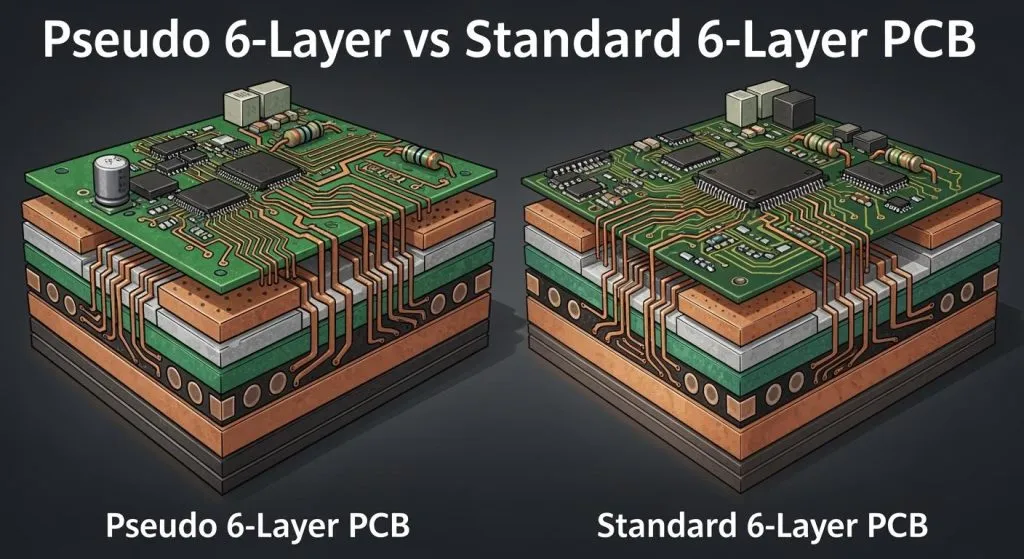
Heavy copper pcb technology is very important for strong power systems. New energy vehicles use these pcb solutions to meet higher power needs. They also help the vehicles work well all the time. Battery systems, power distribution, and advanced controllers need to handle strong current. They also need to manage heat well and be very reliable. In the last five years, more people want heavy copper pcb in cars. This is because electric vehicles and new energy vehicles are becoming more popular.
Aspect | Evidence Summary |
|---|---|
Market Growth (2019-2024) | The heavy copper PCB market has grown steadily. This is because more people are buying electric vehicles and cars. |
Market Size 2023 | The market was about USD 1.59 billion in 2023. Another report says it was about USD 1.2 billion. |
Projected Market Size 2032 | The market may reach between USD 2.1 billion and USD 2.5 billion. |
CAGR (2024-2032) | The market may grow by about 5.16% to 6.5% each year. |
Key Market Driver | More people are buying electric vehicles. These vehicles need heavy copper PCBs for strong electronic systems. |
Automotive Segment Market Share | In 2023, cars had the biggest share of the market. This is because of electric vehicles and self-driving cars. |
Additional Drivers | People want PCBs that work well, stay cool, and carry electricity in tough places. |
Key Takeaways
Heavy copper PCBs have thick copper layers. They can carry more current than regular PCBs. They also manage heat better. This makes electric vehicles safer. It also makes them work better.
These PCBs help with battery management and motor control. They also help with charging and power distribution. They handle high power and heat well. This is important in tough car conditions.
Heavy copper PCBs last a long time. They do not get damaged easily by heat, vibration, or moisture. This helps electric vehicles work well for many years.
Advanced designs like chip embedding and copper inlay help a lot. They make PCBs smaller and stronger. They also help move heat away faster. This supports new ideas for electric vehicles.
Heavy copper PCBs cost more money. But they work better and last longer. Good design and smart manufacturing can help keep costs down.
Performance Impact
Current Handling
Heavy copper PCBs help electric vehicles carry more current. These boards use thick copper layers, starting at 4 oz per square foot. Some boards have up to 14 oz of copper. This lets them carry up to 200 amps in each channel. Most regular PCBs can only handle less than 10 amps. The thick copper lowers resistance. This makes the current flow safer and more efficient. Battery management and motor control units need this high current.
Feature | Heavy Copper PCB | Standard PCB |
|---|---|---|
Copper Thickness | 4 oz – 14 oz per square foot | 0.5 oz – 2 oz per square foot |
Current-Carrying Capacity | Up to 200 A per channel | Typically below 10 A per channel |
Thermal Resistance | Lower resistance, better heat dissipation | Higher resistance, prone to heat buildup |
Mechanical Durability | High resistance to thermal cycling and mechanical stress | Lower durability under thermal/mechanical stress |
Heavy copper PCBs are good for electric vehicles. They help carry lots of current and work well in tough jobs.
Thermal Management
Thermal management is very important in electric vehicles. Heavy copper PCBs spread heat well because of their thick copper. The copper can be from 2 oz to 20 oz per square foot. This helps carry more current and keeps things cool. Special tricks like thermal vias, copper planes, and metal core layers move heat away from parts. This stops hot spots and keeps the car running steady, even when working hard.
Aspect | Measurable Effect / Detail |
|---|---|
Copper Thickness | ≥4 oz supports current above 40A, enhancing current capacity and heat dissipation |
Thermal Conductivity | Metal-core PCBs: 120–180 W/m·K vs. standard FR4: 0.25–0.35 W/m·K |
Thermal Management Techniques | Use of thermal vias, copper planes, heat sinks, and metal core layers |
Mechanical Stability | Symmetrical multilayer stack-ups and high Tg materials reduce thermal expansion mismatch |
CAD thermal simulations and IR thermography validate heat dissipation |
These features help the board resist high temperatures. They also make sure heat moves away fast. This is important for safety and performance in electric vehicles.
Reliability
Reliability means heavy copper PCBs last a long time in electric vehicles. These boards can handle over 1,000 hot and cold cycles from -40°C to 125°C. They do not break apart or peel. They can take strong shaking above 10G. They also do not rust in wet or salty places. Special finishes like ENIG help the board last 30% longer. Thermal sensors watch the temperature all the time. This helps fix problems before they get worse and cuts breakdowns in half.
Reliability Metric | Description & Thresholds | Relevance to EV Environments & Standards |
|---|---|---|
Accelerated Stress Testing | ASTM D149-compliant, reduces validation costs by 30% while meeting ISO 26262. | Ensures safety compliance and cost-effective validation. |
Thermal Cycle Endurance | Withstands 1,000+ cycles from -40°C to 125°C without delamination. | Meets ISO 26262 ASIL D; reduces field failure risk by 60%. |
Vibration Resistance | Endures 10G+ vibrations using rigid substrates and 6oz+ copper planes. | Ensures 99.5% uptime in rugged conditions. |
Corrosion Resistance | ENIG finish resists moisture and chemicals, extending lifespan by 30%. | Critical for humid or salt-spray environments. |
Predictive Maintenance | Embedded thermal sensors monitor junction temperatures in real time. | Reduces outages by 50% and extends ECU lifespan. |
Heavy copper PCBs are very reliable. They help electric vehicles work well for a long time.
Heavy Copper PCB Basics
Definition
A heavy copper pcb has much thicker copper layers than a regular pcb. If a printed circuit board has 3 ounces or more of copper per square foot, it is called heavy copper. Most heavy copper pcbs have between 3 oz and 10 oz of copper per square foot. Some special boards can have up to 200 oz of copper. Engineers measure copper thickness in ounces per square foot. This helps them compare different printed circuit boards. The extra copper lets the pcb carry more current and handle more heat. This makes it good for electric vehicles and other tough uses.
Heavy copper pcb: 3 oz or more copper per square foot
Typical range: 3 oz to 10 oz per square foot
Extreme copper: 20 oz to 200 oz per square foot
Copper thickness is the main way to define heavy copper pcbs
Note: There are no strict rules, but most experts say 3 oz or more is heavy copper.
Key Features
Heavy copper pcbs are special because they meet the needs of modern vehicles. These boards use thick copper layers to carry high current and get rid of heat. They are also strong, so they can last in tough car conditions. Makers use special ways like heavy copper graphics etching and gap filling to keep the circuits strong. They also use films that stop rust and fill the board with resin to stop holes from forming.
Feature | Heavy Copper PCBs | Conventional PCBs |
|---|---|---|
Copper Thickness | Greater than 70μm, up to 40 oz | Typically 35–70μm |
Current Handling | Handles high current without overheating | Limited current capacity |
Heat Dissipation | Acts as a heat sink for better cooling | Less effective at cooling |
Manufacturing Process | Needs special etching, gap filling, and strong films | Standard fabrication methods |
Voltage Tolerance | High voltage tolerance, resists burnout | Lower voltage tolerance |
Reliability in Harsh Conditions | Works well under shock, vibration, and humidity | Less robust in tough environments |
Heavy copper pcbs help electric vehicles stay safe and work well. Their strong build gives high power, better cooling, and long life, even in rough places.
Applications of Heavy Copper PCBs
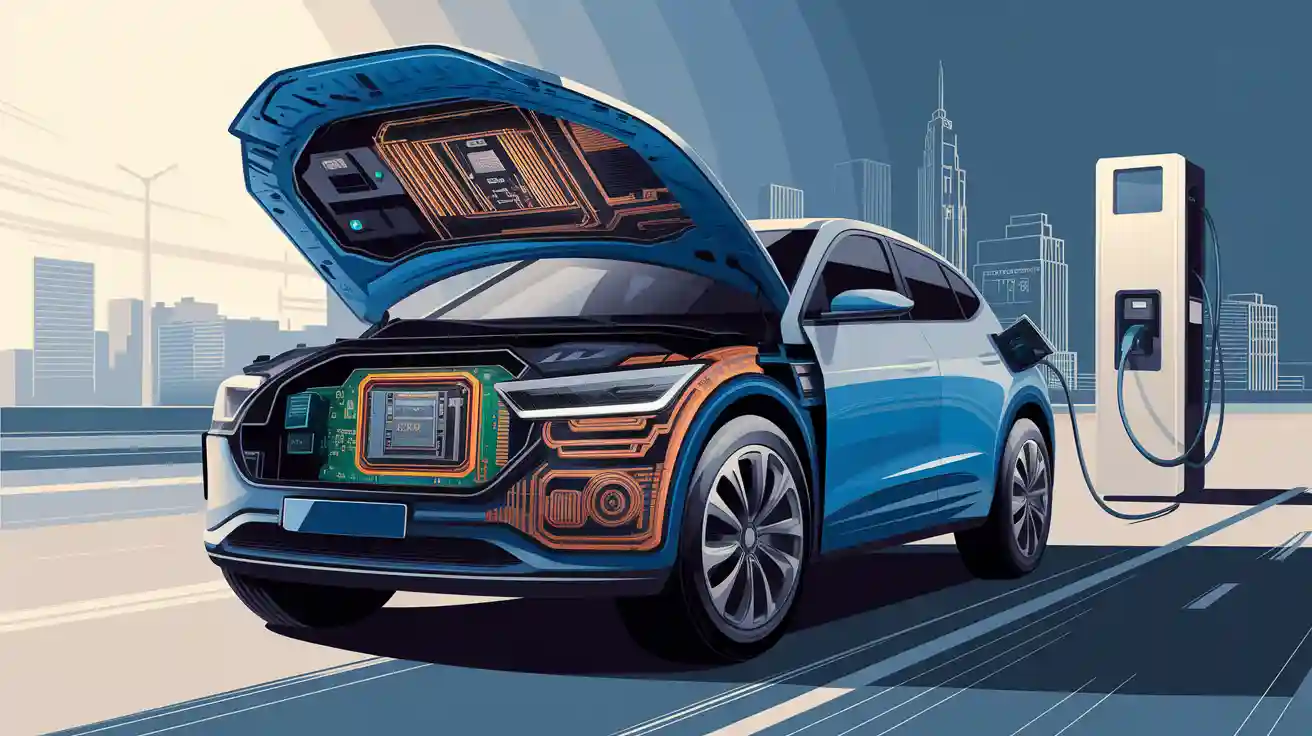
Heavy copper PCBs are very important in cars. They are used a lot in electric vehicles and new energy vehicles. These boards help with high power jobs. They can carry a lot of current, keep cool, and are strong. Below are the main ways heavy copper PCBs are used in these vehicles.
Battery Management Systems
A battery management system, or BMS, checks and controls the battery in electric vehicles. Heavy copper PCBs are needed in these systems for many reasons:
They move big currents, so power spreads well in the battery.
Thick copper helps spread heat, so no hot spots form when charging or using the battery.
The strong board keeps the BMS safe from shaking and changes in temperature, which happen a lot in cars.
Engineers make the copper paths wide enough for the current. They use many layers to share the current and add special holes and sinks to help with heat.
Makers pick strong materials, use thick copper, and make the boards carefully to meet car rules.
Heavy copper PCBs in BMS can safely handle more than 200A.
These boards waste less energy and keep the battery cool, so the battery lasts longer and is safer.
The system has low resistance and does not get too hot, so it works well even when used a lot.
Battery management systems with heavy copper PCBs keep every battery cell safe and working for a long time in new energy vehicles.
Motor Controllers
Motor controllers are the main part of the motor system in electric vehicles. Heavy copper PCBs are the base for these high power jobs. The table below shows what they do:
Aspect | Explanation |
|---|---|
Current Handling | Heavy copper PCBs can carry over 1000A by stacking thick copper, which is needed for motor controllers. |
Parasitic Inductance Reduction | Stacking copper inside the board lowers unwanted inductance, so the power works better. |
Design Constraints | Heavy copper cannot be used for tiny parts, so designers mix it with regular copper or use it in special boards. |
Thermal Management | Thick copper helps get rid of heat, which is important when lots of current flows. |
Integration with Advanced Technologies | Heavy copper PCBs work with new chip and inlay tech, making boards smaller and more reliable, especially for special semiconductors. |
Overall Role | Heavy copper PCBs help control high power, heat, and electric flow in motor controllers. |
Motor controllers with heavy copper PCBs can control the motor very well. They keep working even when the car is under a lot of stress, which is important for all types of vehicles.
Charging Infrastructure
Charging stations for electric vehicles use heavy copper PCBs to move power safely and quickly. These boards are used in fast chargers and chargers inside the car.
Thick copper lets the board carry lots of current, so charging is fast and does not cause too much heat.
Good heat control stops the system and battery from getting too hot.
Strong boards can handle lots of heating and cooling and shaking at public charging spots.
Charging stations and car chargers use these boards to work safely and reliably, even when used all the time.
Heavy copper PCBs in charging stations help new energy vehicles charge fast and safely, which helps more people use electric cars.
Power Distribution Units
Power distribution units, or PDUs, control how electricity moves in the car. Heavy copper PCBs help these systems in special ways:
Thick copper makes it easy for electricity to move and heat to spread, so the system can handle big currents without getting too hot.
Good heat control keeps the system from failing because of too much heat.
The strong board can take shaking and tough car conditions.
PDUs in electric vehicles use these boards to move power to motors, inverters, and other important parts.
Requirement | Explanation |
|---|---|
High Current Handling | Heavy copper PCBs have thick copper to move big currents easily. |
High Voltage Tolerance | They are made to stop burning and sparks when voltage is high. |
Enhanced Heat Dissipation | They use heat sinks and special holes to keep cool and stop overheating. |
Mechanical Strength | Strong boards can handle tough car electrical places. |
Application in EV Power Units | Used in motor drives and inverters to move power well. |
Power distribution units with heavy copper PCBs keep the whole car’s electrical system safe and steady. They help both regular and new energy vehicles work well.
Heavy copper PCBs are used in many parts of electric vehicles and new energy vehicles. They are important for high power jobs, battery care, motor control, charging, and power sharing. These boards help all the main systems work safely, well, and for a long time.
Benefits in Electric Vehicles

Power Density
Heavy copper PCBs help electric vehicles use more power in less space. Engineers put thick copper layers on the board. This lets them fit more paths for current in a small area. The design makes systems smaller but still strong. Cars can use lighter and smaller parts but still get lots of energy. This means electric vehicles can go farther and speed up faster. Both the battery and motor controller work better with this smart use of space and energy.
Durability
Heavy copper PCBs make electric vehicle electronics last longer. They can take high heat and many hot and cold cycles. The boards do not lose their good performance. Car makers use these boards more now. They help with new driver systems and electric engines. Some reasons for their strength are:
Thick copper layers let more current flow safely.
Better heat control keeps parts cool when used a lot.
High resistance to power surges keeps circuits safe.
Smaller, stronger electronics need better heat control and strength.
These things help electric vehicles work well in tough places. For example, the battery system stays safe from too much heat and shaking.
Safety
Safety is very important in electric vehicles. Heavy copper PCBs make power parts safer. They have strong electrical, heat, and mechanical features. Thick copper layers, from 4 oz/ft² to 20 oz/ft², let them carry big currents. Sometimes they move over 200A in battery and motor systems. This stops overheating and voltage drops. Good heat control stops hot spots and keeps parts safe. Strong copper layers help the board resist shaking and stress. This lowers the chance of cracks or breaks. All these things make electric vehicles safer and more dependable.
Advanced Technologies
Power Combi-Boards
Power combi-boards use different copper thicknesses on one pcb. Engineers use them to connect strong and weak circuits together. This design means less wiring and fewer connectors are needed. Electric vehicles save space and weight with these boards. Fewer connections also mean fewer things can break. These boards carry both control signals and power lines. They are great for small car systems.
Inlay and Embedded Copper
Inlay and embedded copper help electric vehicle pcbs in many ways:
They lower inductance by making the loop area smaller, which keeps the system steady.
Big copper areas let more current flow, so high power is possible.
These designs spread heat well and keep things cool.
Small layouts save space and make cars lighter.
Strong boards last longer in tough places.
Simple assembly and repairs make fixing problems easier.
These features help cut costs for running and fixing the system.
Copper inlay means putting big copper pieces inside holes or the pcb. This adds more thermal mass, so heat builds up slower. The embedded copper works like a radiator and helps heat move out. Bus bar pcbs use these tricks to connect batteries and share power. This makes electric vehicles work better and weigh less.
Chip Embedding
Chip embedding puts power semiconductors right inside heavy copper pcbs. This helps heat move away and makes the board work better. Some technologies use a lead frame to spread heat, joined to copper layers with tiny copper-filled holes. This replaces old bond wires. The board has less resistance and switches faster. It can also be made smaller. Heavy copper pcbs with chips inside can handle very high currents, even up to 1000 amps. This method is stronger because it removes weak spots like bond wires and DCB ceramics. Tests show these boards can last over 700,000 cycles with big temperature changes. The system costs less because there are fewer connectors, cables, and cooling parts. New ideas like embedded shunts help measure current and control heat in high current areas. Chip embedding helps electric cars use more power and work better.
Challenges and Solutions
Manufacturing
Making heavy copper PCBs for electric vehicles is not easy. Factories need special chemicals and machines to shape thick copper layers. This helps make sure the copper paths are the right size and shape. When soldering, different materials can expand or shrink. This can make the layers come apart. To stop this, engineers use strong base materials and watch the lamination steps closely. Thicker copper and extra steps make the process cost more and take longer. Not many factories can work with copper over 6 oz, so companies must pick their partners carefully.
Factories need advanced tools to shape thick copper.
Soldering can make layers come apart if materials move differently.
Using more copper costs more and means fewer suppliers.
Only special factories can make very heavy copper boards.
Good planning and working with skilled partners can fix many problems in making these boards.
Design Trade-Offs
Engineers have to make choices when designing heavy copper PCBs for electric vehicles. The table below shows the main things they must balance:
Design Trade-Off Aspect | Description / Trade-Off Details | Impact / Considerations |
|---|---|---|
Copper Thickness | Thicker copper lets more current flow and lowers losses. | It costs more and is harder to make. Needs careful control. |
Substrate Thickness and Material | Thicker boards and metal cores help with heat and shaking. | Heavier boards bend less. Must balance weight and strength. |
Extra things like heat spreaders and cooling fins keep parts cool. | These add cost and make building harder. | |
Using thick copper only where needed saves copper. | Balances how well it works and how much it costs. | |
Compliance with Automotive Standards | Boards must pass tough safety and reliability tests. | This makes testing and materials cost more. |
Mechanical Durability & Corrosion | Strong materials and finishes stop rust and damage. | Makes boards last longer but adds design steps. |
Cost vs. Performance | Mixing materials and copper thickness can save money. | Must think about cost now and savings later. |
Cost Considerations
Heavy copper PCBs cost more than regular boards. They use more copper, take longer to make, and need special tools and skilled workers. The table and chart below show how much more they cost:
Cost Aspect | 1 oz Copper PCB (Standard) | 3 oz Copper PCB (Heavy Copper) | Cost Increase (%) |
|---|---|---|---|
Raw Material Cost | $0.50 per sq ft | $1.50 per sq ft | ~200% |
Prototype Cost (100mm x 100mm, 2-layer) | $50 | $80 | 60% |
Per Unit Cost (10,000 units) | $0.50 | $0.80 | 60% |
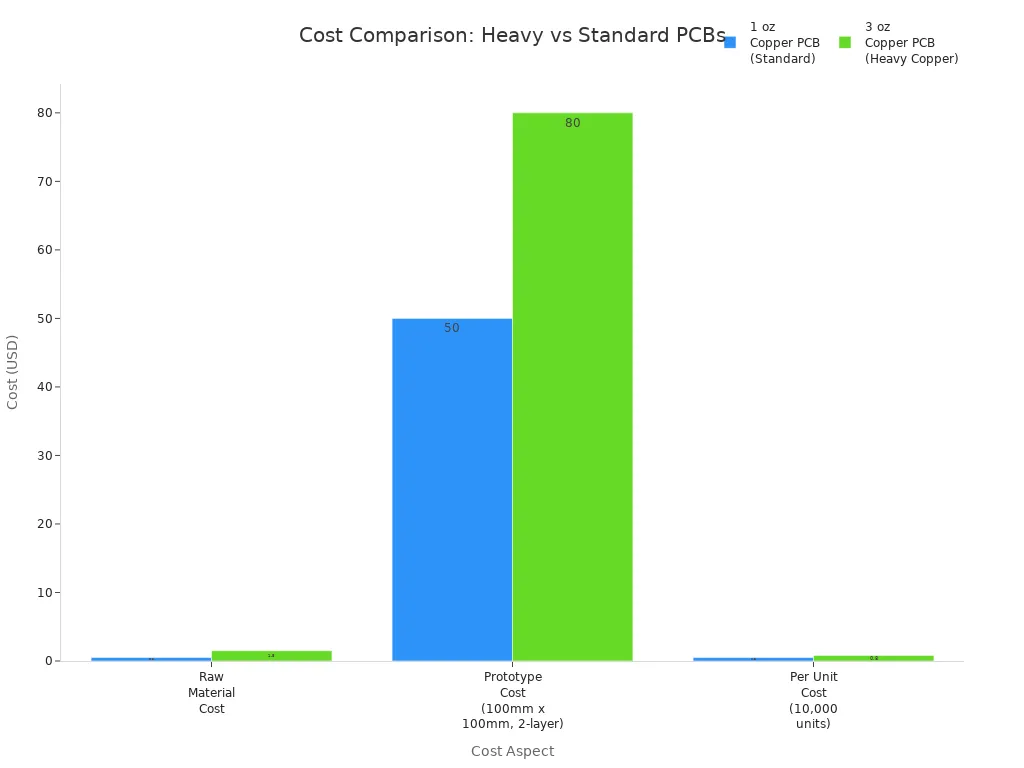
Heavy copper PCBs cost about 30-50% more than regular boards.
The higher price comes from more copper, longer making time, and special tools.
The price difference gets smaller when making lots of boards at once.
The extra money is worth it for better current flow, cooling, and longer life.
To save money, engineers use smart tricks:
They round pad shapes to lower stress and stop cracks.
They pick materials that expand the same way to keep layers together.
They add copper-filled holes to make the board stronger.
They leave enough space for high current and voltage to stop sparks.
They work with skilled factories to avoid mistakes and waste.
They use computer programs to find hot spots and pick the best copper layout.
These steps help keep costs down by making boards last longer and needing fewer repairs.
New Energy Vehicles Trends
Autonomous Systems
Autonomous systems are changing how cars work. These systems use smart electronics to read data from sensors, cameras, and radar. Heavy copper PCBs help these electronics handle lots of power and heat. Engineers make these boards strong for quick decisions and fast talks between car parts. High-frequency PCBs help cars use 5G to talk to each other and to smart city systems. This lets cars react fast to road changes and traffic lights. Battery management and motor control systems use heavy copper PCBs because they last long and work well. This keeps cars safe and running right.
Autonomous vehicles need strong electronics to keep people safe and cars working well.
Future Innovations
Heavy copper PCB technology will get even better soon. Makers are finding new ways to handle more current, sometimes over 1000 amps, by stacking copper layers. Some power PCBs now mix heavy and regular copper to save space and work better. Inlay PCB technology puts big copper pieces inside the board to move heat away faster. Engineers also try hybrid and metal boards to help with cooling. Flexible and rigid-flex PCBs are used more, making car electronics smaller and tougher. AI design tools help make better PCB layouts and make building easier. As new energy vehicles change, these new ideas will help cars be safer, work better, and last longer.
Makers use greener ways and build more boards as more people want them.
Research teams work on new uses, like 5G, AI, and IoT.
Future PCBs will work with solid-state batteries and earth-friendly materials.
Heavy copper technology has made electric vehicles better. Now, pcb designs use thick copper to carry more current and heat. This helps cars last longer and keeps them safer. New things like chip embedding and inlay copper make systems smaller and stronger. More than 10 million electric vehicles use these ideas today. Car makers should keep trying new things to make cars safer and work better.
FAQ
What makes heavy copper PCBs different from standard PCBs?
Heavy copper PCBs have much thicker copper layers. These thick layers let them carry more current. They also help get rid of heat better. Standard PCBs cannot handle as much power. They do not work as well in tough places.
Why do electric vehicles need heavy copper PCBs?
Electric vehicles use heavy copper PCBs to move lots of current safely. These boards help control heat in the car’s electronics. They keep things working well, even when the car works hard or is in a rough place.
How do heavy copper PCBs improve safety in EVs?
Heavy copper PCBs help stop overheating and electrical problems. Their strong build can take shaking and bumps. This protects the car’s power parts and keeps people safe.
Are heavy copper PCBs more expensive than regular PCBs?
PCB Type | Relative Cost |
|---|---|
Standard PCB | $ |
Heavy Copper PCB | $$ |
Heavy copper PCBs cost more because they use more copper. They also need special tools to make. The higher price means better performance and longer life.
Can heavy copper PCBs be used in other industries?
Yes. Heavy copper PCBs are used in solar power, factories, and airplanes. Any system that needs lots of current and strong boards can use them.