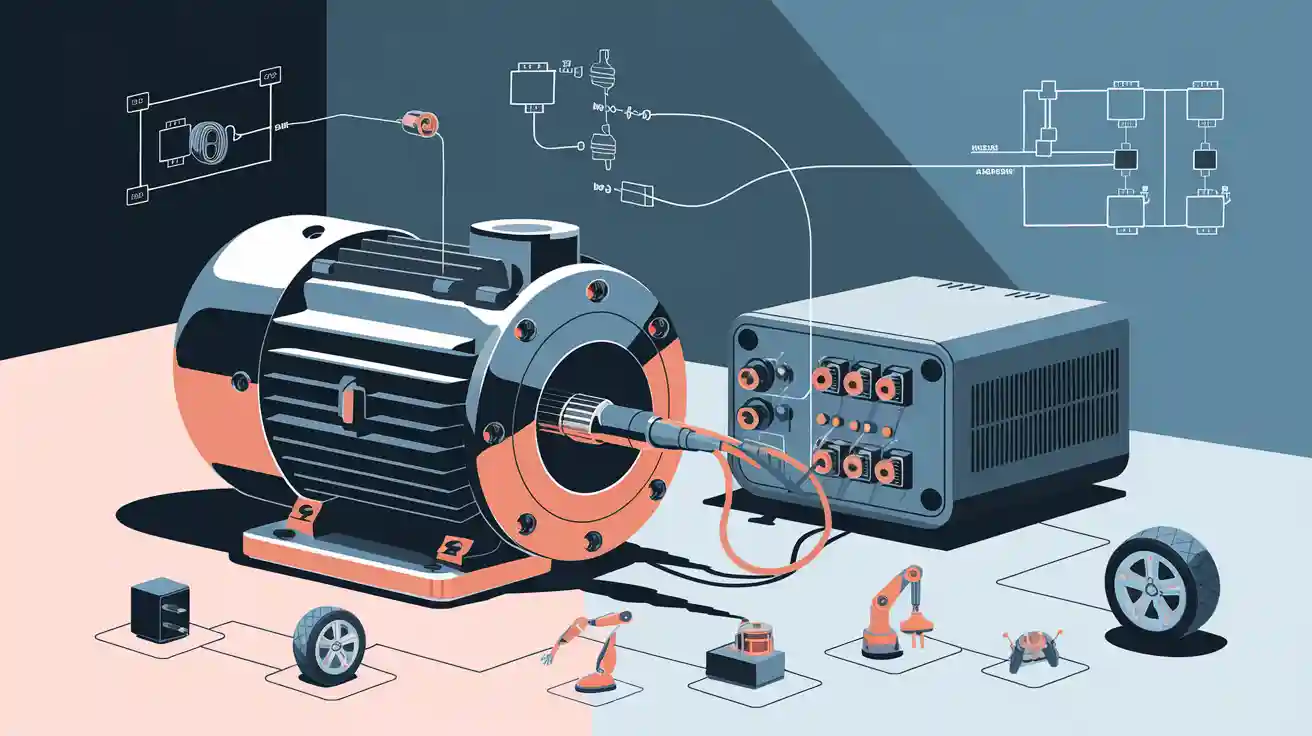
You use brushed dc motor controllers to control a brush dc motor. These controllers help you set the speed and change direction. They also let you control the torque very well. For example, if you want 10 Nm torque at 100 RPM, the controller changes voltage and current to fit. When the motor goes faster, the controller manages current and heat. This stops damage and helps the motor last longer. Brushed dc motor controllers are still popular because they cost less. They are also easy for people to use. The global market for these controllers was USD 1.2 billion in 2024. You see these controllers in many things, like cars and home devices. Engineers like them because they are simple and need little care.
Key Takeaways
Brushed DC motor controllers help you change speed, direction, and torque. They are easy to use and not expensive. – PWM control and closed-loop feedback make motors work better. They help motors be more exact and stay cooler. – Pick the right controller for your project needs. Think about cost, how flexible it is, and safety features. – H-bridge circuits help motors change direction smoothly. They also help control speed in many uses. – Test your motor and controller together first. This helps you find the best settings for good performance and safety.
Principles
Core Functions
A brush dc motor needs a controller to work right. The controller helps you change speed, direction, and torque. You can make the motor go faster or slower by changing voltage. To switch direction, you change the current flow. The controller keeps the motor steady, even if the load changes. Good controllers keep speed steady, even if power or load changes. This means your projects work well and give steady results.
Key Components
A brush dc motor controller has many important parts. Inside, there are switches, sensors, and protection circuits. Switches like MOSFETs or relays turn current on and off. Sensors check things like speed and current. Protection circuits stop the motor from getting too hot or using too much current. The table below lists some important technical facts:
Parameter | Range / Value | Description / Significance |
|---|---|---|
No-load speed | 8000 to 10900 rpm | How fast the motor spins with no load |
Stall torque | 12.1 to 19.9 mNm | Maximum torque at zero speed |
Max continuous current | 0.25 to 2.0 A | Highest current for safe operation |
Back-EMF constant | 0.28 to 2.3 V/1000 rpm | Voltage generated as the motor spins |
Torque constant | 2.67 to 22 mNm/A | Torque per ampere of current |

Control Methods
There are different ways to control a brush dc motor. The easiest way is just turning it on or off, but this is not very exact. Analog control lets you change voltage smoothly, but it wastes energy. PWM control uses fast switching for better speed control and saves energy. Closed-loop control uses feedback to keep the motor working well. The table below shows how these methods compare:
Control Method | Complexity | Efficiency | Cost | Precision | Speed Control Range | Heat Generation |
|---|---|---|---|---|---|---|
On/Off Control | Simple | Low | Low | Low | Limited | High |
PWM Control | Moderate | High | Moderate | High | Wide | Low |
Analog Control | Simple | Low | Low | Moderate | Limited | High |
Closed-Loop Control | High | High | High | High | Wide | Low |
Pick the control method that matches your project. PWM and closed-loop control are best for most brush dc motor uses.
Types of Brushed DC Motor Controllers

There are many ways to control a brush dc motor. Each controller type manages speed, direction, and torque in its own way. Here are the main types you will find.
Power Regulation
You can control power in two main ways. The first way is linear voltage regulation. This way is easy but makes a lot of heat. It wastes energy. The second way is switching regulation. This uses pulse-width modulation, or PWM. PWM turns the current on and off very fast. This saves energy and keeps the motor cooler. Most new bdc motor controllers use PWM. PWM helps you control speed better and use less power. You can see how well each method works by looking at speed, torque, and efficiency. PWM lets your motor work its best.
Linear voltage regulators: Easy, not efficient, gets hot.
PWM switching regulators: Saves energy, stays cool, controls speed well.
Control Signals
You can use analog or digital signals to control the motor. Analog signals are simple but not very exact. Digital signals, like PWM, give you more control. Most bdc motor controllers use digital signals for speed and direction. You can also use H-bridge circuits to change direction. H-bridge circuits have four switches. They let the motor go forward or backward. You must switch them at the right time to stop shorts.
Tip: PWM is the best way to control speed for most brush dc motors.
Feedback
Feedback helps keep the motor at the right speed or spot. Open-loop control does not use feedback. It is easy but not very exact. Closed-loop control uses sensors like encoders. These check the motor’s speed or spot. The controller changes power to keep the motor steady. Some bdc motor controllers use sensorless feedback. These use the motor’s own signals, like back EMF, to guess speed. Sensorless ways cost less but are not as exact.
Feedback Type | Description | Accuracy | Cost |
|---|---|---|---|
Open-loop | No feedback, simple control | Low | Low |
Closed-loop | Uses sensors for speed/position feedback | High | Higher |
Sensorless | Uses motor signals for feedback | Medium | Low |
Integrated vs Discrete
You can pick integrated or discrete bdc motor controllers. Integrated controllers put all parts in one chip. They are small and easy to use. Discrete controllers use separate parts for each job. They let you choose the best parts for your needs. Integrated controllers are good for simple projects. They save time and space. Discrete controllers are better if you want to change things for special uses.
Integrated: Small, easy, not very flexible.
Discrete: You can change parts, more control, bigger.
When you choose a dc motor controller, think about what your project needs. Each type has good points. You can pick the best brush dc motor and controller for your job.
Application Areas
Brushed DC motor controllers are used in many things. You find them in robots, electronics, small devices, and special projects. Each area uses the good features of a brush dc motor. Let’s see how these controllers work in different places.
Robotics
Robots often use brush dc motor controllers. These controllers help control speed and torque very well. In robot arms and moving robots, you need smooth moves. People use math to pick the right motor for each part. Feedback and PWM help make movement exact. Robots need control that works every time. Brush dc motor controllers give this control. The right controller design can fix torque ripple and stop interference. This makes brush dc motors good and useful in robots.
Consumer Electronics
Most brush dc motors are used in electronics for people. You find these controllers in cameras, smart home tools, and kitchen machines. The market shows electronics make the most money for these controllers. Devices like fans, DVD players, and toys run smooth and quiet. Many home gadgets use these controllers because they are simple and cheap. You also see them in things like electric shavers and toothbrushes.
Note: Many electronics use low voltage brush dc motor controllers. This keeps things safe and saves energy.
Low-Power Devices
Brush dc motor controllers are picked for small, low-power things. They are easy to use and do not cost much. These controllers work in battery gadgets, tiny pumps, and small fans. You do not need hard drive circuits, so you save money and space. Some H-bridge controllers can handle up to 3A. This is good for many small uses. PWM helps save power and keeps motors cool. You get good work in cheap products that do not need high accuracy.
Custom Uses
You can use brush dc motor controllers in many special ways. You might make new tools, hobby projects, or school kits. In cars, you see these controllers in power windows, seat motors, and fans. Factories use them in conveyor belts and moving systems. Hospitals use them in pumps for medicine. You can pick the right controller for your needs. This makes brush dc motors very flexible.
Common brush dc motor uses by industry:
Automotive: power windows, seat motors, cooling fans
Industrial: automation, conveyor systems, robot arms
Consumer: home machines, personal gadgets, smart tools
Healthcare: medicine pumps, surgery tools
Brush dc motor controllers work in many places. They give a good mix of price, control, and trust in many fields.
DC Motor Controller Circuit Design
H-Bridge Topology
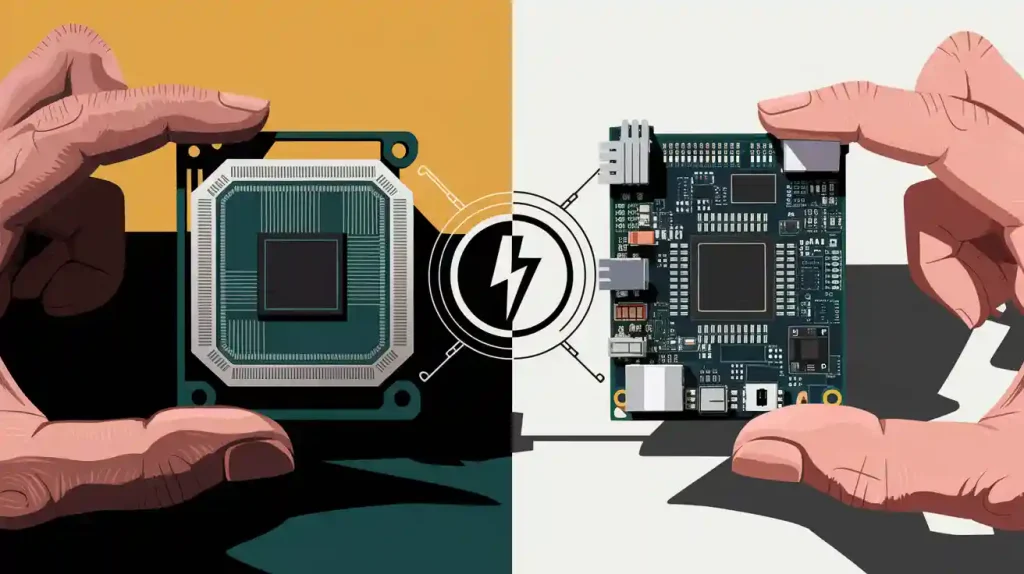
An H-bridge circuit helps control which way a brush dc motor spins. It uses four switches, often power MOSFETs, to let current go both ways. This makes the motor turn forward or backward. You change direction by switching the transistors in a special pattern. Many robots and small machines use this because it is easy and works well. If you add PWM to the H-bridge, you can also change how fast the motor spins. You need to wait a short time between switching to stop short circuits. This keeps your controller safe and your motor working right.
Component Choices
Choosing the right parts is important for a good brush dc motor controller. You need to match the voltage and current to your motor. Power MOSFETs are good for low-voltage controllers because they switch fast and stay cool. For bigger currents, you might pick IGBTs or GaN transistors. Microcontrollers (MCUs) make the PWM signals and handle feedback. Sometimes, you need extra chips like CPLDs if your MCU is not fast enough. Sensors help you know the speed and position of the motor. Always look at your motor’s performance charts. Try not to use more than 60% of the torque so the motor does not get too hot.
Component | Key Performance Data and Considerations |
|---|---|
DC Motor | Power rating, efficiency, reliability |
Motor Driver | Power rating, switching frequency, control interface |
Sensors | Accuracy, resolution, noise immunity |
Tip: Ask motor sellers or engineers to help you pick the best parts for your project.
Power Regulation Methods
There are two main ways to control power in a dc motor controller. Linear regulators are simple but waste energy as heat. Switching regulators use PWM to save energy and keep things cool. Most brush dc motor controllers use switching because it works better. Sometimes, you use both types together. A switching regulator lowers the voltage, and a linear regulator smooths out the bumps. This gives you good efficiency and steady power.
Feature | Linear Regulator | Switching Regulator |
|---|---|---|
Efficiency | Lower (60%-70%) | Higher (up to 95%) |
Control Method | Op amps | PWM signals |
Voltage Scaling | Steps down only | Steps up or down |
Noise | Low frequency | High frequency (10 kHz to 1 MHz) |
Polarity | Same as input | Reversible |
Max Output Voltage | Low | Moderate to high |
Safety Features
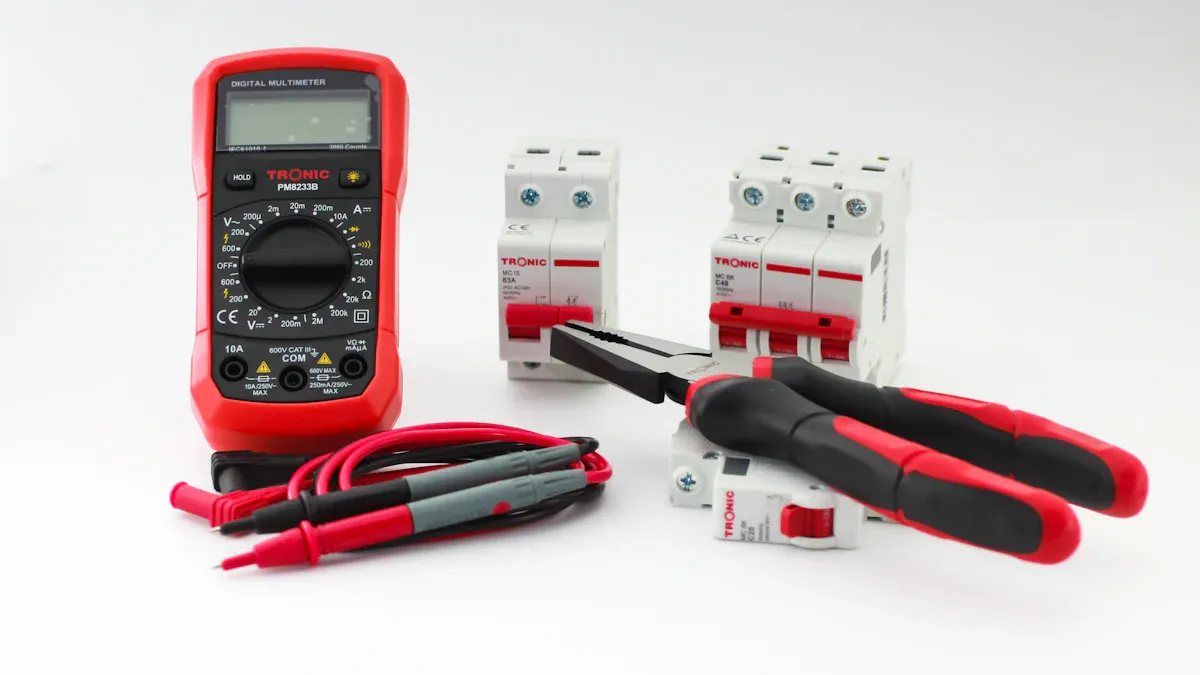
Every dc motor controller needs safety features. Sensors for too much current, voltage, or heat protect your brush dc motor. These sensors shut off the controller if something is wrong. Good design also uses heat sinks and fans to keep things cool. Filters help stop electromagnetic noise from the motor and PWM. Firmware can turn off the motor if it finds a problem. Many real-life examples, like robot lawn mowers, show these steps help your motor last longer and stay safe.
Design Challenges
Switch Timing
You need to set switch timing carefully in a brush dc motor controller. Switch timing controls how the current flows through the motor. If you use fast decay mode, the motor coasts to a stop. Slow decay mode uses the motor’s own energy to brake. This helps you stop the motor quickly and control speed better. For example, tests show that a Yellow-TT motor spins slower and stops faster in slow decay mode. The speed drops from 21.4 cm/sec in fast decay to 8.5 cm/sec in slow decay. You also get a more linear speed curve, which makes speed control easier. You can use CircuitPython code to set decay mode and pwm frequency. Good switch timing improves motor torque, braking, and overall brush dc motor performance.
PWM Frequency
You must pick the right pwm frequency for your brush dc motor. If you use a low pwm frequency, the motor may chatter or vibrate. High pwm frequency makes the motor run smoother and quieter. Performance tests show that you should keep current ripple below 10% for best efficiency. You can measure current ripple, motor heating, and torque to find the best pwm setting. Most brush dc motor controllers work well at 40 kHz to 120 kHz. This range keeps the motor cool and helps it last longer. High pwm frequency also keeps noise above what people can hear.
Measure current ripple and keep it low.
Test motor heating and torque at different pwm settings.
Use pwm above 20 kHz to avoid noise.
Check motor life and brush wear over time.
EMI
Electromagnetic interference (EMI) can cause problems in your brush dc motor controller. EMI comes from fast switching and high pwm frequency. You can reduce EMI by grounding the motor housing and using EMI parts with the right size and capacitance. Ceramic EMI parts work well as bypass devices. Connect EMI grounds to the motor housing for best results. Always measure gate-drive signals close to the driver or MOSFET pins. Use small probe loops to avoid errors. Differential probes help you get better readings. Test and adjust EMI parts until your controller meets standards.
Ground the motor housing.
Use ceramic EMI parts.
Measure signals with good tools.
Adjust EMI parts as needed.
Feedback Integration
Feedback helps your brush dc motor controller keep the motor at the right speed or position. You can use sensors or sensorless methods. Make sure your controller can read feedback signals quickly. If you use closed-loop control, check that the pwm and feedback systems work together. Slow feedback can cause the motor to overshoot or lag. Test your controller with real loads to see how it reacts. Adjust the feedback loop for smooth and steady motor control. Good feedback integration gives you better performance and longer motor life.
Tip: Always test your brush dc motor controller with the real motor and load to find the best settings for switch timing, pwm, EMI, and feedback.
Selecting Brushed DC Motor Controllers
Matching Application
You have to pick the right brush dc motor controller for your job. First, think about what your project needs. Look at how much power, speed, and torque you need. Cranes need a lot of starting torque. Small fans do not need much power but should be quiet. Check the voltage and current your motor uses. Make sure your controller can handle these numbers.
Here is a simple checklist you can use:
Check the voltage from your power source.
Find out how much torque your load needs.
Match the speed range to your project.
Look at your motor’s size and space in your device.
Decide how long and how often the motor will run.
You also need to know what kind of brush dc motor you have. Series-wound motors give strong starting torque. Shunt-wound motors keep a steady speed. Permanent magnet motors are small and easy to use. Each type works best for different jobs.
Tip: Always match your brush dc motor’s torque and speed to your project. If you pick the wrong size, your motor can get too hot or break quickly.
Different industries need different things. The table below shows how each industry uses brush dc motor controllers:
Industry Segmentation Categories | Description |
|---|---|
Aerospace and Defence | Needs special motor controller features |
Agriculture | Uses motors for tools and machines |
Automotive and Transportation | Needs strong and reliable controllers |
Chemicals and Materials | Uses motors for process control |
Construction and Manufacturing | Needs heavy-duty motor controllers |
Consumer Goods and Food & Beverages | Uses many types of motors and controllers |
Energy and Power | Needs high power rating controllers |
Healthcare and Pharmaceuticals | Needs precise and reliable controllers |
ICT | Uses motors in electronics and control systems |
Packaging | Needs speed control for automation |
Process Control and Automation | Needs exact controller selection |
Semiconductor and Electronics | Needs high precision motor control |
Picking the right controller for your job helps you get the best results.
Flexibility vs Cost
You have to think about both cost and flexibility when picking a controller. Brushed dc motors are cheaper at first. They are easy to use and control. You just give them voltage and they work. This makes them good for simple or short-term projects. Toys and small tools often use brushed dc motors because they are cheap and easy to swap.
Brushless motors cost more but last longer and need less care. They save energy and work better for long or hard jobs. If your project needs to be very exact or run all the time, you might want to pay more for a brushless motor and controller.
Here are some things to remember:
Brushed dc motors: Cheap, easy to use, need more care, do not last as long.
Brushless motors: Cost more, save energy, need less care, last longer.
Note: If you do not have much money or only need the motor for a short time, brushed dc motors and controllers are a good pick. If you need high performance and long life, brushless motors may be better.
Safety Needs
Safety is very important when you pick a dc motor controller. You must keep your brush dc motor safe from too much current, heat, or voltage. Good controllers have sensors that turn off the motor if something is wrong. This keeps your motor and device safe.
Look for these safety features:
Overcurrent protection
Overvoltage protection
Overtemperature shutdown
Short-circuit protection
Some jobs, like healthcare or cars, need extra safety. For example, a medicine pump must always work right. Pick a controller with strong safety features for these jobs.
Always test your controller in real situations. Make sure it keeps your brush dc motor safe during normal use and if something goes wrong.
Off-the-Shelf vs Custom
You can buy a ready-made dc motor controller or make your own. Off-the-shelf controllers are ready to use. They save you time and money. You can find many types for different brush dc motor jobs. These work well for most projects, like home gadgets or simple robots.
Custom controllers let you pick every part. You can add special features or make them fit in small spaces. This is good for special or big projects. For example, car makers often use custom controllers for their needs.
Here is a quick guide:
Use off-the-shelf controllers when:
Your project is common.
You need a fast answer.
You do not have much money.
Use custom controllers when:
Your project has special needs.
You want to add new features.
You need the controller to fit in a special space.
Tip: Try a ready-made controller first for testing. Move to a custom design if you need more features or a better fit for your project.
When you choose, look at power rating, what your industry needs, and new trends. For example, new wireless chips let you control motors from far away. This helps in smart homes or factories. Companies like ABB, Siemens, and maxon motor have many choices for different needs.
Picking the right brush dc motor controller means thinking about your project, cost, safety, and if you want a ready-made or custom solution. Making a careful choice helps your motor work well and last longer.
You find brush dc motor controllers in lots of areas. They help you control position very well. They also give strong starting torque and are easy to use. You can use a brush dc motor in robots, machines, and heavy jobs. Experts say a brush dc motor keeps speed steady and saves energy when stopping. New ways to control, like FOPD(1+PI) controllers, make them even better. When picking a brush dc motor, learn about how it works and the different types. Always pick a brush dc motor that fits your project. If your project is hard, ask experts or read more. A brush dc motor gives you many choices and works well in lots of jobs.
A brush dc motor is good for changing speed and exact moves.
You can make a brush dc motor better with new control ideas.
A brush dc motor is great for easy and hard projects.
Tip: Think about what your project needs before picking a brush dc motor controller. Getting help from experts can help you do your best.
FAQ
What is a brush dc motor controller?
A brush dc motor controller lets you change the speed, direction, and torque of a brush dc motor. You use it to make the motor work the way you want. It also helps protect the motor from damage.
Why should you choose a brush dc motor for your project?
You should pick a brush dc motor when you want simple control and low cost. These motors work well in many devices. You can use a brush dc motor in toys, robots, and home gadgets. They are easy to set up and maintain.
How do you control the speed of a brush dc motor?
You control the speed of a brush dc motor by changing the voltage or using PWM signals. PWM lets you adjust how much power the motor gets. This method gives you smooth speed control and saves energy.
What safety features should you look for in a brush dc motor controller?
You need safety features like overcurrent, overvoltage, and overtemperature protection. These features keep your brush dc motor safe. Good controllers shut down the motor if something goes wrong. This helps your devices last longer.
Can you use a brush dc motor in both directions?
Yes, you can run a brush dc motor forward or backward. You use an H-bridge circuit in the controller to change the current direction. This lets you reverse the motor easily. Many robots and machines need this feature.
Tip: Always test your brush dc motor with the controller before using it in your final project.