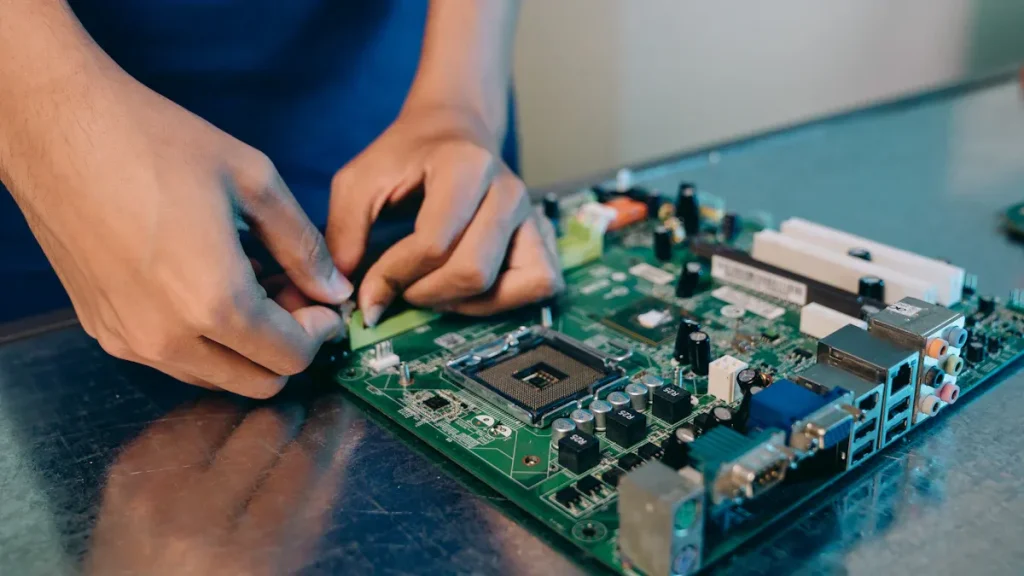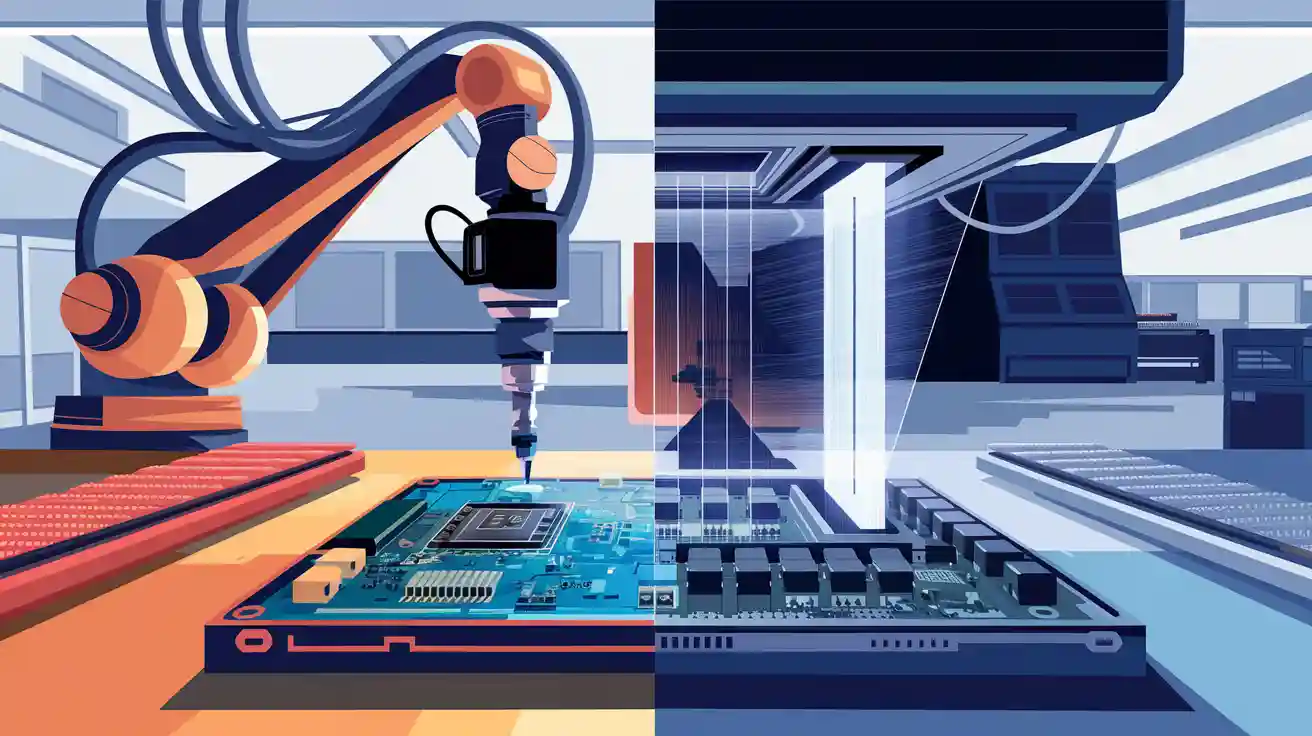
Choosing between AOI vs X-Ray in PCB manufacturing and assembly depends on several factors. These include the complexity of the board, the types of defects you need to detect, production volume, and your budget. AOI inspects the surface quickly and is cost-effective, making it ideal for fast turnaround and budget-conscious projects. However, if you need to identify hidden or internal defects, such as those found in BGAs or multilayer boards, X-Ray inspection is essential. Many manufacturers now combine AOI vs X-Ray in PCB manufacturing and assembly to achieve the highest quality. Additionally, new inspection technologies like AI are helping reduce costs and improve defect detection as PCB designs become more complex and densely packed.
Key Takeaways
AOI checks the top of PCBs very fast. It finds problems you can see, like missing parts and solder mistakes. This makes AOI quick and cheap for easy boards.
X-Ray inspection looks inside PCBs. It finds hidden problems like cracks and empty spaces. AOI cannot find these problems. X-Ray is important for hard or multilayer boards.
Many factories use both AOI and X-Ray together. This helps them find more problems and make better boards. It also helps stop expensive errors.
Picking the best inspection method depends on how hard the board is. It also depends on what problems you want to find, how many boards you make, cost, and how good you want the boards to be.
Using new technology like AI and mixing inspection methods helps factories save money. It also helps them work faster and make sure PCBs work well.
AOI vs X-Ray in PCB Manufacturing and Assembly
Quick Comparison
Performance Metric | AOI (Automated Optical Inspection) | X-Ray Inspection |
|---|---|---|
Defect Detection Scope | Surface-level assembly flaws, component orientation, solder joints | Hidden/subsurface defects, internal solder voids, cracks |
Imaging Technique | Optical and 3D imaging (laser triangulation, structured light) | 2D and 3D volumetric X-ray imaging (CT scans) |
Dimensional Measurement Precision | High precision on surface features, ~1 micron resolution | Precise internal measurements of distances, diameters, volumes |
Inspection Speed | Faster and more cost-effective for surface inspection | Slower, higher cost due to complex imaging and processing |
Defect Types Identified | Visible defects like misalignment, solder fillet shape, component presence | Internal defects such as voids, cracks, hidden solder joint faults |
Non-destructive Testing | Yes, but limited to surface inspection | Yes, enables internal inspection without damaging the PCB |
AI-assisted Defect Recognition | Emerging but less advanced compared to X-Ray | Advanced AI software for automatic defect classification |
Application Role | Primary for surface inspection and assembly verification | Complementary to AOI, essential for subsurface and internal defect detection |
Cost and Deployment | Lower cost, widely deployed on production lines | Higher cost, specialized use for critical quality assurance |
Key Differences
AOI and X-Ray are both used to check PCBs. AOI uses cameras to look at the top of the board. It finds things you can see, like parts that are not in the right place or missing. AOI works fast and fits well in big factories. It is very good at checking small details on the surface. But AOI cannot look inside the board, so it misses problems under some parts.
X-Ray inspection lets you see inside the PCB. It can find problems like cracks or empty spaces that you cannot see from the outside. X-Ray takes more time and costs more than AOI. It is needed for boards that are complicated or have many layers. X-Ray machines need skilled people to use them and understand the results. But they help make sure the board is made well.
Many companies use both AOI and X-Ray together. You do not always have to pick just one. Using both helps find more problems and makes the boards better. AOI checks the surface quickly. X-Ray looks for hidden problems. This way, the process is fast and also checks for quality.
AOI Overview
How AOI Works
Automated optical inspection, or AOI, uses cameras to check printed circuit boards for problems on the surface. The system looks at each board with special cameras. It takes pictures of the PCB and compares them to a good example or design rules. This helps find missing parts, parts that are not in the right place, soldering mistakes, and wrong directions. AOI is an automatic system that works right on the production line. It checks boards very fast, so problems are found right away. This gives quick feedback to workers. AOI can look at hundreds of boards every hour. It is much faster than checking by hand. The technology can use 2D or 3D images. 2D AOI is common and costs less. 3D AOI can measure height and is better for tricky boards. Using AOI helps companies keep quality high and make fewer mistakes during assembly.
AOI Pros & Cons
AOI has many good points for making PCBs:
The system checks boards quickly and always the same way, which helps make more boards faster.
AOI costs less than other ways like X-ray inspection, especially for problems you can see on the surface.
AOI can be put right into the line, so workers can watch the process and fix things fast.
Finding problems early means less money spent fixing or throwing away boards.
AOI helps keep good records and track what happens.
But AOI also has some downsides:
The system cannot find problems inside the PCB that you cannot see. For these, companies need other tools like X-ray inspection.
AOI might say there is a problem when there is not, or miss a real problem, which can slow down repairs.
It can cost a lot at first and take time to set up for hard boards.
The system needs good cameras and smooth movement to work best.
AOI is still a very important tool for finding surface problems. Many companies use AOI with other systems to make sure boards are made well.
X-Ray Inspection
How X-Ray Works
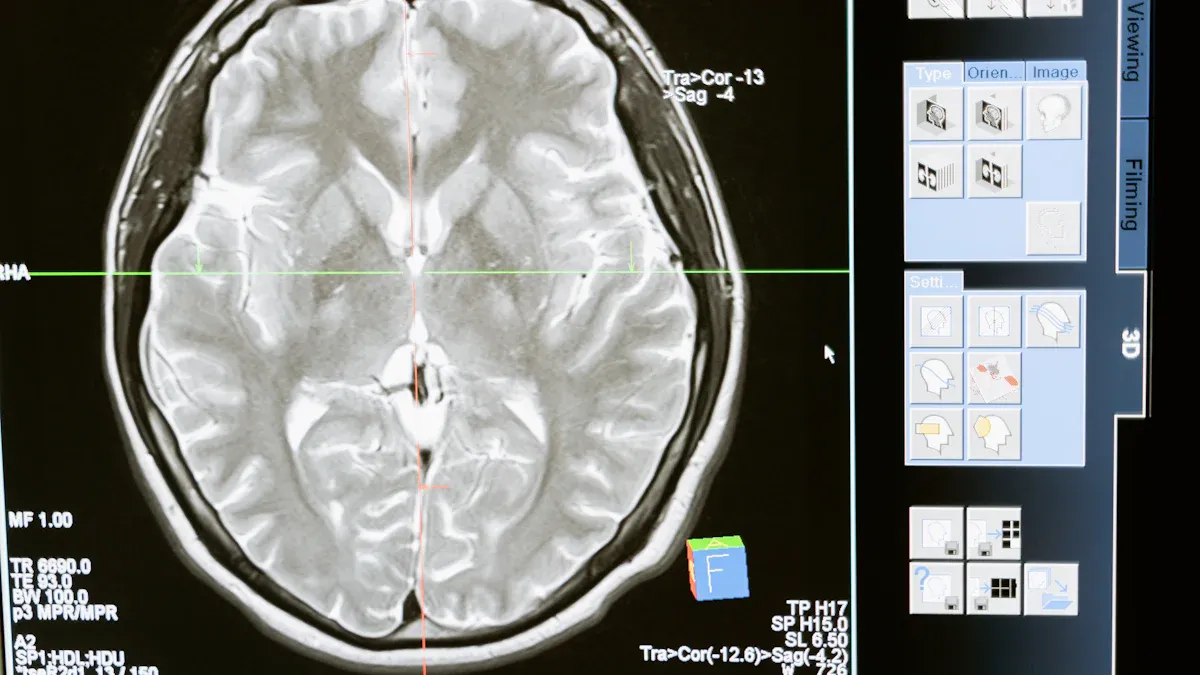
X-ray inspection lets people see inside printed circuit boards. The x-ray source sends out radiation through the PCB. Different materials block the x-rays in their own ways. Solder joints, especially with lead, block more x-rays. These show up clearly in the x-ray picture. The system takes these pictures. Engineers use them to find problems that cameras cannot see.
Modern x-ray systems use both 2D and 3D images. 2D makes a flat picture. Sometimes, parts on both sides of the board overlap in the image. New 3D x-ray uses moving detectors and layers. This helps separate the layers in the board. It is easier to find problems in tricky or thick boards. For example, makers can check solder fill inside vias. This is important for the board to work well. The system can also tilt the board. This helps check every part closely.
X-Ray Pros & Cons
X-ray inspection has many good points in making PCBs:
The process finds hidden problems like cracks, empty spots, and bad solder fills. It is needed for checking BGAs, inside solder joints, and under parts where cameras cannot look.
The system checks if solder fill inside vias is good. This helps stop failures and makes the product last longer.
X-ray can check both the surface and inside the board. This makes it a strong tool for quality checks.
But x-ray inspection also has some hard parts:
The system costs more than AOI and works slower because it is more complex.
People need special training to read x-ray pictures and take care of the system. Without this, mistakes can happen or the system may not be used well.
Adding x-ray to the line can slow things down if not planned right. The system needs regular care to keep working.
Note: X-ray inspection costs a lot at first. But over time, it can save money by stopping recalls, cutting waste, and making customers trust the product more. This makes it worth it for companies that care about quality.
AOI vs X-Ray: Use Cases
When to Use AOI
AOI is best for making lots of PCBs fast. It finds problems on the surface. Companies put AOI after solder paste, before reflow, and after reflow. This helps catch mistakes early. AOI can check up to 20,000 parts every hour. This makes it great for big factories. Experts say AOI is good for surface checks in busy lines with not many changes.
Many companies use AOI at different steps. For example, phone makers use AOI before and after reflow. They make special rules for checking. They connect AOI data to other factory systems. This helps track every board. These steps lower missed problems by 85%. They raise first-pass success from 92% to 98%. They also cut fixing costs by 60%. AOI helps find every problem and pays for itself in eight months.
AOI is good at finding missing or moved parts, solder bridges, and lifted leads. It cannot see hidden problems under BGAs or inside thick boards. But it is still the top pick for quick and trusted surface checks.
When to Use X-Ray
X-ray is needed for tricky PCBs with hidden joints. It lets engineers look inside the board. They can find empty spots, cracks, or bad solder that AOI misses. X-ray is very useful for BGAs, Chip Scale Packages, and crowded boards.
Studies show 3D x-ray can spot tiny bumps, empty spots, and cracks in new packages. Car part makers use both AOI and x-ray to stop failures. One big supplier dropped its PCB problem rate from 12% to 1.5% by using both. They got their money back in six months.
The table below shows what each method can find:
Defect Type | AOI Suitable | X-Ray Suitable |
|---|---|---|
Open circuits | Yes | Yes |
Solder bridges | Yes | Yes |
Solder shorts | Yes | Yes |
Insufficient solder | Yes | Yes |
Solder void | No | Yes |
Excess solder | Yes | Yes |
Solder quality | No | Yes |
Lifted lead | Yes | Yes |
Missing component | Yes | Yes |
Misaligned component | Yes | Yes |
BGA shorts | No | Yes |
BGA open circuit connections | No | Yes |
Tip: For the best results, companies use AOI for fast checks and x-ray for deep checks of hidden joints.
Choosing the Right Method
Board Complexity
How hard a board is to make matters a lot. Many new PCBs have many layers and lots of tiny parts. This makes checking them harder. Old ways of checking do not work well for crowded or inside areas. So, companies use better inspection systems now.
AOI is good for boards where you can see the parts. It takes clear pictures and checks them against a good example. It finds missing parts, things out of place, and problems with solder on top.
X-Ray is needed for boards that are tricky. It can look inside and find hidden problems, like cracks or empty spots under BGAs or in thick boards.
Some companies also use scanning acoustic microscopy to find cracks inside, but AOI and X-Ray are used the most.
If a board is complicated, you need inspection systems that can change, do not hurt the board, and help save money and time.
Defect Types
Different systems are best at finding certain problems. AOI finds issues on the surface. X-Ray finds problems you cannot see.
AOI finds scratches, marks, missing parts, and things not lined up. It does this by looking at pictures and comparing them to a template. It works well for things you can see and can use AI to get better.
X-Ray finds problems inside, like empty spaces in solder, cracks, and hidden shorts. It is best for things AOI cannot see because of blocked views.
Studies show AOI and X-Ray work well together. AOI is fast for surface problems. X-Ray checks for hidden problems.
Most companies use both to make sure they find all problems and keep quality high.
Production Volume
How many boards you make affects which system you pick. Big factories need fast and steady inspection.
AOI, especially 3D AOI, is used a lot in big factories. It is quick and checks many boards every hour. This is good for things like phones and cars.
X-Ray is slower but strong. It is better for small batches or hard boards.
Adding AI to AOI makes it even better. It helps find problems and keeps the line moving fast.
Metric / Trend | Data / Description |
|---|---|
SMT 3D AOI Market Size (2024) | USD 433.4 million |
Projected Market CAGR (2025-2033) | 11.7% |
Number of 3D AOI Units Operational Globally (2024) | Over 76,000 |
Percentage of Inline AOI Installations | 72% |
AOI Inspection Accuracy Rate | Over 98.5% |
Reduction in Manual Rework Due to AOI | 45% |
AOI Integration with MES in SMT Lines | 61% (optimizing line efficiency by 22%) |
AI-Enabled 3D AOI Systems Installed (2023-2024) | Over 58% |
Growth in Compact 3D AOI Shipments (2023 vs 2022) | 34% increase |
Major Manufacturing Hubs for 3D AOI Demand | China, South Korea, Germany (60% of demand) |
These numbers show that as factories make more and harder boards, they pick AOI for its speed and accuracy.
Cost Factors
How much money you have matters when picking a system. AOI and X-Ray cost different amounts to buy and use.
Equipment Type | Typical Cost Range (USD) | Key Economic Considerations |
|---|---|---|
Automated Optical Inspection (AOI) | $20,000 – $150,000+ | Costs less to start; needs money for setup and care; finds problems you can see fast; cheaper to begin with |
X-Ray Inspection | $80,000 – $500,000+ | Costs much more at first; needs trained workers; harder to set up; finds hidden problems inside the board |
AOI is cheaper to start with and easier to use. It checks boards fast and is simple to run. X-Ray costs more and needs special workers. Small companies often pick AOI to save money. Big companies or those with strict rules may buy X-Ray for better checks.
Checking boards costs money at first, but it saves money later by catching problems early and making more good boards.
Quality Needs
How good the boards must be changes how you check them. Some industries, like planes, cars, and medical, need the best boards and must follow strict rules.
AOI is best for making lots of boards fast. It checks the surface well and fits into big lines.
X-Ray is better for thick or tricky boards where you need to see inside. Some rules say you must use X-Ray to meet safety and quality needs.
Connecting inspection to quality and factory systems helps keep track and follow rules.
New ideas like AI and Industry 4.0 make inspection better and help save money while following rules.
Decision-Making Checklist
Companies can use this list to pick the best inspection system:
Check how hard the board is: Use AOI for simple boards; use X-Ray for thick or crowded ones.
Know what problems you need to find: Use AOI for things you can see; use X-Ray for hidden problems.
Think about how many boards you make: Use AOI for fast, big lines; use X-Ray for special or small runs.
Look at costs: Compare how much each system costs to buy, run, and staff.
Think about quality and rules: Pick the system that meets your industry’s needs.
Make sure the system fits with your other factory tools.
By using this list, companies can pick the right inspection system for their needs and balance speed, cost, and quality.
Hybrid Inspection Approach
Benefits of Combining AOI and X-Ray
Manufacturers use both AOI and X-Ray to get the best quality. Each method is good at different things. AOI finds problems on the surface, like missing parts or things not lined up. It works fast and checks many boards. X-Ray looks inside the board. It finds hidden problems, like empty spots or cracks under BGAs. AOI cannot see these hidden issues. Using both methods helps find more types of problems. This lowers the chance of bad boards reaching customers.
Books and articles say AOI is getting better with deep learning and robots. Now, AOI can spot some inside problems and holes using special cameras and smart software. For example, AOI with endoscopic cameras and deep learning can find problems on the surface and inside holes. This helps even when lighting is tricky. X-Ray, with deep learning, is very good at finding blowholes and other inside problems. When used together, AOI and X-Ray give strong quality checks, especially for boards with hard shapes.
Using both AOI and X-Ray makes boards more reliable and the process faster. This way, both easy-to-see and hidden problems are found. Products work better and there are fewer recalls.
Common Hybrid Scenarios
Many companies use both AOI and X-Ray to save money, keep quality high, and follow rules. The table below shows how a hybrid system works in making and fixing products:
Aspect | Description |
|---|---|
Manufacturing Scenario | Hybrid system with unknown results and quality |
Inspection Strategies Compared | Checking some boards, not checking, or checking all boards |
Methodology | Using one plan for making, returns, and checking decisions |
Key Outcomes | Checking some boards saves money, keeps quality, and helps the environment |
In real life, companies use AOI for quick checks on the line. They use X-Ray for deep checks of important or hidden parts. For example:
Drug makers use both remote and in-person checks based on risk and rules.
Remote checks are for first steps and regular checks. In-person checks are for risky areas.
New tools help collect and study data, so there are fewer surprises during checks.
Studies in other areas, like medical scans, show that using more than one way to check finds more problems. This mix of methods in factories makes sure no problems are missed.
AOI and X-Ray help check PCBs in different ways. AOI is good for easy boards with one layer. It checks the top fast and does not cost much. X-Ray is better for hard boards with many layers. It can find hidden problems that AOI misses. Using both AOI and X-Ray together makes checks more correct and trusted. Studies say you should pick based on how hard the board is, what problems you need to find, and how many boards you make.
Method | Best For | Key Strength | Main Limitation |
|---|---|---|---|
AOI | Simple, single-layer | Speed, affordability | Surface-only detection |
X-Ray | Complex, multi-layer | Internal inspection | Higher cost, slower |
Hybrid | High-reliability needs | Comprehensive checks | Integration complexity |
Most companies use both AOI and X-Ray. This helps make sure PCBs are high quality and work well.
FAQ
What types of defects can AOI and X-Ray each detect?
AOI finds problems you can see on the board’s surface, like missing parts or things not lined up. X-Ray finds hidden problems, such as empty spots under BGAs or cracks inside solder.
AOI is best for checking what you can see. X-Ray is great for finding problems inside the board.
Is X-Ray inspection safe for PCB components?
Yes, X-Ray uses a small amount of energy that does not hurt PCB parts. Companies follow safety rules to keep everyone safe.
Workers get special lessons to use X-Ray safely and protect people and boards.
How often should manufacturers use both AOI and X-Ray?
Most companies use AOI to check every board. They use X-Ray for hard boards or just a few random checks.
AOI gives quick and regular checks.
X-Ray looks at places where hidden problems might be.
Does AOI require special training to operate?
AOI machines are easy to use. Most people learn the basics fast.
To use special tools or fix problems, workers may need more lessons.
Can AOI and X-Ray systems integrate with factory software?
Yes, new AOI and X-Ray machines can connect to MES or ERP software.
This helps track problems, make quality better, and use data to make good choices.