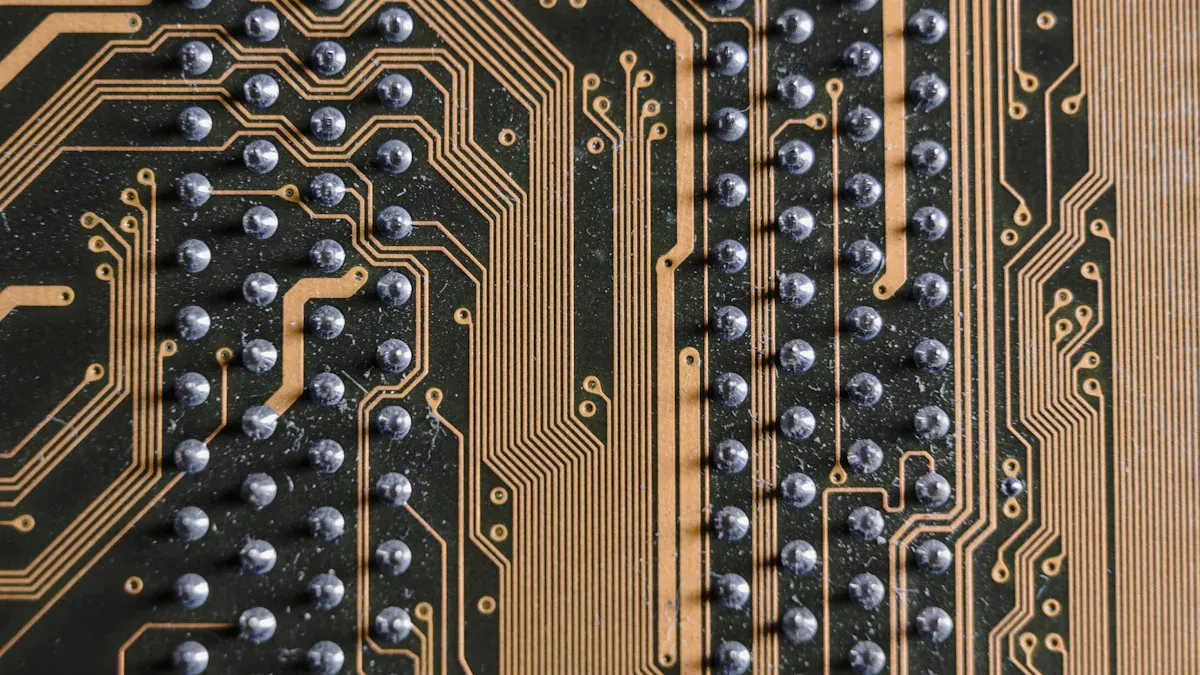
Electroless nickel immersion gold (ENIG PCB) is a common PCB finish. It adds a thin nickel and gold layer to protect copper. This layer stops oxidation and improves how electronics work.
ENIG PCB is used a lot in today’s electronics because it lasts long. Around 54% of PCBs have ENIG PCB as their finish. It’s easy to solder and stays good for a long time, making it a top pick for quality products.
Key Takeaways
ENIG PCB stops rust and keeps electronics working in harsh places.
Its smooth surface helps with easy soldering, especially for tiny parts.
ENIG can stay good for 20 years, perfect for long-term use.
Tests are done to make sure ENIG works well and is reliable.
ENIG costs more than other finishes but lasts longer and works better.
The ENIG PCB Process
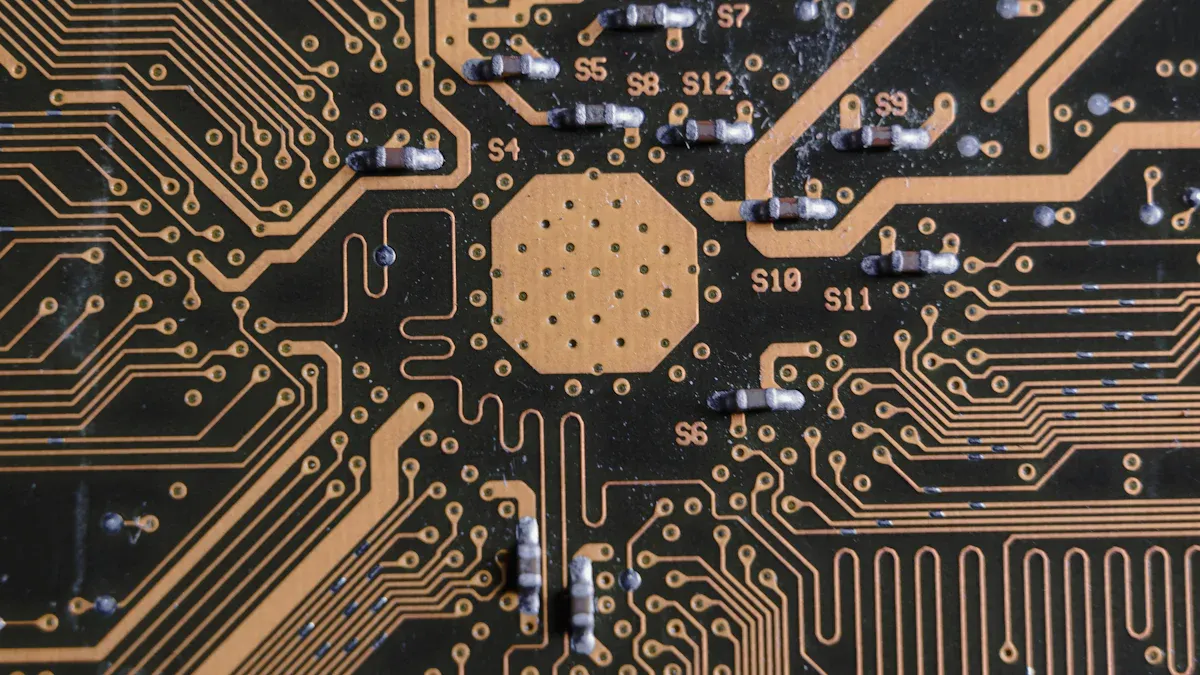
The ENIG process is key to making strong PCBs. It has two main steps: adding nickel and then gold. Both steps help the PCB last longer and work better.
Electroless Nickel Plating
The first step is adding nickel to the copper. This is done without using electricity. Why is this important? The nickel protects the copper from rust and makes a base for the gold.
Nickel covers uneven surfaces and small holes evenly.
No electricity means no uneven coating problems.
Nickel with 10-12% phosphorus resists rust, making it stronger.
The nickel layer keeps the PCB safe in tough conditions. This step helps your electronics stay reliable for a long time.
Immersion Gold Coating
Next, the PCB gets a gold layer. The board is dipped in a gold bath. Gold replaces some nickel on the surface. The gold stops nickel from rusting and makes soldering easier.
The gold layer is made just the right thickness. It’s usually 1.2 to 2.5 µm thick. This makes soldering easy and gives a smooth surface for tiny parts. Gold also makes the PCB look shiny and professional.
Quality Assurance in ENIG
Quality checks are very important in the ENIG process. They make sure the PCB works well and lasts long. Different tests are used to check the quality:
Testing Method | Purpose |
|---|---|
Flying Probe Testing | Good for small batches of PCBs. |
In-Circuit Testing (ICT) | Tests electrical parts in large batches. |
Automated Optical Inspection (AOI) | Finds visible problems like solder mistakes. |
X-ray Inspection | Spots hidden issues like gaps in solder. |
Manufacturers also check designs and processes to avoid mistakes. These steps help make sure the PCB is high quality and matches the design. Fixing problems early means fewer defects and better electronics.
The ENIG process uses smart methods and strict checks. This creates a great surface finish. It helps your PCB work well in many devices, from phones to airplanes.
Advantages of ENIG PCB
Strong Protection Against Rust
ENIG stops rust from damaging the PCB. It adds a nickel and gold layer over copper traces. This layer keeps the surface safe from oxidation in tough conditions. ENIG helps electronics stay reliable and work well for a long time.
The nickel and gold layers block water and dirt. This makes ENIG great for cars, planes, and other hard-use systems. It protects the PCB even in bad environments.
Easy to Solder
ENIG makes soldering simple and smooth. Its flat surface helps create strong solder joints. This is very useful for PCBs with tiny parts like BGAs and CSPs.
Feature | ENIG Benefits |
|---|---|
Solderability | Easy soldering for small parts |
Surface Quality | Flat surface for better soldering |
Application | Perfect for BGA and CSP designs |
Assembly Process | Works well with automated assembly |
ENIG’s self-leveling surface works great with machines. It helps make strong solder joints that improve how electronics perform.
Lasts a Long Time
ENIG finishes stay good for many years. Tests show ENIG can still be soldered after 20 years in storage. Storage conditions include 21ºC temperature and 30%-65% humidity.
ENIG stays solderable for up to 20 years.
It works well in controlled temperature and humidity.
Strong solder joints keep electrical flow steady.
This long-lasting finish is perfect for medical tools and defense systems. ENIG ensures your device works well for a long time.
Compatibility with Advanced PCB Designs
ENIG PCBs work well for modern and complex designs. Their smooth surface helps place parts accurately, even in tight spaces. ENIG is great for HDI designs, where space is small, and precision matters.
This finish is useful for advanced tools like biosensors. It can detect tiny amounts of viral DNA with high accuracy. ENIG works with long DNA pieces, up to 503 base pairs, without extra steps. This shows it’s flexible for special uses and detailed designs.
Why ENIG suits advanced designs:
Flat Surface: Helps place tiny parts correctly.
High Sensitivity: Works for precise electrochemical tasks.
Durability: Stays strong in tough conditions.
The nickel and gold layers make a solid base for multilayer PCBs. ENIG is perfect for fine-pitch parts like BGAs and CSPs. Its even surface reduces soldering mistakes and keeps performance steady.
ENIG also supports smaller electronics. It works well with automated assembly, making it a top choice for factories. Whether for medical tools or airplanes, ENIG gives the precision and strength needed for advanced designs.
Tip: For tricky designs, pick finishes like ENIG for strength and accuracy.
Disadvantages of ENIG PCB
Higher Production Costs
ENIG PCBs cost more than other finishes. This is because the process is detailed and uses nickel and gold. ENIG is better for soldering and stopping rust, but it costs more than HASL or OSP. HASL is the cheapest option, and OSP works well for simpler needs.
For advanced designs, ENEPIG is another choice. It adds a palladium layer to use less gold. This can cut costs by up to 60%. Still, ENEPIG costs more than basic finishes like HASL. If you need strong and long-lasting PCBs, ENIG is worth the extra money.
Risk of Black Pad Defect
ENIG PCBs can have a black pad defect. This happens when phosphorus builds up during nickel plating. The defect makes soldering harder and weakens the PCB.
A study by ITRI looked into this problem. It found the defect happens randomly, especially in parts like BGAs and QFPs. Even though it’s rare, it can hurt performance. Fixing it is possible but takes extra time and effort. Think about this risk when using ENIG for important projects.
Aspect | Details |
|---|---|
Study | ITRI ENIG Project, Round 1 |
Findings | Found causes of black pad defect |
Impact | Affects BGA and QFP parts |
Repairability | Can be fixed but harder to solder |
Complex Manufacturing Process
Making ENIG PCBs is harder than other finishes. It has many steps like cleaning, micro-etching, nickel plating, and gold coating. Each step must be done carefully for a good finish.
HASL is simpler with just one main step. ENIG’s process takes more time and effort. For example, nickel and gold layers must be even to avoid problems. This careful process makes ENIG durable but harder to make.
Step | ENIG Process | HASL Process |
|---|---|---|
Cleaning | Yes | Yes |
Micro-etching | Yes | No |
Nickel deposition | Yes | No |
Gold immersion | Yes | No |
Complexity | Many steps, detailed | Simple, one step |
If you need a strong and reliable finish, ENIG is a good choice. But its complex process may not work for tight budgets or fast timelines.
Applications of ENIG PCB

ENIG PCB finishes are important in many industries. They are strong, easy to solder, and resist rust. This makes them perfect for reliable PCB uses.
Consumer Electronics
ENIG PCBs are common in gadgets like phones and tablets. They support advanced designs and work well in small spaces. With 5G and smart devices growing, ENIG is in high demand.
The ENIG PCB market may grow over 6% yearly by 2030.
ENIG improves circuits with rust resistance and easy soldering.
It’s great for small designs, ensuring smooth assembly and durability.
If you need durable and high-performing electronics, ENIG is a great choice.
Automotive Electronics
Cars need PCBs that handle tough conditions. ENIG works well here, offering great electrical performance. It also has a flat surface for machine soldering, ensuring quality.
Feature | ENIG PCB Benefits | Other Finishes (e.g., HASL) |
|---|---|---|
Electrical Performance | Gold layer gives better conductivity | Lower than ENIG |
Flatness | Smooth surface for soldering | Uneven due to solder thickness |
Tough Conditions | Works in extreme environments | Not ideal for harsh conditions |
Eco-friendliness | Safe for the environment | Lead options are not eco-friendly |
For car electronics, ENIG is reliable in heat and vibration. This makes it a top pick for manufacturers.
Aerospace and Defense Systems
Aerospace and defense need very reliable PCBs. ENIG meets strict standards with even gold layers and good soldering. It’s used in planes, radars, and military tools.
Test Type | Results Summary | Standard Reference | Notes |
|---|---|---|---|
Gold Layer Thickness | Even coating with less than 4% variation | IPC-4552B, IPC-4556-AM-1 | High uniformity for ENIG and ENEPIG |
Solderability Testing | Passed all tests with no major differences in wetting forces | J-STD-003D | ENEPIG had faster wetting times |
Wire Bond Strength | Average pull force of 9.6 grams, above the 2.5-gram minimum | MIL-STD-883 Method 2011 | Acceptable failure modes noted |
ENIG ensures reliable PCBs for aerospace and defense. It’s perfect where strength and performance matter most.
Medical Equipment
Medical tools need to be reliable and precise. ENIG PCB finishes are strong and resist rust, making them perfect for these tools. They help devices like implants, monitors, and diagnostic machines work well for a long time.
ENIG coatings are safe for medical use. Devices that touch the body, like implants or biosensors, need materials that won’t react or harm people. ENIG is safe and keeps electrical performance high. This makes it a top choice for advanced medical devices.
As healthcare improves, more ENIG PCBs are used in medical tools. You’ll find them in portable ultrasound machines, health trackers, and robotic surgery tools. These devices depend on ENIG for accuracy and strength.
Here’s why ENIG is great for medical tools:
Benefit | Description |
|---|---|
Reliability | ENIG ensures medical devices work well for a long time. |
Corrosion Resistance | It protects devices from rust, helping them last longer. |
Biocompatibility | Safe for implants and other tools that touch the body. |
Market Growth | More advanced medical devices mean higher demand for ENIG finishes. |
Choosing ENIG means your medical tools will be safe and reliable. It resists rust and stays strong in tough conditions. Whether for life-saving machines or diagnostic tools, ENIG provides the quality needed in healthcare.
ENIG PCB vs Other Surface Finishes
When picking a surface finish for your PCB, it’s important to know how ENIG compares to other options. Each finish has its own pros and cons, making them better for certain uses. Let’s see how ENIG stacks up against HASL, OSP, and Hard Gold.
ENIG vs HASL
HASL (Hot Air Solder Leveling) is an older and cheaper finish. But ENIG has many benefits, especially for modern designs.
Flat Surface: ENIG gives a smooth surface, great for tiny parts like BGAs. HASL can leave uneven surfaces, which may cause problems with small components.
Heat Safety: HASL uses high heat, which can harm sensitive materials. ENIG skips this by using chemicals, making it safer for advanced designs.
Long-Lasting: ENIG protects copper with nickel and gold, lasting longer. HASL doesn’t offer the same level of protection in tough conditions.
Cost: HASL is cheaper, good for simple projects. ENIG costs more but gives better performance and reliability.
Feature | ENIG Benefits | HASL Limitations |
|---|---|---|
Surface Flatness | Smooth, great for small parts | Uneven, not good for tiny components |
Heat Impact | No heat damage | High heat can harm materials |
Durability | Strong, resists rust | Less durable in harsh conditions |
Cost | Higher, worth it for advanced designs | Low, good for basic projects |
For complex or high-tech designs, ENIG is the best choice. For simpler and cheaper needs, HASL works fine.
ENIG vs OSP
OSP (Organic Solderability Preservative) is another lead-free finish. It uses an organic layer to protect copper. While OSP is cheap and eco-friendly, ENIG is better in key areas.
Shelf Life: ENIG lasts longer because its nickel and gold layers stop rust. OSP wears out faster, especially in humid places.
Strength: ENIG is tough and works well in cars, planes, and medical tools. OSP is weaker and better for short-term use.
Soldering: ENIG makes soldering easy with its flat surface. OSP loses solderability as its coating fades.
Cost: OSP is cheaper, good for low-cost, high-volume projects. ENIG costs more but lasts longer and performs better.
Feature | ENIG Benefits | OSP Limitations |
|---|---|---|
Shelf Life | Long-lasting, resists rust | Short, fades in humid places |
Strength | Tough, works in harsh conditions | Weak, for short-term use |
Soldering | Easy, flat surface | Gets harder as coating fades |
Cost | Higher, worth it for quality | Low, good for budget projects |
Pick ENIG for long-lasting and reliable projects. Use OSP for short-term or disposable electronics.
ENIG vs Hard Gold
Hard Gold, also called Electrolytic Gold, is a premium finish known for its strength. But ENIG has its own advantages depending on the project.
Soldering: ENIG is great for soldering because of its thin gold layer. Hard Gold’s thick layer is better for wear but not for soldering.
Price: Hard Gold costs much more than ENIG due to its thick gold layer. ENIG is a more affordable option for most uses.
Uses: Hard Gold is best for parts that face wear, like connectors. ENIG is better for general PCBs and advanced designs.
Eco-Friendly: Both finishes are lead-free and safe for the environment.
Feature | ENIG Benefits | Hard Gold Limitations |
|---|---|---|
Soldering | Great, thin gold layer | Poor, thick gold layer |
Price | Lower, fits most projects | High, for specific uses |
Uses | Versatile, general-purpose | Best for wear-heavy parts |
Eco-Friendly | Lead-free, safe | Lead-free, safe |
If your project needs parts that face wear, pick Hard Gold. For most other uses, ENIG is a smarter and cheaper choice.
ENIG vs Silver and Tin
When picking between ENIG, silver, and tin finishes, knowing their differences helps. Each finish has its own strengths and weaknesses based on your project.
Corrosion Resistance
Corrosion resistance is key to making PCBs last longer. ENIG protects well with its nickel and gold layers. But in a 1,500-hour salt-spray test, ENIG showed more corrosion than silver. Silver resisted corrosion better under the same test. Tin performed best in a six-week mixed-gas test, showing less damage than ENIG. In flowers-of-sulfur testing, ENIG had less corrosion compared to silver and tin, which degraded more.
These tests show ENIG works well in most cases. However, silver and tin may handle some harsh environments better. Think about these results if your project faces tough conditions.
Solderability
Soldering is another important factor. ENIG has a smooth surface, great for small parts like BGAs. Silver also solders well but loses quality as its coating fades. Tin is reliable for soldering but not as precise as ENIG for advanced designs.
For detailed or high-density designs, ENIG ensures accurate placement and strong solder joints. For simpler designs, silver and tin are cheaper and work fine.
Durability and Shelf Life
ENIG is durable and lasts a long time. Its nickel layer protects copper from rust and wear. Silver works well at first but tarnishes in humid places. Tin is okay for durability but doesn’t last as long as ENIG.
If your project needs long-term use or storage, ENIG is a solid choice. Silver and tin are better for short-term or disposable projects.
Cost Considerations
Cost is a big factor when choosing a finish. ENIG costs more because of its nickel and gold layers and complex process. Silver and tin are cheaper, making them good for tight budgets. But ENIG’s higher cost often means better performance and reliability for important projects.
Choosing the Right Finish
Pick the finish based on your project’s needs. ENIG is durable, easy to solder, and resists corrosion, making it great for advanced designs and tough conditions. Silver balances cost and performance, while tin is a budget-friendly option for simple projects.
Tip: For critical projects, ENIG is worth the cost. If saving money matters, silver or tin can work without losing too much quality.
ENIG PCB is great for modern electronics. It offers excellent soldering and resists rust, helping devices last longer. The gold layer stops oxidation, and the smooth surface allows accurate soldering, even for tiny parts. ENIG also handles high heat, making it perfect for lead-free soldering and meeting RoHS rules.
But, ENIG costs more to make and may have black pad issues. Careful planning is needed to ensure it fits your project. Even with these challenges, ENIG is still a top pick for electronics needing reliability and precision.
Feature | ENIG | OSP | Immersion Silver | HASL | Hard Gold Plating |
|---|---|---|---|---|---|
Solderability | Lasts over 12 months | Short shelf life | Tarnishes over time | Good but thicker solder deposit | Better overall cost |
Durability | Very durable | Weak in high heat | Tarnishes easily | Uneven surface | Poor thermal fatigue |
Corrosion Resistance | Gold protects nickel | Not applicable | Not applicable | Not applicable | Not applicable |
Choosing ENIG ensures your PCB finish stays strong and supports devices in tough conditions.
FAQ
What does ENIG mean in PCB making?
ENIG means Electroless Nickel Immersion Gold. It is a process that adds a nickel layer and a thin gold coating to PCBs. This finish protects copper, makes soldering easier, and helps PCBs last longer.
Why is ENIG better than HASL for modern designs?
ENIG gives a flat, smooth surface, perfect for tiny parts like BGAs. HASL often leaves uneven surfaces, which can cause problems. ENIG also avoids heat damage, making it safer for delicate materials in advanced designs.
How does ENIG stop rust?
The nickel layer blocks moisture, and the gold layer stops oxidation. Together, they protect copper from rust and dirt. This makes ENIG great for tough environments.
Can ENIG PCBs have problems?
Yes, ENIG PCBs can get a black pad defect. This happens when phosphorus builds up during nickel plating. It weakens solder joints, but strict quality checks help reduce this risk.
Is ENIG good for lead-free soldering?
Yes! ENIG works well with lead-free soldering because it handles heat and has a smooth surface. It also meets RoHS rules, making it safe for eco-friendly electronics.
Tip: Talk to your manufacturer to make sure ENIG fits your project’s needs.