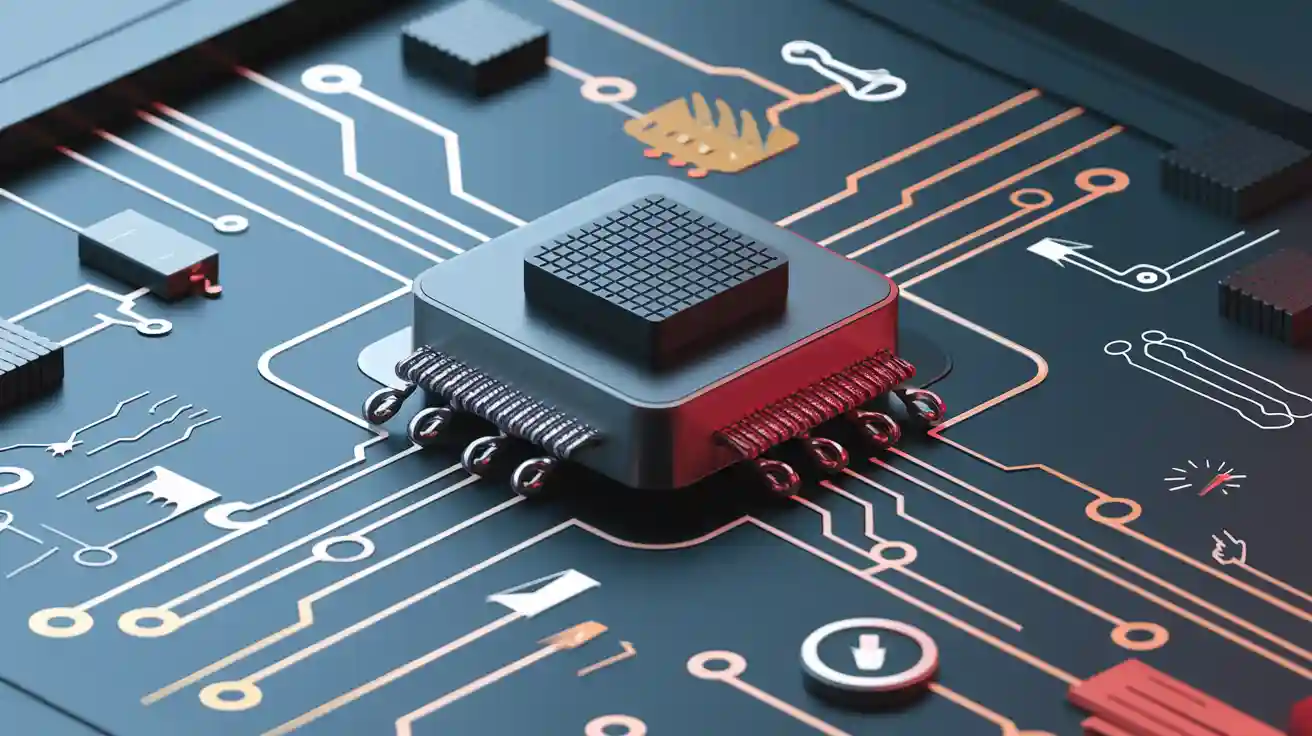
A transistor is a semiconductor device. It can make electronic signals stronger or turn them on and off. You can think of it like a light switch. A small action can control a much bigger flow of electricity. Transistors work as switches and amplifiers. They let you control big currents or voltages with a tiny signal. These small parts are everywhere. Your phone and computer need billions of transistors to work.
Processor | Transistor Count Estimate |
|---|---|
Apple A17 | About twice as many as Kirin 9000 |
HiSilicon Kirin 9000 | Fewer transistors than Apple A17 |
What is a Transistor
Definition
A transistor works like a tiny gate in electronics. It helps control how electricity moves in a circuit. This device can make signals stronger or turn them on and off. Inside, there are three layers made from semiconductor material. These layers are set up as PNP or NPN. The middle layer is the control part. If you change the input here, it changes the current in the other layers.
Transistors have three main parts:
Emitter
Base
Collector
A small voltage or current at the base controls a bigger current between the emitter and collector. This is why transistors are so important in electronics. You find them in almost every modern device.
Tip: Think of a transistor as a gatekeeper. A small signal tells it if a bigger current should flow.
Transistors can make a signal stronger. The output power can be much more than the input power. That is why radios, computers, and phones use transistors.
The transistor uses semiconductor material.
It has three terminals to connect to a circuit.
Doping changes the semiconductor so the transistor works right.
Role in Circuits
Transistors do many jobs in analog and digital circuits. They can make signals stronger, switch currents, and build logic gates. In analog circuits, transistors boost weak signals. For example, speakers use transistors to make music louder. In digital circuits, transistors work as switches. They turn signals on and off so computers can process information.
Here is a table showing how transistors work in different types of circuits:
Circuit Type | Primary Roles of Transistors | Examples of Applications |
|---|---|---|
Analog | Amplification | Audio amplifiers, RF transmitters |
Filtering | Signal filtering circuits | |
Modulation | AM/FM transmission | |
Digital | Logic Gates | AND, OR, NOT gates |
Switching | Motor controllers, microprocessors |
Transistors changed electronics in a big way. Before, people used vacuum tubes. These tubes were large and used lots of power. When Bell Labs invented the transistor in 1947, circuits got smaller and worked better. Now, integrated circuits have many transistors together. This made computers, smartphones, and space travel possible.
Note: The Apollo 11 lunar module had integrated circuits with transistors. This helped astronauts land on the moon safely.
Transistors help make devices fast, small, and use less energy. You use transistors when you use a calculator, listen to music, or send a text.
How Transistors Work
Switch Function
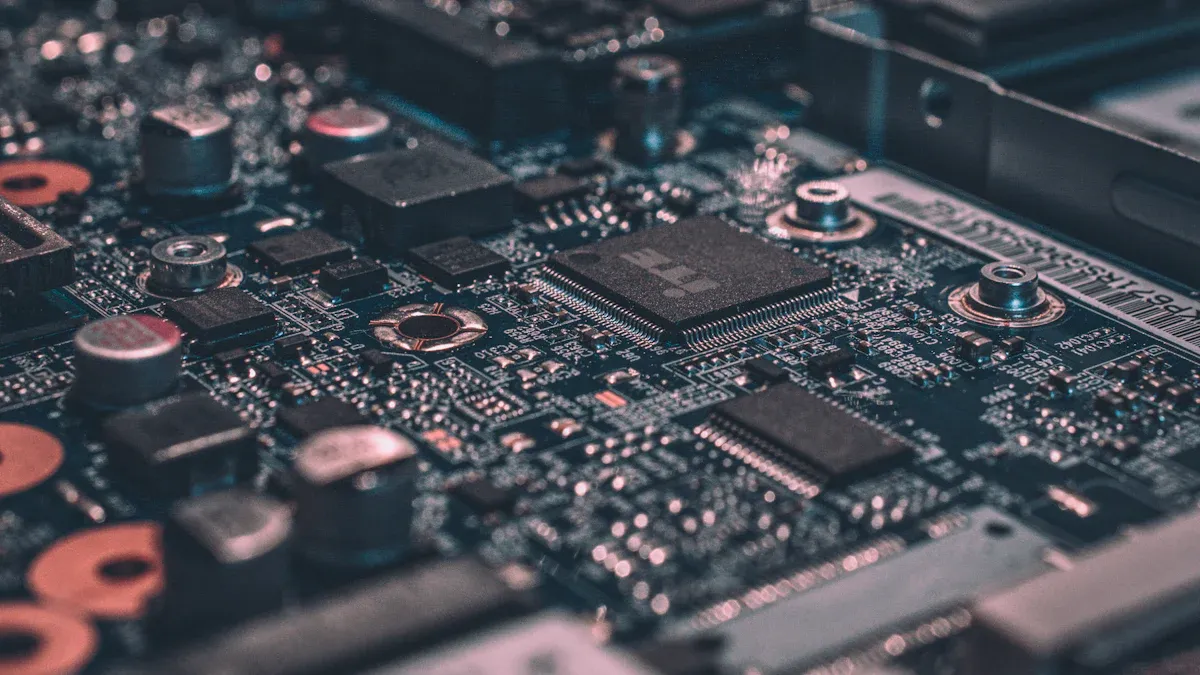
Transistors are inside many things you use every day. You do not see them, but they are there. They act like tiny switches in your devices. When you press a button on your phone, transistors help turn things on or off. Think of a transistor like a faucet. If you open the faucet, water flows. If you close it, water stops. In electronics, transistors control how current moves, just like a faucet controls water.
Transistors work as switches in two main ways. One way is called cutoff mode. In this mode, the transistor is like an open switch. No current moves between the collector and emitter. The other way is called saturation mode. Here, the transistor is like a closed switch. The most current flows through it. This on and off action lets you control electrical signals in circuits.
Tip: Transistors can switch very fast and make almost no sound. That is why new electronics use them instead of old switches.
Here are some real-life places where transistors act as switches:
Computer processors use them to switch very quickly.
They help control relays in cars and home machines.
Transistor switches are small, light, and cheap, so they are in almost every device.
If you send a small voltage to the base of an NPN transistor, it turns on. Then current can flow. If you take away the voltage, the transistor turns off. This lets you control big currents with small signals.
Amplifier Function
Transistors can also make weak signals stronger. You use them as amplifiers. For example, when you play music, transistors boost the sound so you can hear it. In a radio, transistors make the antenna signal strong enough for you to listen.
A small signal goes into the base or gate of the transistor. This small signal controls a bigger current from the collector to the emitter. The output signal gets strong enough for speakers or headphones. You see this in guitar pedals. A single transistor makes the weak guitar sound louder.
Note: A transistor needs the right voltage to work as an amplifier. This is called biasing. The base-emitter part must have about 0.6V to 0.7V for silicon transistors. The collector-emitter voltage must be high enough for the signal to move up and down.
Here is a table that shows the gain range for a common emitter amplifier:
Gain Type | Minimum Gain | Maximum Gain |
|---|---|---|
Common Emitter Amplifier | -5.32 | -218 |
You find transistors in audio gear, where they make microphone signals louder without adding noise. They also help with tone controls, letting you change bass, midrange, and treble.
Current Control
Transistors help you control how much current moves in a circuit. You use them to manage current between different parts of a device. Each transistor has three terminals. For a BJT, these are emitter, base, and collector. For a FET, they are source, gate, and drain.
Here is how transistors control current and voltage:
You send a small current to the base of a BJT or a voltage to the gate of a FET.
This small input controls a much bigger current from collector to emitter or from drain to source.
You can turn the transistor on or off by changing the input, just like turning a faucet to control water.
Tip: The link between base current and collector current in a BJT is important. A small base current can control a much bigger collector current. This is called amplification, and it shows how transistors control signals.
Transistors use semiconductor material to work. Semiconductors let you control voltage and current very well. You see this in computers, phones, and even in space tools.
When you use transistors, you can control voltage and current in many ways. You can switch signals, make them stronger, or manage power in a circuit. This makes transistors the main parts of modern electronics.
Transistor Parts
Key Components
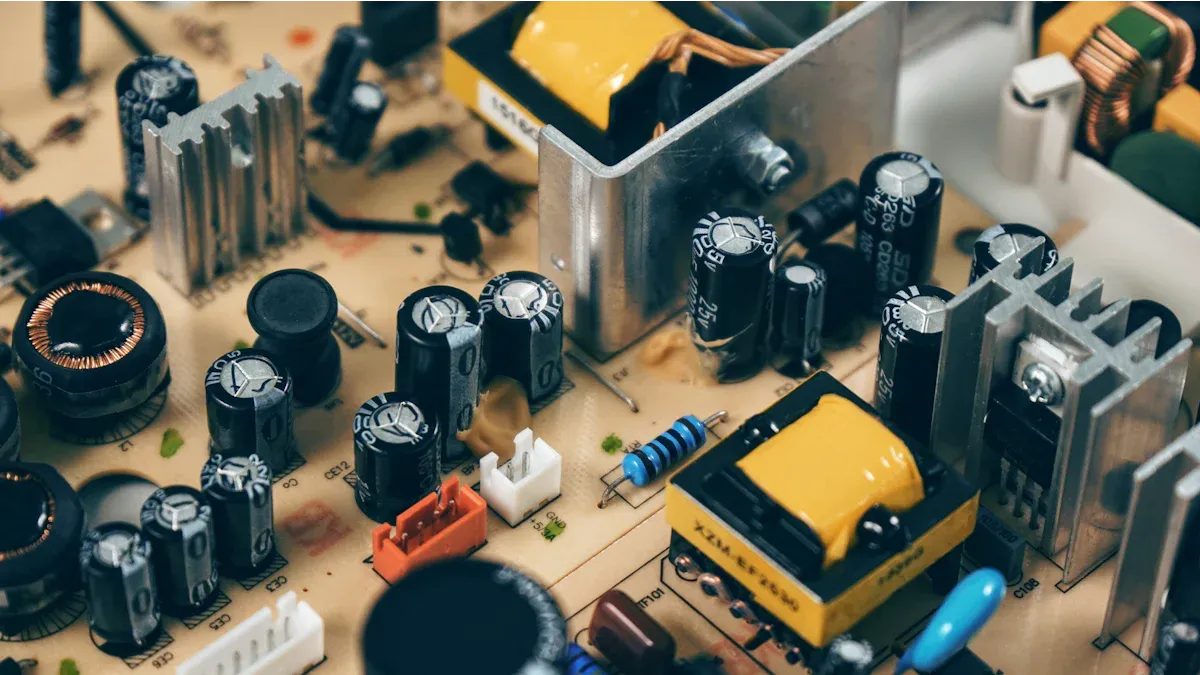
Every transistor has three main parts. Each part does something important. These parts work together to move electricity in devices.
Component | Description |
|---|---|
Emitter | Sends out electrons, has lots of doping, made from copper or aluminum. |
Base | Controls the flow, has little doping, lets electrons move from emitter to collector. |
Collector | Collects electrons, bigger than emitter and base, has some doping, made from silicon or aluminum. |
The emitter gives out electrons or holes. The base is thin and controls the flow. Only a few charge carriers can pass through the base. The collector takes in electrons or holes from the emitter. The size and material of each part change how well the transistor works. When you use a transistor as a switch, the base decides if current moves from emitter to collector. As an amplifier, a small signal at the base makes a bigger signal at the collector.
Tip: How you set up these parts and what they are made of decides if the transistor works as a switch or amplifier.
Semiconductor Material
Transistors use special materials called semiconductors. These materials help control electricity. Silicon is the most common semiconductor. You find silicon in almost every electronic device because it is cheap and works well.
Here are some materials used for transistors:
Germanium was used first in semiconductors.
Silicon became popular in the 1950s because it is easy to find and works better.
Gallium arsenide is used for fast electronics, but it is hard to make.
Silicon is good because it handles heat and is easy to get. Germanium helped early transistors but melts easily and is not stable. Gallium arsenide is better for very fast circuits, like those in satellites or cell towers.
The material you choose changes how fast and well your transistor works. Materials with high mobility let charge move quickly, so devices run faster. Some new materials, like magnetic semiconductors, can even store memory inside the transistor.
Note: The kind of semiconductor you pick can make devices faster, smaller, and stronger.
Types of Transistors
Transistors have different shapes and kinds. Most electronics use two main types. Each type does a special job. Learning about them helps you know how devices work.
BJT
One main type is the bipolar junction transistor. People call it BJT for short. This transistor uses electrons and holes to move current. You control it by sending a small current to the base. BJTs are good for making weak signals stronger. They also help switch things on and off.
Here is a table with important features of BJTs:
Characteristic | Description |
|---|---|
Collector cut-off current (ICBO) | Current in the collector when voltage is there and emitter is open. |
Emitter cut-off current (IEBO) | Current in the emitter when voltage is there and collector is open. |
DC current gain (hFE) | Collector current divided by base current when emitter is grounded. |
Collector-emitter saturation voltage (VCE(sat)) | Voltage when the transistor is saturated under certain conditions. |
Base-emitter saturation voltage (VBE(sat)) | Voltage between base and emitter at saturation under certain conditions. |
Transition frequency (fT) | Frequency where current gain is 1 with emitter grounded. |
Collector output capacitance (Cob) | Collector-base capacitance measured at certain conditions. |
Noise figure (NF) | Ratio of signal-to-noise at input and output, found by a formula. |
You see BJTs in many places:
Amplifiers
Oscillators
Low voltage switching
Common-collector amplifier (emitter follower)
Common-emitter amplifier
Common-base amplifier
Switching circuit
Tip: If you want to make a simple amplifier, you will probably use a bipolar junction transistor.
FET
The other main type is the field-effect transistor. You control this transistor with voltage. FETs use only one kind of charge carrier. They use less power than BJTs. You find field-effect transistors in digital circuits and logic gates.
Here is a table that compares field-effect transistors and BJTs:
Feature | FETs | BJTs |
|---|---|---|
Control Type | Voltage controlled | Current controlled |
Current Gain | Low | High |
Voltage Gain | High | Low |
Switching Speed | Fast | Medium |
Power Consumption | Low | High |
Temperature Coefficient | Positive | Negative |
Size | Smaller | Larger |
Input Impedance | High | Low |
Applications | Low voltage applications | Low current applications |
Manufacturing Cost | Higher | Lower |
There are two common types of field-effect transistors:
Type of FET | Description | Typical Uses |
|---|---|---|
JFET | A simple FET with a channel controlled by a gate made from a p-n junction. | Used in amplifiers and switches because of high input impedance. |
MOSFET | The most used FET with an insulated gate for low power control. | Found in digital circuits, power electronics, and logic gates. |
Note: Field-effect transistors help your devices work faster and use less energy. You find them in computers, phones, and cars.
Each transistor type has its own job. Some are best for making signals stronger. Others are good for switching things quickly. Knowing the difference helps you choose the right transistor for your project.
Importance of Transistors
Impact on Technology
Transistors have changed the world you live in. These tiny devices made technology better and easier to use. When scientists made the first transistor in 1947, it started many new ideas. Before transistors, people used vacuum tubes. Vacuum tubes were big and broke a lot. Transistors made electronics smaller and more dependable.
Transistors helped make electronic devices much smaller. Now you have computers, smartphones, and smart watches because of them.
The digital age began with transistors. They let us store and use lots of information.
Transistors took the place of vacuum tubes. This made things better in communication, entertainment, healthcare, and science.
Artificial intelligence and the Internet of Things need transistors. These areas keep growing as transistors get smaller and stronger.
You can see how transistors changed things by looking at these big moments:
Year | Milestone | Description |
|---|---|---|
1947 | First Transistor | Bell Labs scientists made the first working transistor. |
1955 | Surface Passivation | This made it possible to make lots of integrated circuits. |
1959 | First MOSFET | Now thousands of transistors could fit on one chip. |
1963 | Invention of CMOS | This helped make computer chips and memory for computers. |
Everyday Uses
You use transistors all the time, even if you do not notice. They are inside almost every electronic thing at home or school. Here are some examples:
Computers have millions or billions of transistors in their chips.
Smartphones use transistors to work fast and save your pictures and apps.
Televisions need transistors to make signals stronger and change channels.
Radios use transistors to make sound louder and help you pick stations.
Digital cameras have transistors in their sensors and chips.
Modern chips can have billions of transistors. Some new chips have over 60 billion. The number of transistors in a CPU can be millions or billions, depending on what it is used for.
Every time you text, watch a video, or play a game, you use transistors. These small parts make your favorite devices work.
Transistors change your life in lots of ways. You find them in every digital device you use.
Transistors help computers work by switching ON and OFF quickly.
They make weak signals stronger so you can hear music or voices better.
They keep power safe in many machines.
They turn battery power into energy you can use.
Transistors help make devices smaller and faster. They also make them work better.
They began the digital age and helped technology grow in medicine, communication, and everyday life.
When you use your phone or computer, remember transistors help it work.
FAQ
What does a transistor do in your phone?
A transistor lets your phone process information and store data. It switches signals on and off very fast. You use transistors every time you open an app or send a message.
Why do transistors make devices smaller?
Transistors take up less space than old vacuum tubes. You can fit billions of them on a chip. This helps you carry powerful devices in your pocket.
Can you find transistors in everyday objects?
Yes! You see transistors in computers, TVs, radios, and even toys. They help these devices work better and use less energy.
How do you know if a transistor is working?
You can test a transistor with a multimeter. If you see the right voltage between the terminals, your transistor works. If not, you may need to replace it.
What is the difference between a BJT and a FET?
Type | Controlled By | Common Use |
|---|---|---|
BJT | Current | Amplifiers |
FET | Voltage | Digital circuits |
Tip: You pick a BJT for strong signals. You choose a FET for fast switching.