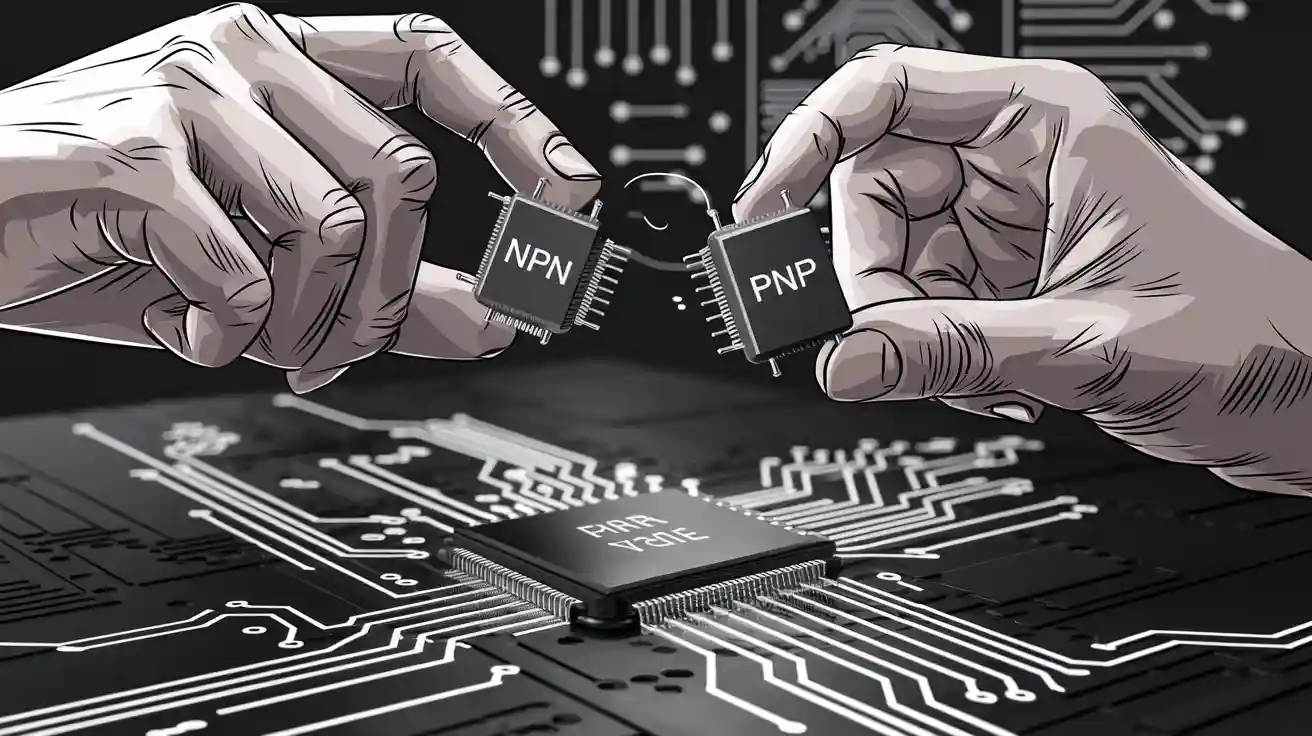
When you pick a transistor for your circuit, it affects how well it works in modern electronics. NPN and PNP transistors do different jobs. NPN transistors are better for fast tasks; they switch quickly and handle heat well. PNP transistors are good for high-side switching and also work well if your circuit needs a negative supply voltage. Choosing the right transistor can make your circuit more reliable and efficient. If you know these differences, you can use transistors in modern electronics more effectively. Try to match each transistor to its best job by following steps.
Selection Criteria
Circuit Needs
When you make a circuit, you need to know what it needs. Every transistor can only handle certain voltage and current. You should look at these numbers so your transistor does not break. If your circuit needs to be fast, you might pick an NPN transistor. NPN transistors switch quickly and are good for digital circuits. If your circuit needs high-side switching or uses a negative supply, a PNP transistor might be better.
You should also think about the gain. Gain shows how much a transistor can make a signal bigger. If you need more amplification, pick a transistor with higher gain. The place where your circuit works is important too. If your circuit will be in a hot or wet place, choose a transistor that can handle it.
Voltage and current ratings keep your transistor safe.
NPN transistors are best for fast switching in digital circuits.
PNP transistors are good for high-side switching and analog use.
Gain should fit what your circuit needs.
Where your circuit works can change how your transistor works.
Tip: Always look at the datasheet for each transistor before you use it.
Logic Compatibility
Logic compatibility matters when you connect a transistor to other parts. You want your control signals to work with the transistor. NPN transistors are used a lot in digital circuits because they work with signals that pull current in. This is called sinking. PNP transistors do the opposite. They push current out to the load, which is called sourcing.
If you pick the wrong type, your circuit might not work. Some digital systems need a transistor that sinks current. If you use a PNP transistor, the signal may not switch the load right. Always match your control signals to the right transistor type.
NPN transistors are best for sinking outputs in digital circuits.
PNP transistors are best for sourcing outputs.
Your choice changes how your devices connect and work.
Sourcing vs. Sinking
You need to know what sourcing and sinking mean when you pick a transistor. Sourcing means the transistor gives current to the load. Sinking means the transistor lets current flow from the load into itself. NPN transistors are for sinking. PNP transistors are for sourcing.
Here is a simple table to help you remember:
Transistor Type | Configuration | Current Flow Direction |
|---|---|---|
NPN | Sinking | Into the transistor |
PNP | Sourcing | Out of the transistor |
If you use sensors, you will see this difference. PNP sensors connect positive voltage to the switched wire. NPN sensors connect zero voltage to the switched wire. You need to match the sensor and transistor type to your digital input modules so your circuit works.
NPN transistors sink current in circuits.
PNP transistors source current.
Using the wrong type can cause too much current or make your circuit not work.
Note: Always check your wiring and the transistor type before you turn on your circuit.
NPN vs. PNP Transistor Differences
Structure and Carriers
Inside a transistor, there are layers made from special stuff. NPN transistors have two n-type layers. There is a p-type layer between them. PNP transistors have two p-type layers. There is an n-type layer between them. Look at the table to see the difference:
Transistor Type | Structure Description |
|---|---|
NPN | Two n-type semiconductors with a p-type semiconductor in between |
PNP | Two p-type semiconductors with an n-type semiconductor in between |
The big difference is how charge moves. In an NPN transistor, electrons travel through the layers. In a PNP transistor, holes move instead. Electrons move faster than holes. That is why NPN transistors are better for fast jobs. You use a bipolar junction transistor to control current with another current. Sometimes you see a field-effect transistor in a circuit. It works differently because it uses voltage to control current.
Current Flow
It is important to know how current moves in each transistor. In an NPN transistor, current goes from the collector to the emitter. The load must be before the transistor. This means the transistor sinks current. In a PNP transistor, current goes from the emitter to the collector. The load connects to the negative side. The transistor sources current. Bipolar junction transistors switch or make signals bigger. Field-effect transistors can also switch signals. They do not use the same current flow.
NPN transistor: Sinks current, load before transistor.
PNP transistor: Sources current, load after transistor.
Bipolar junction transistor: Controls current with current.
Field-effect transistor: Controls current with voltage.
Speed and Efficiency
Speed is important when you build circuits. NPN transistors switch fast because electrons move quickly. PNP transistors use holes, and holes move slower. Pick an NPN bipolar junction transistor for high-speed switching. Sometimes you need a PNP bipolar junction transistor for special jobs, like high-side switching. Field-effect transistors switch even faster than bipolar junction transistors. Use a field-effect transistor for low power and high speed. You find field-effect transistors in computers and phones. They save energy and work fast.
Tip: For the fastest switching, use a field-effect transistor. For easy switching or making signals bigger, use a bipolar junction transistor.
Transistors in Modern Electronics
Historical Significance
Transistors changed electronics in a big way. Before, people used vacuum tubes. These tubes were large and broke easily. They also used a lot of power. When Bell Labs made the transistor, things got better. Devices became smaller and worked better.
Transistors can be close together and not get too hot.
They switch fast, which helps logic circuits work well.
Their small size and low power let electronics get tiny.
Transistors fixed the problems with vacuum tubes.
Now, devices are smaller, use less power, and stay cooler.
This helped make integrated circuits and started the digital age.
Today, transistors are in almost every electronic device. Moving from vacuum tubes to transistors made modern technology possible.
Miniaturization Trends
Making things smaller changes how transistors are used. Moore’s Law says chips get twice as many transistors every two years. This made transistors smaller, faster, and cheaper.
Moore’s Law made NPN and PNP transistors smaller and quicker.
Smaller transistors let microprocessors have billions of them.
More transistors made powerful computers for everyone.
You see smaller transistors in many areas. The table shows how more transistors help different markets:
Industry Segment | Market Value (Projected) | Growth Factor |
|---|---|---|
Global Smartphone Market | Over $400 billion | Continued growth |
Automotive Semiconductor | $80 billion by 2026 | Significant growth |
Wearable Technology | Exceed $100 billion by 2025 | Rapid expansion |
IoT Market | $1.6 trillion by 2025 | Major contributor |
Transistors keep getting smaller in electronics. This gives you faster and lighter devices. Smaller electronics will keep bringing new ideas in the future.
NPN Transistor Operation
How NPN Works
You use an npn transistor in many circuits. It can switch signals and make them bigger. The npn transistor has three layers. There are two n-type layers and one p-type layer. The emitter has lots of extra electrons. It pushes many electrons into the base. The base is thin and has few extra electrons. Most electrons go through the base to the collector. The collector has some extra electrons and catches the moving electrons.
When you put a small positive voltage on the base, the base-emitter part turns on. This makes it easier for electrons to move. Electrons leave the emitter, go through the base, and reach the collector. The base-collector part stays off, so it pulls electrons into the collector. You can control a big current from collector to emitter by changing the small base current. This is why the npn transistor is good for making signals bigger or switching.
The emitter sends electrons into the base.
The base lets most electrons go to the collector.
The collector takes the electrons and makes the main current.
A small base current controls a much bigger collector-emitter current.
Tip: You use the npn transistor in digital circuits a lot. It switches fast and can handle high currents.
Testing NPN
You need to test the npn transistor to make sure it works. There are different ways to check if it is healthy. One way is static resistance testing. You use a multimeter to measure resistance between the pins. The npn transistor should not be powered for this test. This helps you find problems like shorts or open circuits.
Another way is dynamic working point testing. You measure voltage and current while the npn transistor is powered. This shows if the npn transistor works well when it is running. For fast circuits, you can use frequency characteristic testing. This checks how the npn transistor works at different speeds.
Testing in the circuit shows if the npn transistor works during normal use.
The substitution method means you swap the npn transistor with a good one. If the problem goes away, the old one was bad.
Using an ohmmeter helps you check the gain and resistance of the npn transistor.
Note: Always turn off power before using a multimeter for static resistance testing. This keeps you and your npn transistor safe.
PNP Transistor Operation
How PNP Works
You use a pnp transistor when you want to control current in a special way. The pnp transistor has three layers, just like other types, but the layers are arranged differently. In a pnp transistor, the current flows from the emitter to the collector. You connect the load to the negative side. To turn on a pnp transistor, you need a small current from the emitter into the base. This is different from an npn transistor, where you use a higher voltage at the base.
Here is a table to help you see the differences:
Transistor Type | Current Flow Direction | Load Connection | Activation Method |
|---|---|---|---|
NPN | Collector to Emitter | Positive side | Base to Emitter |
PNP | Emitter to Collector | Negative side | Emitter to Base |
You often use a pnp transistor for high-side switching. This means you put the pnp transistor between the power supply and the load. When you apply a small current from the emitter to the base, the pnp transistor lets a larger current flow from the emitter to the collector. This makes the pnp transistor useful in circuits that need to source current.
In a pnp transistor, current flows from emitter to collector.
You activate a pnp transistor by sending a small current from emitter to base.
The pnp transistor works best when you need to source current to a load.
Tip: Always remember that a pnp transistor turns on when the base is at a lower voltage than the emitter.
Testing PNP
You need to test a pnp transistor to make sure it works in your circuit. You can use a multimeter set to diode mode for this job. Follow these steps to test a pnp transistor:
Connect the red test lead to any pin of the pnp transistor.
Use the black test lead to measure the other two pins.
Find the base by looking for two small resistance readings. If the red lead stays on the same pin, you have a pnp transistor.
Measure the resistance between the other two pins to find the emitter and collector.
For a pnp transistor, connect the black lead to the emitter and the red lead to the collector. You should see a resistance reading.
You can also check the voltage drop. Place the negative probe on the base and the positive probe on the collector. You should see a reading between 0.6V and 0.7V. If you reverse the probes and get a short or open reading, the pnp transistor may be faulty.
Use a multimeter in diode mode for testing a pnp transistor.
Check for correct resistance and voltage drop between pins.
Replace the pnp transistor if you find a short or open circuit.
Note: Always turn off the power before testing a pnp transistor to keep yourself and your circuit safe. 🛡️
Applications of NPN and PNP
Switching and Amplification
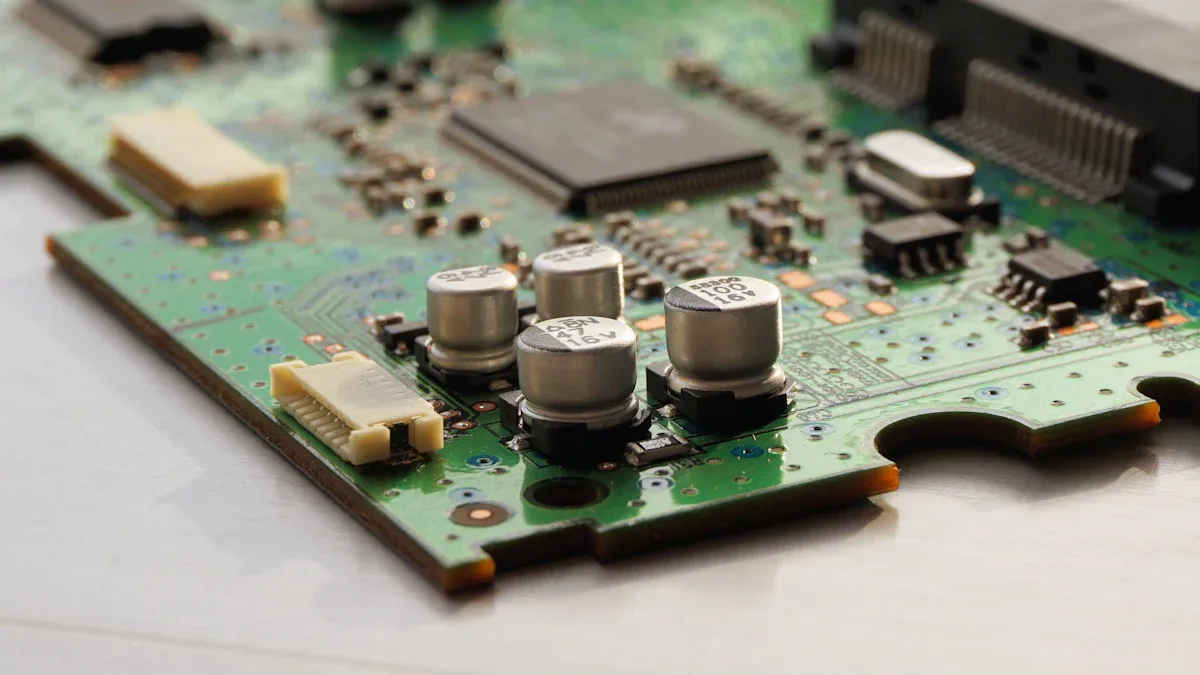
You can find npn transistor and pnp transistor in many places. These devices help control signals and power in circuits. The npn transistor is good for turning things on or off. It also makes signals stronger. The pnp transistor is used for high-side switching. This means it controls current from the positive side.
A basic use for a transistor is to act like a switch. It can turn power on or off in a circuit. When you use cutoff or saturation mode, the transistor acts like a switch. This gives you an on or off effect.
Power electronics need switches that work well. The npn transistor switches fast and makes signals bigger. You see it in digital circuits and voltage control. It is also used to make signals stronger. The pnp transistor is best for sending current to a load. You often use it for high-side switching.
Here is a table that shows where each type is used:
Transistor Type | Common Applications |
|---|---|
NPN | Signal amplification, voltage regulation, electronic switches in digital circuits |
PNP | High-side switching applications |
You use these transistors to control motors, lights, and sensors. The npn transistor is fast, so it works well in digital circuits. The pnp transistor helps control current in analog and high-side circuits. Both types let you switch power and make signals stronger in many uses.
Integrated Circuits
Npn transistor and pnp transistor are inside integrated circuits. These small parts work together to make electronics smarter. In power electronics, you need both types for strong circuits. The npn transistor uses electrons to move current. The pnp transistor uses holes to move current. Each type needs a different voltage to work. The npn transistor works with a positive base voltage. The pnp transistor works with a negative base voltage.
PNP transistors use holes to carry current, but NPN transistors use electrons.
PNP transistors work from emitter to collector with a negative base voltage, but NPN transistors work from collector to emitter with a positive base voltage.
The voltage needed is different: PNP needs a negative voltage on the collector, but NPN needs a positive voltage.
Both PNP and NPN transistors are used together in push-pull amplifiers and special circuits.
You see both npn transistor and pnp transistor in push-pull amplifiers. These circuits help make sound better and signals stronger. Integrated circuits use both types to help devices work well. Power electronics use these transistors for switching, making signals bigger, and control. You find them in computers, phones, and smart devices.
Tip: When you design power electronics, use both npn transistor and pnp transistor for the best results.
Comparing NPN and PNP
Key Differences
When you look at NPN and PNP transistors, you notice some big differences. These differences change how you use them in circuits.
NPN transistors move current with electrons. You turn them on by putting a positive voltage at the base. The base must be more positive than the emitter.
PNP transistors use holes to move current. You turn them on by putting a negative voltage at the base. The base must be less positive than the emitter.
NPN transistors work best with a negative ground. They switch quickly because electrons move fast.
PNP transistors work well with a positive ground. You use them for high-side switching. The transistor goes between the power supply and the load.
Tip: Always check what kind of ground and voltage your circuit needs before you pick a transistor.
Use Cases
You see both types of transistor in many devices today. Each type is good for certain jobs.
NPN transistors help send and process signals in smartphones. They make communication faster and clearer.
PNP transistors help make sound and pictures better in TVs and radios.
Both types help manage signals in devices so you get clear conversations.
Transistors are in CPUs and memory chips. They help computers work fast and store data quickly.
Here is a table to help you compare NPN and PNP transistors for your designs:
Feature | NPN Transistor | PNP Transistor |
|---|---|---|
Current Flow | Collector to Emitter (electrons) | Emitter to Collector (holes) |
Biasing Requirement | Positive voltage at base vs. emitter | Negative voltage at base vs. emitter |
Common Usage | Digital circuits, amplifiers, high-speed switch | Power supply circuits, high-side switches |
Grounding Preference | Negative ground | Positive ground |
Switching Speed | Faster (electron-based) | Slower |
Practical Applications | Logic circuits, audio amplifiers | Motor control, signal processing |
Note: If you want fast switching and easy grounding, pick an NPN transistor. If you need high-side switching or a positive ground, use a PNP transistor.
Selection Challenges
Common Mistakes
When you select a transistor for your circuit, you can make mistakes that cause problems. Many people forget to check the ground of the circuit. You should use an NPN transistor with a negative ground. You should use a PNP transistor with a positive ground. If you swap these types without changing the wiring, the circuit will not work. Each type needs different wiring and signal polarity.
Some people connect the base with the wrong polarity. This mistake can stop the transistor from turning on. It can even damage the part. Always check the base connection before you power up your circuit. You should also avoid swapping NPN and PNP transistors directly. They do not work the same way.
Make sure the ground matches the transistor type.
Never swap NPN and PNP transistors without changing the wiring.
Always check the base connection polarity.
Tip: Double-check your wiring and connections before you test your circuit. This step can save you time and protect your components.
Troubleshooting
If your circuit does not work, you can use some simple steps to find the problem. Start by checking all connections. Make sure every wire is secure and in the right place. Use a multimeter to measure voltages at different points. This tool helps you see if the transistor gets the right signals.
Check if the base current is strong enough to turn on the transistor. If the transistor gets too hot, it may need a heat sink. Make sure the transistor is not installed backward. Sometimes, the part itself is damaged. You can test the transistor outside the circuit to see if it still works.
Check all connections for security and correctness.
Use a multimeter to measure voltages.
Confirm the base current is enough.
Watch the temperature and use a heat sink if needed.
Make sure the transistor is installed the right way.
Test the transistor by itself if you suspect damage.
Note: Careful troubleshooting helps you find and fix problems quickly. You can keep your circuit safe and working well.
Future of Transistor Technology
Physical Limits
Transistor technology gets better every year. Making transistors smaller brings new problems. When transistors get tiny, strange things happen. Quantum effects can change how they work. This makes circuits less reliable. PNP transistors have some limits too. They do not work fast because holes move slower than electrons. This changes how you use them in microprocessors and memory chips.
Here is a table that shows the main problems for transistor technology:
Challenge | Description |
|---|---|
Quantum effects | Tiny transistors can have quantum effects that make them less reliable. |
Variability in device characteristics | Small transistors can act differently, so you need new ways to keep them working well. |
Lower mobility of holes in PNP | PNP transistors are slower than NPN in fast circuits. |
Leakage current | PNP transistors can leak more current, which uses more power and makes heat. |
Voltage handling capability | PNP transistors cannot handle high voltage, so you use them less in those circuits. |
Temperature sensitivity | PNP transistors can change how they work when the temperature changes. |
Noise performance | PNP transistors can make more noise, which is a problem in analog circuits. |
Integration challenges | It is hard to put PNP and NPN transistors together in one chip. |
When you push transistor technology to the limit, you need to fix these problems to make better microprocessors and memory chips.
New Technologies
There are many new ideas in transistor technology. These new things help you get past old problems. Engineers use silicon-germanium (SiGe) to make PNP transistors work faster. This helps build quicker microprocessors and memory chips. Heterojunction bipolar transistors (HBTs) are another big step. They give you more current gain and better results in special circuits.
Silicon-germanium PNP transistors help with high-frequency jobs.
Heterojunction bipolar transistors (HBTs) give more current gain and better results in special circuits.
You will see more new transistor ideas as engineers try to make devices smaller and faster. These changes will help make the next generation of microprocessors and memory chips. When you learn about new transistor technology, you join a world where new ideas never stop.
Stay curious about transistor technology. Every new idea helps make electronics smarter and stronger.
When you pick NPN or PNP transistors, think about speed and current. NPN transistors are good for switching fast and handling more current. PNP transistors help make fixing and building circuits easier. Look at your voltage, current, and sensor type before you choose. Always check the manual for important details. Transistors are used more as devices get smaller and quicker. You will find new ways to use transistors in future electronics.
FAQ
What is the main difference between NPN and PNP transistors?
You use NPN transistors for sinking current and PNP transistors for sourcing current. NPN transistors turn on with a positive base voltage. PNP transistors turn on with a negative base voltage. NPN types switch faster because electrons move quicker than holes.
Can you replace an NPN transistor with a PNP transistor?
You cannot swap them directly. NPN and PNP transistors have different wiring and current flow. If you want to switch, you must change the circuit design and signal polarity. Always check your schematic before making changes.
Why do most digital circuits use NPN transistors?
You see NPN transistors in digital circuits because they switch faster and work well with ground-based logic. Electrons move quickly, so NPN types handle high-speed signals better. This makes your digital devices more reliable and efficient.
How do you test if a transistor is working?
You can use a multimeter in diode mode. Check the resistance between the base and other pins. For NPN, the base-emitter and base-collector should show a voltage drop. For PNP, reverse the probes. Replace the transistor if you see a short or open reading.
When should you choose a PNP transistor?
You pick a PNP transistor for high-side switching or when your load connects to the positive supply. PNP types work well in circuits that need to source current. They also help when your control signal is referenced to ground.