1.What are electronic devices and circuits?
First of all, you should know about electronics. It is the branch of physics and engineering that deals with the study of electrons, their behavior, flow, and control under different situations. Electronic devices are the components that control the flow of electrical current for information processing and system control purposes. These devices enable complex functions such as communication, computing, and automation using semiconductor components like integrated circuit and transistors. Electronic devices reply on electronic circuits.
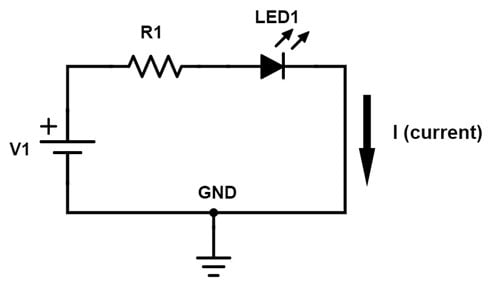
An electronic circuit is the combination of individual electronic components such as resistors, capacitors, inductors, diodes, and transistors connected through wires or a printed circuit board in which electric current can flow. Examples of electronic circuits are simple LED circuits, power supply circuits, amplifier circuits, etc.

2. What is the role of electronic devices in modern technology?
Electronic devices have an important role in structuring modern technology, revolutionizing various industries. Nowadays electronic devices are a major part of our daily lives. From the use of cell phones to advanced appliances, these devices make our lives very easy, accessible, and comfortable. Electronic devices have a great role in today’s advanced technology. If you ever wondered how these devices work, you are not the only one. Most people do not know even if they are using them frequently, how electronic devices and circuits work. Electronic devices are made up of electronic circuits that contain electronic components to process different applications, information, and systems. Some of the major fields in which electronic devices have a great impact are as follows:
- Consumer Electronics and Smart Devices
- Artificial Intelligence and Computer System
- Industrial Electronics and Automation
- Healthcare and Medical Field
- Communication and Connectivity

3. What are the different types of electronic devices?
Passive Components
Electronic devices are made up of electronic (passive) components such as resistors, capacitors, diodes, inductors, and transistors. A resistor is a passive electronic element that consumes energy and acts as a load. It also resists the flow of current. A capacitor stores energy in the form of electric charge. An inductor stores the energy in the form of a magnetic field.
Active Components
A transistor is a semiconductor active electronic component. It is used as a switch in electronic devices, or sometimes it amplifies signals and power. They are widely used in our daily appliances and electronic devices, such as computers, cell phones, memory chips, etc. Transistors are the fundamental components of integrated circuits (IC) that contain passive components like resistors and capacitors etched onto a small chip.

Semiconductor Devices
Diodes allow current in one direction while blocking the current flow in the reverse direction. It contains P-type and N-type semiconductor materials. Special types of diodes are Zener diodes and light-emitting diodes. It also protects circuits from overvoltage or reverse polarity.
Other semiconductor devices are bipolar junction transistors and metal oxide semiconductor field effect transistors in electronic devices and circuits. ’BJTs are current-controlled devices while MOSFETs are voltage-controlled devices.
Electromechanical Components
In electronic devices, relays are electromechanical switches that are made up of an electromagnet coil, contact points, and a mechanical lever. It uses a lower power signal to control a power electronic circuit. Relays provide electrical isolation between the control and load circuits. Relays are used widely in many applications such as industrial automation, motor control and home appliances.
A switch is an electromechanical device that is used to break or make an electrical or electronic circuit. Switches may work manually or mechanically. Switches are used in lighting systems, refrigerators, electronic devices, air conditioners, etc.
A motor is also an electromechanical device that converts electrical energy into mechanical energy. There are many types of motors, like DC, AC motors, servos, and induction motors. They are used in different applications like industrial systems, electrical and hybrid vehicles, and robotics, etc.
4.What are electronic circuits?
An electronic circuit is a path or way through which electrical current flows across different electronic components such as resistors, capacitors, transistors, and inductors. Electronic circuits are the basic building blocks of all electronic devices and systems. From the use of smartphones to large industrial and power system technologies, there is a crucial contribution of electronic circuits in the development of these applications.
5. Types of Electronic Circuits
| Type of Electronic Circuit | Description | Examples |
| Analog Circuit | An analog circuit is a type of electronic circuit that can process continuous signals or data and produce output in analog form. It consists of electronic components such as resistors, capacitors, inductors, diodes, and transistors. | Audio amplifier, Temperature sensors |
| Digital Circuits | Digital circuits process using discrete signals or digital values such as binary codes. Digital circuits are a combination of logic gates and transistors. | Microprocessor, Digital logic gates (AND, OR NAND), |
| Mixed Signals Circuits | Mixed-signal circuits are actually integrated circuits that consist of both analog and digital circuits on one chip. These electronic circuits process both analog and digital signals. They are used in applications such as modems, receivers, and smartphones. | Analog-to-digital converters (ADC), digital-to-analog converters (DAC) |
| Printed Circuit Board | A printed circuit board is a non-conductive surface or board with conductive lines etched on it. It is a type of electronic circuit that connects electronic components. In today’s modern technology, PCBs have a significant role in electronic devices and circuits. PCBs can be single, double, or multi-layer, depending on the complexity and design of the circuit. | Mobile phones, computers, electronic devices |
| Linear Circuits | The electronic circuit whose parameters are constant with time and don’t change with current or voltage value is said to be a linear circuit. It follows Ohm’s law. | Voltage Dividers, RC and RL circuits |
| Non-Linear Circuits | A nonlinear circuit is a type of electronic circuit whose parameters change with voltage or current. These circuits do not obey Ohm’s law. The output of nonlinear circuits is not proportional to the input like linear circuits. | Rectifiers, amplifiers, Digital logic circuits |
6. How to Design Electronic Circuits
When designing electronic circuits, there are a few key steps to be followed.
Understanding Circuit Schematics
Circuit schematics are the graphical representation of an electronic circuit by using standardized symbols. Understanding circuit diagrams or schematics is important for designing, analyzing, and testing or troubleshooting electronic circuits.
Prototyping and PCB Design
After understanding the circuit schematics, the second step for designing an electronic circuit is prototyping and printed circuit board design. PCB prototypes are the early samples of electronic devices that are designed for the primary function of testing. Electronic devices and circuit designers and PCB manufacturers use various PCB prototypes to test different aspects of selected electronic circuits.
Troubleshooting and Repairing Techniques
When electronic devices malfunction, then identifying the faulty components in the circuit is the first objective for designers and electronic engineers. By recognizing damaged, malfunctioning, and broken components or parts, designers can replace them with functional ones to make for proper use and working.
7. Testing and Measurement Tools for Electronic Devices
Oscilloscope
An oscilloscope is a device used for visualizing electrical voltage signals over time. It provided graphical and visual representation of voltage signal versus time. An oscilloscope helps in analyzing waveforms, signal frequencies, transient response, and noise in electronic circuits. waveform, allowing you to observe and study the behavior of electrical systems. It is mostly used for telecommunications and electronics.

Multimeter
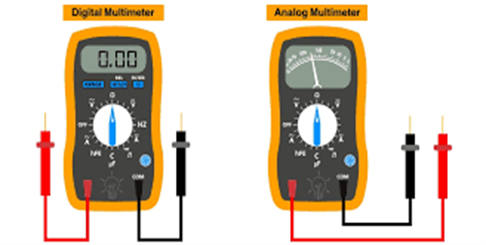
A multimeter is a testing and measuring device used to measure multiple electrical parameters of an electronic circuit, such as current, voltage, and resistance. It can measure AC and DC voltage, current, and resistance in ohms. A multimeter can also be used for a continuity check for a broken connection in an electronic device or circuit. A typical analog and digital multimeter is shown as follows:
8. Applications of Electronic Devices and Circuits
- Consumer electronics
- Industrial Automation
- Robotics and Intelligence
- Medical Applications
consumer electronics
Consumer devices are the devices used for entertainment, communication, or information purposes. They are usually utilized for convenient leisure purposes. In today’s technological era, consumer electronics enable connecting the globe through smartphones and laptops. Examples of consumer electronics are smartphones, laptops, smartwatches, headphones, air conditioners, microwave ovens, etc.
Industrial automation
Electronics engineering and devices have a great impact on the smooth functioning of the industries. Electronic circuits control and monitor industrial processes such as temperature, flow rate, and pressure. Electronic devices and circuits optimize energy consumption in industrial systems. It also enables automation and robotics in industrial systems.

Robotics and artificial intelligence
Electronic devices and circuits are basics to robotics and artificial intelligence (AI). It helps in enabling the decision-making, perception, and control of sensors such as infrared and LiDAR. Electronic circuits contribute to the field of robotics and artificial intelligence by processing the extensive amount of data needed to train and deploy machine learning algorithms in robotic systems.
Medical devices
Like other fields, electronic devices and circuits play an important role in the medical field and devices. It enabled advancements in therapy, diagnostics, and health monitoring through devices like imaging equipment and other monitoring systems. Applications and examples of electronic devices in medicine are X-ray machines, MRI machines, CT scans, ECG, EEG, biomedical sensors, blood glucose monitors, etc.
Conclusion
Electronic devices and circuits play a vital role in making our lives easy, shaping modern technology, and enhancing advancement in various fields. These devices are designed by using electronic components such as passive, active, and semiconductor components that function in the control systems and process information. From cellphones and medical imaging to power systems and industrial automation, electronic circuits form the backbone of efficient systems and innovation in new technologies. Printed circuit board design and troubleshooting methods are crucial for developing an efficient electronic device.
Wonderful PCB, a leading electronics and PCB manufacturing brand, provides the best electronic solutions and plays a significant role in advancing electronic technology by providing high-quality electronic manufacturing services and PCB manufacturing services to various industries.