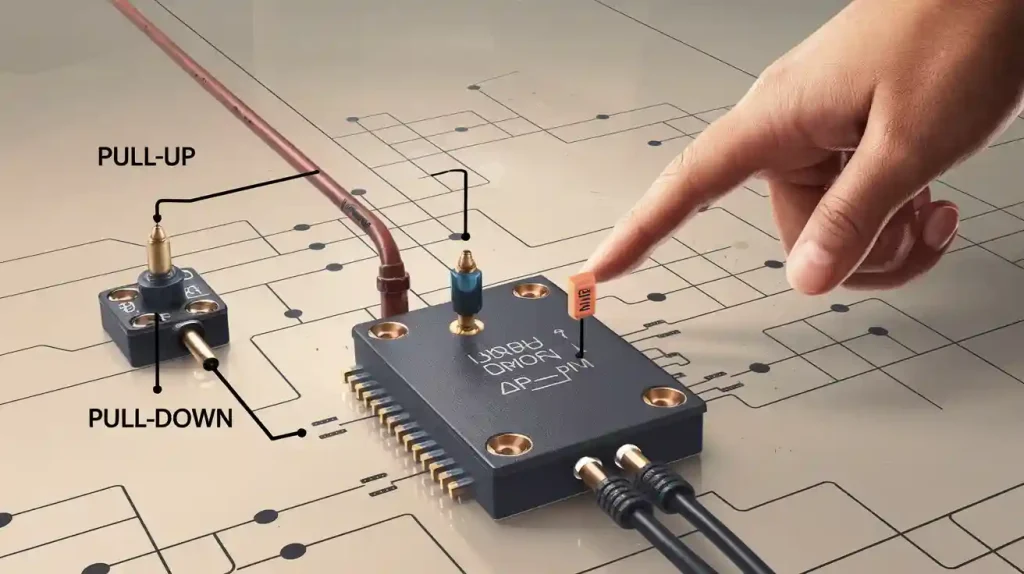
You are a product manager evaluating Multi-Protocol Wireless Communication, choosing between Bluetooth, Wi-Fi, and Zigbee. The wireless protocol market grows at 20.1% annually from 2025. Multi-protocol hubs like Aqara’s Hub M3 with Matter protocol standards help drive this growth.
Your problem: how do you enable Multi-Protocol Wireless Communication without compromising security? Encryption is the foundation. You need secure wireless communication with a robust system. Keeping every channel private matters. This technology requires secure transmission through built-in wireless safety and physical layer security.
This post shares best practices for Multi-Protocol Wireless Communication: selecting protocols, using cryptography, and smart home integration. Build secure wireless networks with layered security. Easy-to-connect IoT standards, speed, and data safety remain the main goals.
Key Takeaways
Use WPA3 for Wi-Fi, AES-128 for BLE and Zigbee, and hybrid RSA+AES for LoRaWAN to keep each protocol safe.
Use time-slot scheduling and frequency hopping to manage the shared 2.4 GHz spectrum. This helps cut down on interference and lowers security risks.
Balance security with power by using flexible encryption levels: full AES-256 for important devices, simpler methods for low-power sensors.
Protect the physical layer to stop attacks that take advantage of unencrypted switching signals.
Use one security plan for all protocols to prevent weak spots and ensure strong protection.
Multi-Protocol Wireless Communication and Core Protocols

The 2.4 GHz frequency band is used by Wi-Fi, Bluetooth, Zigbee, and Thread. Because they share the same space, you can run multiple types of wireless on one radio. You can set up different standards without adding new hardware. Each type has its own strengths for your network setup.
Common Protocols and Their Use Cases
Bluetooth Low Energy (BLE) is the top choice for smart home devices that run on batteries. Things like smart locks, window sensors, leak detectors, and environmental monitors use BLE because it is reliable and uses little power. These devices only need a simple app to set up, not a fast connection. BLE Mesh networking lets them reach farther. It allows lights, curtains, and air conditioners to control themselves without complicated wiring. One example used the nRF52840 chip and sent data reliably up to 28.7 meters with very few lost packets.
LoRaWAN is for a completely different job. This protocol gives low-power wide-area coverage for IoT devices in cities or rural areas. Its setup has three parts: end-devices that collect data, gateways that pass messages, and a network server that handles login and routing. LoRa’s special modulation lets signals travel up to ten miles in the countryside. Class A devices use four times less power than NB-IoT for similar data speed, so their batteries can last for years.
WirelessHART is made for factory control. It uses AES-128 encryption to keep data safe between field devices and controllers. You would pick WirelessHART for factory automation when reliability and privacy matter more than speed.
Single-Radio Multi-Protocol Support
Modern multi-protocol chips let several standards run at the same time. These chips have features that reduce interference by smartly scheduling tasks. Separate processing cores handle each protocol stack in real time. A dynamic power manager checks the workload and changes energy use based on what is needed.
You must manage the frequency spectrum carefully when using multiple protocols. Keep as much distance as possible between Wi-Fi and IEEE 802.15.4 channels to avoid interference. Use Wi-Fi in 20 MHz mode instead of 40 MHz mode, which creates extra distortion. Placing antennas apart physically also helps reduce interference between radios.

Single-radio backhauls have limited throughput. Each hop cuts the available bandwidth. A 54 Mbps root connection gives only 13.5 Mbps after two hops and 3.375 Mbps after three hops. The delay and jitter make single-radio backhauls bad for voice calls after one hop. This limit shapes how you design your network for multi-protocol wireless interoperability.
Security in Multi-Protocol Wireless Interoperability

Encryption Gaps Across Protocols
When you use multiple radio types in one IoT device, you have a big problem. Each type uses a different way to lock data. Wi-Fi uses WPA3. Bluetooth LE uses AES-128. Zigbee uses AES-128 at the network level. LoRaWAN uses AES-128 for end-to-end safety. These differences create holes in your overall security.
The real danger comes when the device switches between different radio types. The switching process uses signals that are not encrypted to start the connection. An attacker can send fake signals that look like a real base station. Your device then adds the fake station’s ID in its report. The original station accepts this report because it comes over the locked channel. The hole comes from the lack of encryption on the measurement signals, not from a weak spot in the encryption types themselves.
Using multiple types also brings different ways to control access. You cannot make the same rules work for every type. This gives attackers more ways in and creates more weak spots.
Threats from Coexistence and Interference
Running multiple radio types in the same frequency band creates new dangers. The 2.4 GHz space is shared by Wi-Fi, Bluetooth, Zigbee, and Thread. An attacker can take advantage of this shared space. They can send interference signals that break normal operations. This forces devices to reconnect or switch channels, which opens up chances for attack.
Think about a case where an attacker targets the switch between Bluetooth and Wi-Fi. The attacker sends strong signals that look like a trusted access point. Your device picks up these signals during the switch. The device sends a measurement report over the locked connection. The original station accepts this report because it arrives on the secure channel. This lets the attacker send traffic through their own node. The unencrypted signals start the switch, not the locked data.
Using multiple radio types makes the total attack area bigger. Each new type adds another way in. You need a security plan that covers many angles. Physical layer security becomes important here. You must protect the data channel itself.
A good plan means you need to think about every layer of the stack. You need safe wireless communication from the physical layer up to the application layer. You also need safe sending of login data. You also need safe sending of device credentials. This means picking the right lock for each type while keeping everything working together. The goal is to make different types work together without losing safety or speed. Multi-protocol wireless communication needs one unified approach across all wireless technologies. You must keep information secret across every channel. You must also protect information while it is stored. The data path must stay protected from start to end. Good connections with strong locks give the best results.
Best Practices for Secure Transmission
You need a clear plan to keep data safe across every wireless standard in your product. Each protocol needs different encryption choices. You also need one shared way to manage keys. This section shows you how to build that system.
Picking Encryption Standards for Each Protocol
Start with the strongest options you can find. WPA3 is the newest Wi-Fi security standard. It uses AES encryption with SAE for password checks. WPA3 also has OWE for open networks. This standard fixes known WPA2 problems. For Wi-Fi, pick WPA3 whenever your hardware can run it.
Standard | Encryption Protocol | Security Status | Key Features |
|---|---|---|---|
WEP | RC4 | Weak/insecure | Shared key login, easy to break |
WPA | TKIP (RC4-based) | Old/insecure | Short-term fix, better than WEP |
WPA2 | AES (CCMP) | Strong (current) | Works for Personal & Enterprise modes |
WPA3 | AES (CCMP/GCMP) | Strongest (newest) | SAE for password login, OWE for open networks |
AES-256 is the strongest symmetric encryption you can use. For low-power IoT devices, you need a different method. LoRaWAN works well with hybrid encryption. This method mixes RSA and AES. The IoT device makes session keys during Over-The-Air Activation. The improved RSA algorithm locks these keys. The network server unlocks them with its private key. Then the device locks data payloads using an improved AES algorithm. This version cuts rounds from ten to seven and uses a three-threaded design. This method boosts speed and saves power while keeping strong security.
Key Encryption/Selection Consideration | |
|---|---|
BLE | Encryption must fit within timing and speed limits; pairing model choice matters |
WiFi | Login and certificate handling are main; session safety needed |
Cellular | Login and SIM security are key; certificate handling applies |
Multi-radio | Protocol interactions add more risk; coexistence security required |
For symmetric encryption, AES follows FIPS-197 rules. You can use key sizes of 128, 192, or 256 bits. For both secrecy and proof of origin, use AES-CTR with HMAC or one AEAD method like AES-GCM. This method keeps data whole across all protocols.
Key Management and Login Strategies
You need a master key database for your multi-protocol wireless setup. This database holds keys for every protocol in one place. Use asymmetric encryption to guard this database. The system locks session keys with public keys. Only the private key holder can unlock them. This method keeps keys safe even if one channel gets broken.
Crypto agility lets groups change their crypto systems to stay safe and follow industry rules. It means the ability to quickly switch between different crypto methods or protocols when security needs or threats change—key in today’s shifting threat landscape.
When rotating keys, you must support multiple versions. This keeps older systems working. You avoid breaking services during changes. Follow these steps for a smooth upgrade:
Do a full crypto inventory and impact check on all use cases.
Pick which PKI parts to upgrade first based on that check.
Upgrade certificate systems to support crypto-agility.
Test PQC-ready versions of protocols like TLS, IKE, and OAuth.
Think about setting up new PKI systems just for PQC credentials.
Use multi-algorithm (hybrid) methods where connections use both old and post-quantum algorithms.
NIST SP 800-57 sets minimum key lengths. Use 128 bits for symmetric encryption. Use 2048 bits for RSA public key encryption. These rules change as computers get faster. Keep up with NIST, ISO, and ETSI guidance.
Your multi-layer security plan must include physical layer security. Protect the data channel itself, not just the encryption above it. This means guarding every layer of the stack. Your safe wireless communication depends on this layered method. The tech exists to support strong encryption without losing speed. Pick standards that balance safety with performance. Your connections depend on getting this balance right. Every communication channel needs proper protection. The data moving through each channel deserves the same care. This method ensures safe transmission across your whole multi-protocol wireless system.
Designing for Coexistence and Secure Performance
Spectrum Management and Scheduling
You must manage the shared 2.4 GHz spectrum to avoid interference between Wi-Fi, Bluetooth, Zigbee, and Thread. Time-slot scheduling and frequency hopping are proven techniques. The Time-Slotted Channel Hopping (TSCH) protocol, inherited from WirelessHART, combines 6-10 ms timeslots with channel hopping across all 16 channels. WirelessHART uses TDMA with 10 ms timeslots and non-adaptive frequency hopping across 15 channels, allowing up to 15 simultaneous transmissions. ISA100 adds CSMA/CA with clear channel assessment before transmission. Adaptive Frequency Hopping (AFH) dynamically excludes channels occupied by WLAN interference. Alternating Wireless Medium Access (AWMA) and Packet Traffic Arbitration (PTA) coordinate access between Wi-Fi and Bluetooth using time-division principles. These methods reduce packet collisions and improve multi-protocol wireless interoperability.
WPA3 also enhances coexistence in enterprise Wi-Fi networks. Its 192-bit mode provides consistent cryptography and eliminates protocol mixing. It mandates PMF negotiation to protect against de-authentication attacks. Transition modes allow gradual migration from WPA2, ensuring both old and new devices coexist. The Transition Disable indication prevents downgrade attacks. These features improve security without significantly affecting bandwidth or latency. You can integrate WPA3 into your multi-protocol system to maintain robust secure transmission across different wireless technologies.
Power Optimization with Robust Security
Stronger encryption consumes more power. AES-256 is the strongest symmetric encryption, but it requires more processing. For battery-powered IoT devices, this can shorten battery life. You must balance security with power efficiency. The trade-off becomes critical in low-power sensors that need years of operation. You can use adaptive security levels based on application criticality. For critical industrial control, use full AES-256 to ensure secure wireless communication. For low-power sensors, consider lighter encryption like AES-128 or hybrid methods. LoRaWAN’s hybrid RSA+AES approach reduces rounds from ten to seven, saving power while maintaining strong cryptography. WPA3’s 192-bit mode does not significantly affect performance unless hardware is outdated. Multi-protocol SoCs can dynamically manage power based on workload. This ensures secure transmission without sacrificing efficiency. You must evaluate each device’s role and choose the appropriate encryption level. This approach supports multi-dimensional security across your entire system. Physical layer security also plays a role in protecting the channel itself. By combining these strategies, you achieve efficient connectivity with strong protection.
Multi-protocol systems demand a unified security strategy across all protocols. Choose encryption standards per protocol while maintaining overall coherence. Include coexistence and performance optimization as core design constraints. Your goal remains secure transmission without sacrificing interoperability or power efficiency. Evaluate your current architecture. Consult security experts. Explore protocols like WPA3, AES-256, and LoRaWAN hybrid encryption for your next product. This approach ensures robust cryptography, multi-dimensional security, and physical layer protection. You achieve efficient connectivity across every channel while protecting sensitive information. Secure wireless communication requires this layered method.
FAQ
What is the biggest security risk when using multiple wireless protocols?
The biggest risk happens when switching between protocols. Unencrypted signals start the switch. Attackers can send fake signals that seem real. Your device accepts them. This makes a hole in your overall security. You need a single plan for all protocols.
How do I choose the right encryption standard for each protocol?
Pick the strongest option each protocol allows. Use WPA3 for Wi-Fi. Use AES‑128 for BLE and Zigbee. For LoRaWAN, think about using hybrid RSA+AES. Match the standard to the device’s power needs. You must balance safety with speed.
Can I use strong encryption without draining battery life?
Yes. Use adaptive security levels. Critical industrial devices need full AES‑256. Low‑power sensors can use lighter methods like AES‑128 or hybrid ways. LoRaWAN’s hybrid method cuts rounds from ten to seven. This saves power and keeps strong protection.
What is physical layer security and why does it matter?
Physical layer security protects the channel itself, not just the data. It guards against attacks that use interference. It adds another layer to your security. You protect the whole path from start to end. This keeps wireless communication safe across your system.
How does multi‑protocol coexistence affect secure transmission?
Coexistence affects your secure transmission. Interference makes devices reconnect or switch channels. Each switch gives a chance for attack. Time‑slot scheduling and frequency hopping lower these risks. You keep wireless communication safe by managing the shared spectrum.