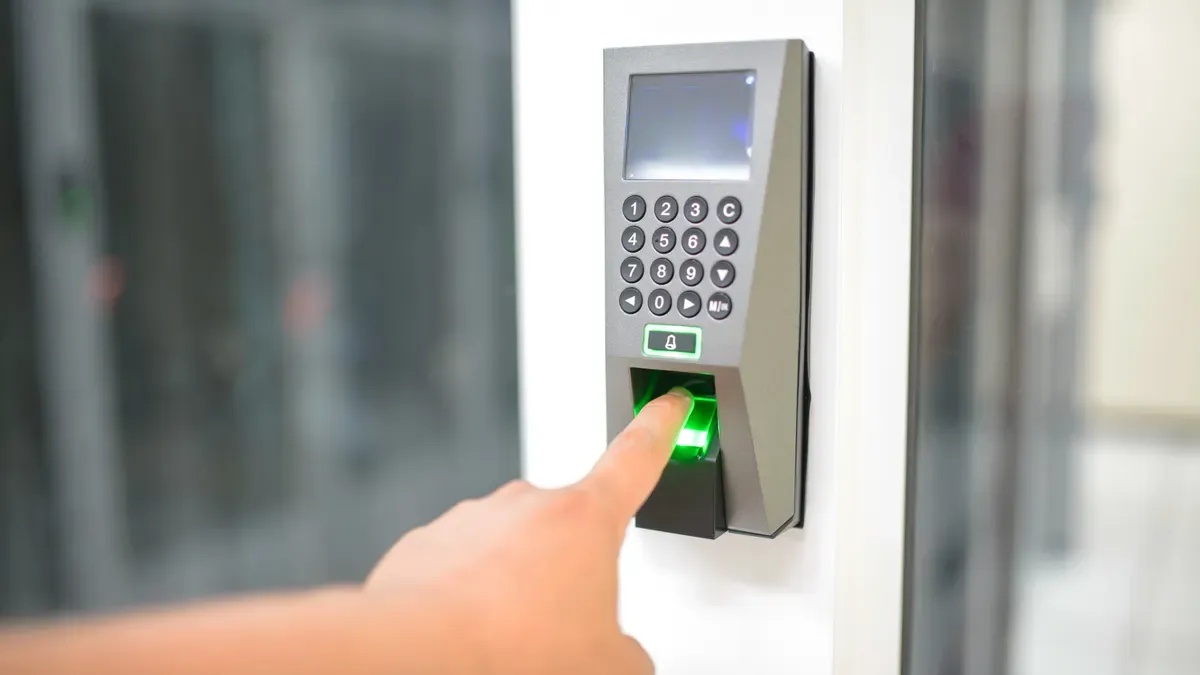
Imagine touching your car’s door handle and watching it unlock right away. Your fingerprint becomes the key, thanks to Fingerprint Recognition technology. This biometric method works with small motors that physically turn the lock, offering a seamless and secure entry experience. The global automotive biometric market hit USD 1.47 billion in 2024, showing strong demand for this advanced security feature.
This system delivers real vehicle security by leveraging Fingerprint Recognition to verify your unique fingerprint pattern, eliminating the risks associated with traditional keys. The design integrates smart access control directly into your car, ensuring only you can gain entry. You will see how capacitive sensors read your print, how microcontrollers start the ignition, and what hurdles remain for widespread adoption of Fingerprint Recognition. This tech transforms ordinary vehicles into personal, secure rides, making every drive feel uniquely yours.
Key Takeaways
Fingerprint recognition opens your car and starts the engine without a key.
Capacitive sensors read your fingerprint and match it to saved templates.
After verification, the motor drive design unlocks the lock and starts the engine.
This technology lowers theft and gives keyless entry, with more people wanting it.
Fingerprint Recognition for Car Security

Capacitive Sensors and Biometric Matching
Your car uses a capacitive fingerprint sensor to read your print without needing any light. Under the surface, the sensor has many tiny capacitor plates. When you place your finger on it, the ridges touch the plates more closely than the valleys, which hold air. This creates small differences in capacitance across the sensor. A readout circuit scans the capacitor grid and turns those analog changes into voltage signals. Then, an analog-to-digital converter creates a digital height map of the ridge-valley pattern. This whole process works without any external light. The fingerprint recognition system matches your print by pulling out unique features from it. It compares those features to stored templates. The matching algorithm makes sure the verification is accurate. The technology is very precise. The false reject rate stays under 1.5 percent, so the system rarely fails to recognize you. The false accept rate stays under 1 per 100,000 reads, making unauthorized access very unlikely. Encrypted templates are stored safely in memory. This design gives every driver strong vehicle security. The fingerprint sensor gives reliable authentication every time you use it. The microcontroller processes the fingerprint data quickly. Your car responds to your fingerprint instantly.
Anti-Spoofing and Secure Storage
Your vehicle security system spots spoofing attacks in several ways. Liveness detection checks how sharp your fingerprint sample is. It also looks at color and brightness levels. The system measures entropy, or randomness, in the print. It finds structural distortions and spots local artifacts. The fingerprint sensor checks light absorbance and tests material elasticity. It also measures moisture content. This helps it identify spoofing attacks effectively. These methods stop fake fingerprints made from silicone or 3D-printed materials from fooling the sensor. This vehicle security process protects against spoofing. Spoofing detection is vital for reliable operation.
For secure storage of fingerprint data, the system follows a clear process. The process execution environment creates a fingerprint template and sends it to the high assurance execution environment. That environment generates a unique mask for the template. The mask key is either random or comes from a master key. The system applies the mask using an involutive function like XOR, which hides the template data. The system sets an anti-replay counter to 1 for each stored template to prevent spoofing during authentication. This full approach to biometric authentication systems keeps your data safe. The microcontroller handles these security tasks efficiently. The microcontroller controls the encryption process. Your access control system becomes truly personal and secure. The access control system responds instantly to your fingerprint. This smart design makes fingerprint recognition technology a reliable choice for modern vehicles. Your vehicle becomes more secure with each use. Each vehicle uses unique encryption keys.
Fingerprint Door Locks and Motor Drive Design
Micro Motor and Gearbox Integration
Your fingerprint door locks use a small but strong motor to move the locking parts. Most cars use a 12V DC brushed permanent magnet micro motor, like the JXF280-815 model. This motor gives 3.74 watts of power and 279 g·cm of torque. Its speed ranges from 1000 to 11097 RPM, so it has enough force to move the lock bolt every time. The 32mm frame fits neatly inside the door panel without adding bulk. This motor has TUV certification, which means it is safe for cars.
The motor connects to a gearbox that lowers speed but raises torque. This setup matters because a raw motor spins too fast to move the lock directly. The gear train changes fast spinning into slower, stronger motion. Your door lock then moves the latch with steady force. Some high-end cars use servo motors instead. These give exact position control for the locking parts. Stepper motors show up less often but offer precise positioning when your design needs it. Each motor type serves a different job in the whole system.
The gearbox also guards the motor from shock loads. When the lock clicks in, the gear teeth soak up sudden resistance. This mechanical buffer makes the motor last longer. Your fingerprint recognition tech starts the motor only after it checks your print. The motor then runs for a short time to finish the locking action. This careful order keeps power use low while still working well.
Microcontroller-Based Lock Actuation
Your microcontroller acts as the brain of the whole door lock system. It gets the checked fingerprint data from the sensor and decides if it should start the motor. The microcontroller sends a control signal to the motor driver circuit. This driver gives the right voltage and current to spin the motor the correct way. The system watches current to find stall conditions. When the lock reaches its end point, the motor current jumps up. The microcontroller sees this rise and stops the motor right away. This protection stops overheating and damage to parts.
Speed monitoring adds another safety layer. If the lock gets stuck and the motor shaft stops turning while power is still on, the speed sensor finds the stall. The system then cuts power to the motor. Your biometric lock system uses a specific stall-checking order. After 100 ms of motor start, the driver checks the motor current. The current comparator reference voltage is set higher than the measured motor current value. If the current goes past this limit during the wait time, the motor turns off. This smart method adjusts for different battery voltages by measuring RMS current and changing the limit as needed. The system avoids false stops during normal use while still guarding against stall-related overcurrent.
This design gives you automatic locking features that react right away to your fingerprint. The microcontroller handles power efficiency and speed control through the whole action cycle. Your car entry becomes smoother and safer with every use. The motorized digital door lock runs quietly and works well. The whole system uses very little power when idle, saving your car battery. The access control sequence finishes in under a second, so you hardly notice the mechanical action. This mix of fingerprint recognition tech with motor drive design creates a smooth user experience. Your car reacts to your touch without needing any physical key. The system also has a manual override for electrical failures, so you never get locked out. This careful design makes fingerprint door locks a smart upgrade for modern cars.
Fingerprint Based Ignition Systems
Biometric Verification for Engine Start
Your fingerprint based ignition system starts with the same capacitive sensor used for door entry. When you place your finger on the reader inside the cabin, the sensor captures your ridge pattern and turns it into a digital template. The microcontroller compares this template with the stored authorized prints. This fingerprint matching process takes less than a second. The system checks for liveness signals to make sure you are a real person, not a silicone replica. This extra security layer stops thieves from using copied fingerprints to start your car.
The authentication flow follows a clear sequence. First, the fingerprint sensor reads your print. Second, the microcontroller runs the matching algorithm. Third, the system verifies your identity against the encrypted template database. Only after successful verification does the ignition sequence begin. This biometric verification acts as the gatekeeper for the entire starting process. Your vehicle security depends on this critical step. The system will not engage the starter motor without a confirmed match. This design removes the chance of hot-wiring or using a stolen key.
The ignition system stores multiple fingerprints, so you can authorize family members or trusted mechanics. Each authorized user gets their own template entry. The system tracks which fingerprint started the vehicle, adding accountability. This feature proves useful for fleet management or shared vehicles. The fingerprint recognition technology ensures only approved drivers can operate the car.
Motor Control for Ignition Authorization
Once the microcontroller confirms your fingerprint, it sends control signals to the motor driver circuit. This circuit manages the starter motor engagement. The design uses two digital output pins to control the direction and activation of the starter relay. One pin goes HIGH to enable the circuit, while the other stays LOW to set the correct polarity. This simple yet effective approach ensures reliable operation.
int fingerprintID = getFingerprintID();
delay(50);
if (fingerprintID == 1)
{
  lcd.setCursor(0, 0);
  lcd.print("Access Granted        ");
  lcd.setCursor(0, 1);
  lcd.print("Vehicle Started       ");
  digitalWrite(9,HIGH);
  digitalWrite(10,LOW);
  while(1);
}
This code shows the main logic. After successful authentication, the microcontroller sets pin 9 HIGH and pin 10 LOW. These signals activate a relay or motor driver, which then engages the engine starter motor circuit. The while(1) loop holds the ignition state after authentication. This ensures the engine keeps running without repeated fingerprint scans.
The motor drive design focuses on power efficiency and speed control. The starter motor draws significant current, so the system manages the engagement carefully. The microcontroller monitors the motor current during cranking. If the current goes beyond safe limits, the system cuts power to prevent damage. This protection extends the life of both the starter motor and the battery.
The ignition system also includes a timeout feature. If the engine does not start within a few seconds, the system disengages the starter motor. This prevents continuous cranking, which would drain the battery and overheat the starter. The microcontroller handles this timing automatically. Your fingerprint based ignition system operates smoothly because of this intelligent control.
The design integrates seamlessly with existing vehicle electronics. The ignition system works alongside the engine control unit to manage fuel delivery and spark timing. This coordination ensures a clean start every time. The fingerprint recognition technology adds security without complicating the driving experience. You simply touch the sensor, and the vehicle responds. This smart approach to ignition makes every drive more personal and secure. The system delivers reliable performance while maintaining the highest standards of vehicle security.
Benefits and Challenges of Biometric Access
Enhanced Convenience and Security
Your car’s access control system does more than let you in without a key. It adds safety that regular keys cannot offer. Access control devices with fingerprint tech provide strong alarms, theft protection, and anti-carjacking features. Miltech reports that immobilizer installations in many countries have lowered theft rates. The ignition switch identification system only lets approved people start your vehicle. So even if a thief gets inside, they cannot start the car. The fingerprint recognition in your vehicle guards the whole ignition system.
This research shows real results. Your vehicle security improves because only approved fingerprints can start the ignition. The fingerprint recognition technology works with the door lock system to offer a full solution. The fingerprint sensor reads your print fast, and the microcontroller checks it in less than a second. You never need to carry physical keys again. Your fingerprint becomes your only credential. This smooth experience makes every entry and start feel easy. The system also includes security features as part of its design. The microcontroller manages the entire authentication process. The design ensures that only your fingerprint grants access.
Privacy, Reliability, and Cost Considerations
Even with these benefits, fingerprint access faces several issues. Data privacy and cybersecurity risks remain top worries. Your fingerprint data is sensitive information. Laws like Illinois’s Biometric Information Privacy Act (BIPA) set strict rules on how you store and handle this data. These laws apply in several states. Illinois requires written notice and consent before collecting biometric data. Texas and Washington have similar state-level protections. Breaking these rules can lead to costly lawsuits.
Your system must follow these regulations. The design must include encryption and secure storage to guard against spoofing attacks. High implementation costs from advanced sensors, processing units, and secure storage slow down mass adoption. Consumer acceptance and trust issues also matter. Some people worry about digital surveillance. The fingerprint lock reliability must be steady in all conditions. The fingerprint door locks you choose must work well in rain and cold weather. The biometric lock system must also resist spoofing. Your vehicle must handle these challenges smoothly. Your vehicle security depends on a strong ignition system. The microcontroller watches over the entire system. Your vehicle access never feels unsafe. The system stores your fingerprint data securely and uses encryption to protect your data. The fingerprint recognition in your vehicle works with the ignition system to start your vehicle’s engine. The fingerprint door locks give you peace of mind. Even with these challenges, the benefits make the technology worth it. Your vehicle security stays protected at all times.
Fingerprint recognition paired with motor drive design transforms your car into a personal, secure space. You gain keyless entry through fingerprint door locks and protected starts via fingerprint based ignition. This technology addresses real theft concerns while simplifying daily use. Market projections confirm growing adoption. IndustryARC forecasts biometric vehicle access systems reaching $1.56 billion by 2030. The Business Research Company projects the fingerprint-specific market hitting $2.43 billion. Your vehicle security improves dramatically with each authentication. The fingerprint sensor and microcontroller work together seamlessly. This smart system delivers convenience without compromising safety. As components shrink and costs drop, more vehicles will include this technology. You can explore aftermarket fingerprint door locks or watch for new models featuring biometric ignition. Your next car might recognize you before you touch the handle.
FAQ
What happens if the fingerprint sensor fails?
Your vehicle includes a manual override for electrical failures. You can still use a physical key to unlock the door and start the engine. The system design ensures you never get locked out. This backup keeps you safe even when electronics malfunction.
Can someone use a fake fingerprint to start my car?
The system detects spoofing through liveness checks. It measures moisture, elasticity, and structural details. Silicone replicas fail these tests. Your vehicle security stays strong against copied prints. The microcontroller verifies every scan before engaging the ignition.
Does cold weather affect fingerprint recognition?
Capacitive sensors work reliably in rain and cold conditions. They read ridge patterns through moisture and temperature changes. The system adjusts for environmental factors automatically. Your fingerprint sensor performs consistently regardless of weather. This reliability makes biometric access practical for daily use.
Can I add this technology to my current car?
Yes, aftermarket fingerprint door locks and ignition systems exist. You can install them with basic wiring knowledge. The microcontroller integrates with your existing electrical system. This upgrade gives you modern security without buying a new vehicle. Installation takes a few hours.
How much does this upgrade cost?
Entry-level fingerprint door lock kits start around $150. Complete ignition system packages with sensors and motor drivers cost more. Prices continue dropping as components become smaller. The security and convenience justify the investment for most drivers. Your fingerprint recognition investment protects your vehicle.