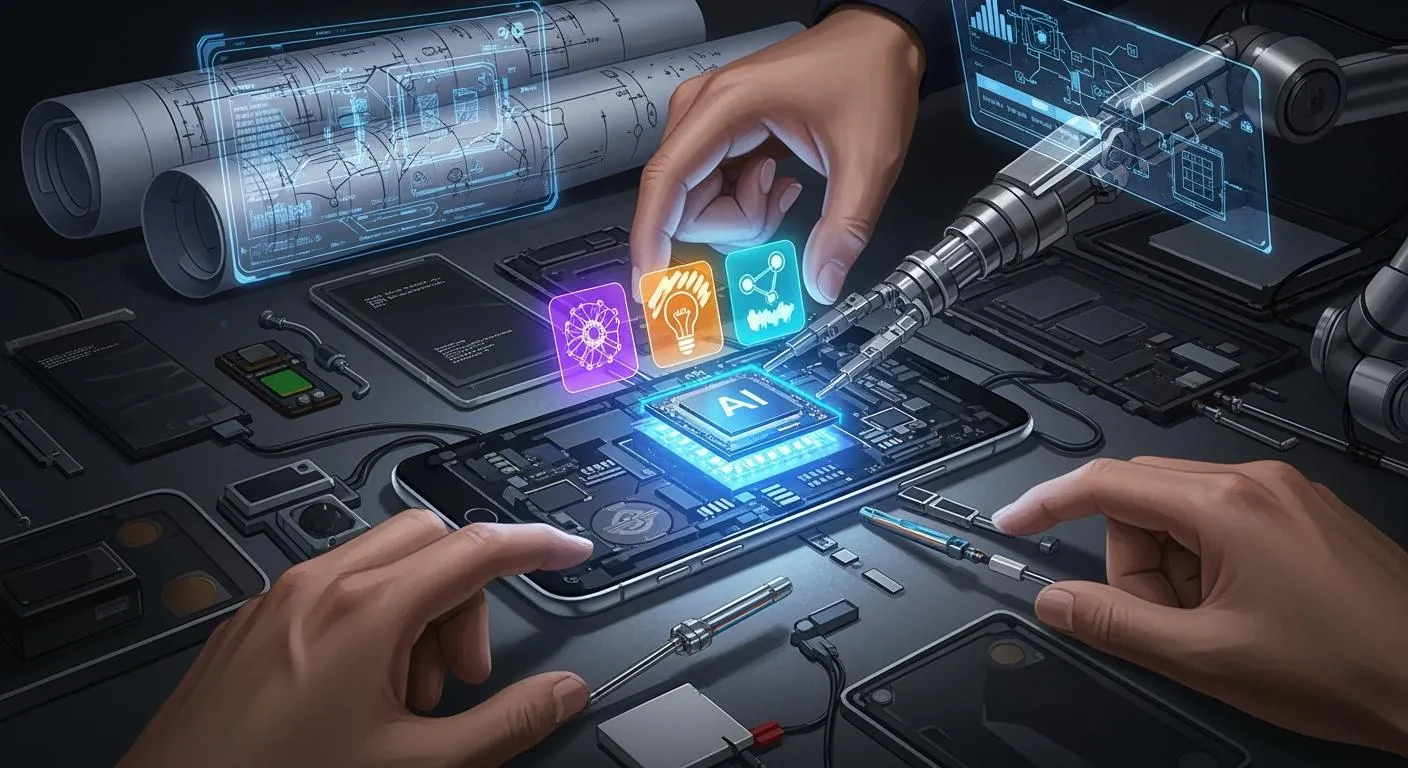
When you use ai phones, you feel the power of artificial intelligence. Makers now work to put advanced chips and small language models inside. You can use features like real-time translation and computational photography fast. These work even if you do not have internet. These phones have special AI accelerators and NPUs for hard tasks. Engineers also look closely at PCB design. They make sure each part helps AI work well. This change brings new problems and fun chances for the future.
Key Takeaways
AI phones have cool features like real-time translation and smart photo editing. These features make them more helpful than normal smartphones.
New hardware, like AI chips, helps phones work faster and use less energy. This makes the battery last longer and the phone work better.
The design of AI phones uses small and smart layouts. They use advanced PCB technology to add more features in less space.
AI-driven manufacturing helps check quality better. It lowers mistakes and makes phones more reliable.
In the future, AI phones will get even smarter. They will understand what users want and work even better.
What Makes AI Phones Special
AI-Driven Features
You can tell ai phones are different from regular phones right away. These phones have more advanced ai features than just voice assistants. You get things like real-time translation and smart photo editing. They also give you suggestions that fit you. Phones like the Google Pixel 9 Pro XL and Apple iPhone 16 Pro Max use special chips and small language models. These make the features work quickly and well.
Here is a table that shows how ai phones and regular smartphones are different:
Feature/Capability | AI Phones | Traditional Smartphones |
|---|---|---|
AI Integration | Advanced generative AI capabilities | Basic AI features (e.g., voice assistants) |
Processing | On-device AI processing for speed | Primarily cloud-dependent processing |
Photo Editing | AI-powered tools like Magic Editor and Best Take | Standard photo editing tools |
Virtual Assistance | Enhanced AI summarization and message adjustment | Basic voice assistants |
Accessibility | Real-time translation and advanced voice commands | Limited accessibility features |
You get help from Google Assistant for smart searches and tips. Samsung Galaxy AI and Bixby help you do tasks and make your phone feel personal. Real-time ai translation lets you talk to people in other languages right away. These tools work on your phone, so your information stays safe.
Hardware Innovations
The parts inside ai phones make them stand out. Companies work on new chip designs and better parts for ai jobs. Apple made the A17 Bionic chip, which makes Siri faster and adds Live Text. Samsung made Samsung Gauss, a large language model that creates text, code, and pictures.
OpenAI finished its first hardware prototypes with Apple’s design chief Jony Ive. They want to make a device that feels very different from today’s phones.
Chips now process information in new ways. Ai chips use parallel processing, so they do many things at once. This makes your phone faster and saves battery. Here is a table that shows the difference:
Feature | AI Chips | Conventional Chips |
|---|---|---|
Processing Method | Parallel processing for multiple calculations | Sequential processing, one at a time |
Energy Efficiency | More energy-efficient, optimized for AI tasks | Less efficient, higher energy usage |
Accuracy | Higher accuracy in AI tasks | Lower accuracy for AI-related tasks |
Application in Devices | Essential for AI phones to process data locally | Limited AI capabilities in devices |
New operating systems also change how you use your phone. You do not have to unlock, tap, or wait for apps. Ai phones guess what you need and show it to you. Elon Musk says, “There won’t be operating systems. There won’t be apps in the future.” Your phone will know what you want.
Ai phones use new hardware and software to give you a better experience. The way they are made now focuses on ai, so making them is faster and smarter.
Design Process for AI Phones
Hardware & PCB Design
When making ai phones, you start with the hardware. The printed circuit board, or PCB, is very important. It links all the parts that help artificial intelligence work. Many pieces must fit into a small space. Making things smaller is key. High-Density Interconnect, or HDI, technology uses tiny lines and holes. This lets you add more features without making the phone bigger.
Flexible and rigid-flex PCB designs help save space. They also let you make new shapes. Ultra-HDI via semi-additive processes make things faster. They help ai accelerators and edge-compute modules work better. You have to think about heat and signals. If not, the phone can get too hot or slow down.
Here are some ways PCB design helps ai features:
PCB design puts important parts together for ai systems.
It makes layouts better for ai jobs.
It solves problems with heat and signals.
HDI PCBs are used in ai servers. They connect CPUs and GPUs in small spaces. 5G technology uses HDI boards for main chips. Wearable health tech uses flexible PCBs for easy checks. These new ways of making things help build smarter phones.
Software & AI Integration
Strong software is needed for ai phones to work well. Machine learning and neural networks are put into the operating system. These tools help your phone learn and get better. Neural networks act like the human brain. They help with things like seeing pictures and hearing speech.
Here is a table that shows how ai works in mobile systems:
Feature | Description |
|---|---|
Machine Learning Algorithms | Algorithms that enable smartphones to learn from data and improve performance over time. |
Neural Networks | Computational models that mimic the human brain, used for tasks like image and speech recognition. |
Integration Across OS | AI is embedded within the operating system and applications, enhancing overall functionality. |
Examples | Android’s Gemini and Apple iOS’s intelligence are leading examples of AI integration in mobile. |
Challenges | Issues such as data privacy, algorithm bias, and energy consumption arise with AI integration. |
Future Trends | As technology evolves, AI capabilities in smartphones will continue to grow, presenting new challenges and opportunities. |
Adding ai to mobile hardware brings many problems. You must keep user data safe and follow privacy rules. You need special skills and tools, which can cost more money. Hard ai algorithms need lots of good data. You must make sure ai works with old apps. Sometimes, people do not trust ai features. You need to make easy interfaces and explain how ai helps.
When planning and testing ai phones, you use different methods:
AI scaffolding gives a basic code setup for apps.
Prompt-to-UI workflows let you make prototypes from words.
Iterative design helps you get feedback and make changes fast.
You go through important steps in the design process. Here is a table that shows these steps:
Stage | Description |
|---|---|
Data collection and analysis | You gather and look at data to know what users need. AI helps with things like writing down interviews and checking other products. |
Model training and development | You set up AI tools with the right data for users and markets. You try things to make AI work better. |
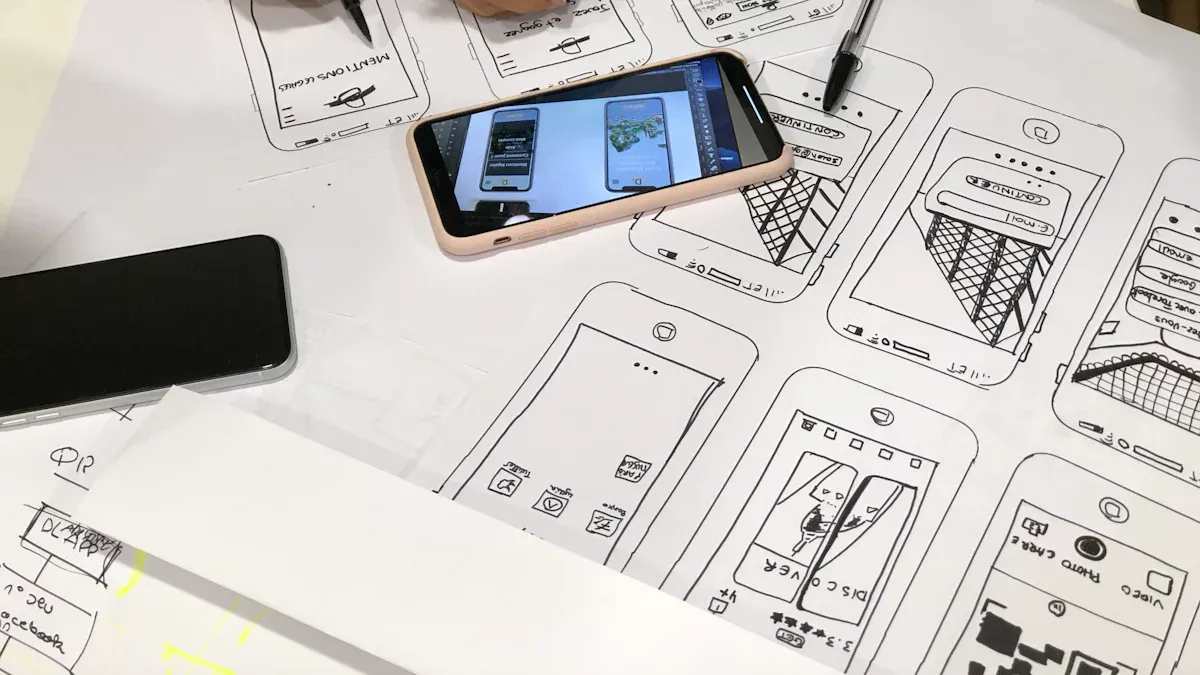
AI-driven ideation and prototyping | You use AI to make first design ideas and wireframes. This lets you test ideas fast, even turning sketches into digital designs. |
Continuous testing and improvement | You use AI for A/B testing to compare designs and make them better for users. You make sure everyone can use the phone. |
User Experience
You can tell ai phones are different when you use them. Artificial intelligence makes your phone smarter and more personal. The camera changes settings for different places. You get better photos without doing anything. The user interface changes to match how you use your phone. It gets easier to use and move around.
AI also helps with battery life and running tasks. You can do many things or play games without lag. Your phone suggests things and guesses what you want next. This makes using your phone smoother and more fun.
People say they like ai features that are easy and helpful. Digital mental health apps give privacy and are easy to use. Users say being simple and useful is most important. Reviews help designers fix problems and make apps better. Sometimes, new ai features are hard to use. For example, some health apps make it tough to take good photos for checks. These problems show you must keep making the design better.
You see that teams work together to make a better user experience. They use ai to test and improve features. This helps you get a phone that fits you and feels special.
AI in Manufacturing

Materials & Assembly
There are big changes in how ai phones are made. Companies use new materials that help with heat and power. These materials help chips and sensors work together well. Flexible circuits and strong metals keep phones light and strong. Robots and smart machines put parts together very carefully. This makes fewer mistakes and builds phones faster. Phones last longer and work better because of these changes.
AI-Optimized Production
AI-optimized production lines change how factories make phones. Companies like Samsung and NVIDIA use this to improve each step. Here are some ways ai-driven manufacturing helps:
Predictive maintenance checks machines before they break, so you avoid delays.
Quality control systems use cameras and sensors to spot defects right away.
Demand forecasting uses sales data to plan how many phones to make.
Production scheduling arranges tasks to save time and reduce waste.
Energy management finds ways to use less power and cut costs.
Supply chain optimization helps move parts and products quickly and safely.
Samsung and NVIDIA use GPUs and special software for better circuit design. NVIDIA Omniverse makes digital twins of factories to test changes first. Samsung’s AI factory uses thousands of GPUs for predictive maintenance. This makes production faster and saves money.
Quality Control
You want your ai phone to work well every time. AI-driven quality control checks each phone for problems. Machine learning finds tiny defects people might not see. Computer vision looks at every part, from chips to the whole phone. AI can find soldering problems on circuit boards with 99% accuracy. Reports say these systems find up to 50% more defects. This means you get better phones with fewer problems. Companies save money and keep customers happy.
Tip: AI-driven manufacturing helps companies stay ahead in a fast-changing market. Most manufacturers believe that using ai improves both productivity and quality.
Challenges & Future Trends
Technical & Ethical Issues
There are many problems with AI phones. Some problems are about technology. Training big models costs lots of money and time. Phone hardware is not strong enough for new AI needs. Designers must make new parts to keep up.
Ethical problems are important too. AI collects user data from phones. Many people do not know what is taken or how it is used. Sometimes, algorithms are unfair because of the data they learn from. This can hurt some users. People want to know how AI makes choices and want it to be fair.
Here are some main ethical worries:
AI takes user data without people knowing.
Algorithms can be unfair because of training data.
People want AI to be clear and fair in choices.
Making AI phones is hard for factories. Technology changes very fast. Factories must use new materials and ways to build. They want to make phones quickly but also keep them high quality.
Note: You should always think about both tech and ethical problems when you work with AI phones.
Innovations Ahead
Many new things are coming for AI phones. Chip making is changing quickly. AI helps design chips faster and better. AI systems check for mistakes in chips with great accuracy. Real-time controls help save energy and make work faster. Companies like TSMC and Intel use AI to make more and better phones.
Quantum computing is starting to help. It may make training big AI models easier and cheaper. Hardware makers are working on new designs to go past old limits. Phones will get smarter, use less power, and work faster.
Here are some future changes:
AI helps design chips faster.
AI systems find more mistakes in chips.
Real-time controls make factories work better.
Quantum computing may change how AI learns.
New hardware will keep making phones better.
AI phones will get smarter and work better. Factories will use new tools and ideas. Making phones will get faster and easier as technology grows.
You can notice that ai is changing how phones are made. New features and better hardware make using phones nicer. Teams have hard problems, but they find smart ways to fix them. In the next ten years, you will see these changes:
Phones will use cross-app orchestration and digital memory.
You will use agent-centric systems instead of only apps.
The mobile phone market might reach $579 billion by 2026.
Be ready for a future where your phone gets even smarter and helps you more.
FAQ
What makes AI phones different from regular devices?
AI phones have smart features. They process information right on the phone. You get things like real-time translation and smart photo editing. Regular devices do not have these advanced features.
How does AI improve manufacturing operations for phones?
Production is faster and there are fewer mistakes. AI checks machines and finds problems early. This keeps factories working well and helps make better phones.
Why is AI important in manufacturing systems?
AI helps control and watch over factories. It finds defects and makes quality better. This lets companies build phones that last longer and work well.
Can AI phones protect your privacy?
You can control your data on AI phones. Many features work without sending info online. This helps keep your personal details safe.