Bluetooth is very important for connecting devices in IoT. As IoT grows, picking the right Bluetooth module is key. Good features like better range, safety, and low power use help. Bluetooth is perfect for IoT devices because of these features. The need for better Bluetooth modules is growing fast. The BLE module market might hit USD 27.90 billion by 2025. This shows how much Bluetooth is used in smart homes, healthcare, and factories.
Key Takeaways
Saving power is important for IoT devices. Pick modules that use less energy to make batteries last longer and save money.
Think about how far and how well your device connects. Use short-range modules for home gadgets and long-range ones for factories or big areas.
Make sure it works with your IoT system. Choose modules that follow the right Bluetooth rules and have needed approvals.
Compare cost and how well it works. Check what your project needs to find a good module without spending too much.
Learn about new Bluetooth updates. Features in Bluetooth 5.4 and newer can make your IoT devices work better and do more.
Key Criteria for Picking a Bluetooth Module
Power Efficiency
Why power efficiency matters in IoT devices
Power efficiency is very important for IoT devices to work well. Many devices, like smart thermostats and smart lights, need to save energy. For example, smart thermostats learn your habits to save heating costs. Smart lights use less energy to help lower bills. Using less power also helps the environment and cuts carbon emissions. Buildings use 20-40% of energy in developed countries. Energy-saving IoT devices can make a big difference.
Examples of energy-saving BLE modules
Some BLE modules are great at saving energy. The Nordic Semiconductor nRF52840 and Silicon Labs BG22 are two examples. They use little power and have cool features like over-the-air updates. BLE technology itself uses less power than regular Bluetooth. Its idle power can be as low as 1 μA. This makes BLE modules perfect for battery-powered IoT devices.
Range and Connectivity
What affects range in IoT devices
The range of a Bluetooth module depends on things like its antenna, where it’s used, and its power. In IoT, good connectivity is very important, especially in big spaces or factories. Bluetooth mesh lets devices talk through a network of nodes. This helps keep IoT devices connected without problems.
Comparing short-range and long-range Bluetooth modules
Short-range Bluetooth modules work well for wearables and smart home gadgets. These devices don’t need to connect far away. Long-range BLE modules, like those with Bluetooth 5.3, can reach up to 700 meters. These are better for factories or places needing wide coverage. BLE is better than regular Bluetooth because it has more range and uses less power. This makes it great for IoT.
Compatibility with IoT Platforms
Making sure it works with IoT systems
It’s important to pick a Bluetooth module that fits your IoT system. Make sure it supports the BLE features you need. Some projects need modules that work with multiple radios. Also, check if the module has certifications and comes from a trusted company.
Why Bluetooth 5.0 and newer versions matter
Bluetooth 5.0 and newer versions, like 5.3, have better features. They offer longer range, faster data speeds, and save more power. These features are perfect for today’s IoT devices. Picking a module with these standards keeps your IoT devices ready for the future.
Cost and Scalability
Balancing cost with performance for IoT projects
Choosing a Bluetooth module needs a balance of cost and performance. You want a module that works well but stays within budget. For example, the Nordic Semiconductor nRF52840 has advanced features. It supports Bluetooth mesh and Bluetooth 5.3, making it great for IoT. But these features can make it more expensive.
To save money, think about what your IoT devices need. If your project uses short-range communication, a simple BLE module may work. For long-range needs, advanced BLE modules are better for industrial use. By understanding your needs, you can save money and still get good performance.
Scalability considerations for large IoT networks
Scalability is important when adding many IoT devices to a network. As devices grow, the network must handle more data and stay connected. A scalable Bluetooth module helps the system grow without losing performance.
Key parts of scalability include network size, bandwidth use, and shared networks. Bluetooth mesh lets devices talk over large areas, avoiding slowdowns. Scalable backend tools like cloud computing help IoT networks grow over time.
Here’s a table showing key scalability factors:
Aspect | Description |
|---|---|
Global Scale | Growing IoT worldwide needs global support and legal planning. |
Network Capacity & Planning | More IoT devices mean careful planning for network size and capacity. |
Bandwidth Optimization | Devices must send data efficiently to avoid slowing the network. |
Distributed Networks | Sharing data tasks across nodes boosts capacity and lowers delays. |
Scalable Network Infrastructure | Cloud computing and software-defined networking help networks grow. |
Network Monitoring | Watching the network helps find problems and keep it running well. |
Interoperable Architecture | Building flexible systems now helps them work with future tech. |
Scalable IoT Backend Design | Using smart backend tools manages devices and data flow easily. |
Controlling the Data Pipeline | Reliable data transfer between devices and the cloud is key. |
Installation Processes | Easy installation tools help scale IoT solutions faster. |
Planning for scalability means thinking ahead. Prepare for needs 2 to 5 years early. This keeps your IoT network flexible and working well. Planning ahead reduces risks and ensures long-term success.
Overview of Top Bluetooth Modules for IoT
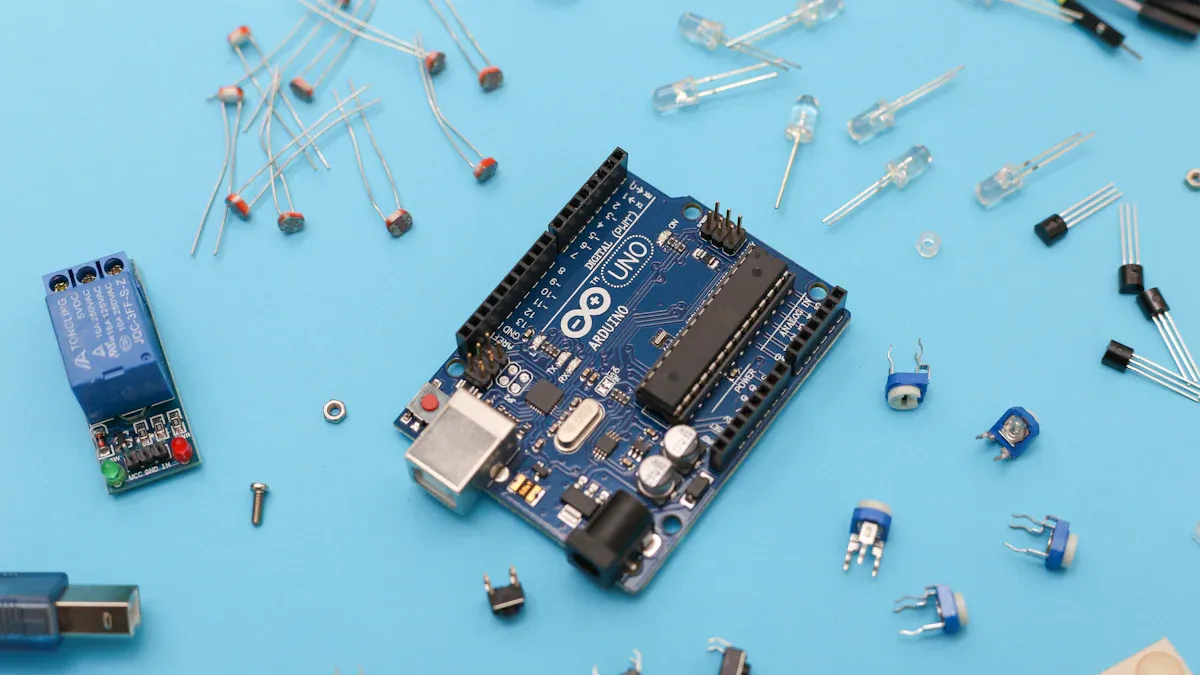
Nordic Semiconductor nRF52840
Key features and specifications
The Nordic Semiconductor nRF52840 is a powerful Bluetooth module. It has a 64 MHz Arm Cortex-M4 processor for fast performance. With 1 MB flash memory and 256 KB RAM, it handles complex tasks. It supports Bluetooth 5.3, mesh, Thread, Zigbee, NFC, and 802.15.4. This makes it flexible for many IoT projects. It also has strong security with a 128-bit AES co-processor and Arm CryptoCell CC310. Its sensitivity of -103 dBm ensures good long-distance connections.
Specification | Details |
|---|---|
Processor | 64 MHz Arm® Cortex-M4 with FPU |
Memory | 1 MB Flash + 256 KB RAM |
Connectivity | Bluetooth 5.3, Bluetooth mesh, Thread, NFC, Zigbee, 802.15.4, ANT |
Security | 128 bit AES/ECB/CCM/AAR co-processor, Arm CryptoCell CC310 |
Sensitivity | -103 dBm at 125 kbps, -95 dBm at 1 Mbps |
Price | $7.42 |
Best use cases for IoT applications
The nRF52840 works well for IoT devices needing strong security and range. It is great for smart homes, factories, and wearable gadgets. Its Bluetooth mesh support helps connect many devices in one network.
Silicon Labs BG22
Key features and specifications
The Silicon Labs BG22 is made for saving energy. It uses 3.6 mA when sending data and 2.6 mA when receiving. Its active current is 27 µA/MHz, and sleep current is 1.2 µA. These features make it perfect for battery-powered devices. The BG22 can last up to 10 years on a single battery, making it very reliable.
Feature | Specification |
|---|---|
Transmit Power | 3.6 mA TX at 0 dBm |
Receive Power | 2.6 mA RX |
Active Current | 27 µA/MHz active |
Sleep Current | 1.2 µA sleep |
Battery Life | Up to 10 years with BG22E |
Target Applications | Bluetooth mesh nodes, smart locks, healthcare |
Best use cases for IoT applications
The BG22 is best for IoT devices that need to save power. It works well in Bluetooth mesh nodes, smart locks, and health gadgets. Its low power use makes it great for portable devices with long battery life.

Texas Instruments CC2640R2F
Key features and specifications
The Texas Instruments CC2640R2F is a strong BLE module for IoT. It has an Arm Cortex-M3 processor and supports Bluetooth 5.0. This gives it better range and faster data speeds. Its low power design uses just 1 µA in standby mode. It also has 128 KB flash memory and 28 KB SRAM for IoT tasks.
Best use cases for IoT applications
The CC2640R2F is great for IoT devices needing steady BLE connections. It works well in smart home gadgets, fitness trackers, and factory sensors. Its low power use and strong performance make it a reliable choice.
Espressif ESP32-C3
Key features and specifications
The Espressif ESP32-C3 is a flexible Bluetooth module for IoT. It has a 32-bit RISC-V processor running up to 160 MHz. It also includes 400 KB of internal memory for smooth operation. This module supports 2.4 GHz Wi-Fi and Bluetooth 5.0 LE. These features provide strong and reliable connections. Its security includes secure boot, flash encryption, and digital signatures. This makes it a safe choice for sensitive IoT tasks.
The ESP32-C3 is also great at saving power. It has deep sleep and light sleep modes to extend battery life. It offers many I/O interfaces like SPI, I2C, UART, PWM, and ADC. These make it easy to connect with sensors and other devices.
Feature | Description |
|---|---|
Processor and Memory | 32-bit RISC-V processor, up to 160 MHz, 400 KB SRAM |
Wireless Connectivity | 2.4 GHz Wi-Fi and Bluetooth 5.0 LE |
Security | Secure boot, Flash encryption, digital signature |
Low Power Consumption | Deep sleep and light sleep modes |
Rich I/O Interfaces | SPI, I2C, UART, PWM, ADC for sensor and device connections |
Best use cases for IoT applications
The ESP32-C3 is perfect for IoT devices needing strong connections and low power use. It works well in smart homes, wearables, and industrial IoT systems. Its Wi-Fi and Bluetooth 5.0 LE make it great for dual-connection projects. For example, it can be used in smart thermostats or security cameras. These devices need both local and cloud communication. Its I/O interfaces are ideal for devices using multiple sensors or actuators.
Dialog Semiconductor DA14531
Key features and specifications
The Dialog Semiconductor DA14531, called SmartBond TINY, is very small and energy-efficient. It has a 16 MHz ARM Cortex-M0 processor and supports Bluetooth 5.1. This module uses very little power, only 0.6 µA in deep sleep mode. It includes 48 KB RAM and 32 KB OTP memory, enough for simple IoT tasks.
The DA14531 supports Bluetooth mesh, making it great for IoT networks. Its tiny size and low cost are perfect for large-scale IoT projects. It also has AES-128 encryption for secure data transfer in IoT systems.
Feature | Description |
|---|---|
Processor and Memory | 16 MHz ARM Cortex-M0, 48 KB RAM, 32 KB OTP memory |
Wireless Connectivity | Bluetooth 5.1, Bluetooth mesh |
Security | AES-128 encryption |
Low Power Consumption | 0.6 µA in deep sleep mode |
Size | Very small and compact |
Best use cases for IoT applications
The DA14531 is ideal for IoT devices needing small size and low power. It is used in wearables, fitness trackers, and smart tags. Its Bluetooth mesh support is great for smart lighting and connected IoT systems. It is also good for low-cost projects like disposable medical tools or asset trackers. These projects need both affordability and good performance.
Comparative Analysis of Bluetooth Modules
Feature Comparison Table
Power efficiency, range, compatibility, and cost
When picking Bluetooth modules for IoT, focus on key features. These include power efficiency, range, compatibility, and cost. These factors decide if a module works well for your project. Below is a table comparing popular modules:
Module Name | Power Efficiency | Range (meters) | Compatibility | Cost ($) |
|---|---|---|---|---|
Nordic nRF52840 | Great (1 µA idle) | 700 | Bluetooth 5.3, multi-protocol capable | 7.42 |
Silicon Labs BG22 | Excellent (1.2 µA) | 200 | Bluetooth 5.2, BLE features | 5.00 |
Texas Instruments CC2640R2F | Very Good (1 µA) | 300 | Bluetooth 5.0, BLE connectivity | 6.50 |
Espressif ESP32-C3 | Good (deep sleep mode) | 150 | Bluetooth 5.0, Wi-Fi integration | 4.00 |
Dialog DA14531 | Excellent (0.6 µA) | 50 | Bluetooth 5.1, Bluetooth mesh | 2.50 |
This table shows differences in power use, range, and compatibility. For instance, the Nordic nRF52840 has long range and multi-protocol support. The Dialog DA14531 stands out for its low cost and energy-saving design.
Strengths and Weaknesses
Pros and cons of each Bluetooth module
Each Bluetooth module has its own good and bad points. Knowing these helps you pick the best one for your IoT needs.
Nordic nRF52840:
Strengths: Long range, strong security, and Bluetooth 5.3 support. Great for industrial IoT.
Weaknesses: Costs more than other modules.
Silicon Labs BG22:
Strengths: Very energy-efficient with long battery life. Best for portable devices.
Weaknesses: Shorter range than some other modules.
Texas Instruments CC2640R2F:
Strengths: Reliable BLE and multi-protocol support. Works well for smart homes.
Weaknesses: Price is slightly higher for its features.
Espressif ESP32-C3:
Strengths: Combines Wi-Fi and Bluetooth 5.0. Affordable and flexible.
Weaknesses: Average range and energy use.
Dialog DA14531:
Strengths: Uses very little power and is small in size. Ideal for wearables.
Weaknesses: Limited range and memory.
Recommendations for specific IoT needs
For projects needing long range and strong security, choose the Nordic nRF52840. If saving power is key, go for the Silicon Labs BG22 or Dialog DA14531. For both Wi-Fi and Bluetooth, the Espressif ESP32-C3 is a good option. The Texas Instruments CC2640R2F is perfect for smart home devices needing steady BLE. Always match the module to your project for the best results.
Future Trends in Bluetooth Technology for IoT
Improvements in BLE Modules
Better power use and longer range in BLE
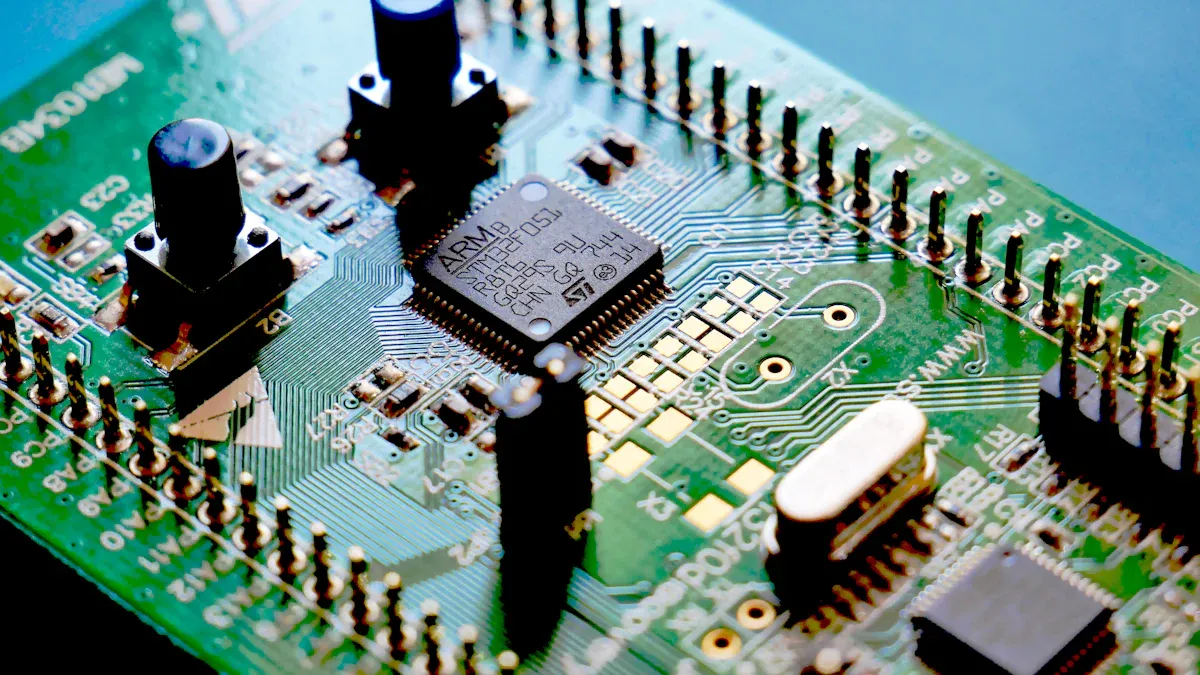
Bluetooth Low Energy (BLE) modules are getting better at saving power and reaching farther. These upgrades help IoT devices last longer on small batteries. This is very important for devices that run on batteries. Now, BLE can let devices start talking to servers directly. This makes IoT networks easier to grow and more flexible. Also, phones and tablets can work as BLE hotspots. This lowers costs by using devices people already have.
Improvement | What It Does |
|---|---|
Client-based design | BLE devices can now connect to servers, making networks more flexible. |
Phones as hotspots | Phones and tablets act as BLE hotspots, saving money on extra hardware. |
Energy-saving | BLE uses less power, helping devices last longer. |
New BLE features made for IoT
BLE now has tools like channel sounding for better location tracking. It also includes LE 2M PHY for faster data sharing. These updates make BLE great for smart homes and factories. BLE can now work in higher frequency bands. This means faster data and more accurate tracking, which is perfect for growing IoT needs.
Bluetooth 5.4 and What’s Next
Big changes in new Bluetooth versions
Bluetooth 5.4 brings better security, faster speeds, and longer range. These updates make sure IoT devices stay connected, even in tough places. New features like LE Audio and periodic advertising sync improve how devices work together. This makes Bluetooth even more useful for IoT.
Upgrade | What It Improves |
|---|---|
Channel Sounding | Helps devices find each other more accurately and securely. |
Faster Data Speeds | LE 2M PHY makes data sharing quicker between devices. |
Higher Frequency Bands | Better performance and tracking with expanded frequency options. |
How these changes help IoT devices
These updates let IoT networks handle more devices without slowing down. For example, Bluetooth mesh connects many devices over big areas. This is great for smart cities and factories. With 5G networks growing, Bluetooth works even better, helping IoT grow faster.
Working with New IoT Technologies
Bluetooth’s role in homes, wearables, and factories
Bluetooth is key for connecting devices in smart homes, wearables, and factories. In homes, it helps with automation and smart city projects. Wearables use BLE to track health and give accurate data. In factories, Bluetooth helps track items in real time, making work more efficient.
Use Case | How Bluetooth Helps |
|---|---|
Smart Homes | Supports automation and smart city projects. |
Wearables | Tracks health and improves user experience. |
Factories | Real-time tracking boosts efficiency and logistics. |
Combining Bluetooth with AI and edge computing
Bluetooth works well with AI and edge computing, opening new possibilities. For example, BLE tags can track items in warehouses, improving inventory checks. In healthcare, BLE watches patient health and ensures medical tools are ready. These uses make Bluetooth a big part of IoT, driving new ideas in many industries.
Tip: Keep learning about Bluetooth updates to make sure your IoT projects stay ahead and ready for the future.
Picking the right Bluetooth module is very important for IoT projects. Each module has its own benefits, like the Nordic nRF52840’s long range or the Dialog DA14531’s low power use. To choose the best one, follow these tips:
Check how much power it uses, especially for battery devices.
Pick a trusted brand with good customer support.
Make sure it allows OTA updates for easy software changes.
Match its features, like range and signal strength, to your needs.
Learning about new Bluetooth updates will help your devices stay useful and work well as IoT keeps growing.
FAQ
What makes Bluetooth and BLE different?
Bluetooth is for fast data sharing. BLE saves power and works well for IoT gadgets like fitness trackers and sensors needing long-lasting batteries.
How can you pick the best Bluetooth module for IoT?
Think about power use, range, cost, and compatibility. Choose a module that fits your project. For example, pick a long-range one for factories or a low-power one for wearables.
Can Bluetooth modules also use Wi-Fi in IoT devices?
Yes, some modules, like the Espressif ESP32-C3, support both. This lets devices talk locally with Bluetooth and connect to the cloud using Wi-Fi.
Why is Bluetooth mesh useful in IoT?
Bluetooth mesh lets many devices link in a network. It keeps connections strong over big areas, making it great for smart homes, factories, and city IoT systems.
Do newer Bluetooth versions work with older ones?
Yes, Bluetooth 5.0 and newer versions work with older devices. But older devices might not use all the new features of the latest versions.
Tip: Always check the module’s details to make sure it fits your project.