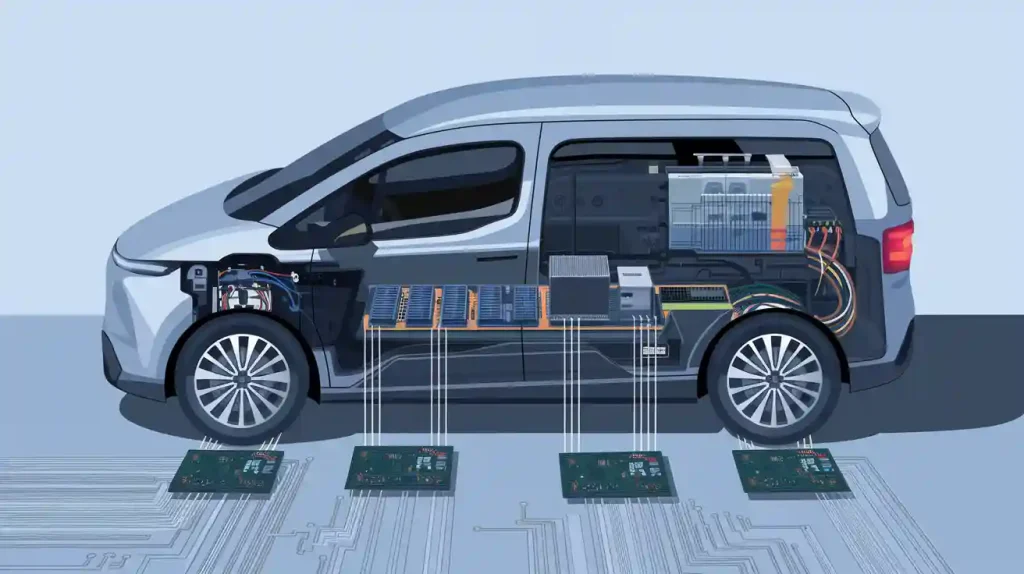
Low Dropout regulators (LDOs) are crucial for modern electronics. They maintain a steady voltage in compact devices such as phones and tablets. Low Dropout regulators enhance circuit performance where precision is essential. They minimize heat generation and extend battery life, making them ideal for portable gadgets. The Low Dropout market is projected to grow from $2.3 billion in 2023 to $3.6 billion by 2032. Their application is also on the rise in automobiles and industrial machinery.
Key Takeaways
Low Dropout Regulators (LDOs) give steady power, which is important for gadgets like phones and tablets.
LDOs save energy and make less heat, helping batteries last longer.
Knowing dropout voltage matters; smaller dropout voltage lets devices use battery power better.
LDOs lower noise, giving clean power for things like sound systems and radio circuits.
When picking an LDO, check input voltage, output accuracy, and current limit to fit your device.
Understanding Low Dropout Regulators
What Are LDOs?
A low-dropout regulator (LDO) is a device that keeps voltage steady. It works even when the input voltage is just a little higher than the output. This small gap is called the dropout voltage, which is a key feature of LDOs. Unlike other regulators, LDOs are quiet, making them great for delicate electronics.
Think of an LDO as a tool that gives your devices clean power. It uses a reference voltage, a feedback system, and a pass transistor to control the output. The low dropout voltage helps save energy and reduces heat. This makes LDOs perfect for gadgets that run on batteries or need quiet power.
Applications of LDOs
Portable Electronics
LDOs are important for small devices like phones, tablets, and smartwatches. These gadgets need good power control to make batteries last longer. LDOs waste less energy and fit well into tiny spaces.
Analog and RF Circuits
Noise can mess up analog and RF circuits. LDOs give low-noise power, keeping signals clear. They are used in audio gear and communication tools for better sound and stable signals.
Industrial and Automotive Systems
Factories and cars use LDOs to keep voltage steady. In factories, they power sensors and machines for automation. In cars, they help control systems and entertainment units. LDOs work well with changing input voltages, making them very useful.
The need for better power solutions has increased LDO use. Their dependability and flexibility make them key in modern electronics.
How Low Dropout Regulators Work
Basic Architecture
Low-dropout regulators use a simple design to provide steady power. The main parts are a pass element, an error amplifier, and a reference voltage. Each part helps the regulator work properly.
Pass Element: This part, often a PMOS transistor, changes the output voltage by controlling current.
Error Amplifier: It checks the feedback voltage against the reference voltage and tells the pass element to adjust.
Reference Voltage: This gives a stable starting point to keep the output steady.
Capacitors are also used to reduce noise and keep the circuit stable. The table below explains these parts:
Component | Description |
|---|---|
Pass Element | A PMOS transistor that adjusts the output voltage. |
Error Amplifier | Compares feedback voltage with reference voltage to guide the pass element. |
Voltage Reference | Provides a steady voltage for regulation. |
Feedback Voltage Divider | Lowers the output voltage for comparison with the reference voltage. |
Output Capacitor | Reduces noise and stabilizes the circuit during load changes. |
Input Capacitor | Filters noise like the output capacitor. |
This design helps low-dropout regulators work well in many devices.
Linear Regulation Principle
Low-dropout regulators use linear regulation to work. The pass element changes resistance to keep the output voltage steady. This reduces energy waste, making LDOs great for delicate devices. The dropout voltage, or the difference between input and output voltage, is very small—usually 100 to 200 mV. This small dropout voltage makes LDOs different from other regulators.
Operational Principles
Keeping Output Voltage Steady
A low-dropout regulator keeps the output voltage stable, even if the input voltage changes. The error amplifier watches the feedback voltage and compares it to the reference voltage. If the output changes, the pass element adjusts the current to fix it. This ensures your devices get clean, steady power.
Importance of Feedback
Feedback is key to how a low-dropout regulator works. The feedback voltage divider lowers the output voltage so it can be compared to the reference voltage. This lets the error amplifier find and fix any changes. Without feedback, the regulator would not stay stable, especially with changing loads.
The table below shows how LDOs work:
Component/Aspect | Description |
|---|---|
Basic Architecture | LDOs have a reference voltage, feedback amplifier, and pass transistor. |
Operational Principle | The error amplifier adjusts the pass transistor to keep the output voltage steady. |
Dropout Voltage | The small difference between input and output voltage, usually 100 to 200 mV. |
By learning these ideas, you can see how low-dropout regulators give reliable and efficient power.
Efficiency in Low Dropout Regulators
Dropout Voltage
What It Means and Why It Matters
Dropout voltage is the smallest gap between input and output voltage needed for a low dropout regulator to work properly. A smaller dropout voltage helps the regulator keep the output steady, even when the input voltage is close to the output. This is very important for devices that use batteries. It lets you use more of the battery before the regulator stops working. Devices with lower dropout voltage also stay cooler, making them more efficient.
Comparing Low and High Dropout Cases
In a low dropout case, if your device needs 3.3V and the input is 3.5V, the regulator can still give a steady output. But in a high dropout case, the input might need to be 5V or more to get the same output. This shows why low dropout voltage is important for saving energy and improving efficiency.
Quiescent Current
How It Affects Battery Life
Quiescent current is the small amount of power the regulator uses when the device is not active. Low dropout regulators are made to use less of this current, which helps batteries last longer. By lowering quiescent current, devices can run longer without losing performance.
Low dropout regulators save power when devices are idle.
They help batteries last longer in portable gadgets.
Very low quiescent current keeps devices efficient without hurting performance.
Balancing Low Power and Performance
Lowering quiescent current has trade-offs. It helps battery life but may make it harder for the regulator to handle quick changes in power needs. You need to balance these trade-offs based on what your device needs for the best results.
Thermal Management
Managing Heat in High-Power Devices
In devices that use a lot of power, managing heat is very important. Regulators must handle heat well to avoid damage and work reliably. The way the circuit board is designed and how much copper it uses can affect how well heat is managed.
Copper Coverage | Effect on Heat Control | |
|---|---|---|
Layout 1 | Low | Moderate |
Layout 2 | Medium | High |
Layout 3 | High | Very High |
You can check how well the regulator handles heat by measuring the junction temperature and using the formula:Zth = (Tj - Ta) / P, where Tj is the junction temperature, Ta is the air temperature, and P is the power used.
Why Thermal Shutdown is Important
Thermal shutdown features turn off the regulator if it gets too hot. This keeps the device safe and prevents damage. Other methods, like soft-start and controlling when the regulator turns on or off, can also help manage heat better.
Features That Improve Low Dropout Performance
Reducing Noise
Why It Matters for Analog and RF Devices
Noise can mess up analog and RF circuits, causing bad performance. Low dropout regulators give clean power, which is very important for these uses. A high power supply rejection ratio (PSRR) blocks input noise from reaching the output. This keeps signals clear in devices like audio systems and communication tools.
Ways to Lower Noise
To cut noise, focus on both internal and external factors. Picking the right capacitors and designing a good PCB layout are key. Low ESR capacitors help filter noise better. Also, knowing your regulator’s noise behavior and testing it correctly avoids wrong results. These steps help LDOs work well in noisy environments.
Managing Load Changes
Dealing with Sudden Power Needs
Sudden changes in power demand can make voltage unstable. The feedback system in an LDO helps keep things steady. Proper placement of poles and zeros in the feedback loop ensures quick response to load changes. This is crucial for devices with changing power needs.
Keeping Stability
Stability depends on the output capacitor and its ESR. Choosing the right mix of these parts helps handle sudden load changes. A good feedback system keeps the voltage steady, even when conditions change. This makes LDOs dependable for many uses.
Safety Features
Protecting Against Overcurrent and Heat
Overcurrent protection stops too much current from damaging the regulator or devices. Thermal shutdown turns off the regulator if it gets too hot. These features keep devices safe and working longer. For example, the TPS7A24 shows how thermal shutdown boosts reliability.
Blocking Reverse Current
Reverse current protection stops current from flowing backward into the regulator. This can save the circuit from damage. It is especially helpful in battery-powered devices during charging. With this feature, LDOs stay safe and work efficiently.
Key Specifications for Low Dropout Regulators
Input Voltage Range
Matching Power Sources
The input voltage range shows the lowest and highest voltages an LDO can handle. This helps it work with different power sources like batteries or DC/DC converters. For the LDO to work, the input voltage must be higher than the dropout voltage plus the output voltage. For instance, if the dropout voltage is 150 mV and the output is 2.8 V, the input voltage must be at least 2.95 V.
Many LDOs support a wide input voltage range, making them useful for many devices. Always check the minimum input voltage to ensure the LDO works properly. This is especially important for battery-powered devices, as battery voltage drops when it discharges.
Things to remember about input voltage range:
Input voltage must be higher than dropout voltage plus output voltage.
Check if it matches your power source to avoid problems.
Pick LDOs with a wide range for more design options.
Output Voltage Accuracy
Why It Matters for Sensitive Devices
Output voltage accuracy is very important for delicate electronics. It ensures the LDO gives a steady and exact voltage, keeping circuits reliable. In precise applications like photomultiplier tubes or chip-making, accuracy can range from 0.02% to 0.0001%. These strict levels reduce noise and ripple, helping devices work their best.
Application | Voltage Accuracy | Line/Load Regulation | Ripple/Noise |
|---|---|---|---|
Photomultiplier Tubes (PMT) | Needs high accuracy | 0.02% – 0.0001% | 0.0005% / 5ppm |
Semiconductor Manufacturing | Requires high precision | 0.02% – 0.0001% | 0.0005% / 5ppm |
General-purpose Power Supplies | +/- 2% to 0.5% | 10% load to full output | 1% within 20MHz |
To meet these accuracy levels, LDOs use precise voltage references and high-quality resistors. These parts keep the output voltage steady, even when the load changes.
Power-Supply Rejection Ratio (PSRR)
What It Is and Why It’s Important
The power-supply rejection ratio (PSRR) shows how well an LDO blocks input voltage noise and ripple. A high PSRR keeps the output voltage clean, even with noisy input power. This is crucial for sensitive analog circuits, where noise can ruin signal quality.
Aspect | Description |
|---|---|
Power-Supply Rejection (PSR) | PSR measures how well the LDO blocks input ripple across frequencies. |
Frequency Bands | PSR is measured in two ranges: Band 1 (low frequencies) and Band 2 (high frequencies). |
Output Capacitance | Using high-value capacitors improves PSR in high-frequency ranges. |
PCB Layout | A good PCB layout reduces noise leakage from input to output. |
To improve PSRR, focus on good PCB design and use capacitors with high capacitance. High PSRR LDOs are great for filtering noise from DC/DC converters, giving stable and clean outputs for your devices.
Tip: PSRR improves at light loads due to higher output impedance. But at heavy loads, PSRR may drop, so choose an LDO based on your device’s power needs.
Maximum Output Current
Matching Regulator Capacity to Device Needs
When picking a low-dropout regulator (LDO), make sure its maximum output current fits your device’s needs. The maximum output current is the most current the LDO can give while keeping the voltage steady. If your device needs more current than the LDO can handle, the voltage might drop, and the device could stop working.
To choose the right LDO, figure out the highest current your device will use. For instance, if your circuit uses 500 mA normally but goes up to 700 mA under heavy use, pick an LDO that can supply at least 700 mA.
Tip: Pick an LDO with a slightly higher current limit than your peak need. This helps handle sudden surges and keeps performance steady.
Here’s a simple comparison of LDOs with different current limits:
LDO Model | Maximum Output Current | Best Uses |
|---|---|---|
LDO-A | 150 mA | Small sensors, low-power chips |
LDO-B | 500 mA | Portable gadgets, audio devices |
LDO-C | 1 A | Motors, high-power lights |
Also, think about how the LDO handles heat. Higher currents create more heat, which can lower efficiency and shorten its life. Look for LDOs with thermal protection to avoid overheating.
By matching the LDO’s capacity to your device, you keep it running smoothly and protect it from harm. This step is key for building reliable and efficient systems.
Low dropout regulators are important for today’s electronics. They keep voltage steady, cut noise, and help batteries last longer. This makes them essential for delicate devices.
Case Study 1: Portable medical tools worked longer and more reliably with the NCP4681DSQ25T1G.
Case Study 2: Factory systems used less power and managed energy better with the NCP4681DSQ33T1G.
LDOs are great for quiet systems, with excellent PSRR and noise control. Their small dropout voltage and low quiescent current suit portable and wireless gadgets well.
Check out detailed guides to learn more about LDO designs and uses.
FAQ
What makes LDOs unique compared to other voltage regulators?
LDOs need only a small gap between input and output voltage, called dropout voltage. This makes them better for devices using batteries. Unlike switching regulators, LDOs give smooth, quiet power, perfect for sensitive electronics like analog circuits.
How can I pick the right LDO for my device?
Look at the input voltage range, output voltage accuracy, and maximum output current. Match these to what your device needs. Also, check for features like noise control and heat protection to improve safety and performance.
Can LDOs help batteries last longer?
Yes, LDOs save energy by using low quiescent current. This helps portable devices run longer. Picking an LDO with a low dropout voltage also uses battery power more efficiently as it drains.
Why is noise control important in LDOs?
Noise can mess up delicate circuits, especially in analog and RF devices. LDOs with high PSRR and low noise output give clean power. This improves sound quality and performance in things like audio gear and communication devices.
Are LDOs good for high-power devices?
LDOs can work in high-power devices if they manage heat well. Features like cooling and thermal shutdown stop overheating. But for very high-power needs, switching regulators might work better.
Tip: Always check how well an LDO handles heat and current before using it in high-power setups.