When you look at FPGA vs Microcontroller for embedded systems, the right choice depends on what your project needs. You may choose an FPGA if you want special hardware and fast speed. A microcontroller is good when you need a simple and efficient system. Think about how it is built, how well it works, the price, how much power it uses, and how hard it is to make. Always make sure your embedded design fits what your application needs.
Decision Factors
Performance
You should think about performance when picking between an FPGA and a microcontroller. FPGAs can do many things at once. This gives them strong performance for jobs like signal processing or image analysis. Microcontrollers are good for easy tasks. Their performance gets worse if you give them too much to do. If your project needs quick answers or real-time data, performance should be your main concern.
Power
Power use is very important in embedded systems. FPGAs often use more power because they do many things at the same time. You may see higher power use with an FPGA for hard jobs. Microcontrollers usually use less power. They are great for battery devices or places where saving energy matters. If you want your system to last long without charging, check how much power each choice uses.
Tip: Always test how much power your design uses before you finish your project. This helps you avoid problems later.
Cost
You should look at the cost of FPGAs and microcontrollers. FPGAs can cost more, especially for small projects. You pay extra for their flexibility and strong performance. Microcontrollers cost less and are easy to buy. If you want to save money, a microcontroller may be better for you.
Complexity
Think about how hard it is to build and program your system. FPGAs need special tools and skills. You must learn hardware description languages to use them. Microcontrollers are easier to program. You can use simple code and common languages like C. If you want a fast and easy setup, microcontrollers make things simpler.
FPGA Architecture

If you look at fpga architecture, you see a special way to build digital systems. This type of architecture is different because you can change it. You can make the fpga work in new ways even after your device is built. This makes fpgas helpful for lots of projects.
Logic Blocks
Logic blocks are the main parts of fpga architecture. They are like tiny building pieces. Each logic block can do easy math or logic jobs. When you link many logic blocks, you can make hard circuits. You do not have to keep the same design. If you want to change your project, you can reprogram the fpga. This lets you update your hardware without buying new chips.
Note: Logic blocks let you test new ideas fast. You can try different designs and find what works best for your system.
Parallelism
A big plus of fpga architecture is parallelism. You can make the fpga do many jobs at once. Each logic block can work on its own job. This is not like most microcontrollers, which do one thing at a time. With an fpga, you can make your system faster by running jobs together. This parallelism happens because the fpga can be changed. You pick how the logic blocks connect and what they do. If your project needs quick data work, you should think about fpga architecture.
Microcontroller Architecture
When you look at microcontroller architecture, you see a design made for control and efficiency. This type of architecture helps you manage tasks in many devices. You can find microcontrollers in things like home appliances, toys, and cars. Their design lets you build systems that are easy to use and work well.
Processor Core
The processor core is the main part of every microcontroller. It acts like the brain of the system. The core runs your program and follows instructions. Most microcontrollers have one processor core. This makes the design simple and easy to learn. You write code for the core to read and follow. The processor core is good for jobs that do not need high speed or hard logic. You can use it for reading sensors, turning on lights, or sending signals.
Tip: If you want to learn about embedded systems, start with a microcontroller. The processor core helps you see how computers control things in real life.
Sequential Tasks
Microcontroller architecture works by doing tasks one after another. You give the processor core a list of steps. It finishes each step before starting the next one. This way of working is called sequential processing. You get a system that is easy to understand and fix. Microcontrollers are best for controlling simple devices or following routines. For example, you can use them to blink an LED, check a button, or read a temperature sensor.
Advantages of Sequential Tasks:
Easy to program
Simple to test
Good for basic control jobs
You can trust microcontrollers for projects that do not need fast or hard data work. Their design keeps your project clear and easy to handle.
FPGA Pros
Custom Hardware
You can create custom hardware with an fpga. This is one of the biggest advantages you get. You do not have to use fixed circuits. Instead, you design the hardware to fit your project. You can change the way the hardware works even after you finish building your system. This flexibility gives you many advantages. You can update your design if you find a better way to solve a problem. You can also fix mistakes without buying new parts.
Tip: Custom hardware lets you test new ideas quickly. You can try different solutions and see which one works best for your needs.
You can use custom hardware to make your system faster or more efficient. You can also add special features that other systems do not have. These advantages help you stand out in your field.
High Speed
High speed is another key advantage of using an fpga. You can make the hardware do many jobs at the same time. This is called parallel processing. You do not have to wait for one job to finish before starting the next. Your system can handle lots of data very fast.
You get faster results for tasks like video processing or signal analysis.
You can use high speed to improve real-time systems.
You can process information as soon as it arrives.
These advantages make fpgas a strong choice for projects that need quick answers. You can trust the hardware to keep up with tough jobs. When you need both speed and flexibility, the advantages of custom hardware and high speed make fpgas stand out.
Microcontroller Pros
Simplicity
Microcontrollers make building projects easy. You do not need to make hard hardware. Most microcontrollers have timers, memory, and input/output pins. You can connect sensors or buttons right to the chip. This helps you plan and finish your project faster.
Tip: If you want to learn about embedded systems, pick a microcontroller. You can write code in C or Python. You do not need to learn special hardware languages.
There are many guides and examples online. These help you fix problems fast. You do not need to change the hardware much. You can spend time writing and testing your code. This simple way saves time and helps you make fewer mistakes.
Efficiency
Microcontrollers help you make efficient systems. They use very little power. You can run your project on batteries for a long time. You do not need extra hardware for power. The chip does most jobs by itself.
You can use sleep modes to save energy.
You can control how much power each part uses.
You can finish tasks fast and go back to sleep mode.
Microcontrollers make your design smaller and cheaper. You do not need many extra parts. The chip does most of the work. This makes microcontrollers great for smart watches, sensors, and home gadgets. You can trust them to keep your project easy and reliable.
FPGA Cons
Complexity
You may find that working with an fpga brings several disadvantages. The first challenge you face is complexity. You need to learn special tools and languages to program the hardware. Most projects require you to use hardware description languages like VHDL or Verilog. These languages look different from regular programming languages. You must understand how digital circuits work. You also need to test your design many times to make sure it works.
Note: If you do not have experience with hardware design, you may spend extra time learning new skills.
You often need to use advanced software to create and simulate your circuits. This software can be hard to use. You may also need to debug problems that are difficult to find. These disadvantages can slow down your project and make it harder to finish on time.
You need special knowledge to use fpgas.
You must spend time learning new tools.
You may face more errors during testing.
Power Use
Another disadvantage you should consider is power use. Fpgas often use more energy than microcontrollers. You may see your device get warm or drain batteries quickly. This happens because fpgas run many tasks at the same time. Each logic block uses power when it works. If you build a system that needs to save energy, you may struggle with this issue.
Tip: Always check the power needs of your design before you choose an fpga.
You may need extra cooling or bigger batteries for your project. This can add cost and make your device larger. If you want a small, battery-powered system, these disadvantages may push you to look for other options.
Microcontroller Cons
Limited Power
You may notice that microcontrollers have limits when you need more power. These chips work well for simple tasks, but they struggle with heavy jobs. If you want to process large amounts of data or run complex math, you will see slow results. Microcontrollers often run at lower speeds than other hardware. You might find that your project cannot keep up with real-time needs. For example, if you want to stream video or handle fast signals, a microcontroller may not deliver the speed you expect.
Note: Always check the speed and memory of your microcontroller before you start your project. This helps you avoid problems later.
Some projects need more memory or faster processing. Microcontrollers usually come with fixed resources. You cannot add more memory or boost the speed. If your system grows, you may need to switch to a different solution.
Less Customization
Microcontrollers give you a fixed set of features. You cannot change the way the hardware works. You must use the built-in timers, pins, and memory as they are. If you want to add special features, you may need extra chips or parts. This can make your design bigger and harder to manage.
You also cannot change the way the chip handles tasks. The chip follows your code, but the hardware stays the same. If you want to create custom hardware or add new functions, you will face limits. Some projects need special logic or fast data paths. Microcontrollers do not let you build these features into the chip.
You get less freedom to design unique systems.
You may need to use workarounds for special needs.
You might spend more time and money adding extra parts.
If you want full control over your hardware, you may need to look at other options.
fpga vs microcontroller
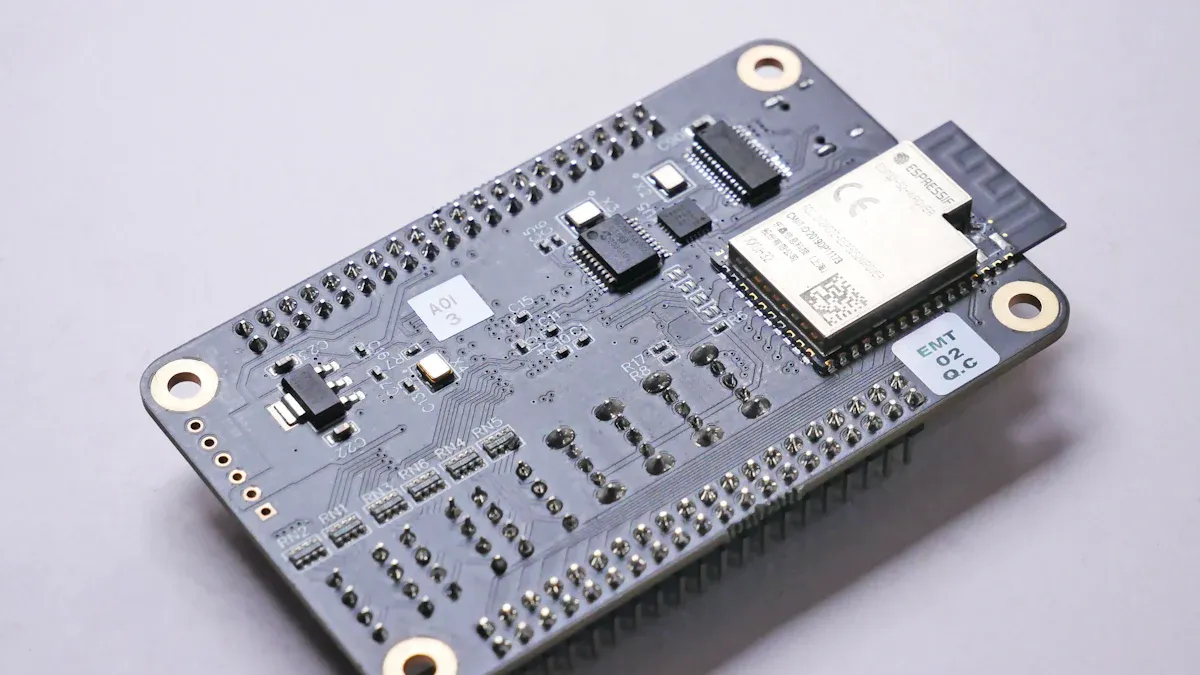
When you compare fpga vs microcontroller, you see big differences in how each one works. You need to look at their architecture, performance, power use, cost, and how easy they are to develop. This helps you pick the right system for your project.
Here is a table that shows a side-by-side comparison of fpga vs microcontroller:
Feature | FPGA | Microcontroller |
|---|---|---|
Architecture | Customizable hardware. You can change how it works after building your system. | Fixed hardware. You use a processor core that runs your code. |
Performance | Very high performance. Handles many tasks at the same time. Great for real-time jobs. | Good performance for simple tasks. Works best with one job at a time. |
Power | Uses more power. Each part works at once, so it needs more energy. | Uses less power. Saves battery and works well in small devices. |
Cost | Costs more. You pay for flexibility and speed. | Costs less. Good for projects with a small budget. |
Development Ease | Harder to learn. You need special tools and skills. | Easier to use. You can start with simple code and common languages. |
You should think about performance first. If your project needs to process lots of data fast, fpga vs microcontroller shows that fpga gives you better performance. You can run many jobs at the same time. This helps in projects like video processing or signal analysis. If you only need to control simple things, microcontroller performance is enough. You can blink lights, read sensors, or send signals without problems.
Power use is another big point in fpga vs microcontroller. Fpga uses more power because it does many things at once. You may need bigger batteries or cooling. Microcontroller uses less power. You can use it in watches, toys, or other small devices.
Cost matters in fpga vs microcontroller. Fpga costs more, but you get more speed and flexibility. Microcontroller costs less and is easy to buy. If you want to save money, microcontroller is a good choice.
Development ease is also important in fpga vs microcontroller. Fpga is harder to learn. You need to use special languages and tools. Microcontroller is easier. You can write code in C or Python and find many guides online.
Tip: Always match the performance you need with the right technology. If you need high performance and custom hardware, choose fpga. If you want simple control and low cost, choose microcontroller.
When you look at fpga vs microcontroller, you see that each one fits different needs. You should pick the one that matches your system and your project goals.
Use Cases
field-programmable gate arrays
Field-programmable gate arrays are used in many places today. These chips help when you need fast data or special hardware. One use is video processing. An fpga can handle high-definition video streams quickly. This helps make security cameras and video editing tools work fast.
Fpgas are also used in telecommunications. They help manage signals in cell towers and network equipment. You can change how the hardware works without swapping the chip. This makes upgrades simple and keeps your system new.
Medical devices use field-programmable gate arrays too. For example, MRI machines and portable ultrasound tools need fast and accurate data. Fpgas give these devices the speed and flexibility they need.
Tip: Field-programmable gate arrays are great if you want to try new ideas or update your hardware often.
microcontroller
Microcontrollers are found in many things you use every day. These chips control simple devices and make them smarter. One use is home automation. A microcontroller can control lights, fans, or alarms in your house. This helps save energy and keeps your home safe.
Microcontrollers are also used in toys and gadgets. You can build robots, remote controls, or electronic games with them. These chips make devices easy to program and use.
Cars use microcontrollers too. They help control engines, airbags, and entertainment systems. Microcontrollers keep your car working well and safely.
Use Case | Example Devices |
|---|---|
Home Automation | Smart lights, thermostats |
Toys and Gadgets | Robots, remote controls |
Automotive | Engine control, airbags |
Microcontrollers are a good choice for projects that need simple control and low power.
Hybrid Solutions
You can use both an fpga and a microcontroller together. This is called a hybrid approach. It gives you the best features from both. Some projects need fast data work and easy control at once. Hybrid solutions help you do this.
A hybrid system lets you split the jobs. The fpga does fast tasks like image or signal work. The microcontroller takes care of simple things. It reads sensors or sends out commands. When they work together, you get more power and choices.
You can find hybrid systems in many fields. For example:
In medical devices, hybrid boards use an fpga to process patient data fast. The microcontroller runs the screen and checks for safety.
In cars, hybrid designs help with live video from cameras. The fpga works on the video. The microcontroller gives alerts on the dashboard.
In robots, hybrid setups control motors and sensors. The fpga does quick math. The microcontroller sends movement commands.
Note: Hybrid solutions make updates easy. You can change the software on the microcontroller. You can also reprogram the fpga for new features.
Hybrid systems give you many good things:
You save power because each chip does what it is best at.
You spend less money by using smaller chips for each job.
You can upgrade and fix your project more easily.
When you pick a hybrid design, you get the best of both. You have fast processing, simple control, and more ways to build your embedded system.
Decision Guide
You have many choices when you start a new embedded design. You want your system to work well for your needs. Use this checklist to help you decide:
Define your application
Write down what your system should do. Make a list of the main jobs. Decide if you need fast processing or just simple control.Set your performance goals
Think about how fast your system must answer. If you need high-speed work or real-time computing, look at fpga implementation. For easy control, microcontrollers are often best.Choose your hardware implementation
Decide if you want hardware you can change later. Fpga implementation lets you change hardware after building. Microcontroller hardware stays the same. Hybrid solutions use both for more options.Check your power limits
Find out how much power your system can use. Fpga implementation uses more energy for hard jobs. Microcontrollers save power in most cases.Review your budget
Check the price for each hardware implementation. Fpga implementation costs more but gives better performance and changeable hardware. Microcontrollers cost less and work for simple jobs.Assess your design skills
Ask yourself if you know special hardware description languages. Fpga implementation needs these skills. Microcontrollers use common programming languages.Test your functionality needs
List all the features your system must have. If you need custom hardware or advanced processing, fpga implementation is a good fit. For basic needs, microcontrollers are easier.
📝 Tip: Make a table to compare your needs with each hardware implementation. This helps you see which design fits your goals.
Decision Factor | FPGA Implementation | Microcontroller | Hybrid Solution |
|---|---|---|---|
Performance | High | Moderate | Balanced |
Power | High | Low | Medium |
Cost | High | Low | Medium |
Reconfigurable | Yes | No | Yes |
Functionality | Customizable | Fixed | Flexible |
Computing | Parallel | Sequential | Mixed |
You make better choices when your design matches your needs. Focus on processing, hardware implementation, and features. Use reconfigurable hardware if you need changes. Pick microcontrollers for simple designs. Try hybrid solutions for balanced computing and flexible hardware.
You now know the key strengths of FPGAs and microcontrollers. FPGAs give you speed and custom hardware. Microcontrollers offer simple control and low power use. Always match your choice to your project needs in embedded systems. Use the decision guide to help you plan. When you want both speed and easy control, think about hybrid solutions. Your best design comes from picking the right tool.
FAQ
What is the main difference between an FPGA and a microcontroller?
You can change the hardware in an FPGA even after building your device. A microcontroller has hardware that stays the same and just runs your code. FPGAs are good for jobs that need custom hardware and fast speed. Microcontrollers are better for simple control tasks.
Can you use both an FPGA and a microcontroller in one project?
Yes, you can use both together. This is called a hybrid solution. The FPGA does the fast data work. The microcontroller takes care of simple control jobs. Using both gives you more choices and better results.
Which is easier to learn for beginners?
Microcontrollers are easier for beginners to learn. You can use common languages like C or Python to write code. FPGAs need special hardware languages that are harder to learn. There are more guides and examples for microcontrollers.
When should you choose an FPGA over a microcontroller?
Pick an FPGA if your project needs high speed, custom hardware, or many jobs at once. Use a microcontroller for simple, low-power, or cheaper projects.