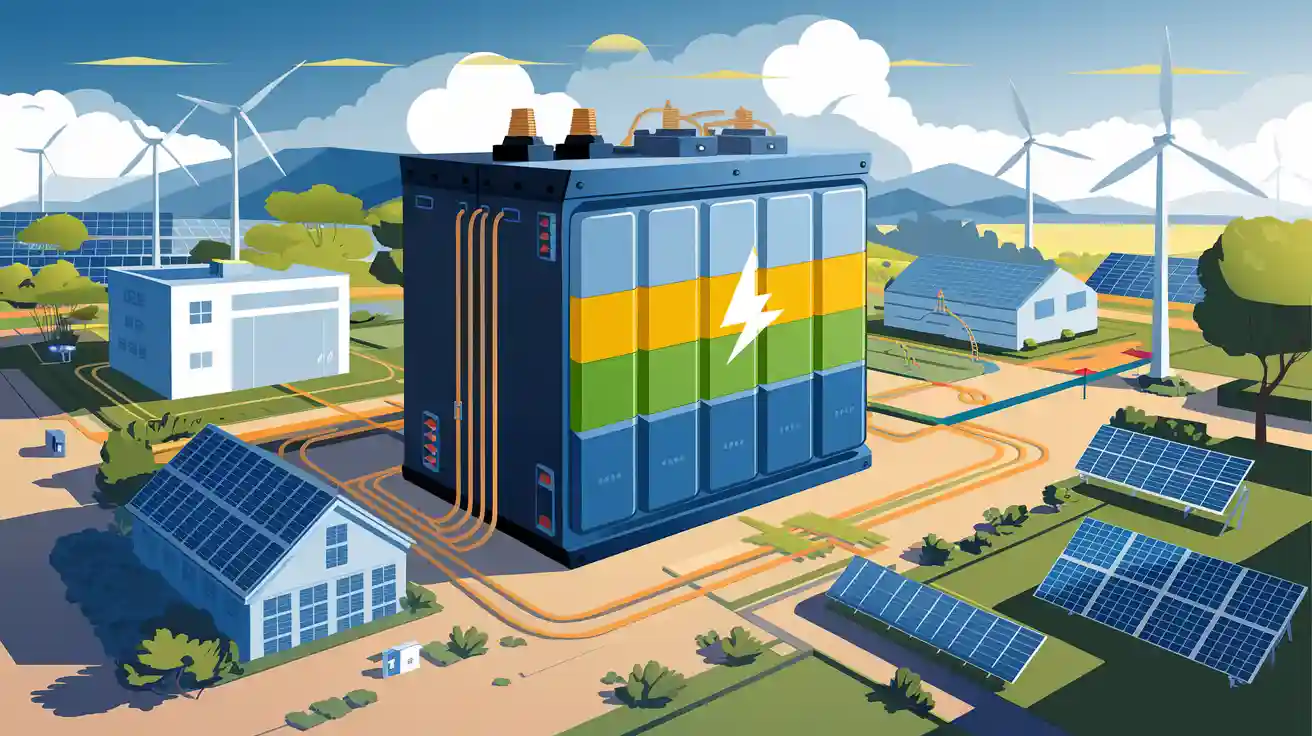
Battery energy storage systems keep electricity for later use. They give out electricity when people need it. These systems help balance how much energy is used and made. They make the power grid more steady. They also help renewable energy sources work better.
Key technical performance metrics include:
Cost to buy, set up, and connect systems
Costs to run and take care of systems
Costs when the system is no longer used
Metric | Value (USD Billion) | Additional Info |
|---|---|---|
Market Size in 2024 | 13.3 | About how much it is worth |
Market Size by 2033 | 41.5 | What it may be worth later |
Compound Annual Growth Rate | 14.6% | From 2025 to 2033 |
Key Takeaways
Battery energy storage systems keep electricity for later use. They help when people need more power or when there is less renewable energy. This helps the power grid stay steady and work well.
BESS have batteries, management systems, inverters, and safety tools. These parts work together to store and give out energy safely and well.
There are different battery types like lithium-ion, lead-acid, and sodium-sulfur. Each type has its own good points and problems. Some types work better for certain jobs than others.
BESS help manage energy, keep the grid stable, and use more renewable energy. They store extra power and can give it out fast when it is needed.
Picking the right BESS means thinking about how well it works, how safe it is, how much it costs, and if it follows rules. You can choose from ready-made systems or ones made just for you.
Battery Energy Storage Systems Overview
What Is a BESS
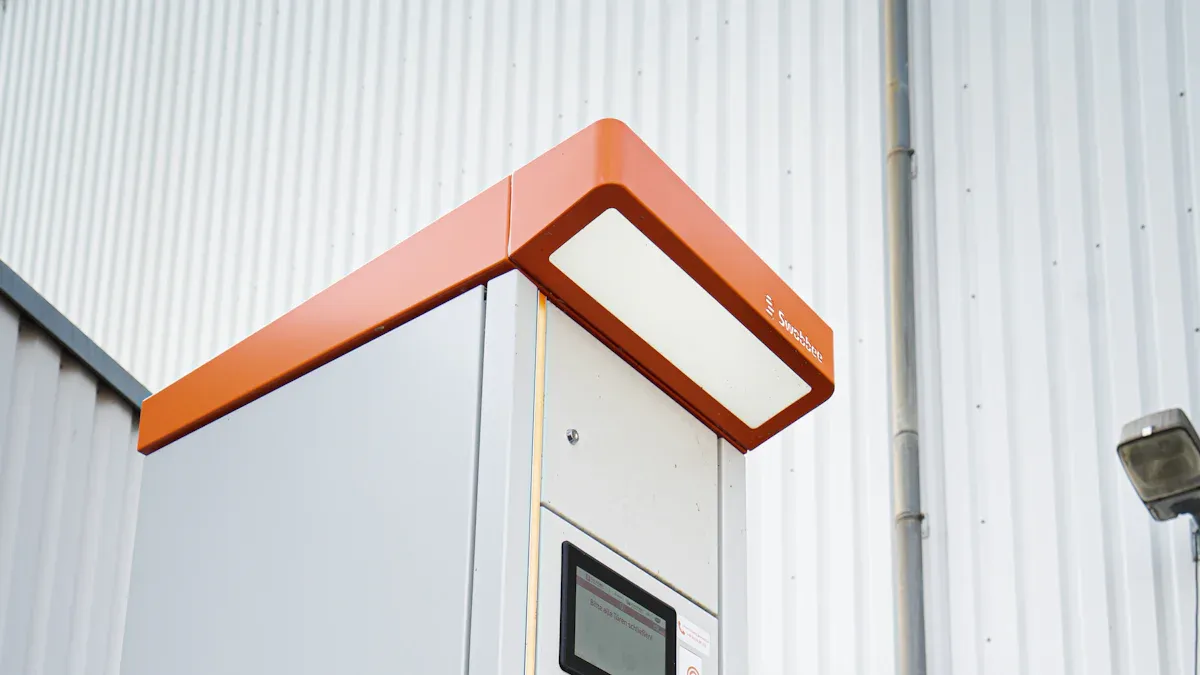
A battery energy storage system is a group of devices that save electricity for later. These systems help control how much energy is used and made. They can send power back to the grid when people need it most. BESS are important for energy management. They make sure electricity is there during busy times or when solar and wind are not making enough.
The main job of a BESS is to keep supply and demand balanced. This helps the power grid stay steady and safe. BESS can also give backup power, help with grid services, and make renewable energy more useful.
Parameter / Example | Numerical Data / Description |
|---|---|
Power rating | Measured in MW or GW |
Energy capacity | Measured in MWh or GWh |
Duration of full rated power delivery | Usually from 1 to 4 hours |
Degradation factors | Depth of discharge, number of cycles, temperature, state of charge, current |
Control times | As low as 10 milliseconds |
Cycle life warranties | Given by yearly cycles and energy per cycle |
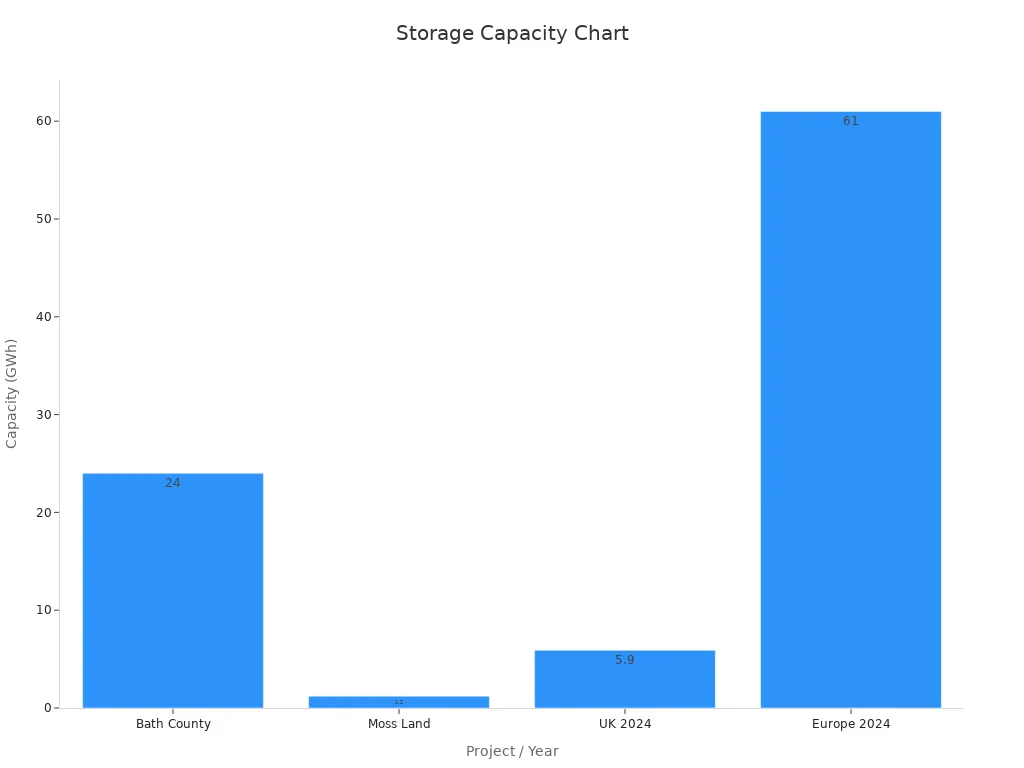
Example: Bath County Pumped Storage | 24 GWh storage, 3 GW power |
Example: Moss Landing Energy Storage | 1.2 GWh storage, 300 MW power |
Installed capacity (UK, 2024) | 4.6 GW power, 5.9 GWh energy |
Installed capacity (Europe, 2024) | 61 GWh total, 21 GWh added in 2024 |
Average installation cost (Europe) | €300 to €400 per kWh |
How BESS Work
Battery energy storage systems charge batteries when there is extra electricity. They give out stored energy when people use more power. The system has different parts to control how energy moves in and out. When the grid has too much electricity, the BESS saves it. When the grid needs more, the BESS gives back the stored power.
In real life, BESS must handle changes in how much energy they keep and give out. Over time, batteries hold less energy. For example, a system may start with 95% energy per cycle in the first year. This can drop to about 77% at the end of its life. Operators change how often and how long they charge and use the system. This helps the system work well and earn more money.
Modern BESS use smart designs. Some have parts that can be stacked or swapped out. Others use smart modules with AI to check for problems and guess when repairs are needed. Good cooling, like air or liquid cooling, keeps batteries safe and working longer. These features help BESS last longer and work better.
Studies show how a BESS is used changes how fast it wears out. Using the system for primary frequency regulation is more efficient and causes less wear than other jobs. Operators must watch things like depth of discharge, number of cycles, temperature, and state of charge. Managing these things helps the system run well and stay under warranty.
Main Components
A battery energy storage system has several main parts. Each part has a special job to keep the system safe and working well:
Batteries: These hold the energy. Most BESS use lithium-ion batteries, but there are other types. The battery is the heart of the system. It decides how much energy can be saved and for how long.
Battery Management System (BMS): This checks each battery cell’s health. It keeps batteries safe by watching temperature, voltage, and current. The BMS stops problems like overheating or overcharging.
Inverters: These change direct current (DC) from batteries into alternating current (AC) for the grid or buildings. Inverters also control how much energy goes in and out.
Energy Management Systems (EMS): The EMS controls when to charge or use the batteries. It uses software to pick the best times to save or give out energy. EMS helps the system work with the grid and other energy sources.
Safety Systems: These include fire suppression, alarms, and cooling. Safety systems protect the BESS from harm and keep people safe.
Note: All parts must work together for the system to run well. If one part breaks, the whole system can stop.
Studies show these parts help BESS last longer and work better. For example, a big lithium-ion BESS kept 95.88% of its health after three years and 356 full cycles. It lost only 1.37% capacity each year. The system worked best near its rated power, with 85% efficiency, but this dropped to 65% at lower power. The BMS was important for keeping batteries safe and working well by changing settings for temperature and voltage.
Performance metrics for BESS include energy efficiency, reliability, regulation ability, economic value, and environmental impact. Researchers made models to measure these things. They use formulas for depth of discharge, average energy density, and energy loss rate. These metrics help people compare systems and pick the best one for their needs.
Types of Battery Energy Storage Systems

Battery Technologies
There are many kinds of battery technologies. The most common are lithium-ion, lead-acid, nickel-cadmium, sodium-sulfur, and flow batteries. Each type has special features for different uses.
Battery Technology | Specific Energy Density | Space Requirement | Self-Discharge Rate | Coulombic Efficiency | Environmental Impact |
|---|---|---|---|---|---|
Sodium Sulfur (NaS) | ~760 Wh/kg | Less than half of Lead-Acid | None | 100% | Environmentally friendly, low risk |
Lead-Acid | ~1/3 of NaS | More space required | ~4% per week | ~90% | Not environmentally friendly |
Lithium-Ion (LIB) | High | N/A | N/A | High, stable | High energy density, stable |
Lithium-ion batteries store a lot of energy and work well. Sodium-sulfur batteries are good for big storage needs. Lead-acid batteries are still used for backup power.
Pros and Cons
Each battery type has good and bad points. Lithium-ion batteries last 5 to 15 years and work very well. But they can get too hot and need to be watched. Lead-acid batteries are cheaper but take up more space and can hurt the environment. Sodium-sulfur batteries work well and are safer for the environment, but they need high heat to run.
Aspect | Data/Description |
|---|---|
Environmental Impact | Up to 46.6% emission reduction per kWh stored |
Financial ROI | Typical payback in 5–7 years |
Safety | Lithium-ion fires have caused injuries and property damage |
Maintenance & Lifespan | Predictive maintenance can reach 99.99% anomaly detection accuracy |
Scalability | Systems range from home to utility scale |
Environmental Challenges | Mining and recycling issues |
Some batteries help cut pollution by almost half. Most systems pay for themselves in five to seven years. Lithium-ion batteries can catch fire and cause harm. Good care can find almost all problems before they get worse. These systems can be small for homes or big for power plants. Mining and recycling batteries can cause problems for the environment.
Alternative Storage Methods
Some energy storage does not use batteries. Pumped hydroelectric storage uses water and gravity to save energy. Compressed air energy storage puts air underground to use later. Flywheel storage spins a wheel to keep energy for a short time. Thermal storage keeps heat, like molten salt, to use with renewable energy.
Note: Each storage type is best for certain jobs. Pumped hydro is good for saving lots of energy for a long time. Flywheels are best for quick, short power needs. Flow batteries and solid-state batteries are safer, but not used everywhere yet.
Applications of BESS
Energy Management
Battery energy storage systems are used in many ways for energy management. They help power companies and businesses decide when to use electricity. These systems save extra energy when people do not need much power. They give out this saved energy when more people need it. This is called load management. Operators use different ways to save money and use energy better. One way is called energy arbitrage. Companies buy electricity when it is cheap. They sell it back to the grid when prices go up.
Utility-scale storage costs may be $135 to $189 per MWh by 2025, so these uses will cost less.
Battery energy storage systems around the world could reach 400 GWh by 2030.
Cities using BESS spend less money and use resources better.
Big batteries in Alaska have worked since 2003 and show they last a long time.
Battery systems also give backup power if the lights go out. They help microgrids, which can work alone if the main grid stops. These uses help keep important places running.
Grid Support
BESS are very important for helping the grid and keeping it steady. They can react fast when people use more or less electricity. This quick action keeps the grid balanced and stops blackouts. Battery systems can give backup power in just a few milliseconds. This is much faster than old power plants.
Application Area | Impact Example |
|---|---|
Grid stabilization | Energy self-sufficiency goes up to 70%-90% with storage and renewables |
Grid stability | Carbon emissions can drop by over 80% |
Backup power | Grid batteries can last 20 years or longer |
Case study | El Hierro’s hybrid system gets 100% renewable power in summer |
Battery management systems check temperature, voltage, and how well the system works all the time. This keeps the system safe and working right for every grid job. More battery recycling also helps the environment.
Renewable Integration
BESS help add more renewable energy by making solar and wind power smoother. They save extra energy from renewables when there is a lot. They give out this energy when there is less. This is called energy shifting. It lets more renewable energy go into the grid without making it unstable.
Battery systems work well, with 85-90% roundtrip efficiency, and can react in milliseconds. They give backup power, spinning reserve, and help control frequency. These uses help use less fuel, cut pollution, and make the grid stronger. For example, BESS can take the place of spinning reserves from turbines. This lowers repair costs and makes things work better.
Note: Using BESS with renewable energy makes the grid cleaner, more reliable, and ready for new changes.
Market Options and Customization
Off-the-Shelf Solutions
Many companies sell off-the-shelf battery energy storage systems. These are ready-made and come from big brands like LG Energy Solution, Tesla, and ENGIE. Off-the-shelf systems use designs that already work well. They often have lithium-ion batteries because these are efficient and cost less. Cloud-based analytics help these systems by spotting problems early and keeping batteries safe. For example, cloud monitoring checks thousands of battery cells every few seconds. This helps stop failures and makes the system more reliable.
Performance Parameter | Typical Range or Example |
|---|---|
Round-Trip Efficiency | 85% to 95% (lithium-ion) |
Cycle Life | Longer and deeper cycles than lead-acid |
Cooling Methods | Air and liquid cooling for safety and performance |
Market Growth | 64% increase in battery storage capacity (Deloitte, 2025) |
Off-the-shelf systems are good for homes, businesses, and big grid projects. They are fast to set up and usually cost less than custom systems. But sometimes they have extra features people do not need or may not fit special needs.
Custom Systems
Custom battery energy storage systems are made for special needs. These systems can match unique project goals, site needs, or industry rules. For example, a containerized battery energy storage system can be built for easy moving and quick setup in faraway places. Custom systems skip extra features found in standard products and can fix compatibility problems.
Custom solutions take more time, money, and expert teams. They must follow strict safety and certification rules. Building a custom system means working with many suppliers and following both national and international standards. Custom systems can grow and change more easily, but they cost more and take longer to build.
Tip: Custom systems are best when a project has special needs that off-the-shelf products cannot meet.
Selection Criteria
Picking the right battery energy storage system takes careful thought. Buyers should look at these main points:
Performance: See how the system works in different temperatures and how long it lasts. Real-time data and smart controls help keep performance high.
Safety: Early fault detection and strong safety systems stop fires and other dangers. Good systems use AI and cloud tools to find problems before they get worse.
Compliance: Make sure the system meets all local and international rules. Certification is needed for safe and legal use.
Support: Look for good customer support and easy repairs or upgrades.
A good choice balances cost, safety, and how well the system fits the project’s needs. Both off-the-shelf and custom systems have good points, so buyers should pick what matches their goals.
Integration Challenges
Technical Barriers
Battery energy storage systems have some problems when joining the grid. Sometimes, devices and software do not work well together. This is called interoperability. The grid needs enough energy storage to meet the highest demand. Operators use a formula: Grid Stability = Energy Storage Capacity divided by Peak Demand. Power quality can drop if lots of energy moves in or out fast.
Projects like the Green Mountain Power virtual power plant use many batteries. These batteries help the grid and save millions during busy times.
In New York, a 200 MW/200 MWh storage system saved up to $23 million each year. It replaced the need for expensive new power lines.
More than 38 GW of new solar and wind projects will use energy storage. This shows that more projects are adding storage.
Some business models, like renewable energy plus storage contracts, help fix these problems. Better forecasting and upgrades for storage make the grid more flexible and reliable.
Compliance
Following rules makes battery energy storage system integration harder. Systems must pass tough tests like UL 9540, NFPA 855, and IEEE 1547. Operators need paperwork to get approval from officials and fire marshals. Fire risk is a big worry, especially with lithium-ion batteries. New cooling methods, like immersion cooling, help stop fires and make indoor use safer.
Different agencies have different rules, which can slow down projects.
Changing energy policies and unclear rules for new tech make things uncertain.
Environmental and social checks can take a long time and may face pushback from the community.
Cybersecurity and data protection rules add more steps as systems get more digital.
To meet environmental, social, and governance goals, operators must report clearly and follow sustainability standards.
Maintenance
Keeping battery energy storage systems working well needs regular care. Maintenance records and technical data are not always the same. Operators use their skills and math tools to guess when things might break. Maintenance jobs include checking parts, managing heat, testing capacity, replacing parts, and updating software.
Some systems need checks every six months, while others need yearly checks.
Real-time monitoring helps switch from set schedules to fixing things when needed.
Operators must collect data every 15 minutes to keep warranties and not lose coverage.
Managing warranties is hard and needs good records and teamwork with dispatch teams.
Maintenance costs can be very different, depending on the company and service level. Good records help operators know real costs and plan better for the future.
Battery energy storage systems are very important for energy today. They use special batteries, smart controls, and safety tools to help the grid and renewables. The market is getting bigger because of new tech and more people wanting these systems. Picking the right system and knowing the problems helps projects do well. You can pick ready-made or custom systems, and both are useful. Big companies like Tesla and Siemens make new ideas and lead the way.
Aspect | Details |
|---|---|
Market Growth Projection | CAGR is 31.3% from 2024 to 2030; $4.9B to $33.2B |
Key Challenges | Keeping the grid steady, using renewables, cost, and working well |
Market Drivers | More need for renewables, better batteries, EVs, and microgrids |
Tip: Getting help from experts makes it easier to pick the right system and keeps projects working well.
FAQ
What is the main purpose of a battery energy storage system?
A battery energy storage system saves electricity for later. It helps keep supply and demand even. The system helps the power grid and makes renewable energy work better.
How long do battery energy storage systems last?
Most battery energy storage systems work for 5 to 15 years. How long they last depends on battery type, how they are used, and care. Checking and taking care of them helps them last longer.
Are battery energy storage systems safe?
Battery energy storage systems have safety tools like fire suppression, alarms, and cooling. A battery management system looks for problems. Good design and regular care keep the system safe.
Can homes use battery energy storage systems?
Yes, homes can use battery energy storage systems. These systems save solar energy or backup power. Homeowners can save money and keep lights on if power goes out.
What are the main types of batteries used in BESS?
The main types are lithium-ion, lead-acid, sodium-sulfur, and flow batteries. Each type has its own features. Lithium-ion batteries are most used for homes and businesses.