High frequency pcb technology is very important in new electric vehicles. Engineers use high frequency pcb designs to add smart features. These designs also make cars safer and save more energy. These circuit boards help control many parts inside EVs. It is important to know how they are used. People should also learn about their special benefits and problems. This is needed for anyone who wants to learn about new car ideas.
Key Takeaways
High frequency PCBs help electric cars talk fast and clear. This makes cars safer and helps smart things like self-driving work better. These PCBs watch the battery’s health and find problems early. They help control power so the battery lasts longer. Strong PCB designs use thick copper layers. These layers handle lots of electricity and heat. This keeps the motor running smoothly and gives steady power. Special materials and layouts lower interference and heat. This makes ADAS and fast charging safer and work better. New PCB technology will help make smarter, greener electric cars. They will also help with faster data and cleaner ways to build cars.
High Frequency PCB in Automotive Systems
Core Functions
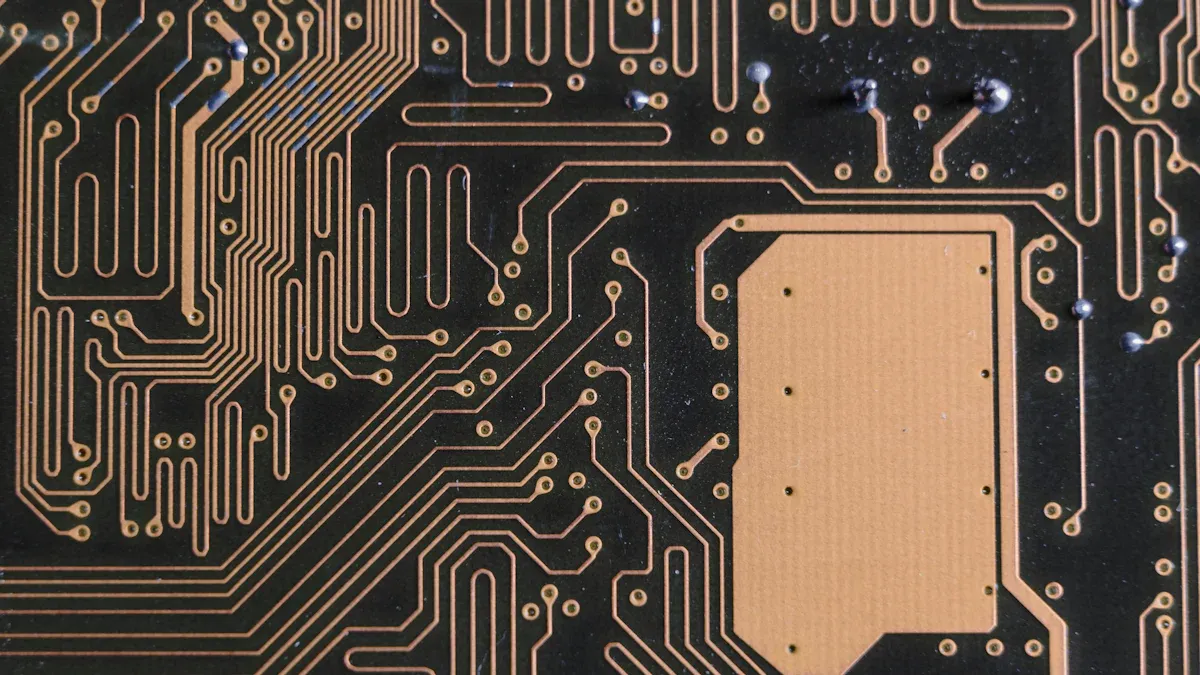
High frequency PCB technology is a key part of many car systems. Engineers use these special circuit boards for fast data and quick communication. The table below shows the main jobs and how they help cars:
Function Area | Role of High-Frequency PCBs | Impact on Automotive Systems |
|---|---|---|
Advanced Driver Assistance Systems | Real-time processing of sensor data | Makes driving safer, lowers mistakes, and helps self-driving cars |
5G Connectivity and V2X Communication | Enables vehicle-to-everything communication via 5G networks | Helps self-driving, smart traffic, and talks to traffic lights and cloud servers |
Car engineers use high frequency PCB designs in important parts. These include:
Radar systems
Collision avoidance systems
Satellite connectivity modules
Wireless communication systems
Each part needs strong signals and fast data. High frequency PCB technology helps car PCB designs meet tough rules for new cars.
Note: Car PCB solutions must work well in rough places. Engineers pick materials and layouts that handle shaking, heat changes, and electrical noise.
Key Benefits
High frequency PCB technology gives clear benefits to cars. These include better signals, less electromagnetic interference, and more energy savings. Engineers use different design tricks to get these results:
Controlled impedance routing keeps signals clear and on time.
Shielding, like grounded copper pours and via stitching, cuts down interference and makes signals better.
Good PCB layouts, with short fast signal lines and differential pair routing, stop signal problems and crosstalk.
Layer stackup, with fast signals between ground planes, keeps impedance steady and lowers EMI.
Thermal management helps save power and keeps systems working. Materials like Shengyi SI10US move heat away and stop overheating.
Grounding, such as star grounding and solid power/ground planes, lowers noise and keeps return paths stable.
Car PCB designs also use noise filters, like decoupling capacitors and filters, to block bad signals. Shielded PCB structures keep inside signals in and block outside noise. These tricks help car systems work well and avoid electromagnetic problems.
High frequency PCB technology helps save energy by lowering signal loss and moving heat away. This lets car systems last longer and work better, even when busy. So, printed circuit board solutions are very important for safety, connections, and how well new cars work.
Battery Management and Power Control
Monitoring and Safety
High frequency PCB technology is very important for battery management in electric vehicles. Engineers use these boards to watch and protect each battery cell. They put sensors and microcontrollers right on the PCB. This lets them collect data quickly. It helps find problems early and keeps the battery safe.
High frequency PCB designs help with fault detection circuits. These circuits find things like short circuits or overheating before they get bad.
Isolation parts on the PCB stop dangers like thermal runaway. This can hurt the battery or the car.
Automotive engineers use these features to meet tough safety rules and make sure things work well.
Flexible and multilayer PCB technologies save space in the battery pack. This lets designers add more features in small spaces. Custom options help engineers fit the PCB to different batteries and car models.
Tip: Good battery management keeps electric vehicles safe and helps batteries last longer.
High-Speed Data Processing
Modern car systems need fast and correct data handling. High frequency PCB designs let the battery management system talk quickly to other car parts. These parts include the powertrain and thermal controls. Fast data helps use energy well and makes driving smooth.
Heavy copper layers in the PCB carry high currents and fast switching. This lowers bad electrical effects and helps power conversion up to 1000 A.
Power combi-boards mix heavy copper inside with normal copper outside. This puts power and control circuits on one PCB. It saves space and works better.
Advanced PCB substrates cost less than ceramics. They also help move heat away, so the battery stays cool when working hard.
These PCB improvements make battery management better and more dependable. They help engineers build cars that work well and stay safe all the time.
Motor Control and Inverter Systems
Torque and Speed Regulation
Motor control is a key part of every electric vehicle. High frequency pcb technology helps engineers control torque and speed very well. The motor in a car must react fast when the driver gives a command. The pcb sends signals between sensors, controllers, and the motor. This quick signal sharing lets the system change torque and speed right away.
Powertrain control units use these special pcbs to watch the motor’s position and how fast it spins. They read sensor data and send orders to the motor. This keeps the ride smooth and safe for everyone. Engineers plan the pcb layout to stop signal loss and keep timing right. These choices help the car speed up and slow down when needed.
Note: Good torque and speed control makes driving feel better and helps the motor last longer.
Heavy Copper and Current Handling
Electric vehicles must move a lot of power. Inverter and converter systems use pcb layers with heavy copper to handle big currents. These thick copper lines move energy from the battery to the motor without getting too hot. Car engineers pick special materials that can take heat and let electricity flow well.
The table below shows how heavy copper pcbs help these systems:
Feature | Benefit for EVs |
|---|---|
Heavy copper layers | Carry more current safely |
Thermal management | Prevents overheating |
Strong connections | Reduces risk of failure |
Engineers use these pcbs to make strong inverter and converter systems. These systems turn battery power into the right kind for the motor. Good pcb design helps the car run well and stay safe, even when working hard.
Advanced Driver Assistance and Connectivity
ADAS and Radar
High frequency PCB technology is very important for ADAS and radar. Engineers use rigid-flex PCBs to link radar sensors, cameras, and control units. These boards make strong and small connections between parts. Rigid-flex PCBs can handle high-frequency signals over 1 GHz. They keep impedance steady and lower electromagnetic interference. Differential pair routing and shielding help keep signals clear.
Rigid-flex PCBs can bend, so they fit in tight or moving spaces.
Polyimide films make the boards flexible and stable in heat, while FR-4 keeps them stiff.
Good design, like using the right layer stack-up and wider traces, keeps signals strong and the board tough.
These boards are lighter because they do not need heavy connectors or cables, which helps ADAS work better and safer.
Engineers test and simulate these boards to make sure they meet tough rules for signal quality and strength.
High frequency PCBs must work in hard car conditions, like very hot or cold weather and lots of shaking. Their bending ability helps them work on moving parts, and smart design stops them from wearing out after many uses. Even though they cost more to make, they save space, keep signals strong, and are very reliable, so they are needed for ADAS and radar.
Real-Time Processing
ADAS needs to process fast signals from radar, cameras, and LIDAR right away. These systems must react quickly for things like stopping crashes and cruise control. High frequency PCBs use materials with a low dielectric constant and low dissipation factor. This helps stop signal loss and electromagnetic interference. Low-loss dielectrics keep data correct, which is very important for safety.
AI helps design PCBs by placing parts in the best spots. This lowers electromagnetic interference and makes signals clearer. Machine learning finds design problems that could hurt signals at high frequencies. This stops mistakes and slowdowns. Automated layout tools keep impedance steady and stop crosstalk, so data can move up to 5 Gbps. AI also checks data transmission and controls heat, so parts stay safe during real-time processing.
These new PCB materials and design tricks help ADAS handle lots of fast data. They make sure circuits are quick, reliable, and stay cool in modern electric vehicles.
Electric Vehicle Charging and Power Delivery
Stable Power Conversion
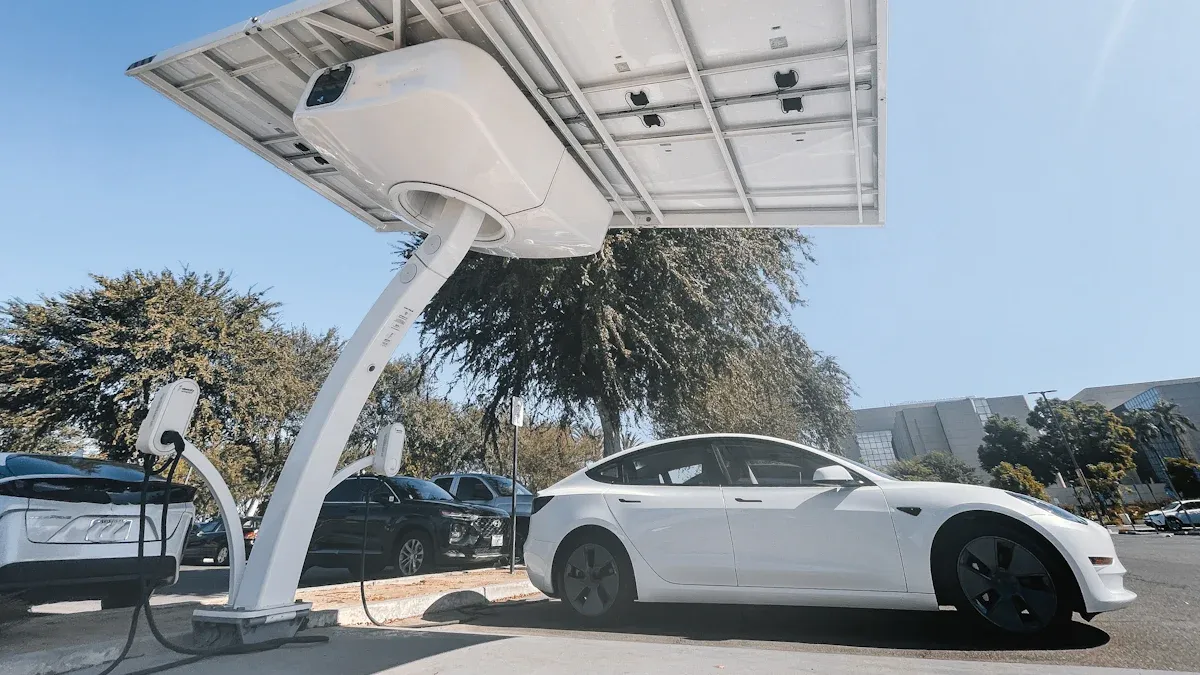
High frequency pcb technology is very important for charging electric vehicles. These pcbs help with switching and changing power in DC-DC converters. They make sure charging stays steady and works well. Engineers use special materials like silicon carbide and gallium nitride on these boards. These materials help the system work better and control heat during charging.
High frequency pcbs help inverters and converters move lots of power.
They help cooling systems take heat away from important parts.
In very fast charging stations, these boards handle big power and heat.
They keep charging safe and steady, even when it is hard.
A good pcb design makes sure charging works right every time. Stable power keeps the battery and car parts safe from harm.
Efficiency and Safety
Engineers make high frequency pcbs to save energy when charging cars. They put parts in smart places to spread out heat. Wider copper tracks and thick copper layers carry more current and stop heat loss. This helps the system use less energy and stay cool.
Better materials, like higher CTI, let parts be closer and handle more voltage.
Picking the right solder mask thickness and quality helps with insulation and heat.
Design rules for track width, space between parts, and via spacing keep things safe and working well.
Safety is very important in fast charging systems. High frequency pcbs must follow strict rules and pass many tests. The table below shows some main safety rules and features:
Aspect | Details |
|---|---|
Safety Standards | IEC 61851, ISO 15118, SAE J1772, IEC 62196 |
Electrical Testing | Hipot testing checks if the pcb can take high voltage without leaking |
Environmental Testing | Tests for hot, cold, wet, and other tough conditions |
EMC Testing | Checks if the board works well with other electronics |
Design Safety Features | Has fuses, surge protectors, and ground-fault protection |
Thermal Management | Uses ways to move heat away and stop overheating |
Signal Integrity | Keeps data moving fast and cuts down noise |
Manufacturing Quality | Follows top industry rules and checks for good quality |
These steps help charging systems for electric cars stay safe and work well. A good pcb design helps fast charging and keeps signals strong, even when working hard.
Technical Challenges and Solutions
Thermal Management
Electric vehicles get very hot when they run. High frequency PCBs must deal with this heat to stay safe. Engineers use special ways to move heat away from important parts. They pick materials like ceramics or special plastics that spread heat fast. Thick copper layers also help take heat away from power parts. Good thermal design keeps the PCB cool and stops damage. This helps high reliability pcbs last longer in tough car places.
Tip: Picking the right materials and layout can stop overheating and make systems safer.
EMI Mitigation
Electromagnetic interference (EMI) can cause trouble in electric vehicles. High frequency signals can make noise that hurts other systems. Engineers use shielding, ground planes, and careful trace paths to lower EMI. They keep sensitive circuits away from noisy power lines. Special filters and decoupling capacitors block bad signals. These steps keep data safe and help the car’s electronics work well.
A table below shows common EMI mitigation methods:
Method | Purpose |
|---|---|
Shielding | Blocks outside noise |
Ground planes | Gives a steady reference |
Trace separation | Cuts down crosstalk |
Filters | Removes bad frequencies |
Miniaturization
The miniaturization trend in evc makes engineers fit more features in small spaces. High frequency PCBs use different tricks to do this:
High-frequency substrates like PTFE help fast signals and need special drilling.
Thick copper multilayer PCBs handle lots of power and heat, using special etching and lamination.
Component embedding packs more parts in and makes boards smaller, using ways like excavation type and module type.
HDI technology uses tiny holes and careful lamination for tight layouts.
These tricks help engineers make small, strong boards for electric vehicles. Miniaturization also makes boards more reliable by using fewer connectors and making them stronger.
Materials and Manufacturing
Substrate Selection
Engineers pick the best substrate for each printed circuit board. The substrate helps the board handle heat and electricity. It also helps the board work in tough car places. Different materials are used for different needs in automotive pcb design. The table below lists common substrate materials and what they do:
Substrate Material | Properties | Automotive EV Use Cases |
|---|---|---|
FR-4 (High-Tg) | Good insulation, strong, resists heat, cost-effective | Engine and transmission controllers |
Ceramic (Alumina, AlN) | High thermal conductivity, stable, great insulation | RF/microwave circuits, high-power modules |
Flexible, heat and chemical resistant | Flexible circuits, harsh environments | |
Rogers Materials | Low dielectric loss, stable at high frequencies | RF amplifiers, antennas, radar, 5G modules |
PTFE-based Laminates | Very low loss, good for microwave and RF | ADAS radar, 5G connectivity modules |
High-Tg FR-4 is picked a lot because it works well and costs less. For high-frequency or high-power jobs, engineers use ceramic or PTFE-based laminates. Polyimide is good for flexible or hot spots. Rogers materials are used for radar and 5G systems. Each material helps the board meet the needs of automotive pcb manufacturing.
Tip: Picking the right substrate keeps the printed circuit board safe from heat and electrical problems.
Manufacturing Advances
Automotive pcb manufacturing uses new ways to make boards strong and reliable. Factories use multilayer and HDI designs to fit more features in small spaces. Machines check for mistakes with optical and X-ray inspections. Thermal cycling tests make sure boards last through hot and cold.
Aspect | Description | Impact on Reliability |
|---|---|---|
Precision Manufacturing & QC | Multilayer, HDI, automated inspections, thermal cycling tests | Compact layouts, durability |
Advanced Materials | High Tg FR4, ceramic, metal core for heat management | Handles high temperature and current |
EMI Shielding & Signal Integrity | Ground planes, EMI filters, optimized trace layouts | Less interference, better signals |
Durability Testing | Shock, vibration, conformal coatings, surface finishes | Survives harsh environments |
Safety Features | Fuses, thermal cutoffs | Fewer electrical failures |
Energy Efficiency | Thick copper, optimized layouts | Less power loss, longer battery life |
Factories also use green methods to cut waste and follow rules. They test boards for shock, shaking, and water. Special coatings and finishes protect against rust and damage. These steps help each automotive pcb work well in electric vehicles.
Future Trends
Integration with New Technologies
High frequency PCB technology is changing as electric vehicles get smarter. Engineers now make PCBs that work with artificial intelligence and new sensors. These boards also help with wireless communication in cars. Cars can use these boards to process data faster. This helps them make better choices while driving. Self-driving systems need PCBs that handle fast signals. These boards must not lose any data.
The world market for PCBs in New Energy Vehicles is growing fast. Asia-Pacific, especially China, is leading because they make many cars. North America and Europe are also growing because of government help. More people are picking electric cars in these places. In the U.S., the market for high frequency and high speed PCBs will grow a lot. It will go from $4.5 billion in 2024 to $8.1 billion by 2033. This happens because cars need faster data and better power control.
Engineers think high frequency PCBs will be even more important soon. These boards will help with new things like over-the-air updates. They will also help with real-time checks and better safety systems.
Sustainability
Sustainability is shaping how high frequency PCB technology grows in electric vehicles. Makers now use eco-friendly materials and try to make less waste. They pick substrates that last longer and can be recycled. Factories use less water and energy to make each board.
A table below shows some ways the industry helps the planet:
Practice | Benefit |
|---|---|
Recyclable materials | Less waste in landfills |
Energy-efficient plants | Lower carbon emissions |
Lead-free solder | Safer for people and nature |
Green certifications | Meets global standards |
Right now, the electric vehicle PCB industry is moving to greener ways. Companies spend money to find new materials that work well and protect nature. These steps help electric vehicles be cleaner and better for everyone.
High frequency PCB technology helps electric vehicles work better and safer. Engineers use special materials like PTFE and controlled impedance designs. These help cars send data fast, make parts smaller, and give steady power.
Flexible and HDI PCBs can handle tough places, help ADAS, and make battery management better.
These new ideas let cars use data quickly, weigh less, and follow strict safety rules.
Better PCB designs will bring new features and help future electric vehicles be more eco-friendly.
FAQ
What makes high frequency PCBs different from standard PCBs in electric vehicles?
High frequency PCBs use special materials and smart layouts. These boards let signals move very fast and stop interference. Standard PCBs cannot handle the speed or heat in electric vehicles.
How do high frequency PCBs improve electric vehicle safety?
Engineers use high frequency PCBs to watch battery cells and control power. These boards find problems fast. Quick action helps stop overheating, short circuits, and other dangers.
Why do electric vehicles need advanced thermal management in PCBs?
Electric vehicles make a lot of heat when running. High frequency PCBs have thick copper and special layers. These features move heat away from important parts and keep systems safe.
Can high frequency PCBs help with fast charging?
Yes. High frequency PCBs help keep power steady and signals clear. These boards handle big currents and voltages, so fast charging is safer and works better.
What challenges do engineers face when designing high frequency PCBs for EVs?
Engineers must control heat, lower electromagnetic noise, and fit many things in small spaces. They pick the best materials and use smart layouts to fix these problems.