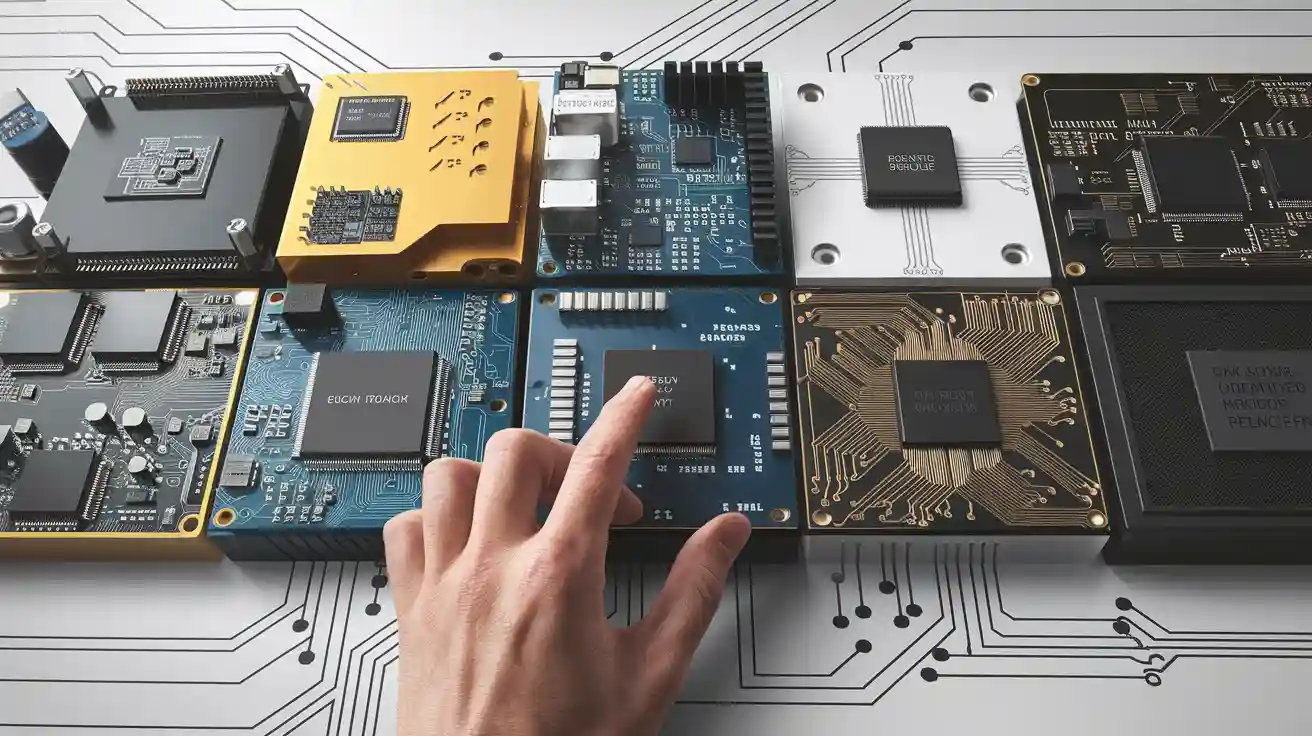
You can find a few main types of printed circuit boards. These are single-sided, double-sided, and multilayer designs. There are also rigid, flexible, and rigid-flex options. Each pcb type has special features for different jobs. For example, HDI and standard multilayer boards are very popular. They help with high performance and smaller sizes. The table below lists some common pcb types and what they are used for:
PCB Type | Key Features | Common Uses |
|---|---|---|
Rigid | Durable, stable | Automotive, aerospace |
Flexible | Bendable, compact | Wearables, sensors |
Rigid-Flex | Combines rigid and flexible | Military, automotive |
You can pick the best printed circuit board for your project. Look at the features and uses to help you choose.
Key Takeaways
Printed circuit boards have many types. These include single-sided, double-sided, multilayer, rigid, flexible, and rigid-flex. Each type works best for different things.
Picking the right PCB depends on a few things. You need to think about layers, flexibility, materials, and where it will be used.
Flexible PCBs can bend and help save space. Rigid PCBs are strong and do not bend. Rigid-flex PCBs mix both types. They work well in tough, moving devices.
FR-4 is a common material and does not cost much. Metal-core and ceramic PCBs are better with heat. They are used for special jobs.
Good PCB design helps it work better and last longer. Placing parts carefully is important. Always check your design before making it.
Types of Printed Circuit Boards

Printed circuit boards have many shapes and uses. You can sort them by layers, flexibility, materials, via structure, special features, and where they are used. Each pcb type is good for certain jobs. Let’s look at the main types of printed circuit boards. This helps you pick the right board for your project.
Classification by Number of Layers
Printed circuit boards can have different numbers of copper layers. The number of layers changes how hard they are to make, how much they cost, and how well they work.
PCB Type | Number of Layers | Description and Features |
|---|---|---|
Single-sided Board | 1 layer | Circuits on one side only. Simple pcb design. Used in basic electronics. |
Double-sided Board | 2 layers | Circuits on both sides. Supports more components and better performance. |
Multi-layer Board | 4 to 8 layers (even) | Multiple layers stacked together. Handles complex circuits and high speeds. Can reach up to 100 layers. |
Tip: Multi-layer pcbs usually have an even number of layers. This keeps the pcb layout flat and strong.
Single-Sided PCB
Circuits are only on one side of the board.
This single-layer pcb is simple and cheap.
You use it in things like calculators and power supplies.
Pros: Costs less, made quickly.
Cons: Not good for hard jobs, takes up more space.
Double-Sided PCB
This pcb type has circuits on both sides.
You can add more parts and use vias to connect both sides.
You see double-layer pcb in audio gear, vending machines, and LED lights.
Pros: More ways to design, works better.
Cons: Harder to make, costs more than single-layer pcb.
Multi-Layer PCB
Multi-layer pcb stacks four or more layers.
You use it in computers, smartphones, and medical tools.
Multilayer pcbs are fast, small, and can be very complex.
Pros: Fits lots of parts, keeps signals strong, saves space.
Cons: Costs the most, hard to fix.
Classification by Flexibility
Printed circuit boards can be rigid, flexible, or a mix of both. How much a board bends changes how you use it and design it.
Feature | Rigid PCB | Flexible PCB | Rigid-Flex PCB |
|---|---|---|---|
Cost | Low | High | Highest |
Durability | Durable for static use | Durable under bending | Superior for harsh environments |
Flexibility | None | High (can bend and twist) | Partial (flexible and rigid sections) |
Weight | Heavy | Light | Moderate |
Use Cases | TVs, computers, appliances | Wearables, cameras, sensors | Aerospace, medical, automotive |
Rigid PCB
Rigid pcbs do not bend or change shape.
You use them in TVs, computers, and other home electronics.
This rigid board is cheap and easy to make in big amounts.
Flexible PCB
Flexible pcb can bend, fold, or twist without breaking.
You use flexible boards in tight spaces, like smartwatches and cameras.
Flex pcbs save space and weigh less.
Note: Flexible pcbs cost more and need careful pcb design so they do not break.
Rigid-Flex PCB
Rigid-flex pcbs have both stiff and bendy parts.
You use them in planes, medical tools, and cars.
Rigid-flex pcbs are strong and can handle shaking and moving.
These boards use fewer connectors and wires, so your device lasts longer.
Flex pcbs can take the place of many rigid boards and cables. This makes your design lighter and stronger.
Classification by Materials
The material you pick for your printed circuit board changes how it handles heat, electricity, and cost.
PCB Type | Thermal Conductivity (W/m·K) | Dielectric Loss (Df at 1 MHz) | Key Features and Applications |
|---|---|---|---|
FR-4 | 0.3 – 0.5 | 0.02 – 0.03 | Most common. Good insulation, low cost. Used in general electronics. |
CEM-1 | ~0.3 – 0.5 | ~0.02 – 0.03 | Cheaper than FR-4. Used in single-layer pcb for simple devices. |
CEM-3 | ~0.3 – 0.5 | ~0.02 – 0.03 | Better strength and flame resistance. Used in double-layer pcb and multilayer pcbs. |
Metal-Core PCB | 20 – 200+ | N/A | Excellent heat dissipation. Used in LED lighting and power electronics. |
Ceramic PCB | 20 – 250 | 0.0002 – 0.0005 | Superior thermal and electrical properties. Used in aerospace, RF, and high-power devices. |
FR-4 PCB
FR-4 is made from glass-fiber and epoxy.
You use it for most printed circuit boards.
It is good at stopping electricity and does not cost much.
CEM-1 / CEM-3 PCB
CEM-1 is cheap and used for single-layer pcb.
CEM-3 is stronger and does not burn easily. It is used in double-layer pcb and multilayer pcbs.
High-Frequency PCB
Uses special materials with low dielectric loss.
You need this pcb type for fast communication and RF devices.
Metal-Core PCB
Metal-core pcb uses aluminum or copper as a base.
It handles heat well, great for LED lights and power supplies.
Ceramic PCB
Ceramic boards are best for heat and electricity.
You use them in planes, the military, and high-frequency jobs.
FR-4 works for most things, but use metal-core or ceramic for high heat or fast signals.
Classification by Via Structure
Vias link different layers in your printed circuit board. The way vias are made changes signal quality and how the board is built.
Through-hole vias: Go through all layers. Used in most pcb design.
Blind vias: Link outer layers to inside layers, saving space.
Buried vias: Link only inside layers, hidden from view.
Microvias: Very tiny, made with lasers, used in HDI pcb type for small designs.
Through-Hole PCB
Uses through-hole vias to connect layers.
Easy to make, but can mess up signals in fast designs.
HDI PCB (High-Density Interconnect)
Uses microvias, blind, and buried vias.
Good for tricky pcb layout and tiny boards.
You find HDI in phones, tablets, and medical devices.
Non-via PCB
No vias at all. Simple pcb type for easy circuits.
Only for single-layer pcb or easy double-layer pcb.
Vias can make signals weaker if not done right. HDI and microvias help keep signals strong in fast circuits.
Classification by Functional/Process Features
Some printed circuit boards have special features for tough jobs.
PCB Type | Key Features |
|---|---|
High Tg | Withstands high temperatures. Used in automotive and industrial controls. |
High Frequency | Maintains signal quality at high speeds. Used in 5G, radar, and RF devices. |
Heavy Copper | Thick copper layers for high current. Used in power supplies and motor controls. |
ENIG | Gold surface finish for better soldering and corrosion resistance. Used in high-reliability jobs. |
Embedded Passive | Resistors and capacitors built into the board. Saves space and improves performance. |
Blind/Buried Vias | Enables complex multilayer pcbs and high-density pcb layout. |
High-Frequency PCB
Uses materials with low dielectric loss.
You need this pcb type for fast data and wireless signals.
High Tg PCB
Has a high glass transition temperature.
Handles heat and stress in cars and factories.
Heavy Copper PCB
Has thick copper layers.
Carries more power and handles heat better.
ENIG PCB (Electroless Nickel Immersion Gold)
Gold finish keeps it flat and stops rust.
Used in tiny and important jobs.
Embedded Passive PCB
Parts like resistors and capacitors are inside the board.
Saves space and helps the board work better.
Blind/Buried Via PCB
Uses blind and buried vias for tricky connections.
Good for advanced multilayer pcbs and small pcb design.
Classification by Application Field
You can match different printed circuit boards to certain industries. Each job needs a special kind of board.
Application Field | Common PCB Types Used | Notes |
|---|---|---|
Consumer Electronics | Single-sided, double-layer, FR-4 | Simple, low-cost boards for TVs, toys, and gadgets. |
Computer and Mobile Devices | HDI, multi-layer pcb, rigid-flex pcbs | High density and small size for phones, tablets, and laptops. |
Medical Equipment | HDI, multi-layer pcb, rigid-flex pcbs | Reliable, compact, and safe for medical devices. |
Automotive Electronics | Multi-layer pcb, high Tg, rigid-flex pcbs | Withstands heat, vibration, and stress. |
Industrial Automation | Multi-layer pcb, heavy copper, high Tg | Handles power, heat, and harsh environments. |
LED Lighting | Metal-core pcb, single-layer pcb | Manages heat for long-lasting LED lights. |
Aerospace/Military | Ceramic, multi-layer pcb, rigid-flex pcbs | Demands top reliability, heat resistance, and signal quality. |
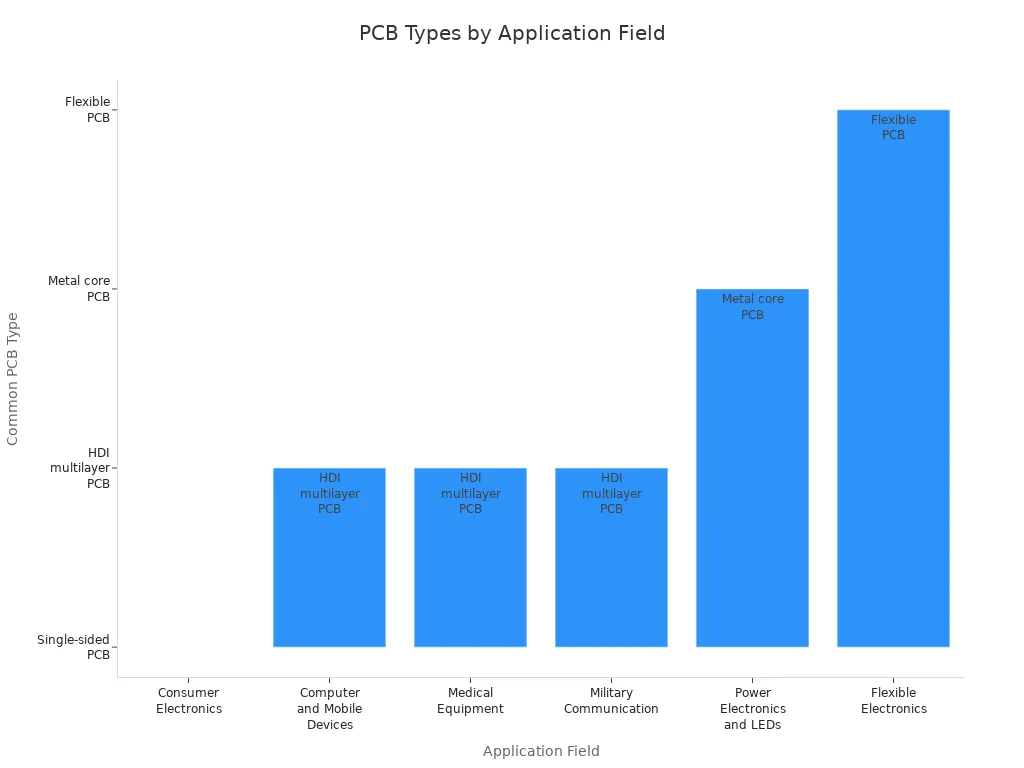
Always pick the pcb type that fits your job. For example, use rigid-flex pcbs in planes, flexible pcbs in wearables, and metal-core pcb in LED lights.
PCB Type Features and Applications

Key Features Comparison
It is important to look at different printed circuit boards before picking one. Each pcb type has its own features and good points. The table below shows how the main types are different:
PCB Type | Main Features | Advantages |
|---|---|---|
Single Sided | One copper layer | Low cost, easy to make, good for simple circuits |
Double Sided | Copper layers on both sides, connected by holes | More parts, better performance, used in phones, audio |
Multi-layer | Many copper layers, stacked | Compact, flexible pcb design, handles high speeds |
Rigid | Hard, does not bend | Strong, easy to repair, fits complex pcb layout |
Flexible | Bends and twists, thin material | Saves space, light, handles high signal density |
Rigid-Flex | Mix of rigid and flexible layers | Saves up to 60% space, used in medical and military |
Works at 500MHz–2GHz | Great for fast signals, used in 5G and radar | |
Aluminum Backed | Metal base for heat control | Handles heat, good for LED lighting and power supplies |
You should also think about what the board is made of. Some materials are better for certain jobs. FR4 is cheap and works well for most things. Rogers and Taconic are best for fast signals but cost more money. Metal core boards help cool down power devices.
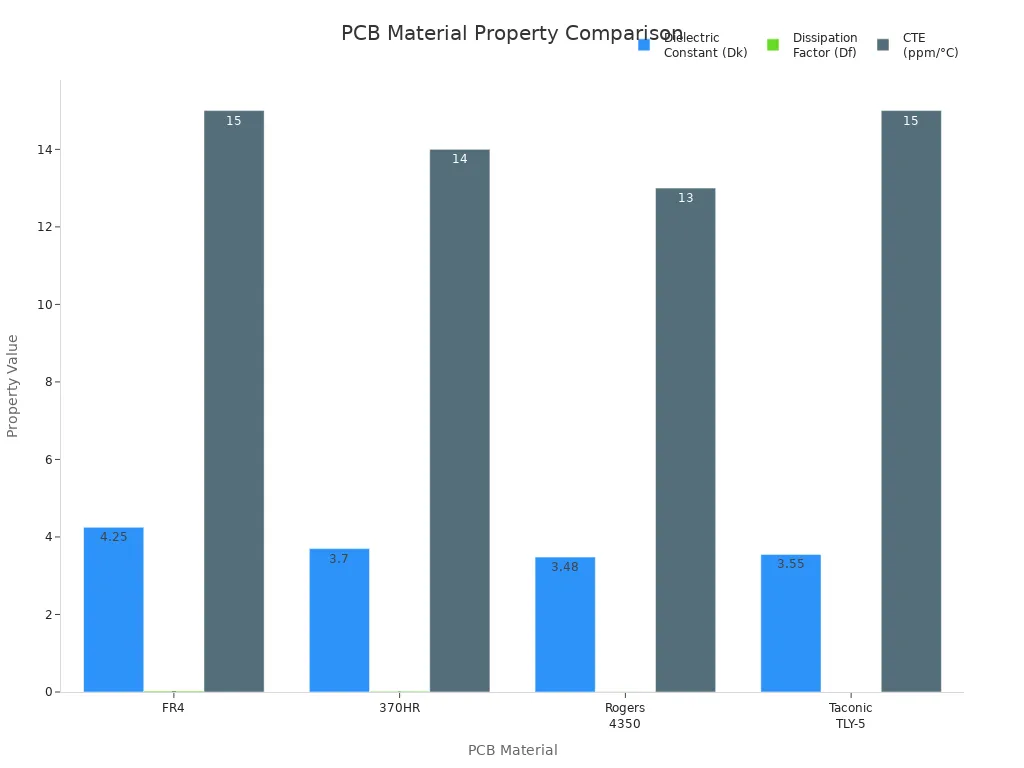
Tip: If you need a board for fast or strong power jobs, check how the material handles heat and electricity.
Typical Applications
Printed circuit boards are used in almost every industry. Each board is made for a special job. Here are some examples:
Automotive: Engine controls, LED headlights, and dashboards use rigid pcbs and metal core boards.
Aerospace: Satellites and control towers need multi-layer and rigid-flex pcbs for strong and light builds.
Consumer Electronics: Phones, TVs, and computers use double-sided and multi-layer boards for small pcb design.
Medical Devices: Heart monitors and scanners use flexible pcb and rigid-flex pcbs for safe, small, and reliable circuits.
Telecommunications: 5G networks and GPS devices need high-frequency and multi-layer boards for fast, clear signals.
LED Lighting: Metal core printed circuit boards help control heat in bulbs and displays.
You should use flex pcbs and flexible pcb in wearables and medical tools. These boards can bend and fit in small spaces. Rigid pcb is best for home electronics and computers. Flex pcbs also work well in cameras and sensors where space is tight. Rigid-flex pcbs give both strength and bending, great for aerospace and military gear.
Remember: Good pcb design and the right pcb layout help your printed circuit board last longer and work better.
Choosing the Right PCB Type
Selection Factors
When you pick a printed circuit board, you should think about some key things. These choices can change how your project works and how much it costs. Here are the main things to look at: 1. Size and Shape: Big or strange-shaped boards need more materials and take longer to make. 2. Complexity: Boards with more layers or special features like HDI are harder to design and cost more. 3. Type of Board: You need to choose if you want rigid, flexible, or rigid-flex boards for your project. 4. Material: The base material changes how the board handles heat, how strong it is, and how much it costs. FR-4 is used a lot, but some jobs need other materials. 5. Layer Count: More layers help with tricky circuits but also cost more and take longer. 6. Copper Thickness: Thicker copper lets more power flow but costs extra. 7. Surface Finish: Different finishes keep the board safe and change the price. 8. Trace Width: Wider traces carry more current but use more copper. 9. Lead Time: If you need your board fast, it will cost more. 10. Custom Features: Special holes, shapes, or coatings make the board more complex. You have to balance these things with what you need for performance, reliability, and your budget.
IPC Classes Overview
IPC classes help you pick the right quality for your pcb design. These classes set rules for how printed circuit boards are made and tested. Here is a quick guide: | IPC Class | Life Cycle | Quality Level | Description | Typical Use | |———–|————–|—————|————————————————–|——————————| | Class 1 | Short | Basic | For simple electronics with short life | Toys, remotes | | Class 2 | Long | Good | For products needing steady, reliable function | Laptops, smart devices | | Class 3 | Very Long | Failproof | For critical systems where failure is not allowed | Medical, aerospace, military | You should choose the IPC class that fits your product’s risk and how reliable it needs to be. For example, use Class 3 for medical or aerospace, and Class 1 for toys.
Practical Tips
You can stop common mistakes and make your pcb design better by following these tips: – Always check where you put your parts and how close they are using 3D models. – Put decoupling capacitors near power pins to cut down on noise. – Keep analog and digital circuits apart so they do not mess each other up. – Use the right trace width for the amount of current your circuit needs. – Try not to use too many vias on fast signals to keep them strong. – Run design rule checks before you send files for circuit board fabrication. – Make sure your paperwork is clear and complete so assembly is easy. – Test your prototypes in real situations to find problems early.
Tip: Always update your bill of materials and check if any parts are out of stock. This helps you avoid delays in printed circuit board manufacturing.
If you follow these steps, you can make a pcb design that works well and meets your project goals.
You can pick from many PCB types. Each one has special features and uses. The table below shows how they are different:
PCB Type | Key Features & Differences | Typical Applications |
|---|---|---|
Single-layer | Simple, cheap, easy to build | Calculators, cameras, radios |
Double-layer | More parts, both sides used | Power supplies, LED lighting |
Multi-layer | Small, fits lots of circuits | Medical, GPS, data storage |
Rigid | Hard, flat, does not bend | Motherboards, fixed devices |
Flexible | Bends, fits small spaces, costs more | Wearables, compact electronics |
Rigid-flex | Mix of rigid and flexible, for tricky designs | Aerospace, advanced equipment |
Picking the right PCB type saves money and makes your project work better. Not every company can make all types, so check if they have the right skills and certificates.
Quick Checklist for Choosing a PCB:
Choose the best material and copper thickness.
Pick a surface finish and solder mask.
Set limits and check your files.
Make drawings and a BOM for assembly.
If you are not sure, ask PCB experts for help. They know the rules, help pick good materials, and test for quality. This keeps your project safe and working well.
FAQ
What is the most common material for printed circuit boards?
You will find FR-4 as the most common material. It uses fiberglass and epoxy. FR-4 gives good strength and insulation. You can use it for most electronics.
Can you use flexible PCBs in high-temperature environments?
Flexible PCBs can handle some heat, but you should check the material’s rating. For very high temperatures, you may need special polyimide or ceramic boards.
How do you choose the right PCB type for your project?
Start by listing your needs. Think about size, flexibility, heat, and cost. You can use a table to compare options. Ask experts if you feel unsure.
Tip: Always match the PCB type to your device’s environment and performance needs.
What is the main advantage of HDI PCBs?
HDI PCBs let you fit more parts in a small space. You get better performance and smaller devices. You see HDI boards in smartphones and tablets.