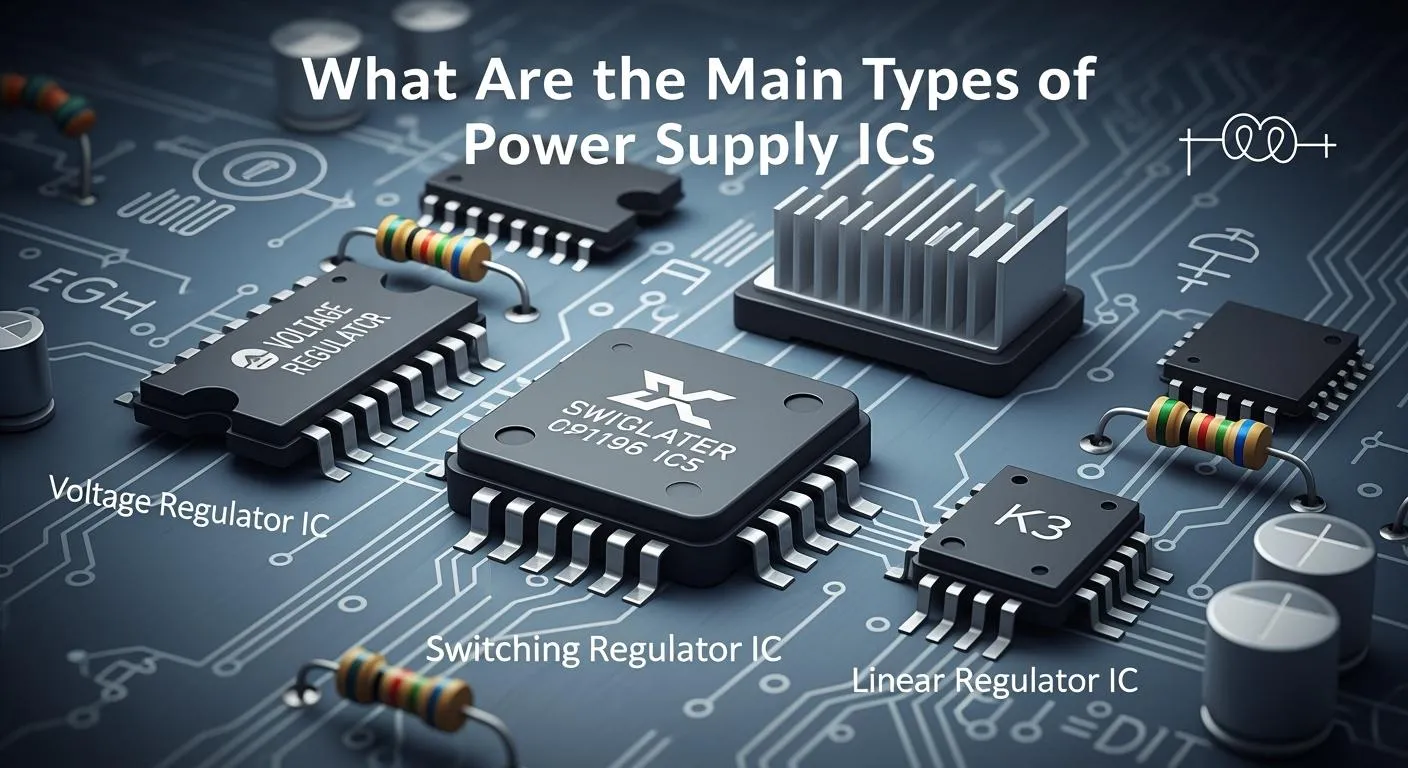
You can find power supply ICs in almost all electronics. These chips are put into main groups like linear regulators, switching regulators, charge pumps, AC/DC converters, DC/DC converters, and power factor control ICs. A power supply IC gives the right voltage and current to circuits. In many fields, power supply ICs help devices stay safe and work well.
The power management IC market size may grow from $35.87 billion in 2025 to $38.29 billion in 2026 with a CAGR of 6.8%.
It might reach $48.63 billion in 2030 at a CAGR of 6.2%.
Key Takeaways
Power supply ICs are very important in electronics. They give the right voltage and current. This helps devices work safely and well.
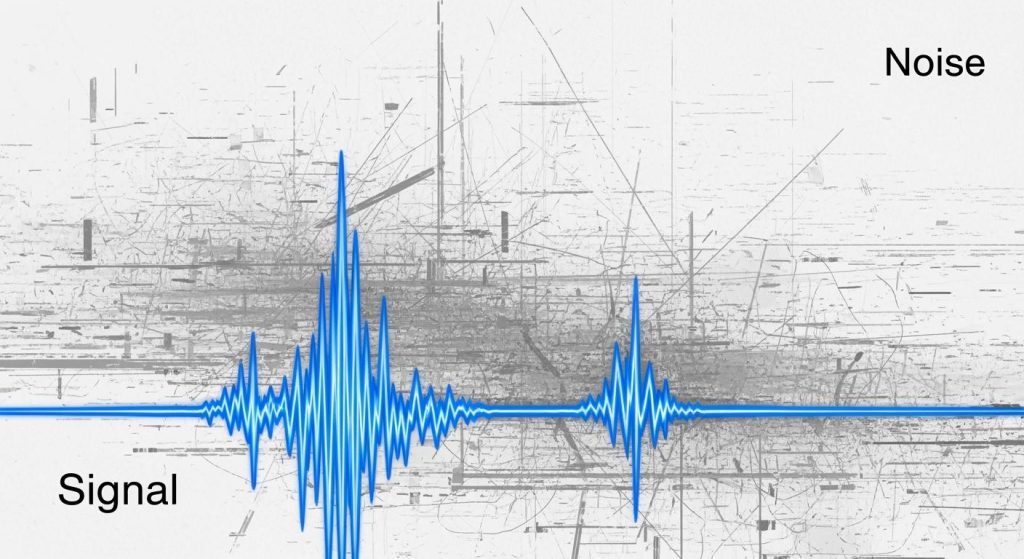
Linear regulators are easy to use and make little noise. But they waste energy. Switching regulators save more power and are better for efficiency. But they can make more noise.
Charge pumps and DC/DC converters are good for small devices. They help save space. They also make batteries last longer.
AC/DC converters are needed to change wall power into DC power. Devices like computers and chargers need this to work.
Picking the right power supply IC depends on your device. You need to think about how much power it saves, how much noise it makes, and how much space you have.
Types of Power Supply ICs
Linear Regulators
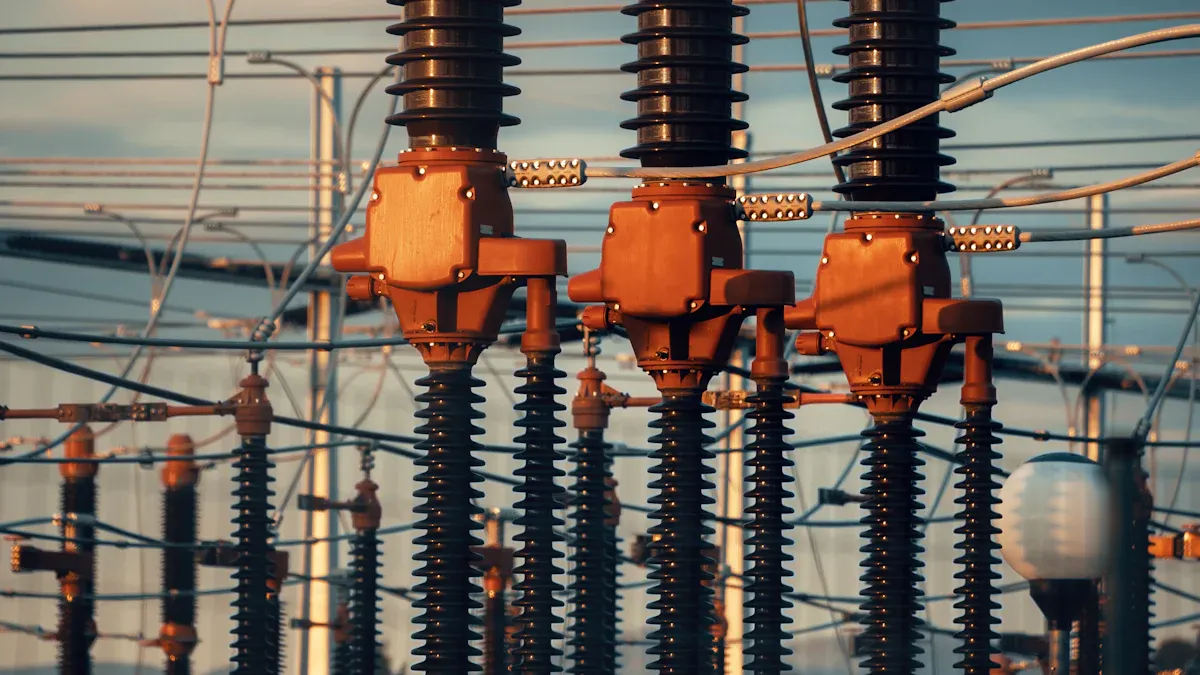
A linear regulator keeps voltage steady by turning extra voltage into heat. You pick this type when you want low noise and a simple setup.
Standard Linear Regulators
Standard linear regulators only lower voltage. You see them in audio devices and sensors. Clean power is important in these places. These regulators make little noise but waste energy if input voltage is much higher than output.
LDO (Low Dropout Regulator)
An LDO is a special linear regulator. It works even when input voltage is close to output. You use LDOs in battery gadgets. They keep output stable as the battery runs down.
Tip: Linear regulators are simple and cheap. They do not work as well as switching regulators.
Feature | Linear Regulators | Switching Regulators |
|---|---|---|
Complexity | Simple | Complex |
Noise | Low | High |
Efficiency | Low | High |
Switching Regulators
A switching regulator uses switches, inductors, and capacitors to change voltage. These regulators save power and make less heat.
Buck Converter (Step-Down DC-DC)
A buck converter lowers voltage. You use it in computers and phones. It powers chips from a battery.
Boost Converter (Step-Up DC-DC)
A boost converter raises voltage. You find it in LED drivers and speakers.
Buck-Boost Converter
A buck-boost converter can raise or lower voltage. You use it when input voltage might be above or below what you need.
Switching regulators can be very efficient, sometimes over 95%. You see them in smartphones, electric cars, and machines.
Isolated Power Supply Controllers
Isolated controllers keep input and output separate for safety. You use them in medical devices and electronics.
Flyback Converter
A flyback converter is good for low-power supplies. You find it in chargers and small appliances.
Forward Converter
A forward converter handles more power. You use it in industrial controls.
LLC Resonant Converter
An LLC resonant converter is efficient and quiet. You see it in servers and telecom equipment.
Feature | Isolated Power Supply | Non-Isolated Power Supply |
|---|---|---|
Safety | High | Low |
Efficiency | Lower | Higher |
Application | Medical, Consumer | Industrial, Compact |
Charge Pumps
A charge pump uses capacitors to move charge and change voltage. You use charge pumps in RS-232 level shifters, LCD drivers, and microprocessors. They work in cell phones, laptops, and medical equipment.
RS-232 level shifters
LCD or white-LED drivers
NMOS memories and microprocessors
AC/DC Converters
AC/DC converters change AC from the wall into DC for your devices. You see these in power adapters and chargers. They use rectifiers and filters to make power safe and steady.
AC-DC Power Supply ICs
AC-DC power-supply ICs follow strict safety rules like UL 60950-1 and RoHS. You use them in computers, TVs, and machines.
DC/DC Converters
A DC-DC converter changes one DC voltage to another. You use these in portable electronics. They save space and help batteries last longer. Good design keeps output steady and lowers noise.
Power Factor Control ICs
Power factor control ICs help you use energy better. They cut power loss and make things work better in factories, telecom, and green energy.
Power Management ICs (PMICs)
A power management IC does voltage regulation, battery management, and thermal control. You use PMICs in phones and laptops to keep everything working well.
Battery Management ICs
Battery management ICs keep batteries safe and help them last longer. They watch voltage and temperature, control charging, and stop overheating.
Battery Charger IC
Battery charger ICs help batteries charge safely and fast.
Battery Protection IC (BMS)
A battery protection IC, or BMS, stops overcharging and overheating. It keeps your device safe and your battery healthy.
Voltage Reference ICs
Voltage reference ICs give a steady voltage for accurate measurements. You use bandgap references and zener diodes in test equipment and sensors.
Power Monitoring / Supervisor ICs
Power monitoring and supervisor ICs look for problems and help stop failures. You use them in data centers and important systems to keep things reliable.
Applications of Power-Supply ICs
Computing
Power-supply ICs are used in many computers. These chips help laptops and tablets work well. The right IC keeps your device safe and saves energy. Here are some ways power supply ICs help computers:
AC/DC modulation ICs change wall power to DC.
DC/DC modulation ICs control voltage for laptops and phones.
Power factor control ICs help save energy.
PWM and PFM control ICs run switches for power.
Linear modulation ICs are used in low-dropout regulators.
Battery charging ICs keep batteries working well.
Hot-plug board control ICs protect when you connect things.
Switching function ICs help change power.
Tip: Use switching regulators for high efficiency in computers. Pick linear regulators when you need less noise.
Medical Devices
Power-supply ICs are found in medical devices. You see them in monitors and pumps. These ICs give clean and steady power. Low noise and high reliability are important in medical tools. LDO regulators and isolated controllers help keep people safe. Battery management ICs help portable devices last longer and charge safely.
Military and Industrial Equipment
Power-supply ICs are needed in military and industrial machines. These ICs work in tough places and extreme heat or cold. You need strong parts and good insulation for these jobs. The table below shows what is needed:
Requirement Type | Description |
|---|---|
Thermal Management | Uses cooling to stop ICs from overheating. |
Ruggedized Components | Handles shock, shaking, and hot or cold weather. |
High-Reliability Components | Works a long time and fails in known ways. |
Advanced Insulation Systems | Handles high voltage and keeps working in hard places. |
Note: Pick the right power-supply IC for your job. Industrial machines need reliable ICs. Military gear needs strong parts.
Telecommunications
Power-supply ICs are used in telecom gear. You find them in routers and base stations. These ICs keep signals clear and systems working. DC/DC converters are good for saving space and making less heat. Isolated controllers protect sensitive parts. Power monitoring ICs help you find problems early and keep networks working.
Callout: Always check how efficient and noisy your power supply IC is before using it in telecom gear.
Comparing Power Supply IC Types
Efficiency and Noise
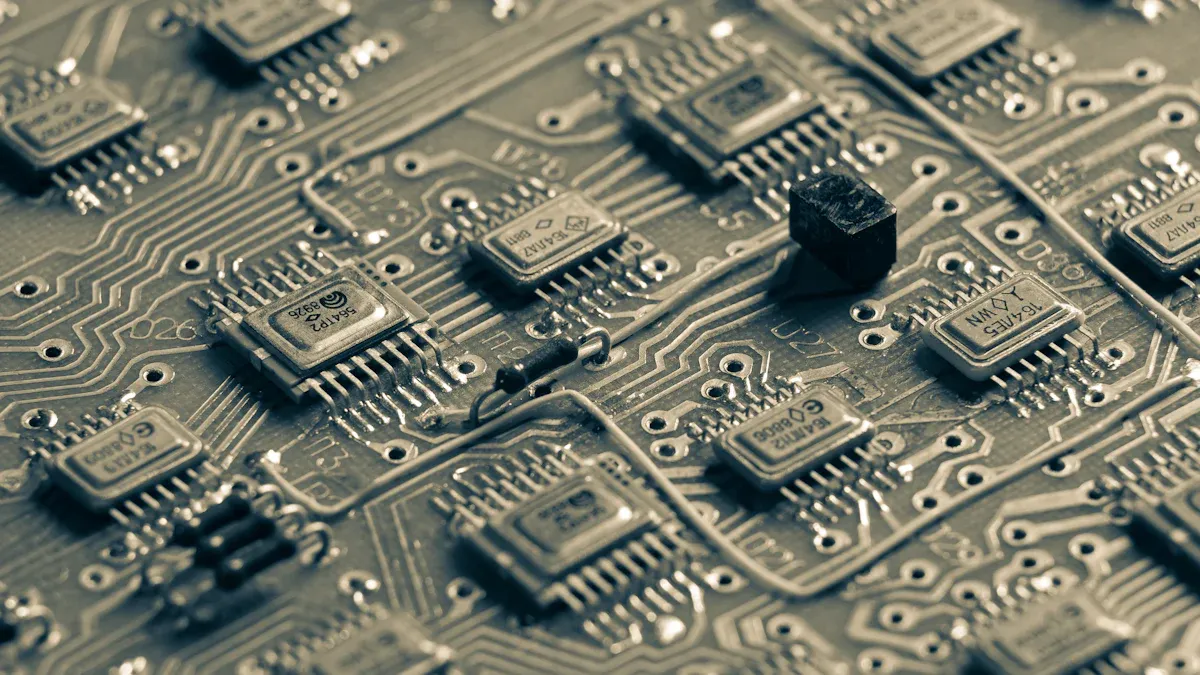
When you pick a power supply IC, think about how well it works and how much noise it makes. A linear regulator is easy to use and makes very little noise. This is good for audio devices and sensors. It gives clean power, but it wastes energy as heat. This happens more when the input voltage is much higher than the output. A switching regulator works in another way. It uses fast switches to save energy. These can be over 90% efficient. That means less heat and longer battery life. But switching regulators can make more noise because they work so fast. You need to choose between saving energy and having less noise for your project.
Type | Efficiency | Noise Level | Complexity | Cost |
|---|---|---|---|---|
Linear Regulator | Low | Very Low | Simple | Low |
Switching Regulator | High | Moderate | Complex | Medium |
Charge Pump | Medium | Low | Simple | Low |
DC-DC Converter | High | Moderate | Medium | Medium |
AC/DC Modulation IC | High | Moderate | Complex | Medium |
Power Management IC | High | Low/Medium | Complex | High |
Tip: Pick a linear regulator for quiet power in sensitive circuits. Use a switching regulator or dc-dc converter if you want to save energy.
Choosing the Right Power Supply IC
You need to pick a power supply IC that fits your device. First, check how much voltage control your circuit needs. If you make a portable device, use a dc/dc modulation ic or charge pump. These save space and help batteries last longer. For computers and telecom gear, use a power management ic or power management semiconductor. These control many power rails. If you need to change AC to DC, pick an ac/dc modulation ic. For battery gadgets, battery management and dc-dc converter chips keep things safe and working well.
Ask yourself these questions:
Does your device need high efficiency or low noise?
How much room do you have for the IC?
What is your budget for power supply ics?
Do you need extra features like monitoring or protection?
Note: Picking the right IC helps your device get steady voltage and work well.
You now know about the main types of power supply ICs. Each type is good for different jobs. Linear regulators make little noise but use more energy. Switching regulators save energy but can be noisy. Charge pumps and DC/DC converters are great for small devices you can carry. AC/DC converters and power management ICs are best for bigger systems.
Tip: Always look at what your device needs. Think about how much energy, noise, and how hard it is to use before picking a power supply IC.
FAQ
What is the main job of a power supply IC?
A power supply IC gives your device the right voltage. It also gives the right current. This helps electronics work safely. It helps them last longer.
How do you choose between a linear and a switching regulator?
Pick a linear regulator for low noise. It is good for simple designs. Choose a switching regulator for high efficiency. It makes less heat.
Can one IC power many parts of a device?
Yes, you can use a Power Management IC (PMIC). It controls many power rails in one chip. It also controls other features. This saves space. It makes your design easier.
Why do some devices need isolated power supply controllers?
You need isolation to keep things safe. Isolated controllers protect users from high voltage. They also protect sensitive parts from faults. You see them in medical equipment. You see them in industrial equipment.