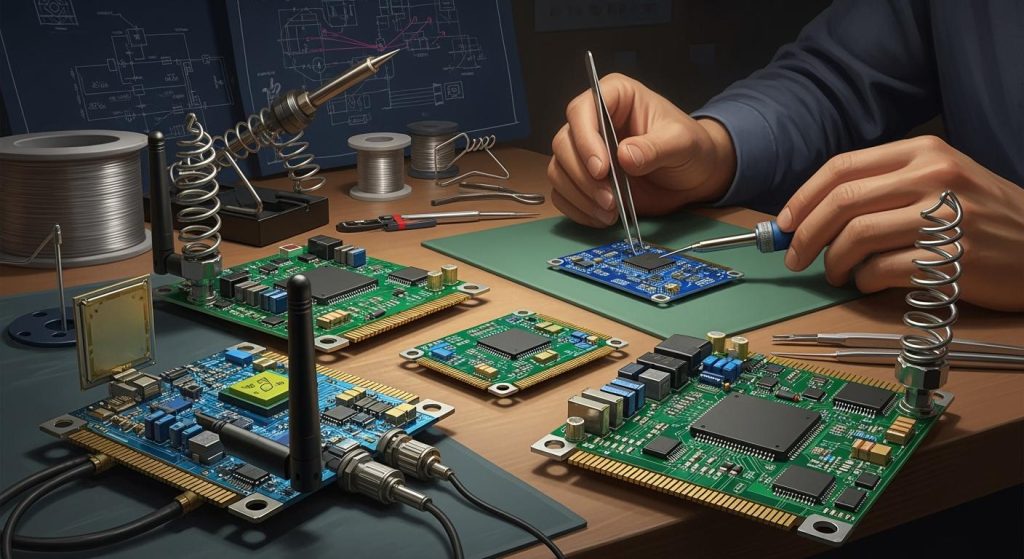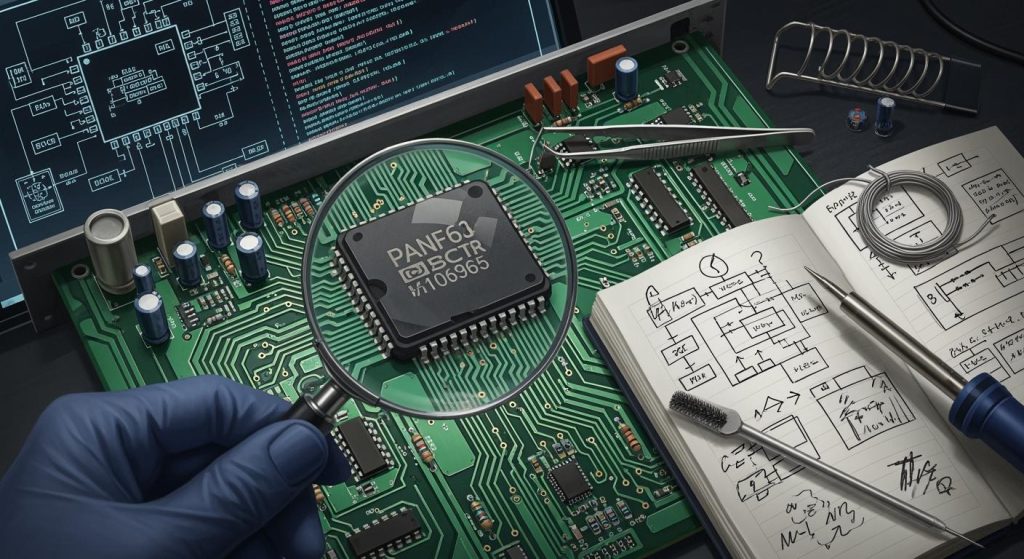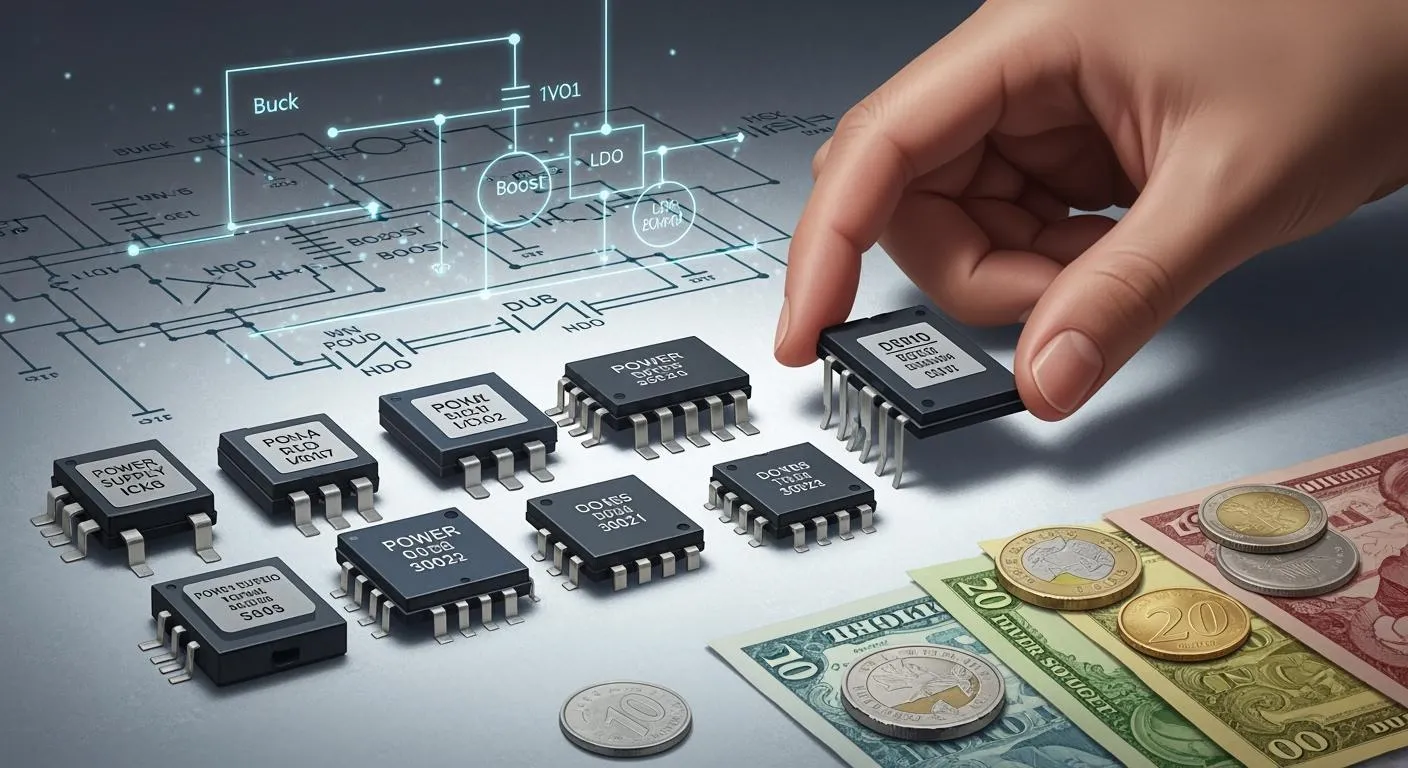
You want to find the best Power Supply ICs without breaking the bank. Whether you build gadgets for fun or work on serious projects, you need practical choices that fit your budget. Energy efficiency matters, too. Picking the right IC for your application can save you time, money, and hassle. Let’s make it easy for you to get reliable power and smart performance.
Key Takeaways
Pick a power supply IC that fits your budget and project. Entry-level choices like the 7805 and 7812 are good for beginners.
Mid-range ICs like the LM5149 use energy better and have more features. They are good for harder projects, hobbyists, and small businesses.
Premium power supply ICs, like the Rigol DP832, have advanced features and work very well. They are best for professionals and tough jobs.
Always look at the IC’s specifications to make sure it gives the voltage and current you need. This helps stop problems in your projects.
Try to use energy-efficient ICs to save money and make your devices last longer. High-efficiency ICs make less heat and work better.
Best Power Supply ICs: Quick Picks
Picking the best power supplies can seem hard. But you can make it easy by thinking about your budget and project needs. Here are some quick choices for every price range. This way, you can find the right power supply unit fast.
Entry-Level Choice
If you want something cheap and dependable, look at the 7805 and 7812 power supply ICs. These chips are well-known because they are simple to use. You just hook them up, and they start working. You do not need special tools or lots of extra parts. Many beginners use them for small gadgets, school projects, and DIY electronics. They keep your devices safe and steady. You get a good price and trust that they will work, which is great when you are learning about power supplies.
Tip: The 7805 gives a steady 5V output. The 7812 gives 12V. Pick the one that matches what your device needs.
Mid-Range Choice
If you want more features and better energy use, try the LM5149. It is popular because it can handle more power and works well in bigger projects. It has smart energy-saving tech, so your devices stay cool and last longer. The LM5149 is good for robotics, smart home systems, and green energy setups. It gives you a good mix of price and performance. This makes it a smart pick for serious hobbyists and small businesses.
LM5149: Good for projects that need steady voltage and better energy use.
Premium Choice
If you need the best power supply unit for tough jobs, check out high-end choices like the Rigol DP832 or the Seasonic PRIME TX 3.1. These models give you top energy savings, exact control, and strong safety features. You can use them in pro labs, big machines, or anything that needs perfect power. They cost more, but you get the best quality and trust.
Note: Premium power supply ICs help you waste less energy and protect important equipment. They are worth it for big projects that must not fail.
The 7805, 7812, and LM5149 are popular because they make things easier. They are simple, dependable, and a good deal for low-power uses. As more people want energy-saving electronics, these power supply ICs keep getting better. You can count on them for everything from phones to solar panels.
Entry-Level Power Supply ICs
Key Features
When you look for entry-level power supply ICs, you want simple chips that do their job well. These ICs keep your devices safe and steady, even if the power coming in changes. You can see the most important features in the table below. This helps you pick the right chip for your project.
Feature | Description |
|---|---|
Line Regulation | Keeps output voltage steady when input voltage changes. |
Load Regulation | Maintains voltage when the device uses more or less power. |
Efficiency | Shows how much power the IC saves and how little heat it makes. |
Input/Output Ripple Voltage | Reduces small voltage bumps that can mess with sensitive electronics. |
Transient Response | Helps the IC react fast when your device suddenly needs more or less power. |
Allowable Dissipation | Tells you how much heat the IC can handle before it gets too hot. |
Tip: If you want your project to last longer and work better, check these features before you buy a power supply IC.
Top Picks & Use Cases
You have lots of choices for entry-level power supply ICs. The 7805 and 7812 are favorites because they are cheap and easy to use. You can find them in school projects, small robots, and DIY gadgets. The LM317 and LM338 are also popular. They let you adjust the output voltage, so you can use them for many different devices. The LM317 gives you between 1.2V and 35V, and the LM338 can handle up to 5 amps. Both chips have built-in safety features, so you do not have to worry about your project getting damaged.
Here are some common uses for these ICs:
Science fair projects
Simple battery chargers
LED displays
Toy circuits
Small audio devices
You do not need a big budget to get started. Check out the price table below to see how affordable these chips are.
Product | Price Range |
|---|---|
L7805CV LM7805 | $0.04-0.09/piece |
SMD 78M05 | $0.02-0.05/piece |
LM7812 Voltage Regulator | $0.11 |
Note: You can buy several power supply ICs for less than the price of a snack. This makes them perfect for learning and experimenting.
Pros and Cons
You want to know what makes entry-level power supply ICs a smart choice. Here is a quick list to help you decide.
Pros:
Super affordable
Easy to find in stores and online
Simple to use, even if you are new to electronics
Reliable for basic projects
Good for learning how power supplies work
Cons:
Limited features compared to advanced ICs
Not the best choice for high-power or complex devices
May need extra cooling if you use them for bigger projects
If you want the best power supplies for learning and small builds, entry-level ICs are a great place to start. You get a reliable power supply unit without spending much money. You can try different circuits and see how power supply ICs work in real life. This helps you build skills and confidence for bigger projects later.
Mid-Range Power Supply ICs
Key Features
You might want more power for your projects. Mid-range power supply ICs give better performance than basic ones. They do not cost as much as premium models. These chips have smart features. They control voltage well and save energy. They also have safety protections built in. You can use them for robotics and smart home devices. They work for small businesses, too.
Here are things that make mid-range ICs special:
They work with many input voltages.
They give high current for bigger devices.
They protect against too much heat.
They use little power when not working.
They have safety certifications.
Tip: If you need a power supply unit for hobby or work, mid-range ICs are a good pick.
Recommended ICs
There are some good choices in this group. The LM5149 and LM5148 are liked by makers and engineers. These chips handle more power and keep devices working well. Fuji Electric also makes safe and reliable power supply ICs.
Let’s see how mid-range ICs compare to others:
Category | Price Range | Description |
|---|---|---|
Low-end (100–300W) | $20–$60 | Often generic brands with limited documentation |
Mid-range (300–700W) | $60–$150 | Includes reputable OEMs with full spec sheets and safety certifications |
High-end (700W+) | $150–$400+ | Industrial-grade, modular, or GaN-enhanced units with digital interfaces |
Mid-range power supply ICs give almost premium performance. They do not cost too much. You get full spec sheets and safety certifications. Trusted brands make these chips. Many people choose them for the best power supplies.
Popular mid-range ICs:
LM5149: Good for robotics and smart homes
LM5148: Used for green energy and automation
Fuji Electric ICs: Trusted for business and industry
Pros and Cons
You may wonder if mid-range power supply ICs are right for you. Here is a quick look at the good and bad sides.
Pros:
Good balance of price and performance
Reliable for medium and large projects
Full documentation and safety features
More energy efficient than entry-level chips
Cons:
Some models can be only 50% efficient
Bigger components make them larger
Circuit design can be hard
High-frequency use may cause noise
Disadvantage | Description |
|---|---|
Inefficiency | Mid-range power supply ICs can be less efficient, sometimes only 50%. |
Size | They need bigger parts, so they take up more space. |
Complexity | The circuits can be hard to design and fix. |
Noise Issues | They can make noise and mess with other circuits because of high-frequency use. |
If you want more features and better performance than basic chips, pick mid-range ICs. You get the best power supplies for most projects. You do not have to pay premium prices. Always check the specs to make sure the IC fits your needs.
Premium Power Supply ICs
Key Features
You want the best power supplies for big projects. Premium power supply ICs have special features. These chips make your devices smarter and safer. They also help your devices use less energy. They do more than just give power. They help you control energy and protect your equipment. They can even make charging faster.
Look at this table to see what makes premium ICs different from entry-level and mid-range ones:
Feature | Description |
|---|---|
Fast Charging | Lets you charge batteries much faster, so you spend less time waiting. |
AI-based Power Optimization | Uses artificial intelligence to manage power and save energy. |
Multi-core Voltage Regulation | Handles different voltages for multiple cores, boosting performance. |
Premium ICs have digital interfaces and advanced safety systems. They also manage heat better. You get more control over your power supply unit. This means your devices work better and last longer.
Tip: If you work on hard projects or need top safety, these features help a lot.
Top Premium ICs
When you want the best, you pick trusted brands. Two top choices are well-known in premium power supply ICs:
Rigol DP832: This model gives you exact voltage control and more than one output. You can use it in labs or testing stations. It has a clear screen and simple controls. You always know what is going on.
Seasonic PRIME TX 3.1: This power supply unit is known for high efficiency and strong safety. It works well in servers, big machines, and advanced electronics. You get quiet use and steady power, even when your devices need a lot of energy.
Other premium ICs have similar features. You might get digital monitoring and programmable settings. Some have smart cooling systems. These features help you build safe and energy-saving devices for work, research, or cool DIY projects.
Note: Premium ICs cost more, but they give you peace of mind and top results. You can trust them for jobs that must not fail.
Pros and Cons
You may wonder if premium power supply ICs are right for you. Here is a quick look at the good and bad sides:
Pros:
Advanced features like fast charging and AI power management
Best energy efficiency for lower electric bills
Strong safety systems protect your devices
Great for hard and pro projects
Last a long time and are reliable
Cons:
Cost more than entry-level and mid-range choices
May need more setup and learning
Some features may be too much for simple projects
If you need the best power supplies for work or fun, premium ICs are a smart buy. You get top tech, strong safety, and the power to handle tough jobs. These chips help you build devices that work better and last longer.
Power Supply ICs Comparison Table
You want to see how the top power supply ICs stack up. This table helps you compare the most important specs, energy efficiency, and best uses for each chip. You can spot the differences fast and pick the right IC for your project.
IC Model | Output Voltage | Max Current | Energy Efficiency | Best Use Case | Special Features |
|---|---|---|---|---|---|
7805 | 5V | 1A | 40–60% | DIY gadgets, school projects | Simple, cheap |
7812 | 12V | 1A | 40–60% | Audio, LED displays | Easy to use |
LM317 | 1.2–37V adj. | 1.5A | 50–70% | Adjustable power, chargers | Variable output |
LM338 | 1.2–32V adj. | 5A | 50–70% | High-current circuits | Handles more power |
LM5149 | 0.5–60V adj. | 10A | 85–95% | Robotics, smart homes | Switching regulator |
LM5148 | 0.5–60V adj. | 10A | 85–95% | Automation, green energy | High efficiency |
Fuji Electric ICs | Varies | Varies | 80–99% | Industrial, business | Safety certified |
Rigol DP832 | 0–30V adj. | 3A x3 | 70–99% | Labs, testing stations | Digital control |
Seasonic PRIME TX 3.1 | 12V, 5V, 3.3V | 70A+ | 90–99% | Servers, pro electronics | Silent, modular |
Tip: Switching voltage regulators like LM5149 and LM5148 can reach much higher energy efficiency than basic linear regulators. You might see ratings from 15% up to 99%, depending on the load and input voltage. If you want to save power and keep things cool, look for ICs with high efficiency.
Energy efficiency can change a lot between different ICs. Basic chips like the 7805 and 7812 work well for simple jobs, but they waste more power as heat. Switching regulators and premium models, such as LM5149 or Seasonic PRIME TX 3.1, use energy much better. You get less heat and longer device life. When you choose an IC, think about how much power your project needs and how much energy you want to save.
You can use this table to match your project with the best power supply IC. Pick the one that fits your budget, your device, and your goals for saving energy. If you want more control or need to power big machines, premium ICs give you the features you need.
Buying Guide: Energy Efficiency & Selection Tips
Choosing Power Supply ICs
You want to pick the right power supply IC for your project. Start by thinking about what your device needs now and what it might need later. Look at the specs and make sure the IC matches your voltage and current needs. If you want your device to last longer and run cooler, focus on energy efficiency. The table below shows the most important things to check before you buy:
Factor | Description |
|---|---|
AC input voltage range (Vin) | Check if the IC works with the power sources you have. |
Output voltage range (Vout) | Make sure the IC gives the voltage your device needs. |
Maximum output current (Iout) | Know how much power your device uses at its peak. |
Output regulation / ripple | Look for low ripple to keep your device safe and steady. |
Space/dimensions | Pick a size that fits your project and helps with cooling. |
Enclosure/cooling/fan | Good cooling keeps your IC working well and stops overheating. |
Temperature grade | Choose an IC that works in the temperatures your device will face. |
Derating | Think about where you will use the device—high places or hot spots can lower efficiency. |
Standards to meet | Make sure the IC meets safety and quality rules for your country or industry. |
You also want to think about the future. Newer ICs often have smart features and better safety. If you want to keep up with trends, look for these things in 2025:
More focus on saving energy and meeting new rules.
Smaller ICs that do more in less space.
ICs that work with many power sources.
Better cooling and packaging for tough jobs.
Smart power management for flexible devices.
New materials like GaN and SiC for higher power and less heat.
Tip: Always check the datasheet and reviews before you buy. This helps you avoid surprises.
Avoiding Common Mistakes
You can save time and money by avoiding common mistakes. Here are some things to watch out for:
Physical layout matters as much as the parts you pick. A messy layout can ruin a good design.
Sometimes your IC looks great in tests but fails in real life. This often happens when you put decoupling capacitors in the wrong place.
Fake or low-quality parts can break your device later. Always check for real markings and buy from trusted sellers.
If you follow these tips, you will build safer and better projects. Take your time, double-check your choices, and your power supply will work just the way you want.
You can pick from many power supply ICs. Some are basic, some are mid-range, and some are premium. Choose an IC that gives the right voltage and current. Make sure it fits your budget and works for your project. Here are some things to remember: – Think about the size, price, and how well it works. – Check if the IC matches your other parts. – Find safety features like temperature protection.
Saving energy is important. It helps you spend less money. It also makes your device last longer.
Aspect | Impact on ICs |
|---|---|
Cost | Smart designs make ICs cost less |
Power Usage | Wastes less power |
Reliability | Breaks down less often |
Buy ICs from sellers you trust. Read what other people say about them. Think about what you might need later. Use the table to compare ICs fast and make better projects.
FAQ
What is a power supply IC?
A power supply IC is a chip that controls and delivers electricity to your device. You use it to keep voltage steady and protect your electronics from damage.
How do I choose the right power supply IC?
You should check your device’s voltage and current needs. Look at the datasheet for each IC. Pick one that matches your project and fits your budget.
Can I use a 7805 for all my projects?
You can use a 7805 for many small gadgets. It works best for simple circuits that need 5V. For bigger or more complex devices, you might need a different IC.
Why does energy efficiency matter?
Energy efficiency helps your device use less power and stay cool. You save money and your electronics last longer. High-efficiency ICs waste less energy as heat.
Where can I buy reliable power supply ICs?
You can find power supply ICs at electronics stores or online shops. Always buy from trusted sellers. Check reviews and look for real product markings.