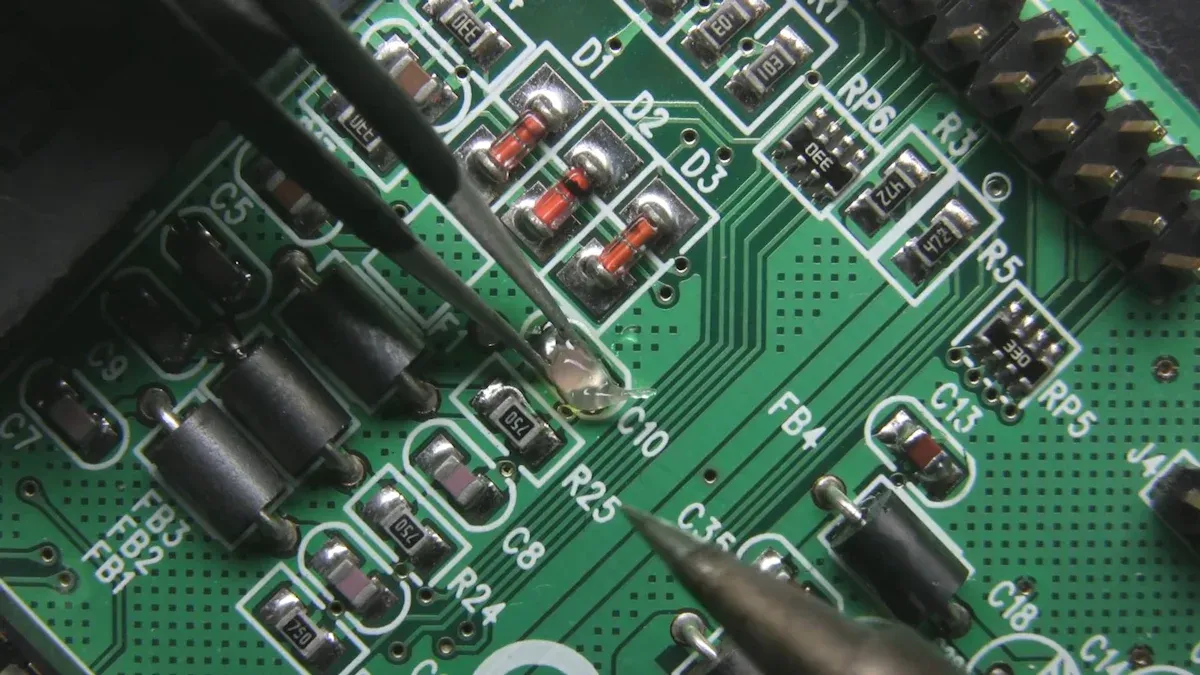
Solder bridging happens when solder unintentionally connects two or more pads, traces, or pins on a circuit board. This creates a conductive path where there shouldn’t be one. It can lead to serious problems like electrical shorts, malfunctioning devices, or even permanent damage to components. Avoiding this issue is crucial to ensure reliable electronic performance.
Key Takeaways
Solder bridging happens when too much solder joins pads or pins. This can cause electrical problems. Use the right amount of solder to avoid this.
Good PCB design is very important. Keep enough space between pads and follow rules to lower the chance of solder bridging.
Use proper soldering tools and methods. Adjust your tools correctly and keep pads clean to make soldering better and avoid mistakes.
Common Causes of Solder Bridging

Solder bridging can occur due to several factors during the soldering process. Understanding these causes helps you take preventive measures and improve the quality of your work. Below are the most common reasons for solder bridging:
Excessive Solder Application
Applying too much solder is one of the leading causes of solder bridging. When you use more solder than necessary, it can overflow and create unintended connections between adjacent pads or pins.
Using too much solder is the biggest cause of solder bridges. When you apply more solder than needed, it can overflow.
Here are some key points to keep in mind:
Excessive solder deposition often leads to short circuits.
Narrow gaps between pads increase the likelihood of solder bridging.
Overflowing solder can unintentionally connect adjacent pads.
To avoid this, always measure the amount of solder you apply and ensure it matches the requirements of your project.
Incorrect Soldering Temperature
Using the wrong soldering temperature can also lead to solder bridging. If the temperature is too high, the solder may flow uncontrollably, spreading to unintended areas. On the other hand, a temperature that is too low may result in incomplete soldering, leaving excess solder behind.
You should always calibrate your soldering equipment to the recommended temperature for the materials you are working with. This ensures proper solder flow and reduces the risk of bridging.
Poor PCB Design and Layout
The design and layout of your printed circuit board (PCB) play a significant role in preventing solder bridging. If the pads are too close together or the traces are poorly aligned, the chances of solder bridging increase.
To minimize this risk, you should:
Ensure adequate spacing between pads and traces.
Follow industry standards for PCB design.
Use solder masks to prevent solder from spreading to unintended areas.
A well-designed PCB reduces the likelihood of solder bridging and improves the overall reliability of your circuit.
Misalignment of Components
When components are not properly aligned on the PCB, their leads may touch adjacent pads. This increases the risk of solder bridging during the soldering process.
Misaligned components can cause their leads to overlap with nearby pads.
This overlap creates a conductive path, leading to solder bridging.
You can prevent this by carefully aligning components before soldering. Using automated placement machines or alignment tools can also help achieve better accuracy.
Contaminated or Damaged Pads
Contaminated or damaged pads can interfere with the soldering process and lead to solder bridging. Dirt, grease, or oxidation on the pads prevents solder from adhering properly, causing it to spread unevenly.
To avoid this issue, you should:
Clean the pads thoroughly before soldering.
Inspect the PCB for any damage or defects.
Use flux to remove oxidation and improve solder flow.
Maintaining clean and undamaged pads ensures a smooth soldering process and reduces the risk of solder bridging.
How to Prevent Solder Bridging
Preventing solder bridging requires a combination of good design practices, proper soldering techniques, and rigorous quality control. By following these steps, you can significantly reduce the risk of this common defect.
Optimize PCB Design and Stencil Specifications
A well-designed PCB and stencil can minimize solder bridging. Follow these best practices to optimize your design:
Double-check your design rules for mask reliefs: Set a relief between .003” to .008” for all surface-mount components. This spacing prevents solder from overflowing.
Always leave a solder mask dam between pads: Maintain a minimum dam size of .004” (2 mils) to contain solder on each pad.
Use solder mask-defined pads for tight-pitched areas: This ensures proper solder application when space is limited.
Tip: Collaborate with your PCB manufacturer to ensure your design meets industry standards. This step can save time and reduce errors during production.
Use Proper Soldering Techniques
Using the right soldering techniques is essential to prevent solder bridging. The table below highlights effective strategies:
Strategy | Techniques |
|---|---|
Optimize Solder Paste Printing | Balanced aperture dimensions, step-down stencils, proper alignment, clean masks, revised reflow profile |
Follow Solder Mask Design Rules | Minimum web width, pad opening size, global expansion offset |
Modify Pad & Circuit Layouts | Increased land spacing, leave every 3rd pin unpopulated, solder thieves, rounded pad corners |
Change Assembly Materials | Solder paste alloy, flux formulation, pad surface finish |
Adjust Reflow Parameters | Lower peak temperature, shorter time above liquidus, improved cooling ramp |
Note: Consistent training for your team on these techniques can improve soldering quality and reduce defects.
Maintain Clean and Contaminant-Free Pads
Contaminants on pads can cause solder to spread unevenly, increasing the risk of solder bridging. To maintain clean pads:
Use isopropyl alcohol to clean the PCB before soldering.
Apply flux to remove oxidation and improve solder adhesion.
Inspect pads for damage or debris before starting the soldering process.
Keeping pads clean ensures a smooth soldering process and reduces the chances of unintended connections.
Choose the Right Soldering Equipment
The choice of soldering equipment plays a critical role in minimizing solder bridging. The table below compares different soldering techniques and their performance:
Soldering Technique | Key Performance Metrics | Advantages | Challenges |
|---|---|---|---|
Wave Soldering | Robust mechanical connections, process control | Advanced machines with nitrogen inerting | Bridging, solder ball formation, insufficient wetting |
Reflow Soldering | Precise control over soldering process | Accurate temperature control, thermal profiling | Thermal stress, solder voids, tombstoning |
Tip: Invest in equipment that offers precise temperature control and process monitoring. This reduces errors and improves soldering outcomes.
Implement Thorough Quality Control Measures
Rigorous quality control ensures that solder bridging is detected and corrected early. Key aspects of quality control include:
Aspect | Description |
|---|---|
Visual Inspection Criteria | Defines acceptable and unacceptable solder joint characteristics, facilitating standardized evaluation. |
Troubleshooting and Corrective Actions | Identifies root causes of defects and develops proactive solutions to prevent solder bridging. |
Continuous Monitoring | Ensures manufacturing processes consistently adhere to quality standards, reducing solder bridging. |
Regular inspections and process monitoring help maintain high manufacturing standards and minimize defects.
Fixing Solder Bridging Issues
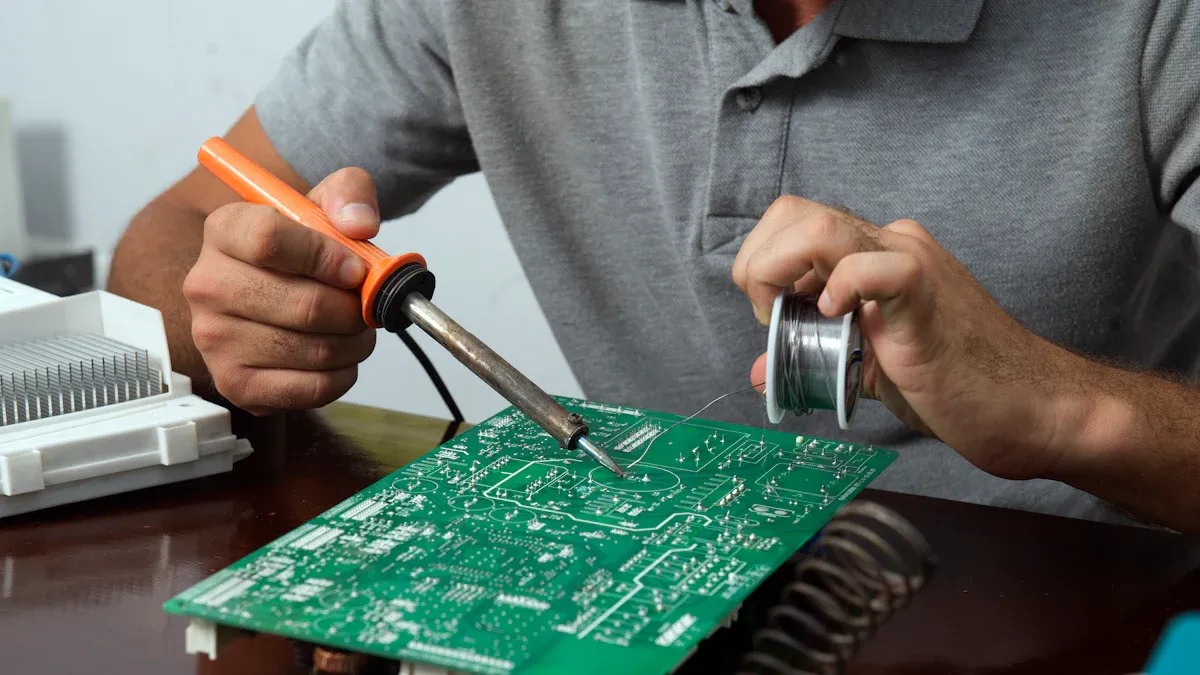
When solder bridging occurs, you can fix it using specific tools and techniques. Below are some effective methods to resolve this issue.
Use a Solder Wick or Desoldering Pump
A solder wick or desoldering pump can help you remove excess solder and eliminate solder bridges. A solder wick is a braided copper wire that absorbs solder when heated. It works well for precise solder removal and correcting solder bridges. A desoldering pump, on the other hand, uses suction to remove molten solder quickly.
Technique | Description | Application | Key Benefit |
|---|---|---|---|
Solder Wick | Braided copper wire used to remove solder. | Correcting solder bridges, removing components. | Precise solder removal. |
Desoldering Pump | Handheld tool that uses suction to remove solder. | Removing large amounts of solder. | Quick and efficient. |
If you notice solder bridging, place the solder wick over the affected area and heat it with a soldering iron. The solder will transfer to the wick. Alternatively, use a desoldering pump to suck up the excess solder after melting it.
Apply Flux to Remove Excess Solder
Flux improves solder flow and helps remove excess solder. Apply a small amount of flux to the solder bridge and reheat the area with a soldering iron. The flux will make the solder flow more evenly, breaking the unintended connection. This method is especially useful for small bridges between closely spaced pads.
Inspect and Rework the PCB for Proper Alignment
Misaligned components often cause solder bridging. Inspect the PCB carefully to identify any misaligned parts. Use tweezers or rework tools to adjust the components into their correct positions. Proper alignment ensures that solder flows only to the intended areas, preventing future bridging issues.
Tip: Always double-check component placement before soldering to avoid alignment problems.
Solder bridging occurs when solder unintentionally connects pads or pins, creating electrical shorts. You can prevent this issue by focusing on proper PCB design, using correct soldering techniques, and maintaining quality control. Apply these methods to reduce defects and improve your manufacturing outcomes. Reliable electronics start with careful soldering practices.
FAQ
What tools can help you detect solder bridging?
You can use tools like Automated Optical Inspection (AOI) systems or X-ray machines. These tools identify solder bridges quickly and improve inspection accuracy.
Can solder bridging damage your PCB?
Yes, solder bridging can cause electrical shorts. These shorts may damage components or lead to complete PCB failure if not addressed promptly.
Is solder bridging common in manual soldering?
Yes, manual soldering increases the risk of solder bridging. Inconsistent solder application or improper technique often causes this issue. Practice and proper tools can reduce errors.
Tip: Always inspect your work after soldering to catch and fix solder bridges early.