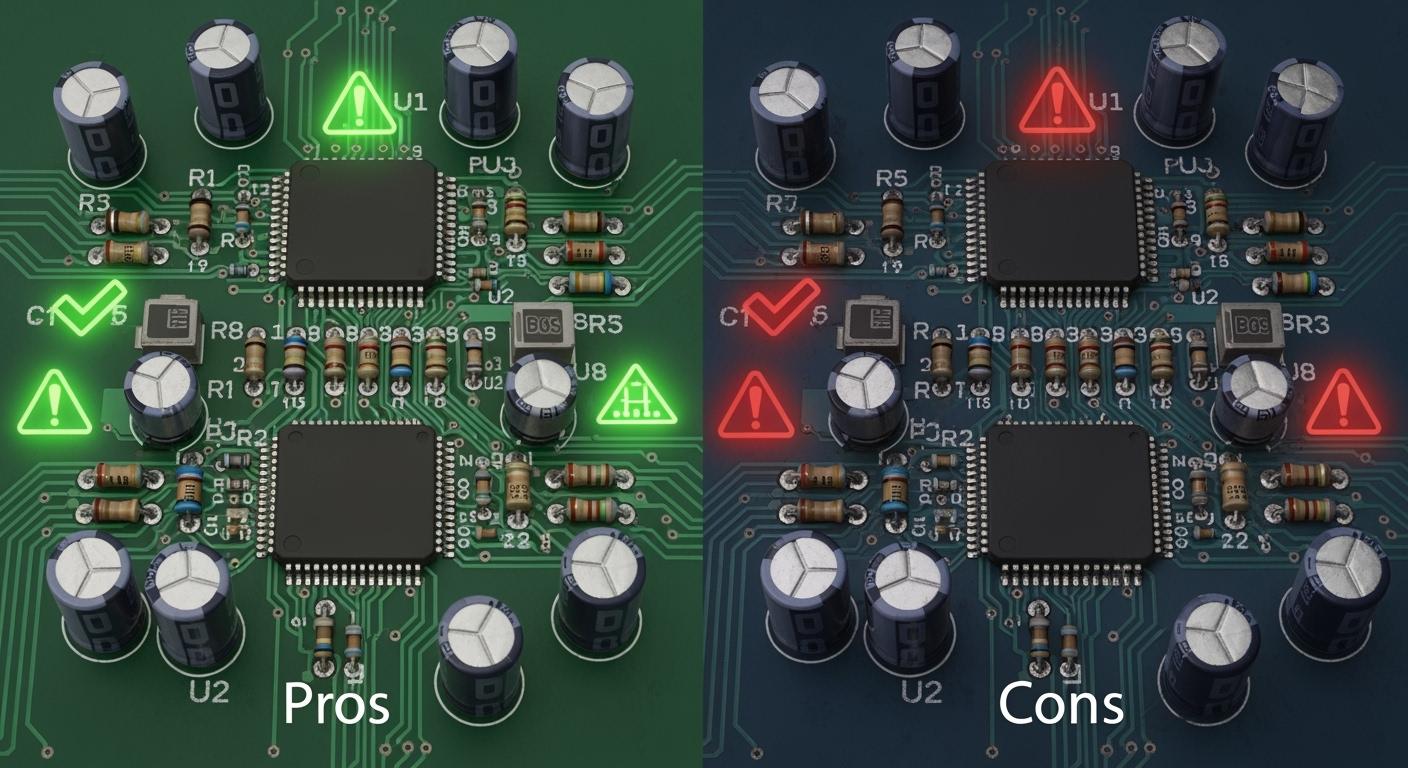
When you build electronics, you have to make choices. Surface-mount technology lets you put small parts on a circuit board. This method helps you make smaller designs and finish projects faster. But it can also be hard to fix and costs more for special tools. You should think about both good and bad sides before you decide. The table below shows how these good and bad points can change your work.
Advantages of SMT | Disadvantages of SMT |
|---|---|
You can fit more parts on the board for smaller designs. | It is not as strong if you do not use extra connectors. |
You can set up production faster than with through-hole technology. | You need to spend more money at first for special equipment. |
You can use more parts for microelectronics on the board. | Solder joints might not be as strong because they are smaller. |
Shorter signal paths help signals stay clear. | It is harder to fix and take care of because parts are tiny. |
You spend less on handling boards and materials. | Solder can spill over and cause short circuits more easily. |
Key Takeaways
Surface mount technology (SMT) helps make electronics smaller and lighter. It puts parts right on the board’s surface.
SMT can make things faster to build. It also helps save money when making lots of products. This is because the assembly process is very efficient.
SMT has many good points. But it needs special machines to work. It can be hard to fix because the parts are tiny.
You should pick SMT or through-hole technology based on your project. Think about how big your project is. Also, think about how strong the parts need to be. Consider how many you want to make.
SMT has long-term benefits. It works better for high-frequency uses. It also saves space in small devices.
What Is Surface-Mount Technology?
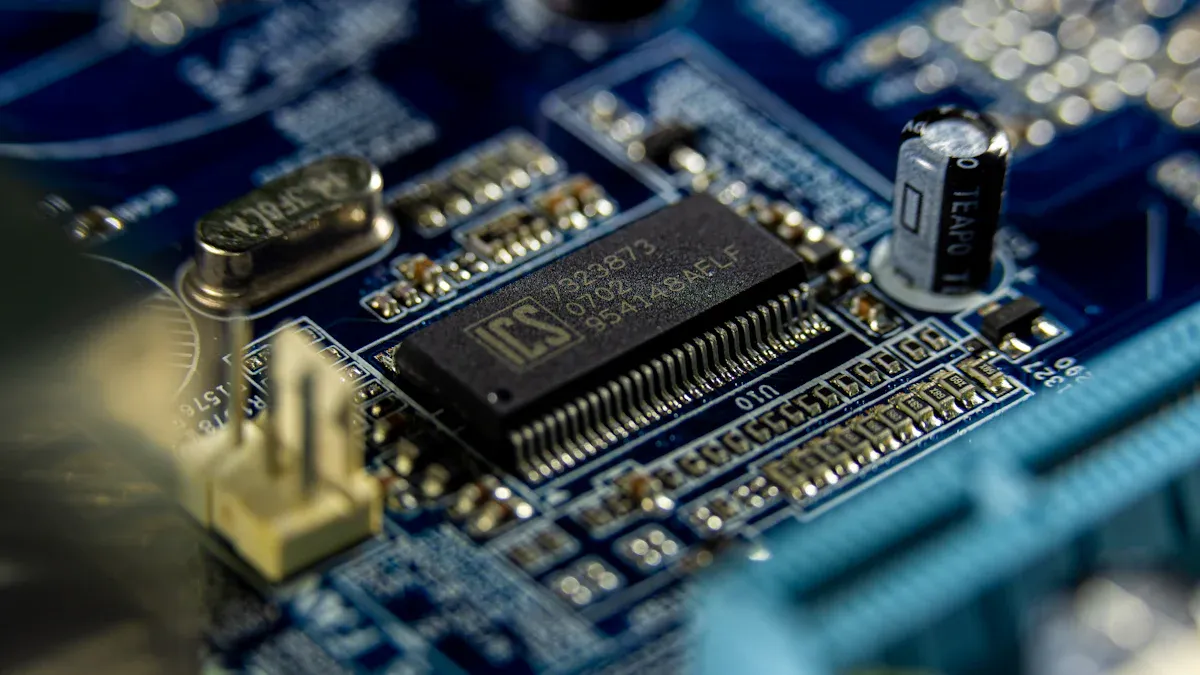
Surface mount technology is a new way to build electronics. You put parts right on the top of printed circuit boards. This way does not need holes like old methods. Many experts agree about what surface-mount technology is. Here is what some top sources say:
Source | Definition |
|---|---|
PCBNet | Surface Mount Technology (SMT) is a way to put parts on a board by placing them on top, not through holes. |
Advanced PCB | Surface mount technology means putting parts on the board’s surface. |
Ninja Circuits | Surface Mounting Technology is when you place and solder parts on the top of a printed circuit board. |
Candor Industries | SMT stands for surface-mount technology. It is a way to put electrical parts right on the board’s surface. |
PCB Directory | Surface Mount Technology is a term for ways to put and solder parts on the top of a printed circuit board. |
SMT vs. Through-Hole
You may wonder how surface mount technology is different from through-hole technology. The biggest difference is how you attach parts to the board. With surface mount technology, you use smaller and lighter parts. You do not drill holes. You put on solder paste, place the parts, and heat them in a reflow oven. Through-hole technology uses bigger parts. You drill holes, put in the leads, and solder on the other side. Here is a quick look:
Feature | Surface-Mount Technology (SMT) | Through-Hole Technology (THT) |
|---|---|---|
Component Size | Smaller and lighter | Bigger, needs drilled holes |
PCB Arrangement | More parts fit on both sides | Fewer parts, bigger boards |
Assembly Process | Solder paste, place parts, reflow oven | Drill holes, insert, solder bottom |
Tip: Surface mount technology helps you put more parts on your boards. Your designs can be smaller and faster.
Key Features of SMT
Surface mount technology gives you many good things. You can put parts on both sides of your boards. Most surface-mount devices have small or no leads, so you save space. The process uses solder paste, robots to place parts, and reflow soldering. This makes building faster and more steady. You can put parts close together, so circuits work better. You also spend less because you do not drill holes. Here are some main features:
You can fit more parts on your pcb.
You use smaller device parts for tiny designs.
You get better speed with short signal paths.
You make more boards faster and save money.
You get better electromagnetic compatibility.
Surface mount technology has changed how people make printed circuit boards. Now you can build smaller, quicker, and better electronic products.
Advantages of Surface-Mount Technology
Surface mount technology has many good points for making electronics. You can make your pcb smaller and lighter. Your devices can also be more powerful. You save time and money when you build with this method. Let’s look at the main reasons why surface mount technology is helpful and how smt parts make things better.
Space-Saving Design
People want small and easy-to-carry devices. Surface mount technology helps you use less space on your pcb. Smt parts are much smaller than old-style parts. You do not need to drill holes in the board. You can put smt parts on both sides of the pcb. This helps you fit more parts in a small area.
Here is a table that shows how much space you save with surface mount technology compared to through-hole assembly:
Feature | SMT | Through-Hole (THT) |
|---|---|---|
Component Size | 10x smaller | Larger |
Through-Holes Required | None | Yes |
Placement | Double-sided | Single-sided |
Components per Square Inch | 100+ | 20 |
With smt parts, you can fit over 100 parts in one square inch. Through-hole technology only lets you fit about 20. This means you can make small products like smartphones and wearables. Your devices will also weigh less, so they are easier to carry.
Surface mount technology helps you make smaller and lighter devices.
You can put many smt parts on one pcb, which saves space and weight.
The small size of smt parts lets you make tiny electronics.
You can place smt parts close together, so you can make more complex circuits.
Making things smaller is important for the electronics market.
Automated Assembly
You want to build things fast and without mistakes. Surface mount technology lets you use machines to put smt parts on your pcb. Using machines makes building faster and cheaper.
Machines help lower labor costs when you make lots of devices.
Special machines put smt parts in the right place every time.
Using machines means fewer mistakes and better results.
Pick and place machines can move smt parts quickly. These machines help you finish building faster and with fewer errors. You spend less money on workers and can focus on other jobs. Machines also make it easy to build more devices when you need to.
High-Density Compatibility
You need to fit lots of features in a small device. Surface mount technology lets you put more smt parts on your pcb. This helps you make small products with many features.
More parts in a small space is a big plus for surface mount technology.
Smt parts are small, so you can fit more on your pcb.
You can put smt parts on both sides of the board, saving even more space.
Smt parts can be up to 90% smaller, so designs can be very compact.
Smt parts can also weigh much less, making devices lighter.
More parts in a small space means you can add more features.
SMD packaging lets you use tiny smt parts, saving even more space.
You can put more smt parts on the same or smaller pcb, which is great for things like smartphones and laptops.
Cost Efficiency
You want to spend less money when you build things. Surface mount technology helps you save money when you make lots of pcbs. Smt parts are small, so they cost less to store and move. Using machines to build lowers labor costs and makes things faster.
Here is a table that shows the cost savings when you use surface mount technology for mass production:
Technology | Cost per Board | Total Cost for 10,000 Boards |
|---|---|---|
Surface-Mount (SMT) | $0.80 | $8,000 |
Through-Hole (THT) | $1.50 | $15,000 |
Surface mount technology can cut your costs almost in half. You also save money because you need fewer workers. Machines like pick and place machines help you make more boards in less time.
Evidence | Explanation |
|---|---|
Automated machines | Making lots of boards with machines saves money and time. |
Small size of smt parts | You can fit more parts on a pcb, so you use less material. |
Fewer people needed for assembly | Machines let you use your workers for other jobs. |
Surface mount technology is a good choice for making lots of devices. You spend less on materials, workers, and moving parts. You can also make more devices in less time, which helps your business.
Performance in High-Frequency Applications
You want your devices to work well and fast. Surface mount technology helps your devices work better at high speeds. Smt parts have short leads and can be placed close together. This helps signals move faster and with less noise.
Advantage | Description |
|---|---|
Improved signal integrity | Smt parts help keep signals clear in high-speed uses. |
Reduced noise | Surface mount technology helps stop noise, which is important for fast devices. |
Enhanced thermal performance | Smt parts handle heat better, which is good for fast work. |
Shorter electrical paths | Smt parts can be close together, so signals move better. |
Reduced parasitic inductance | Smt parts do not have long leads, so signals are not disrupted. |
Lower parasitic capacitance | Smt parts are close together, so signals stay on time. |
Minimized signal delay | Shorter paths mean signals move faster. |
High-frequency performance | Smt parts give good connections for things like 5G. |
Signal timing precision | Smt parts help keep signals on time in fast devices. |
Controlled impedance | You can put smt parts in the right place for good signal flow. |
Smt parts help stop electromagnetic interference because they have less inductance.
You can put smt parts close together, which helps keep signals clear.
Good RF and microwave sockets help stop signal problems.
Keeping signals clear is important for stopping errors and making sure devices work well.
Surface mount technology gives you many good things, like saving space, using machines to build, fitting more parts, saving money, and working better at high speeds. When you use surface mount technology, you build faster, cheaper, and better. You also make small products that work well and last a long time.
Disadvantages of Surface-Mount Technology
When you use surface mount technology, you face some problems. These problems can make your pcb projects harder. You should know about these issues before you pick this method. Let’s look at the main problems and see how they can change your work.
Manual Assembly Challenges
Manual assembly with surface mount technology is not easy. Smt parts are very small and hard to hold. You need steady hands and good tools to put these tiny parts on your pcb. It is easy to make mistakes, and fixing them takes extra time.
Here is a table that shows common manual assembly problems and ways to fix them:
Challenge | Description | Solution |
|---|---|---|
Shadowing | Big parts block solder flow, making weak joints. | Put small parts on first before big ones. |
Solder bridging | Too much solder connects pads and causes shorts. | Use the right amount of solder paste and change stencil holes. |
Insufficient solder joints | Not enough solder makes weak connections. | Change hole size and check if parts are flat. |
Tombstoning | Chips lift off pads when heated. | Use parts that cover half of both pads and keep movement low. |
Non-wetting | Solder does not stick well to parts. | Make metal finishes better and change heating time. |
Solder balling | Small solder balls form and cause trouble. | Use bigger solder powder to lower risk. |
Solder beading | Big solder balls show up near parts. | Make stencil thinner or holes smaller. |
Cold solder joint | Joints look grainy from bad soldering. | Heat more during soldering for better joints. |
Insufficient solder | Not enough paste is used. | Split big holes into smaller ones and check squeegee pressure. |
Signal integrity | Bad placement hurts circuit performance. | Follow signal paths in your design. |
Power integrity | Bad placement causes power problems. | Put bypass capacitors close to supply pins. |
Rework challenges | Hard to reach parts for fixing or checking. | Plan for easy access when you design. |
Test point accessibility | Parts too close to test points make testing hard. | Place parts so you can reach test points easily. |
Manual assembly has many problems. You must be careful at every step. If you mess up, you might have to do it again. This slows you down and costs more money.
You also need to know about error rates. Here is a table that compares error rates for surface mount technology and through-hole technology:
Technology Type | Error Rate | Reliability Characteristics |
|---|---|---|
Through-Hole (THT) | Below 1% | Strong mechanical strength, good for vibration |
Surface Mount (SMT) | 0.5-1% | Less resistant to stress, better with improved soldering |
Surface mount technology can have more mistakes if you do not use good assembly methods. You need to check your work to keep it reliable.
Limited Power Handling
Surface mount technology cannot handle high power as well. Smt parts are small and cannot carry as much current as big through-hole parts. You may have trouble with heat and reliability.
Here is a table that shows the differences in power handling:
Component Type | Size | Power Handling | Heat Dissipation | Reliability |
|---|---|---|---|---|
Through-Hole | Larger | Higher | Better | More Reliable |
Surface-Mount | Smaller | Lower | Limited | Less Reliable |
If you need a pcb for high power, you should use through-hole parts. Surface mount technology works best for low-power devices. Think about these problems before you start your assembly.
Repair and Testing Difficulties
It is hard to repair and test pcbs with surface mount technology. Smt parts are small and close together, so checking and fixing is tough. You need special tools to take out and put in parts. Sometimes, you cannot reach a part without hurting others.
Common problems include:
Solder cracks from heat and cold changes.
Too much heat during assembly causes defects.
Weak materials make devices last less time.
Vibration and water can break parts.
Bad design makes repairs harder.
You can lower these problems by using balanced copper and strong pad layouts in your pcb design. You also need to control your assembly and check for parts that are not lined up, bad soldering, and not enough solder paste. Problems can come from bad design, broken equipment, or human mistakes.
Testing is also hard. If smt parts are too close to test points, you cannot check your pcb well. You need to plan your assembly so you can reach all test points.
Specialized Equipment Needs
You need special machines for surface mount technology assembly. This is a big problem for small factories. You must buy placement machines, inspection systems, and rework tools. These machines cost a lot and may not fit your budget if you build only a few pcbs.
Needing advanced machines can slow down your use of surface mount technology. You may need to spend a lot before you see good results. Over time, you can get better performance and higher quality, but the first cost is high.
Surface mount technology has many good points, but you must think about these problems before you pick it for your pcb projects. You need to think about manual assembly, power handling, repair and testing, and equipment costs. If you plan well, you can lower these problems and make your assembly better and keep signals clear.
Is Surface-Mount Technology Right for You?
Choosing SMT vs. Through-Hole
When you design a pcb, you have a big choice. Surface mount technology and through-hole technology are both useful. You should think about what your project needs before you pick one. Here are some things to help you decide:
The size and number of parts matter. Surface mount technology is good for small parts and crowded boards. Through-hole technology is better for bigger parts.
How you put the board together can change your work. Surface mount technology lets machines build boards fast. Through-hole technology needs more work by hand.
Strong connections are important. Through-hole technology gives stronger holds for parts that get bumped or moved a lot.
How well signals move on your pcb is important. Surface mount technology helps signals stay clear because paths are short.
Cost is something to think about. Surface mount technology saves money when you make lots of boards. Through-hole technology can cost less for just a few boards or for testing.
Tip: Think about how you will use your pcb. If you want a small board and quick building, surface mount technology might be best.
Application Scenarios
Each technology works best for different things. The table below shows where each one is used most:
Technology Type | Best Suited Applications |
|---|---|
Surface Mount Technology (SMT) | Large-scale production, Handheld or smaller electronics, High-frequency applications |
Through-Hole Technology (THT) | Parts subjected to physical stress or harsh conditions, Prototyping stages, Small-scale production |
Surface mount technology is great for phones, tablets, and fast devices. Through-hole technology is better for things that need strong parts or will be changed a lot.
Key Decision Criteria
You should use clear rules when you pick a technology for your pcb. The table below lists important things to think about:
Decision Criteria | Description |
|---|---|
Application Requirements | What your project needs is most important. |
Thermal Management | High-power boards may need through-hole for better heat control. |
Manufacturability | Surface mount technology helps you build faster. |
Production Size | Big orders are better with surface mount technology. Small orders work with through-hole. |
Component Size and Density | Small parts and tight spaces are good for surface mount technology. |
Cost | Surface mount technology can save money and time. |
Reliability | Through-hole gives more strength and handles heat better. |
You can make a good choice by thinking about your pcb’s size, how many boards you need, and how much stress the parts will get. Surface mount technology helps you build fast and add more features. Through-hole technology gives you strong boards and easy fixes. Your choice will change how your pcb works and how long it lasts.
Impact of SMT on PCB Manufacturing and Assembly

Transformation of PCB Manufacturing Processes
Surface-mount technology has changed how people make pcbs. Now, parts go right on the board. You do not need to drill holes anymore. This makes building faster and easier. You can design smaller pcbs that fit in tiny spaces. You also use less material, so you save money. Machines help put parts on the board quickly. Since the 1960s, most factories started using this method. It helps them build electronics faster. Surface-mount technology lets you make more boards in less time. You also spend less money when you use this way.
Assembly Efficiency and Product Quality
You want your products to work well and be made fast. Surface-mount technology helps you do both. You do not have to put parts in by hand. Machines can place many parts every hour. This means you can fit more features on your pcb. You make fewer mistakes because machines do the work. Your products are better and cost less to make. You can build small devices that work quickly. Some machines can place over 136,000 parts in one hour. Using surface-mount technology makes your assembly line faster. Your products are more reliable and you can make them quickly.
Industry Trends and Emerging Challenges
There are new trends and problems in electronics making. The table below shows what is happening now:
Trends | Challenges |
|---|---|
More people want tiny electronics | It costs a lot to start |
Better machines for surface-mount technology | The process is hard to learn |
More people buy consumer electronics | It is hard to find skilled workers |
More electric cars need new pcbs | Supply chain problems can slow things down |
People want smaller and smarter devices. Factories use better machines to build them. The market for electronics keeps getting bigger. Electric cars need new kinds of pcbs. But there are problems too. It costs a lot to get started. It is hard to find workers who know how to use the machines. Sometimes, it is hard to get the parts you need. You must learn new things and keep up with changes in technology.
You see many benefits with surface-mount technology. You can fit more features in smaller devices, and machines help you build faster for big projects. You also save money when you make lots of boards. However, small parts break easily, and you need special equipment, which costs more for small runs.
Tip:
Think about your project size and needs before you choose. For high-volume work, automated assembly and better electrical performance make surface-mount technology a smart choice.
Check your budget and production size.
Look at your design needs and how strong your parts must be.
Pick the method that matches your goals.
FAQ
What is the main difference between SMT and through-hole technology?
You place SMT parts on the surface of the board. Through-hole parts go into holes drilled in the board.
SMT | Through-Hole |
|---|---|
On surface | In holes |
Can you repair SMT boards easily?
You may find it hard to repair SMT boards. The parts are small and close together.
Tip: Use special tools like tweezers and magnifiers for better results.
Why do SMT parts work well in small devices?
SMT parts are tiny. You can fit many on a small board. This helps you build phones, watches, and other compact electronics.
:iphone: :watch:
Do you need special equipment for SMT assembly?
You need machines to place SMT parts and solder them. Hand assembly is tough.
Note: Automated tools make the process faster and more accurate.