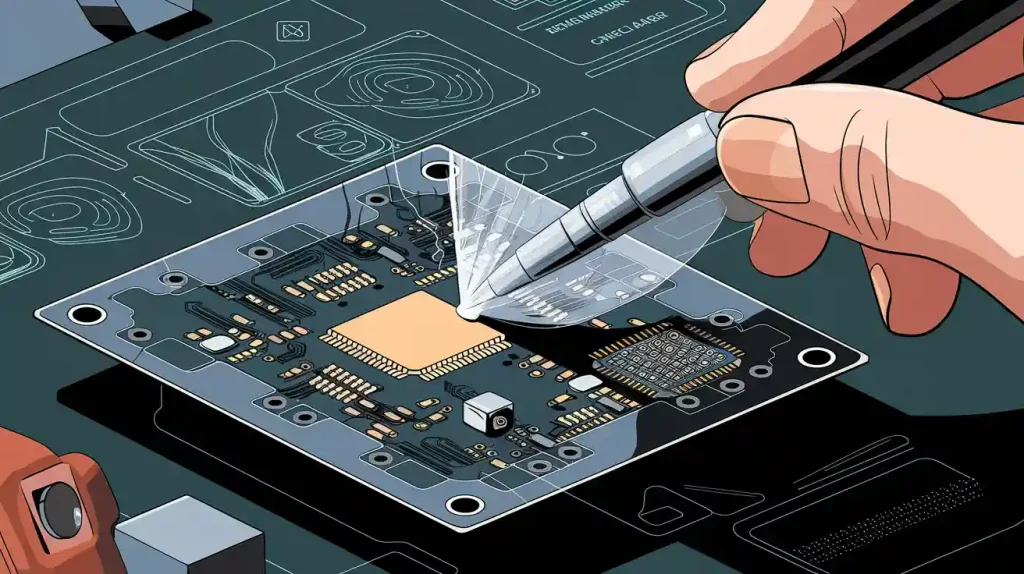
The engineering files used in PCB production include PCB files, ODB++ files, Gerber files, and EXCELLON files. Among these, Gerber files are used for photoplotting to produce film for exposure and screen printing. EXCELLON format files serve as drilling and milling program files, facilitating hole drilling and shaping. PCB files must be converted into Gerber and EXCELLON formats to be utilized in production. On the other hand, CAM software for PCB manufacturing can directly read ODB++ file data.
PCB Data Files
What is a PCB File?
PCB files are design files saved from EDA (Electronic Design Automation) software. These files cannot directly serve as production tool files since manufacturing equipment cannot recognize PCB file formats. All PCB data files saved from EDA software need to be converted into Gerber format for production. Gerber files are the primary file format used in manufacturing equipment, although certain inspection tools may support the ODB++ format.
PCB File Extensions
During PCB manufacturing, Gerber files are essential throughout the process, from online viewing and PCB printing to production material preparation and AOI (Automated Optical Inspection). Gerber files act as a guiding reference for seamless PCB production.
For PCB assembly, the template layers within Gerber files provide a basis for adjusting the positions of various electronic components, guiding both SMT (Surface Mount Technology) and through-hole assembly processes.
ODB++ Data Files
What is ODB++?
ODB++ is an ASCII-based bidirectional data transmission format proposed by Mentor, an IPC member. This file format integrates all PCB and assembly functional descriptions, encompassing design, manufacturing, and assembly requirements. It includes PCB drawings, routing layers, wiring diagrams, pad stacks, fixtures, and more.
ODB++ was introduced to address the limitations of Gerber files by incorporating more comprehensive manufacturing and assembly information.
Advantages of ODB++
The ODB++ format was designed to bridge the gap between design files and finished products. PCB manufacturers initially adopted this format, eliminating the need to compile multiple CAM file formats such as Gerber, Excellon, IPC-356, and IPC-350. The success of ODB++ lies in its industry-wide acceptance and its ability to simplify data conversion.
Gerber / Excellon Data Files
What is a Gerber File?
Gerber, also referred to as “photoplot,” represents formats such as RS-274, 274D, and 274X. These serve as intermediaries for translating design graphic data into PCB manufacturing. Gerber files are primarily used for PCB layout plotting, ultimately enabling PCB manufacturers to produce PCBs. The most widely used Gerber format in the manufacturing industry is GERBER 274X.
Uses of Gerber Files
Gerber files are indispensable in all stages of PCB manufacturing, serving as a reliable medium for conveying design data to production equipment.
What is an Excellon File?
EXCELLON is a pioneering format for computer-controlled drilling and milling machines. It developed a command language system called Excellon Computer Numeric Control (CNC), which became an industrial standard. Initially, it introduced separate languages for drilling (Format One) and milling (Format Two).
In 1979, Excellon updated the Format Two language, unifying drilling and milling commands into a single system. Machines developed before 1979, known as Generation One, could only use Format One, while those after 1979, labeled Generation Two, supported both Format One and Format Two.