The internet of things (iot) is growing very fast. It is changing how businesses work and how people live every day.
Statistic Description | Numerical Value | Context/Implication |
|---|---|---|
Projected global annual average contribution of IoT to GDP growth (2018–2030) | 0.99% per annum | This is about $849 billion each year (2018 prices) |
Estimated potential economic impact of IoT in 2025 | $3,900–$11,100 billion per annum | This is 4–11% of the world’s total GDP |
The internet of things links normal things like appliances, cars, and machines to the internet. This lets them collect, share, and use data. People use iot in many ways now:
Smart home hubs help control lights and keep homes safe.
Wearables track health and fitness.
Connected cars give safety warnings.
Hospitals use iot devices to care for patients right away.
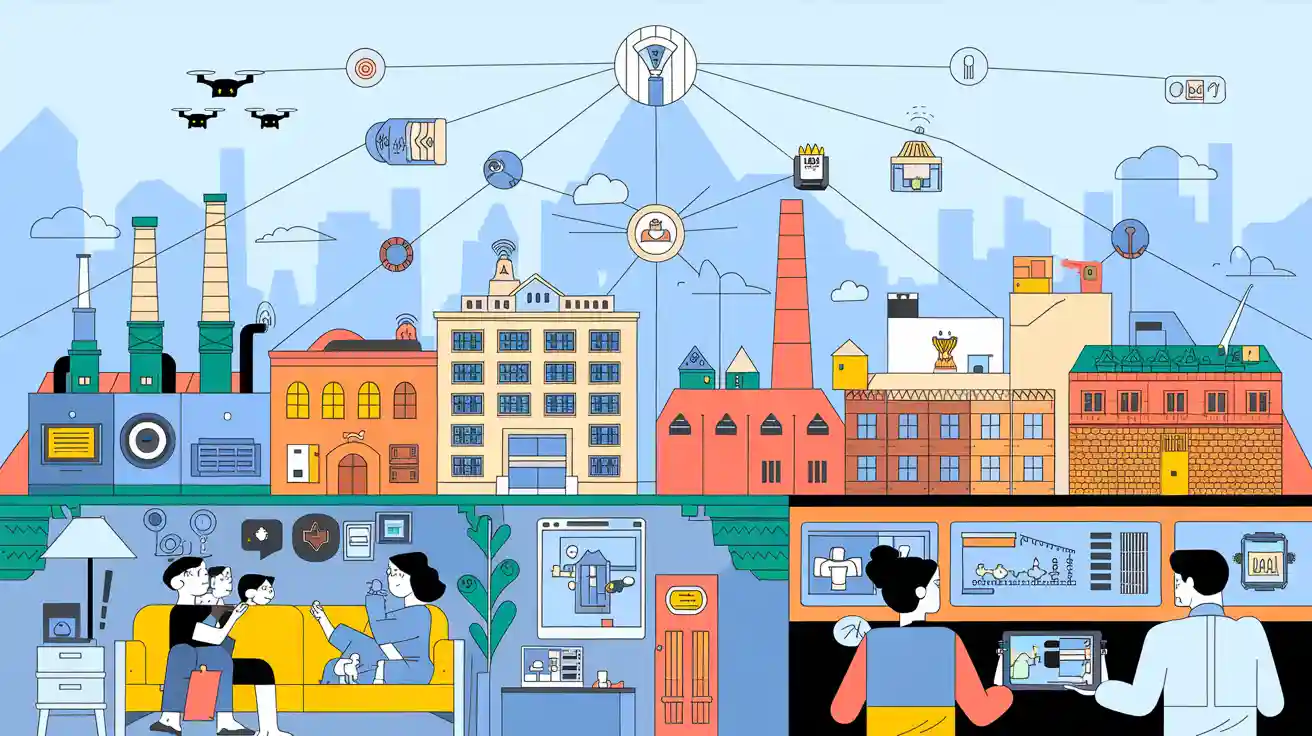
These changes show how iot is shaping our world. It helps make life safer, easier, and more connected.
Key Takeaways
IoT links normal things to the internet. This helps people and companies gather and use data. It makes life and work better.
Industrial IoT makes places safer and more efficient. It saves money by watching machines and automating jobs. It also tracks supplies.
Consumer IoT covers smart homes, wearables, and smart appliances. These save energy and watch health. They make daily life simpler.
Wireless tech like Wi-Fi, Bluetooth, and LoRa help IoT devices talk. They work over both short and long distances.
Security and privacy are big problems. Strong protection and updates keep IoT devices and data safe.
What Is the Internet of Things (IoT)
IoT Definition
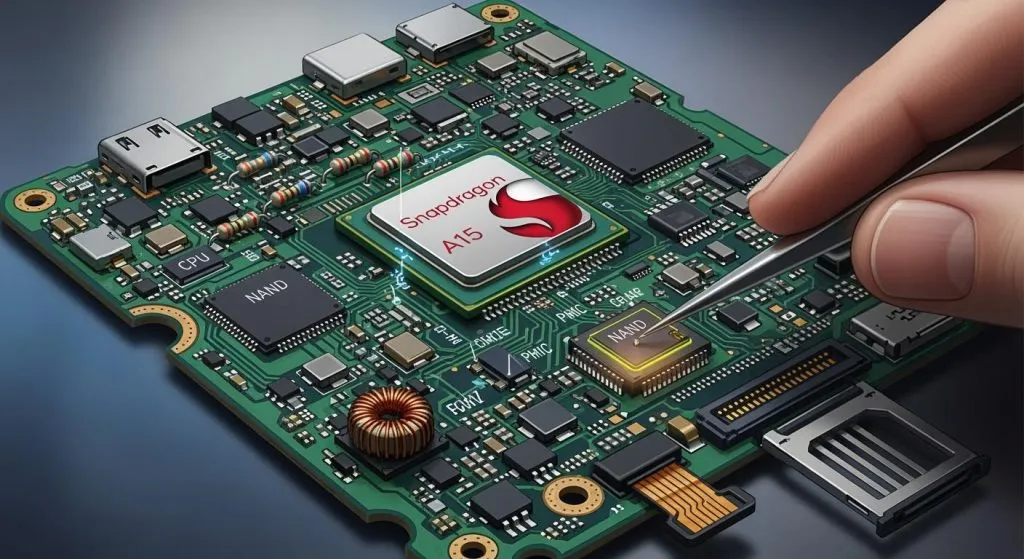
The internet of things connects normal objects to the internet. These objects can be sensors, machines, appliances, or vehicles. Each device gathers data and shares it with others. The iot ecosystem uses hardware, software, connections, and cloud services. This system lets devices sense, use, and act on data right away.
Many experts say the internet of things is a network. In this network, real and digital things work together. These things have their own identities and can sense and share data. For example, sensors in a smart home check temperature and send updates to a phone app. The iot ecosystem also has people, networks, and events that help make value.
Reference | Contribution to IoT Understanding |
|---|---|
Firouzi et al. (2020) | Defines IoT basics and how it works |
ITU-T Y.2060 (2012) | Sets up IoT rules and parts |
Whitmore et al. (2015) | Explains IoT as objects that sense and connect |
IoT Technology Stack
The iot technology stack has many layers. At the device layer, sensors take in data from the world. Embedded software tells devices how to collect and send data. The connection layer moves data to the cloud using Wi-Fi, Bluetooth, or cellular. In the cloud, data is saved, used, and studied. Apps use this data to help people make choices.
Cloud computing helps the iot by handling lots of data. It also keeps devices simple and saves energy. Edge computing can use data near where it is made, so there is less delay. Security matters at every layer to keep data and devices safe.
Device Growth and Market
The number of iot devices keeps going up. In 2024, the global iot market was $1179.42 billion. Experts think it will grow to $3597.01 billion by 2033. The iot devices market may go from $70.3 billion in 2024 to $181.2 billion by 2030. Sensors and connected devices help this growth.
83% of groups using iot say they work better.
44% of US companies use iot everywhere.
58% of makers see iot as key for digital change.
Wi-Fi and Bluetooth are the top ways to connect.
Asia-Pacific grows fastest, helped by smart cities and 5G.
The iot ecosystem keeps growing as more devices, sensors, and data become part of daily life and work.
Internet of Things Applications

The internet of things (iot) brings new uses to work and home. These uses need iot devices, sensors, and smart gadgets to gather data. They help people do jobs better and live easier lives. The main types are industrial iot, consumer iot, and some that mix both.
Industrial IoT
Industrial iot changes how places like factories and mines work. Companies use iot devices and sensors to get live data from machines and workers. This data helps them make good choices and stop problems early. It also keeps people safe. Industrial iot is used for checking machines, tracking supplies, and making work safer.
Experts say most money from iot comes from industry. McKinsey thinks over half of the $6 trillion value by 2025 will be from industry. Connecting old machines makes lots of data. This data helps companies work better and save money. It is important to show clear results because factories have small profits. Predictive maintenance and early fixes help make more products and waste less.
Here are some real examples of industrial iot:
Company / Application | Description | Performance Improvement / Statistic |
|---|---|---|
Bosch – Inventory Tracking | Sensors on tools help manage supplies and save time | Workers are happier and get more done because they spend less time looking for tools |
John Deere – Self-Driving Tractors | GPS-guided tractors work by themselves and are safer | GPS is accurate to 2 cm, so there are fewer mistakes and work is faster |
North Star BlueScope Steel – Wearables | Helmets and wristbands with sensors check worker health and dangers | Workers are safer because their health is checked in real time and dangers are found fast |
Predictive Maintenance | Sensors watch machines to find problems before they break | 82% of companies had costly stops, losing 4 hours and $2 million each time; iot helps stop these problems |
Inventory Monitoring | Iot gives live updates on supplies and restocks automatically | 24% of small businesses still use paper lists; iot saves time and cuts mistakes |
Automation | Repeats tasks with machines to lower mistakes and boost work | Up to 40% of workers do repeat jobs; automation makes work better and safer |
Worker and Plant Safety | Sensors check worker health and plant safety to stop accidents | OSHA says muscle injuries are common; iot helps stop these with quick alerts |
Industrial iot helps companies in many ways: Predictive maintenance finds problems before machines break. Automation lowers mistakes and helps people do more. Live data from devices lets managers act fast. Checking worker health and plant safety keeps everyone safe.
Studies show iot can help countries grow faster, especially those still developing. Iot could add $800 billion a year in transport and $700 billion in health. McKinsey says iot could be worth over $11 trillion by 2025. Accenture thinks industrial iot could add $14.2 trillion to the world economy by 2030. These gains come from working better, spending less, and using data in new ways.
Consumer IoT
Consumer iot brings smart gadgets to homes, stores, and daily life. These iot devices help people save time, stay healthy, and make life simple. Consumer uses include smart homes, wearables, and smart appliances.
A study on smart home energy shows iot devices like smart meters and appliances help people watch and control energy use. This helps people use less energy, save money, and run their homes better.
Consumer iot uses include: Inventory tracking with RFID sensors and smart tags to cut mistakes. Sales analysis uses iot to learn what customers do and improve ads. Loss prevention uses cameras and sensors to stop theft. Supply chain tracking follows goods from start to finish. Store automation controls lights, heat, and energy. Sensors help manage wait times in stores to make shopping better. Predictive maintenance for home gadgets stops breakdowns. Proximity sensors send special deals to shoppers. Digital customer help makes checkout and home delivery easy.
Wearables are a big part of consumer iot. Fitness trackers and smartwatches count steps, heart rate, and sleep. In the US, 45% of people use smartwatches. 69% would use fitness trackers for insurance discounts. Health monitoring with iot lets people and doctors check health right away.
Smart homes use iot to control lights, locks, and alarms. Smart speakers and appliances make chores easier. These gadgets use sensors to gather data and answer voice or phone commands.
The consumer iot market is growing fast in many places:
Region | Growth Indicator / Trend | Supporting Data / Statistic |
|---|---|---|
North America | Biggest market in 2022; more growth coming | Over 23.35% of sales in 2022; fitness trackers are popular; 45% use smartwatches; 69% want insurance discounts for using trackers |
Asia Pacific | Big growth expected from 2023-2030; smart homes help growth | China’s smart home market grew from $40.96B in 2016 to $91.08B in 2021 |
Middle East & Africa (MEA) | Big growth expected because of smart city plans | Growth comes from smart city projects that focus on saving resources |
Global Market | Consumer iot market will keep growing | Growth rate of 12.7% from 2023 to 2030; could reach $555.92 billion by 2030 |
Overlapping Use Cases
Some iot uses work for both industry and people. Smart cities use iot to manage traffic, check air, and keep people safe. These uses need live data from devices to make cities safer and work better.
Healthcare is another area where both use iot. Hospitals use iot for patient checks. People use wearables to watch health at home. Both use sensors to gather data and send alerts if something is wrong.
Smart transportation uses iot in cars, buses, and trains. Devices check vehicle health, watch traffic, and help drivers stay safe. These uses help cut accidents and make trips faster.
Mining and factories use iot to help workers and the public. Sensors check air in mines and factories. This keeps workers safe and cuts pollution for nearby people.
Iot helps both industry and people by making life safer, healthier, and easier. Sensors, smart gadgets, and live data connect people, machines, and places in new ways.
IoT Wireless Technologies
How iot devices connect depends on their wireless technology. Some iot devices use short-range links for homes or offices. Others need wide-area coverage for places like cities or farms. Each wireless technology works best for certain iot uses.
Short-Range Solutions
Short-range wireless helps iot devices talk in small areas. These are good for smart gadgets and sensors that stay close together. They do not need to send data very far. Many iot devices use these for quick and steady connections.
Wi-Fi works inside buildings and covers about 50 meters. It sends lots of data fast, so it is good for videos and internet.
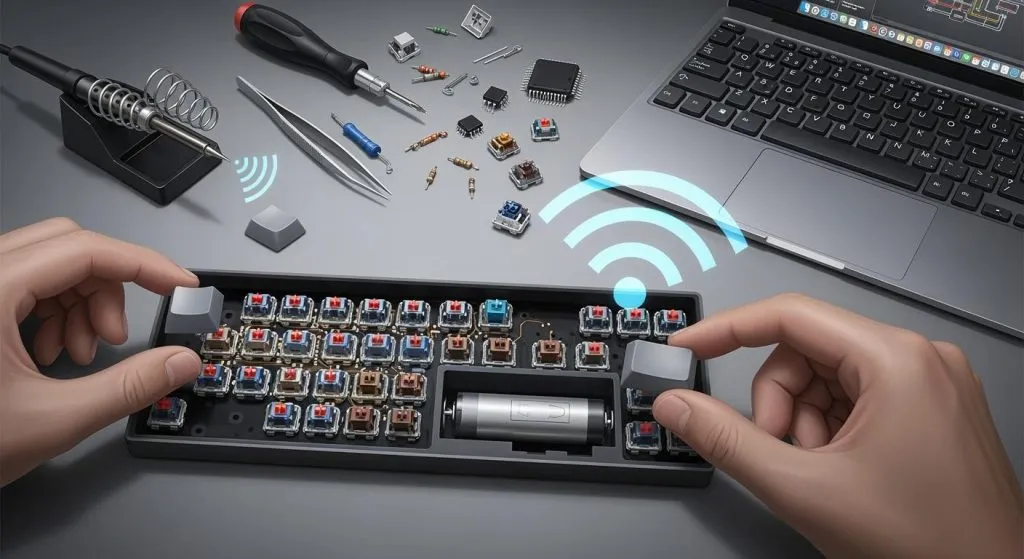
Bluetooth links things like fitness bands and headphones. It works up to 10 meters and does not use much power.
ZigBee uses little power and can make mesh networks. It reaches 134 meters and is used for smart lights and home controls.
Z-Wave also makes mesh networks. It covers 30 meters and is used in home security.
UWB sends data very fast over short spaces. It is used for radar and imaging.
IrDA uses infrared light for safe, direct links but needs a clear path.
Technology | Frequency Band | Range (meters) | Data Rate | Power Consumption | Network Topology | Typical Applications |
|---|---|---|---|---|---|---|
ZigBee | 2.4 GHz ISM | Up to 134 | 250 kbps | Low | Mesh | Home automation, sensors, lighting control |
Bluetooth | 2.4 GHz ISM | ~10 | 1 Mbps | Moderate | Piconet | Mobile devices, audio streaming, short-range data transfer |
Wi-Fi | 2.4/5 GHz | ~50 indoors | Up to 100+ Mbps | High | Infrastructure/Ad hoc | Internet access, video streaming, LANs |
Z-Wave | ~908 MHz (US) | Up to 30 | 9.6 kbps / 40 kbps | Low | Mesh | Home automation, security devices |
UWB | 3.1-10.6 GHz | ~10 | >100 Mbps | Low to moderate | Point-to-point | High-speed indoor communication, radar, imaging |
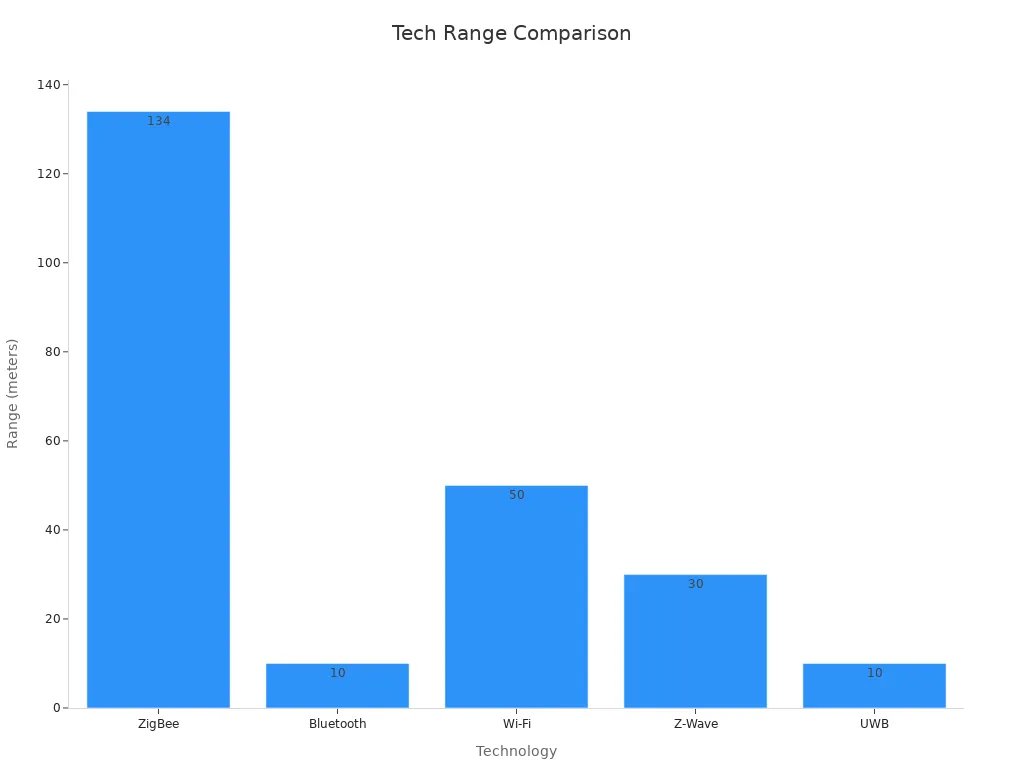
Short-range iot lets many devices work together at home or work. These networks help people control lights, watch health, and save energy.
Wide-Area Solutions
Wide-area wireless connects iot devices over big places. These are used in cities, farms, or highways. They support many sensors and smart gadgets far apart. They use less power and are good for sending small bits of data.
LoRa and Sigfox use little power and reach far. They are used in smart cities, farms, and animal tracking.
NB-IoT and LTE-M use cell networks. They give strong signals and work for many iot devices.
Studies show LoRa is good for watching animals in forests. NB-IoT helps smart meters in cities with strong coverage.
Reports from GSMA and Ericsson say cell iot works well for coverage, battery life, and data speed.
Technology | Battery Lifetime | Capacity | Cost | Latency | Quality of Service |
|---|---|---|---|---|---|
Sigfox | High | High | Low | Moderate | Moderate |
LoRa | High | High | Low | Moderate | Moderate |
NB-IoT | Moderate | Moderate | Higher | Low | High |
Wide-area iot helps connect sensors and devices in many places. These networks let people share data over long distances. This makes iot work in lots of areas.
IoT Trends and Challenges
AI and Analytics
AI is changing how iot works today. Many companies use machine learning to make iot devices smarter. Deep learning helps these devices learn from data. These tools help with data analysis and real-time checks. Predictive maintenance uses data to find problems early. Digital twins use iot sensors to copy machines or buildings. This helps people see problems before they happen. AI and iot work with 5G and edge computing for faster data. Companies face high costs and need skilled workers. Keeping data safe is also hard. As AI and iot grow, they help factories and smart homes work better.
Digital twins use live data from iot sensors to predict problems.
Machine learning finds equipment failures early and saves money.
Cloud computing and analytics make these tools easier to use.
Smart Cities and Homes
Smart cities and homes use iot to help people every day. Cities use iot for traffic, saving energy, and waste control. Smart homes use sensors to control lights and locks. Many cities have started iot projects:
City | IoT Initiative | Quantitative Evidence / Metrics |
|---|---|---|
Masdar City (UAE) | Autonomous vehicle system | First in region; up to 12 passengers per vehicle |
Copenhagen | Energy and bike traffic monitoring | Won top smart city award; aims for CO2 neutrality by 2025 |
Singapore | Smart garbage and transport systems | Leading in regional iot use |
These projects show iot and smart tech make cities cleaner and safer. Smart homes help people save energy and keep families safe.
IoT Security and Privacy
Security and privacy are big problems for iot. Many devices have weak security and old passwords. Hackers can attack these devices easily. Reports say 60% of iot hacks come from unpatched devices. Botnets and DDoS attacks can stop websites and services. In healthcare, 75% of iot devices use old systems. This causes expensive security problems. Over 25% of data breaches involve stolen personal data. Companies must protect data and update devices to stop these risks. Good iot security keeps people and cities safe.
Development Advice
Developers have many problems when making iot systems. They must focus on security, privacy, and making things work well. Here are some tips:
Use strong security and update devices often.
Make sure devices from different brands work together.
Plan for more devices and data in the future.
Use machine learning for live data checks.
Manage battery use for devices.
Follow rules for privacy and data safety.
Watch devices for problems and fix them fast.
Control costs with smart network choices.
Upgrade networks for better speed.
Train workers to use new iot tools.
IoT gives many chances, but developers must solve hard problems. Good planning and smart tools help make iot safe and helpful for all.
The internet of things is changing how we live and work. IoT links many devices together. These devices help people and companies use data. This data helps them make better choices. The market for IoT is growing very fast. Experts think it will be worth trillions by 2030.
There are still problems with security and making new things. New ideas like 5G, AI, and edge computing will bring more chances. People and businesses can use IoT to make life or work better.
Statistic Description | Value / Projection |
|---|---|
Global IoT market revenue (2024) | $1,387 billion |
Projected global IoT market revenue (2028) | $2,227 billion |
Number of IoT-connected devices (2030) | Hundreds of billions |
FAQ
What is an example of an IoT device?
A smart thermostat is one kind of IoT device. It connects to the internet and lets people change the temperature with a phone. The thermostat can learn what you like. It helps save energy at home.
How does IoT improve daily life?
IoT devices help people save time and energy every day. Smart lights turn off when no one is in the room. Fitness trackers show health information. These tools make life easier and keep people safer.
Are IoT devices safe from hackers?
Many IoT devices do not have strong security. People should change the default password and update the software often. Companies try to make devices safer, but some risks are still there.
What industries use IoT the most?
Industry | Common IoT Use |
|---|---|
Manufacturing | Machine monitoring |
Healthcare | Patient tracking |
Agriculture | Crop sensors |
Transportation | Fleet management |
Many industries use IoT to work better and stay safe.