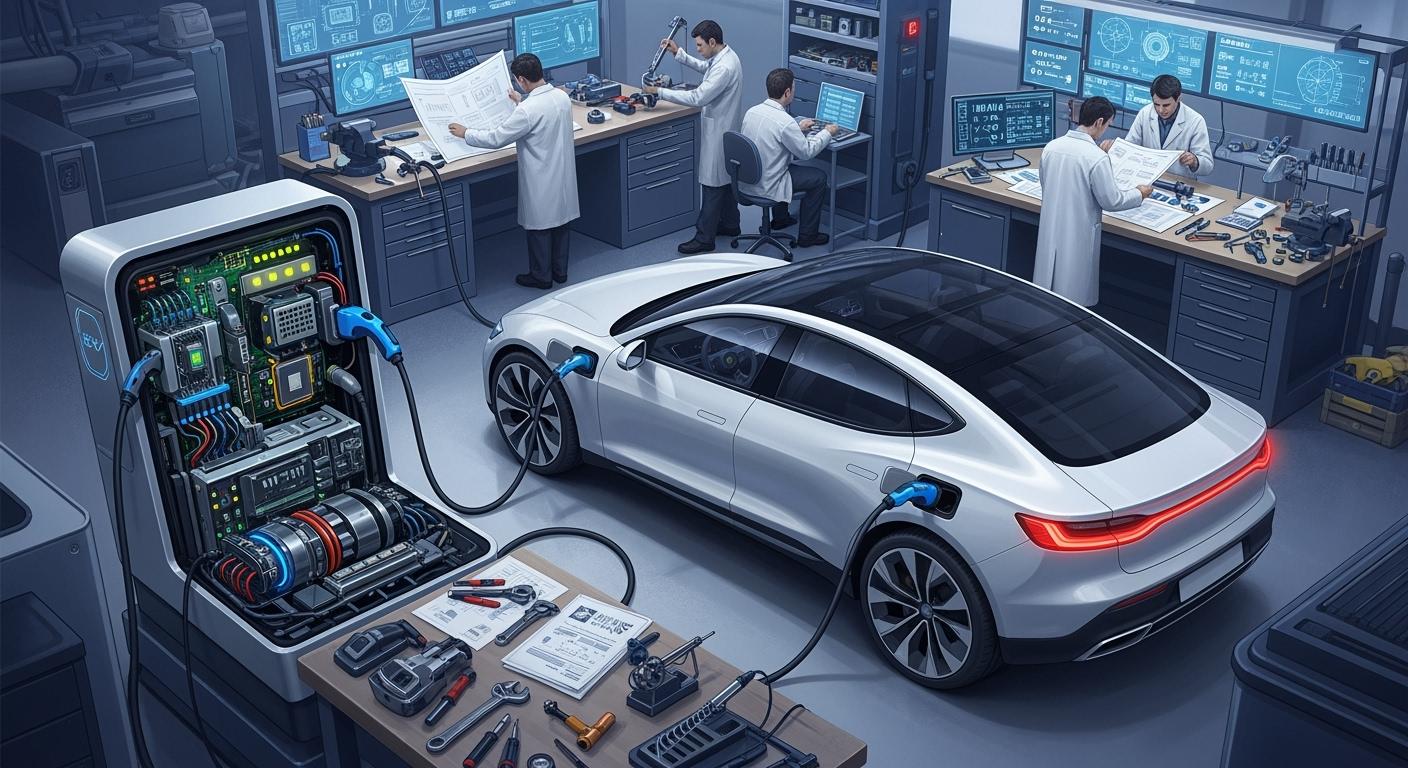
You use onboard charging piles to charge your electric car safely and quickly. These systems are important for how fast and easy you can charge your car. The market for these chargers is growing fast, worth billions of dollars, and keeps getting bigger every year. There are AC and DC charging choices, and each one has different costs and works differently. Good design and safety steps help make charging simple, safe, and easy for all people.
Key Takeaways
Pick a charging pile that fits your needs and follows safety rules. This helps you charge safely and quickly. Good design and easy-to-use screens make charging simple for all people. Use eco-friendly materials to help the planet. These materials also make your charger strong and work well. Check and fix your charging pile often. This helps it last longer and work better. Learn about new things like wireless charging and smart features. These can make charging better for you.
Onboard Charging Piles Design Principles

When you think about onboard charging piles, good design starts with what you need. Some people want to charge their cars fast. Others care more about safety or want something simple to use. What you want helps decide how the charger is made. If you drive in a city, you may need quick charging. If you charge at home, you may want something easy and safe. Designers listen to what people want and make chargers that fit their lives.
Electrical Safety Standards
Safety is always the most important thing in design. You want to be sure your electric vehicle piles are safe. Different countries have their own safety rules. Here is a table that shows the main standards in the US, EU, and China:
Region | Certification Standards | Notes |
|---|---|---|
China | CQC, etc. | No mandatory certification currently |
US | UL, FCC, Energy Star | High difficulty in certification |
EU | CE certification | Varies by country, some have extra rules |
There are also special rules like UL 2251, SAE J3400, and IATF 16949. These rules say chargers must have things like temperature sensors and locks. They also need protection from electric shock. Designers follow these rules to keep you safe every time you charge.
Power Conversion & PCB Role
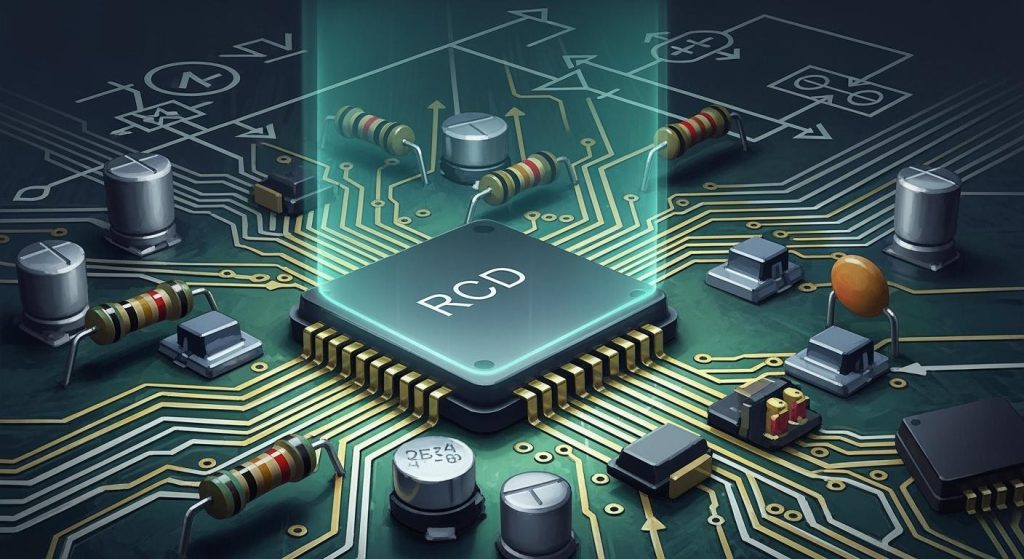
The power conversion system is the main part of onboard charging piles. It changes electricity from the grid into power your car can use. New technology makes this faster and better. Some chargers use 4-in-1 integration to put many parts together. This saves space and money. Some chargers use special materials like SiC and GaN. These help the charger handle more power and stay cool.
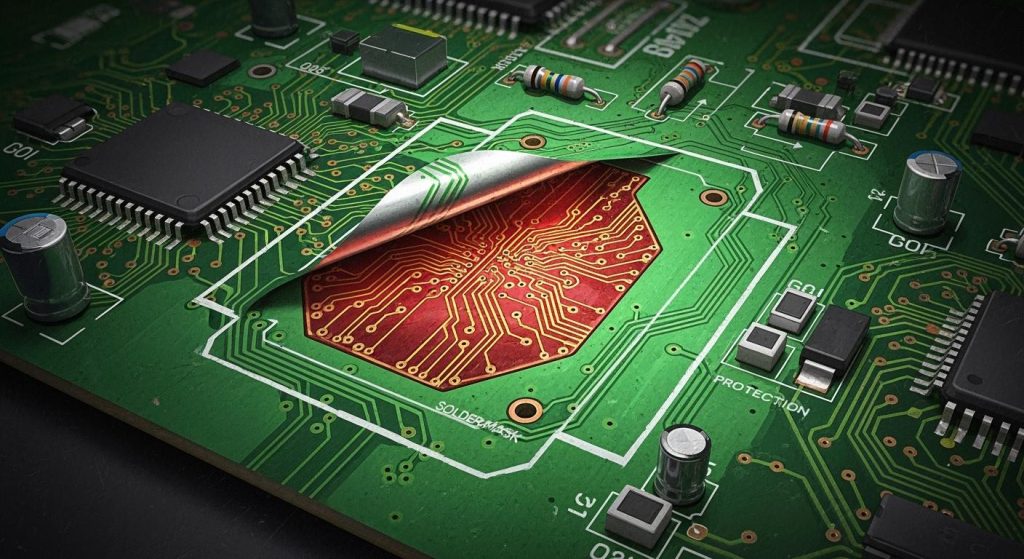
A printed circuit board (PCB) is very important in the charger. It controls how electricity moves inside. A good PCB keeps the charger cool and safe. It uses heat sinks and smart layouts to stop overheating. It also keeps signals clear and saves power. When designers use strong materials and smart designs, your charger lasts longer and works better.
Vehicle System Integration
You want your onboard charging piles to work with many cars. This can be hard sometimes. More people are buying electric cars, so more chargers are needed. Sometimes, the power grid cannot give enough electricity. Designers must plan where to put chargers and how to share power. If too many cars charge at once, it can cause problems like power loss.
Car makers also have to solve problems. They need to fit the charger in the car without using too much space. Some cars use onboard chargers for easy charging. Others use off-board chargers for more power. Some systems can do both. Designers and car makers work together to make sure the charger fits and works well for you.
User Interface & Accessibility
You want a charger that is simple to use. The user interface is what you see and touch. Many people want features like user management and energy management. These help you control who uses the charger and how much power it uses. Some smart chargers can talk to other chargers and the power grid. This helps balance electricity and makes charging better.
Accessibility is important too. Fast DC charging piles help city drivers save time. You spend less time waiting and more time driving. Where the charger is placed matters a lot. If it is easy to reach and in a busy place, more people will use it. Good design means thinking about the technology and how you use it every day.
Tip: When you pick a charging pile, choose one that fits your needs and follows safety rules. A good charger keeps you safe and saves you time.
Electric Vehicle Piles Manufacturing Process
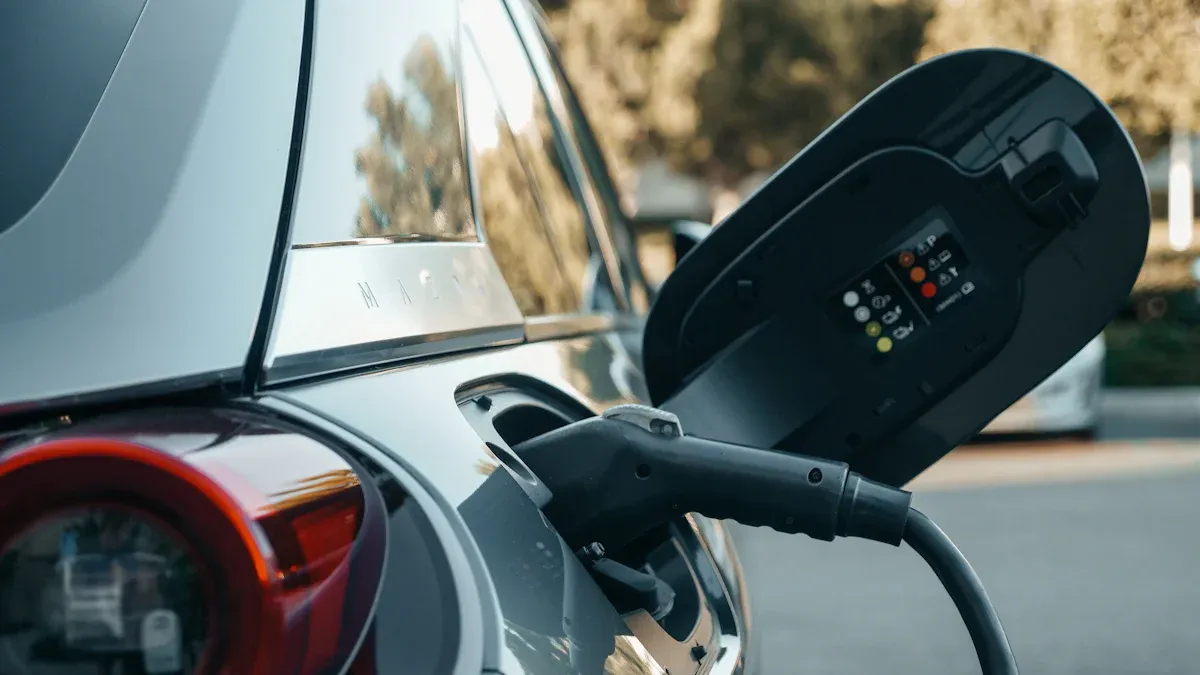
You see how onboard charging piles are made step by step. Each part of the process helps make your charger safe and strong. The way materials are picked, put together, tested, and set up all matter. These steps help electric vehicle piles last a long time.
Material Selection
You begin by picking the best materials. The type of plastics, metals, and composites changes the cost and how green the charger is. New chargers use materials that save energy and help the planet. Modified plastics and strong composites make chargers tough and last longer. These materials are good for the earth because you can recycle them. Companies use eco-friendly plastics to follow new rules. The energy used in making chargers and where it comes from is important too. Every material choice changes how the charger works and affects the world.
Materials affect the environment and how much energy is used.
Modified plastics and composites make chargers last and cost less.
Recyclable materials help protect the planet.
Eco-friendly plastics meet green rules.
Making chargers uses energy and the power source matters.
Assembly & Testing
You watch as workers build the charger in order. They put parts together, test them, age them, seal them, and pack them. Every step is important. During assembly, you make sure all parts fit and work right. Tests keep you safe. You do BMU communication tests to check if data moves right. High voltage tests check if the charger is safe from shocks. Fire detection tests make sure safety systems work. You look for damage and test emergency stops and leakage protection. You add overcurrent and short circuit protection. For outdoor chargers, you use rainproof and sun shields. You treat parts to stop moisture, mildew, and salt spray. Each test helps you trust your charger every time.
BMU tests check if data is correct.
High voltage tests check for safe insulation.
Fire detection tests check safety systems.
Visual and working tests check if it works well.
Emergency stop and leakage protection are added.
Overcurrent and short circuit protection are included.
IP54 keeps outdoor chargers safe.
Parts are treated to stop moisture, mildew, and salt spray.
Quality Control
You check quality to stop problems and keep chargers safe. You look at raw materials to make sure they are pure and strong. You mix and coat electrodes carefully so they are even. You check cell assembly to make sure parts line up and seal right. You fill and seal electrolytes to stop leaks. You watch voltage and capacity during formation and aging to find problems early. Each step helps you make a charger that works well and lasts long.
Quality Control Measure | Purpose |
|---|---|
Raw Material Inspection | Checks for pure and strong materials |
Electrode Production | Careful mixing and coating for evenness |
Cell Assembly | Checks if parts line up and seal well |
Electrolyte Filling and Sealing | Makes sure there are no leaks |
Formation and Aging | Watches voltage and capacity for early problems |
Charging Pile Installation
You plan how to install the charging pile. You pick floor-mounted or wall-mounted chargers. Floor-mounted piles need a strong base and ground work. They are good for busy places and can charge many cars. Wall-mounted piles go on walls and are easier to put in. They usually charge one car and are best for passenger cars. You check the electrical system to make sure it can handle the charger. You use waterproof and sun shields for outdoor chargers. You check everything often to keep it working.
Consideration | Floor-Mounted Charging Piles | Wall-Mounted Charging Piles |
|---|---|---|
Installation Method | Needs ground work and a strong base | Goes on walls, easier to install |
Safety Features | Extra safety for busy places | Must be put up safely to stop tipping |
Charging Capacity | Can charge many cars at once | Usually for one car only |
Versatility | Works for many types of vehicles | Mostly for passenger cars |
Technology | Often has smart charging features | May have basic charging only |
You follow these steps for a safe setup:
Check safety before you start to match the power.
Get a licensed electrician to check circuits and install.
Follow the maker’s wiring steps closely.
You also think about cost and time. Level 1 chargers are cheaper and quick to install. You can use outlets you already have. Level 2 chargers cost more and need a 240-volt circuit. They charge faster and work for most people. Installing costs $800 to $2,500, with most jobs about $1,700. Labor, the electrical panel, and how hard the job is change the price.
Tip: Your charger lasts longer if you check it often and follow safety steps when you install it.
Challenges in Charging Pile Installation
When you put in a charging pile, you face many problems. You must pick a good spot. You need to make sure it is safe. You want it to last a long time. Every step is important for a smooth job.
Thermal Management
Charging piles get hot when they charge cars fast. You need to keep them cool. Fans and heat sinks help move heat away. Smart layouts also help keep parts safe. This stops the charger from breaking early. Good cooling helps the charger work well for years.
Good cooling keeps chargers working well.
Cooling stops parts from breaking too soon.
Fast charging stays safe with good cooling.
Miniaturization
Chargers should fit in small places. Small chargers use short cables and tiny parts. These fit into many designs. You can put them in tight spots. Small chargers help add more charging points. Operators can grow their network easily.
Small chargers fit many places.
Flexible chargers meet many needs.
You can add more chargers as needed.
Regulatory Compliance
You must follow rules when you install chargers. Each state in the US has its own rules. California has very strict rules. Canada checks chargers with special safety laws. Chargers must be easy for everyone to use. You need permits and must follow local rules.
Rules are different in each place.
Safety checks are needed for all chargers.
Public chargers must be easy for all people.
Reliability & Durability
Chargers should work in all weather and last years. Different brands have different strengths. Here is a table to compare them:
Manufacturer | Strengths in Reliability and Durability |
|---|---|
ABB | Fast charging, lots of experience |
Siemens | Strong stations for big fleets |
TGood | Fast chargers for buses |
Delta Electronics | Versatile hardware, energy management |
ChargePoint | Networked solutions, advanced connectivity |
BYD | Integrated systems for buses |
EVBox | Modular, customizable chargers |
Tritium | Ultra-fast, very reliable chargers |
Shenzhen Clou Electronics | Durable, cost-effective for cities |
Goldstone | Focus on safety and easy use |
Ensto | Weather-resistant, reliable outdoor chargers |
Reverse Engineering and Redesign
Old chargers may need updates for new rules. Reverse engineering helps find weak spots. You take apart the charger and study it. You fix security problems and make it safer. This helps old chargers work with new cars and rules.
Tip: Always check safety before using a new charger. This keeps you and your car safe.
Cities have space limits and strict rules.
Rural areas may not have many charging spots.
Old systems can slow down new charger installs.
Innovations & Future Trends
New technology is changing onboard charging piles. These changes make charging faster. Charging is easier now. Charging is better for the planet. You get smarter features. You see wireless options. Manufacturing is getting greener.
Smart Charging Features
Smart charging features give you more control. These tools help you and the power grid work together. Here are some new features you can use:
Bidirectional communication helps the grid manage charging. It uses real-time needs. This keeps the grid stable.
Remote monitoring lets you check charging piles. You can fix problems quickly.
Mobile apps help you schedule charging. You can track your car’s battery from anywhere.
Smart algorithms protect your battery. They make it last longer. They adjust how fast and when you charge.
Monitoring tools show battery use. They help your car run well.
These features make charging more efficient. They make your experience smoother.
Wireless Charging Integration
You can charge your car without plugging in. Wireless charging is growing fast in the US. Detroit opened the first wireless charging road in December 2023. This road has copper coils under the pavement. Your car charges as you drive or park over these coils. Your car needs a receiver to use this.
Wireless systems can reach up to 93% efficiency. This matches many plug-in chargers. New projects plan to use solar power with wireless charging. Florida’s State Road 516 is one example. Experts think wireless charging will grow a lot by 2034. You will see more roads and parking lots with this technology soon.
Sustainable Manufacturing
You help the planet by choosing chargers made with green practices. Companies use more recycled and recyclable plastics. They look for bio-based materials and natural alternatives. These changes shape new charging pile designs.
Sustainable Practice | Impact on Manufacturing |
|---|---|
Recycled plastics | Reduces waste and saves resources |
Bio-based polymers | Lowers carbon footprint |
Recycling technologies | Can meet up to 40% of raw material needs by 2025 |
You see more eco-friendly products. You see clean-label options. These trends push companies to improve design. They help protect the environment.
Note: New design and manufacturing ideas make electric vehicles easier to use. They help more people choose EVs. Charging is faster, safer, and more reliable.
You help make onboard charging piles better for the future. Smart design makes charging safer and easier for everyone. Manufacturers use modular systems to build chargers. They also pick eco-friendly materials to help the planet. New rules and what customers want make companies build stronger chargers. These chargers work with new technology and last longer.
Safety and how you use chargers are very important
Smart design and modular systems let you change things easily
Using green materials helps protect nature
Making chargers ready for the future helps new EVs and energy changes
FAQ
What is fast charging and how does it work?
Fast charging lets you power up your electric car quickly. You connect your car to a charging pile that sends more electricity than regular chargers. Fast charging uses special technology to fill your battery in less time. You spend less time waiting and more time driving.
How is dc fast charging different from other fast charging methods?
Dc fast charging sends direct current straight to your car’s battery. Other fast charging methods use alternating current. Dc fast charging works faster because it skips some steps inside your car. You get back on the road sooner with dc fast charging.
Can I use fast charging at home?
You can use fast charging at home if you install the right equipment. Most homes use Level 2 chargers, but some new systems offer fast charging. You need a strong electrical setup. Fast charging at home helps you save time every day.
Does fast charging hurt my battery?
Fast charging does not hurt your battery if you use it correctly. Modern chargers protect your battery with smart controls. You should follow the maker’s advice. Fast charging helps you when you need quick power, but regular charging keeps your battery healthy.
Where can I find dc fast charging stations?
You find dc fast charging stations at many public places. Shopping centers, highways, and parking lots often have them. You can use apps to locate dc fast charging spots. These stations help you travel longer distances without long stops.
Tip: Always check your car’s manual before using fast charging or dc fast charging. This keeps your battery safe and helps you get the most out of your charger.