When picking a surface finish for your PCB, you’ll see two common choices: ENIG PCB and Hard Gold. ENIG PCB, which stands for Electroless Nickel Immersion Gold, is great for soldering and resists rust. It’s also cheaper for most uses. Hard Gold, however, is very strong and lasts longer, making it suitable for parts that get touched frequently.
What you choose depends on your specific needs. If you want something that lasts long and can handle heavy use, go with Hard Gold. For regular applications that need to function well but at a lower cost, ENIG PCB is the better choice.
Key Takeaways
ENIG PCBs are cheaper and great for everyday use. They are good for soldering and resist rust well.
Hard Gold PCBs last longer and work best for heavy use, like in edge connectors and keyboards.
Pick the right finish based on your needs: ENIG is budget-friendly and easy to solder, while Hard Gold is strong and lasts longer.
Gold thickness matters; thin layers help soldering, but thick layers can cause problems with solder joints if not handled right.
Think about how hard it is to make; ENIG is easier and costs less, but Hard Gold needs more skill and tools.
Gold Thickness Comparison
Gold Thickness in ENIG PCB
ENIG PCBs have a very thin gold layer. This makes them great for soldering and prevents rust. The gold thickness in ENIG PCBs is between 0.05 and 0.2032 microns. This thin layer helps keep solder joints strong and avoids breaking.
Source | Gold Thickness (microns) |
|---|---|
RAYPCB | 0.05 to 0.1 |
PCD&F | 0.0508 to 0.2032 |
The immersion gold process gives ENIG PCBs an even and smooth coating. This improves how well the PCB works. ENIG is often chosen when good soldering is very important.
Gold Thickness in Hard Gold PCB
Hard gold PCBs have a much thicker gold layer than ENIG. The thickness ranges from 3 to 50 microinches (0.0762 to 1.27 microns). This thick layer makes them strong and long-lasting. They are perfect for parts like edge connectors that get touched a lot.
Source | Gold Thickness Range | Nickel Barrier Coating | Notes |
|---|---|---|---|
Multilayer PCB Manufacturing | 3µ” to 50µ” | Yes | Hard gold finish for durability. |
Technical PCB Guideline | 1-3µm | 4-7µm | Used in combination with connector contacts. |
Hard gold uses electroplating, which creates a tough and durable finish. This makes it the best choice for areas with frequent contact.
Impact of Gold Thickness on PCB Performance
Gold thickness affects how well a PCB works. Thin gold layers (less than 0.5 microns) are best for soldering. They stop problems like brittle solder joints. Thick gold layers (15-50 microns) can cause solder joints to fail if too much gold mixes with the solder.
Thin gold (5 microns or less) reduces harmful compounds during soldering.
Too much gold increases the chance of solder joint problems.
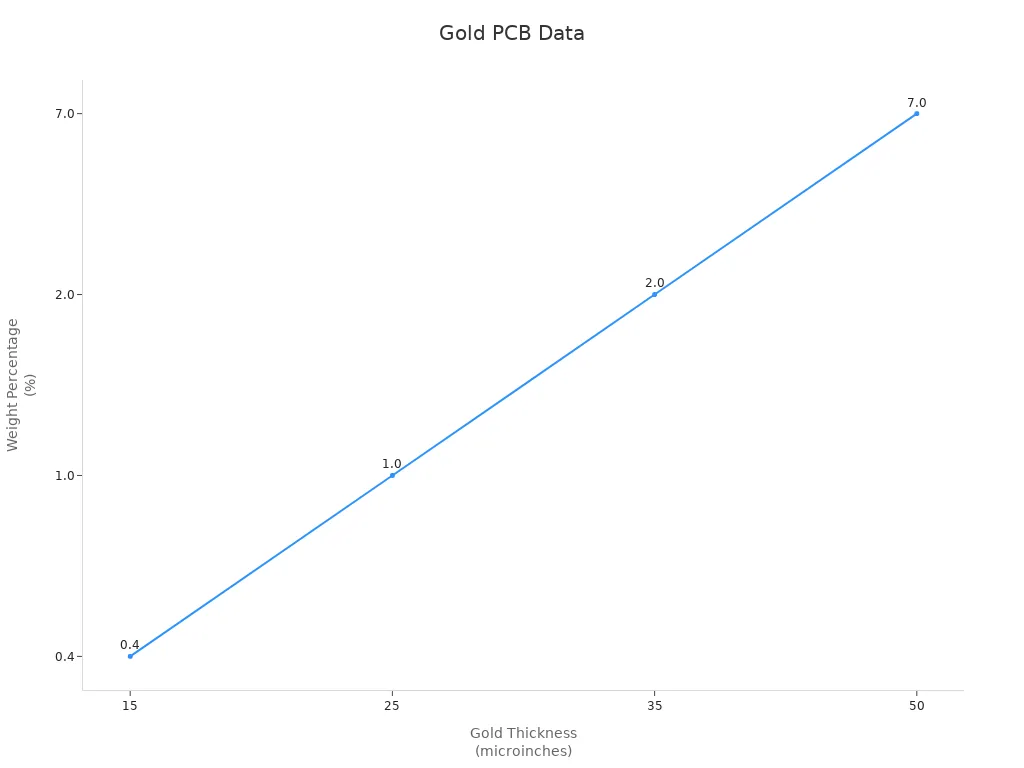
The IPC 6010 series sets minimum thicknesses for nickel and gold at 3.00 and 0.05 microns. Going over these limits without proper planning can hurt the PCB’s reliability. Picking the right gold thickness helps balance strength, soldering, and performance.
Durability and Wear Resistance
Durability of ENIG PCB
ENIG PCBs are strong and work well in many uses. The thin gold layer and nickel barrier stop rust. This makes ENIG a good choice where corrosion might harm the PCB. The nickel layer protects the gold from wearing off during soldering or assembly.
ENIG stays durable over time and resists tarnishing. It keeps good electrical flow. But it may not handle frequent stress as well as hard gold. ENIG can last over 12 months, making it great for uses needing rust resistance and easy soldering.
Durability of Hard Gold PCB
Hard gold PCBs are very durable because of their thick gold layer. This layer, mixed with nickel or cobalt, makes it harder and stronger. Hard gold works best in areas like edge connectors or keyboards that get touched a lot. It keeps working well even after repeated use.
Hard gold is tough but has some downsides. It doesn’t solder as easily as ENIG. The thick gold layer can also cause problems if not managed well. Still, hard gold is the top choice for parts needing to handle heavy wear.
Best Choice for High-Wear Applications
For parts that face a lot of wear, hard gold is best. Its thick gold layer makes it strong and long-lasting. This is perfect for things like edge connectors that get touched often. Hard gold ensures reliable performance in tough conditions.
If your part doesn’t face much stress, ENIG might be better. It costs less and is great for soldering and stopping rust. Knowing the strengths and weaknesses of each finish helps you pick the right one for your needs.
Applications of ENIG and Hard Gold
Common Applications of ENIG PCB
ENIG PCBs are used in many industries because they resist rust and solder well. They are great for tasks needing accuracy and long-lasting performance. Here are some examples:
Consumer Electronics: ENIG PCBs are in gadgets like phones, laptops, and tablets. Their rust resistance helps these devices work longer.
Automotive: ENIG is used in car electronics like engine controls and safety systems. It is strong and reliable for these parts.
Medical Devices: ENIG PCBs are found in medical tools like monitors and diagnostic machines. They are trusted for their precision and dependability.
Aerospace: The aerospace field uses ENIG because it works well in tough conditions and keeps electrical performance steady.
ENIG is a popular choice for industries needing high-quality and reliable PCBs.
Common Applications of Hard Gold PCB
Hard gold PCBs are best for jobs needing strength and wear resistance. Their thick gold layer handles frequent use and stress. Common uses include:
Edge Connectors: Hard gold is perfect for connectors that are plugged in and out often.
Keyboards and Switches: Hard gold plating is great for keyboards and switches that are used a lot.
Military and Defense: Military equipment uses hard gold PCBs because they work well in extreme conditions.
Industrial Equipment: Machines in factories use hard gold PCBs because they last under heavy use.
These uses show how hard gold is great for high-wear situations.
Choosing the Right Finish for Specific PCB Use Cases
The right finish depends on what you need. If you want good soldering, rust resistance, and lower costs, pick ENIG. For example, ENIG is great for electronics and car systems where it ensures reliable performance.
If your PCB will face lots of touching or stress, hard gold is better. Its thick gold layer makes it very strong, perfect for connectors and other parts that wear out easily.
Think about the pros and cons of each finish. ENIG is affordable and solders well, while hard gold is stronger and lasts longer. Choose the one that fits your project’s needs best.
Process Complexity and Manufacturing
ENIG PCB Manufacturing Process
Making ENIG PCBs involves several careful steps. First, the surface is cleaned and prepared. This helps the nickel stick well to the copper. Then, the board goes into a bath where nickel is added using a chemical process. The nickel layer makes the PCB strong and durable. Finally, a thin gold layer is added. This gold layer stops rust and makes soldering easier.
This process has many benefits. ENIG is great for soldering and resists rust. It also creates a smooth surface, improving how the PCB works. But the process needs to be done carefully to avoid mistakes.
Hard Gold PCB Manufacturing Process
Making hard gold PCBs is harder because of the thick gold layer. First, the surface is cleaned and prepared. Then, nickel is added to make a strong base. After that, the surface is treated to get ready for gold plating. A thick gold layer is then added using electroplating. This makes the PCB strong and long-lasting. Finally, the board is checked to ensure it meets quality standards.
This process makes a very durable finish but has challenges. It costs more and needs skilled workers. Even with these issues, hard gold is the best choice for parts that face a lot of wear and tear.
Manufacturing Steps | Challenges in Making Hard Gold PCBs |
|---|---|
Cleaning and Preparing the Surface | Higher Costs |
Adding Nickel | More Complicated Process |
Treating the Surface | Needs Skilled Workers |
Adding Gold | N/A |
Final Quality Check | N/A |
Comparing Process Complexity Between ENIG and Hard Gold
ENIG is easier and cheaper to make than hard gold. Its process uses simple steps like adding nickel and gold through immersion. Hard gold, however, needs electroplating, which is more complex and costly. But this extra work makes hard gold stronger and better for heavy use.
If you want something affordable and easy to make, choose ENIG. If you need a tough finish for parts that get used a lot, hard gold is worth the extra cost and effort.
Cost Analysis
Cost of ENIG PCB
ENIG PCBs are great for soldering and stopping rust. But, they cost more because of the gold and nickel layers. The process also uses chemical baths and careful steps, which add to the price. Even though it’s expensive, ENIG is popular for its reliability and ability to work with tiny parts.
Compared to other finishes, ENIG costs more. For example, HASL (Hot Air Solder Leveling) is cheaper but not as smooth or precise. ENIG gives a flat surface, perfect for high-quality designs. While it costs more upfront, its long-term benefits make it worth the price.
Cost of Hard Gold PCB
Hard gold PCBs are one of the most expensive finishes. This is because they use a thick gold layer added by electroplating. The process needs more gold and skilled workers, raising the cost. Its strength and ability to handle wear make it a top choice for things like connectors and switches.
Hard gold costs more than ENIG, but it lasts longer. For example, military and factory equipment use hard gold because it handles tough conditions. Even though it’s pricey, its long life and strong performance make it a smart buy for certain uses.
Surface Finish | Description | Cost Implications |
|---|---|---|
ENIG | Great for soldering and rust resistance, works with small parts. | Costs more due to gold and nickel. |
Hard Gold | Very strong and handles wear, good for tough uses. | High cost because of thick gold and hard process. |
Value for Money: ENIG vs Hard Gold
Choosing between ENIG and hard gold depends on your needs. ENIG is cheaper and works well for most uses. It’s a good pick for electronics, cars, and medical tools because it’s affordable and reliable.
Hard gold costs more but is stronger and lasts longer. If your PCB will face heavy use, hard gold is better. For example, connectors and factory machines benefit from its tough finish.
In the end, your choice should match your needs. ENIG is a budget-friendly option for general use. Hard gold is worth it for parts that need to handle wear. Knowing the pros of each finish helps you decide what’s best for your project.
Soldering Performance
Solderability of ENIG PCB
ENIG PCBs are great for soldering because of their smooth surface. The thin gold layer helps electricity flow well, making strong solder joints. This is why ENIG is often used when precise soldering is needed. The nickel layer under the gold stops copper from mixing in, keeping the solder joint strong over time.
ENIG works well for designs with many small parts. Its flat surface helps parts sit evenly, lowering the chance of soldering mistakes. But ENIG has some downsides. If the process isn’t done right, “black pad” problems can happen. This can weaken the solder joints. Even with this issue, ENIG is still a trusted choice for most soldering tasks.
Solderability of Hard Gold PCB
Hard gold PCBs are not as good for soldering as ENIG. The thick gold layer, while strong, can cause problems during soldering. Too much gold can mix into the solder, making the joints brittle. This problem, called “gold embrittlement,” can hurt how well the PCB works.
Hard gold is better for parts that don’t need much soldering, like edge connectors. It conducts electricity well but isn’t as easy to solder as ENIG. If you need strength more than easy soldering, hard gold can still be a good choice.
Which Finish is Better for PCB Assembly?
For PCB assembly, ENIG is the better option for soldering. Its smooth surface and thin gold layer make strong and reliable connections. This is why it’s great for projects needing high assembly success rates.
Experts study soldering to find hidden problems like weak joints or heat damage. This helps improve designs and makes PCBs work better in the long run.
Hard gold is very durable but not as good for soldering. Its thick gold layer can make soldering harder, so it’s not ideal for projects needing lots of assembly. If your project needs frequent soldering, ENIG is the best choice. But for parts that face heavy use, hard gold’s strength makes it worth considering.
When picking between ENIG and Hard Gold, think about your needs. ENIG has a smooth surface, great for small, detailed parts. It is cheaper and works well for making high-quality PCBs. Hard Gold has a thicker layer, making it last longer in tough jobs like edge connectors. But its process is harder and costs more.
Weigh the pros and cons of strength, cost, and use. ENIG is good for most regular tasks. Hard Gold is better for tough conditions. Choose the one that fits your project’s goals and budget best.
FAQ
What makes ENIG and Hard Gold different?
ENIG has a thin gold layer for easy soldering and rust protection. Hard Gold has a thicker layer, making it stronger for parts like connectors. Pick based on what your PCB needs.
Can the finish change how long a PCB lasts?
Yes, the finish affects lifespan. ENIG stops rust, helping PCBs last longer in normal use. Hard Gold is tougher and works well in areas with heavy wear. Choose based on how your PCB will be used.
Is ENIG the same as electroless nickel electroless palladium immersion gold?
No, they are not the same. ENIG uses nickel and gold layers. The other finish adds palladium for better performance. It’s used for advanced projects needing high reliability.
Which finish costs less for making many PCBs?
ENIG costs less for large production because it uses less gold. Its process is simpler too. Hard Gold costs more due to its thick gold layer and harder process.
How do I pick the right finish for my PCB?
Think about how you’ll use the PCB. ENIG is great for general use with good soldering and rust resistance. Hard Gold is better for parts like connectors that face heavy use. Look at your budget and needs before choosing.