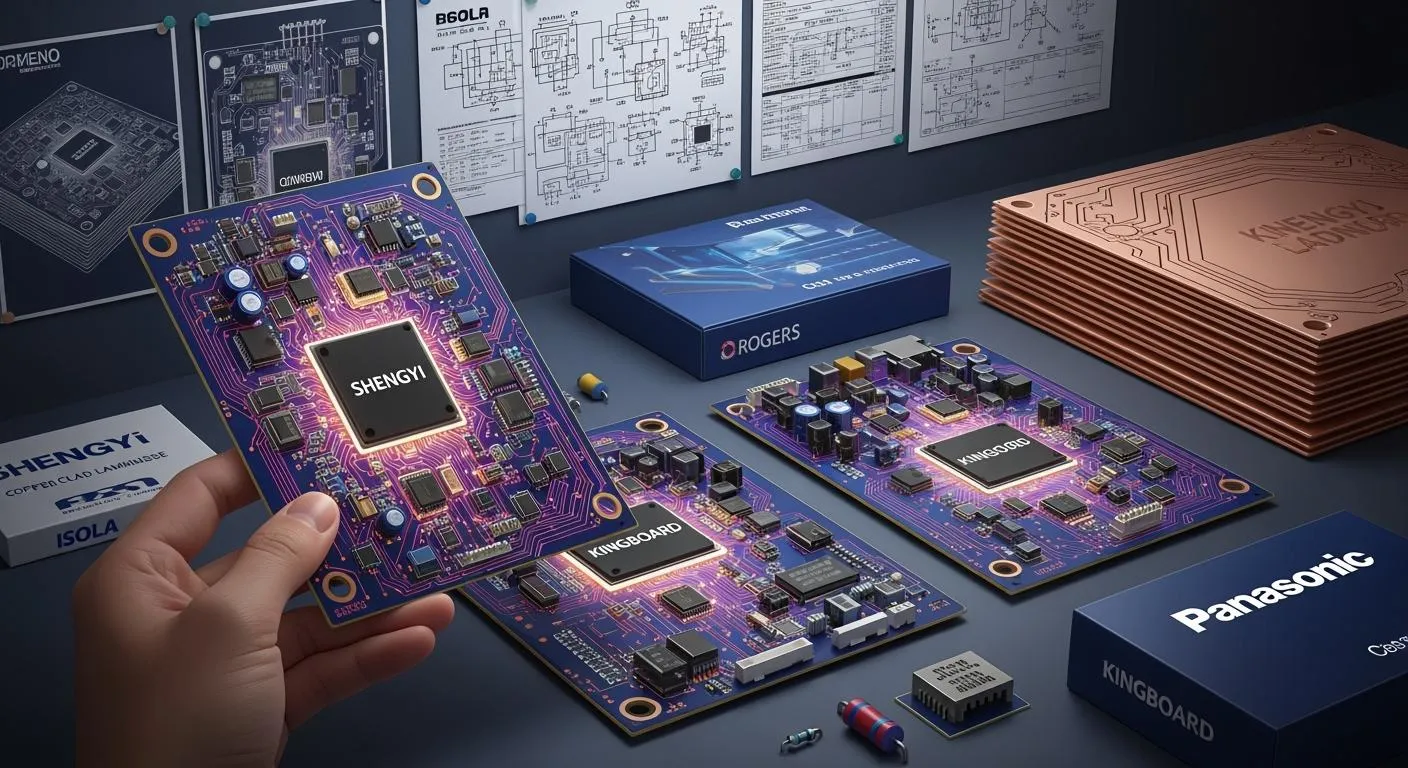
You can find major PCB brands like Isola Group, Rogers Corporation, Panasonic, Shengyi Technology, and ITEQ. They make important products for printed circuit boards. Copper clad laminate is very important in making circuits and electronics. You might use FR-4, CEM-1, CEM-3, polyimide flexible copper clad laminates, Teflon, and composite copper clad laminate for different jobs. These laminates help with heat, electricity, strong power, and high heat. Rigid copper clad laminates, flexible copper clad laminates, and copper clad laminates with metal base give you choices for fast speed, high frequency, and high temperature. You get strong materials and special high-frequency materials for good results in fast digital materials.
Key Takeaways
Copper clad laminate is very important for printed circuit boards. It gives the board strength and helps electricity flow.
There are different kinds of laminates, like FR-4 and polyimide. Each type is used for special jobs in electronics, like high-frequency uses.
Picking the right laminate makes your circuits work better and last longer. You should think about things like how well it handles heat and how strong it is.
Big brands like Isola, Rogers, and Panasonic make special products for many uses. These brands help make sure your boards are reliable and good quality.
You should always look for certifications like UL94 V-0 and RoHS. These show your PCB materials are safe and follow rules.
Copper Clad Laminate Overview
What Is Copper Clad Laminate?
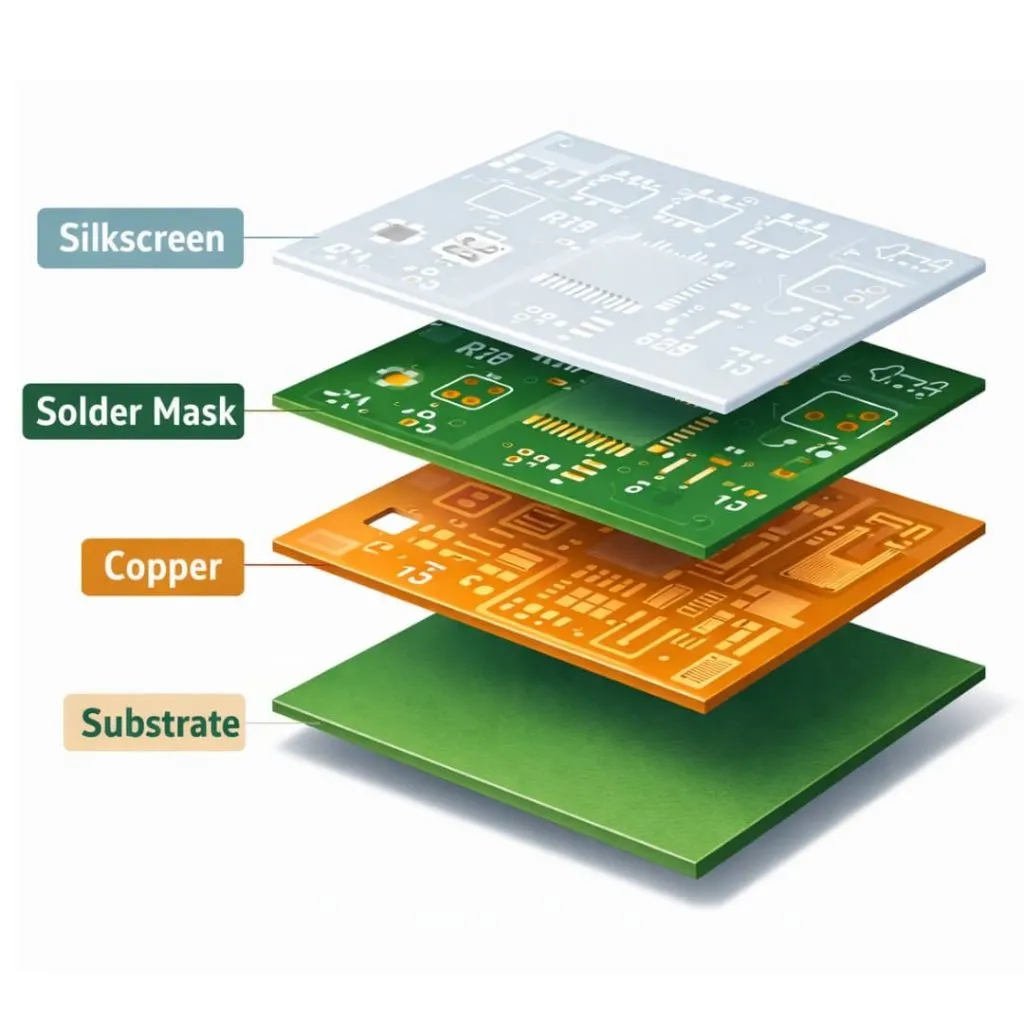
Copper clad laminate is the main part of a pcb. It has a copper foil layer on a base. The base is made from resin and something strong. The resin can be epoxy, phenolic, polyester, or polyimide. The strong part is usually glass fabric or special paper. To make it, people get the resin ready first. Then they dip the strong part in the resin. Next, they press everything together. They also clean, grind, and put the copper foil on the base. After cutting and checking, you get a strong laminate for electronics.
Tip: Polyimide and Teflon work better for fast and high-frequency circuits.
Types of Copper Clad Laminates
There are different types of copper clad laminate for your pcb. Each type uses its own materials and has special features. Here is a table to help you compare:
Material | Thermal Stability | Mechanical Properties | Electrical Insulation | Cost-Effectiveness |
|---|---|---|---|---|
FR-4 | Tg ~ 130-140°C | Good | Excellent | Moderate |
CEM-3 | Lower than FR-4 | Good | Excellent | More cost-effective |
Polyimide | Tg > 250°C | Excellent | Excellent | High |
Teflon (PTFE) | N/A | N/A | Low Dk, Low Df | N/A |
FR-4 and CEM-3 are used for most normal pcb jobs. Polyimide and Teflon are best for fast and high-frequency electronics. Flexible laminates let you make circuits that can bend or twist.
Role in PCB and Circuit Manufacturing
Copper clad laminate is very important for every pcb and circuit. Its materials give the board strength, insulation, and help electricity move. The copper layer lets signals travel quickly with little loss. The base keeps your electronics safe from heat and chemicals. High-performance materials are used in advanced devices. These devices need to work fast and handle high frequencies. Good laminates help your pcb last longer and work well in hard places.
Here are some important properties you should know:
Property | Description |
|---|---|
Electrical Conductivity | The copper layer lets electricity move easily for signals. |
Thermal Conductivity | Copper helps get rid of heat made during use. |
Mechanical Strength | The fiberglass base keeps the pcb strong and safe. |
Chemical Resistance | It stands up well to chemicals, so it works in tough places. |
Thermal Stability | It stays strong even when it gets very hot. |
Flexibility | It can bend, so it works where the pcb might move. |
Surface Finish | A smooth surface gives the pcb a nice finish. |
You should always pick the right laminate and materials for your circuit. This helps your electronics work well and last a long time.
Major PCB Copper Clad Laminate Brands

Isola Group
Isola Group is a top company for pcb materials. They make copper clad laminate for advanced circuits. Their main product is FR408HR resin. This resin can handle high heat, with a glass transition temperature over 230°C. It gives strong strength and works well when hot. Isola uses woven glass fabric to make the laminate stronger. This also helps with dielectric properties. The copper foil on both sides lets signals move fast and keeps power steady. Pre-preg layers stick the copper and core together. This makes the laminate stable. You can use Isola’s materials in telecom, aerospace, and fast computers. These areas need good reliability, heat control, and signal quality.
FR408HR resin for high heat
Woven glass fabric for strength and dielectric properties
Thin copper foil for signals and power
Pre-preg layers for bonding and stability
Low dielectric loss and steady dielectric constant
Used in telecom, aerospace, and computers
Rogers Corporation
Rogers Corporation is known for advanced materials in RF and microwave pcb. You can pick from many products for high-frequency circuits. Rogers 4350B, Rogers 3000, and Rogers 5880 are popular. These laminates have low dielectric constants and low loss tangent. They also have high thermal conductivity. Rogers materials are used in fast digital circuits, car radar, and satellites.
Product | Key Features | Applications |
|---|---|---|
Rogers 4350B | Dielectric Constant: ~3.48 | High-Speed Digital Circuits |
Rogers 3000 | Low Dielectric Constant | RF Circuit Boards |
Rogers 5880 | Excellent Electrical Characteristics | Advanced Telecommunications Equipment |
Panasonic Electronic Materials
Panasonic Electronic Materials makes many types of copper clad laminate. You can use them in cars, planes, and factories. Panasonic focuses on reliable products and advanced resin chemistries. Their MEGTRON line helps with AI and social problems. Panasonic works on new ideas and low CTE substrates for stable multilayers.
Product Lines | Market Strengths |
|---|---|
Laminates for automotive | High-reliability segment |
Laminates for aerospace | Advanced resin chemistries |
Laminates for industrial automation | Low CTE substrates for multilayer stability |
Focus on new ideas in electronic materials
Invests in MEGTRON product line
Supports AI and social needs
Shengyi Technology
Shengyi Technology is a big pcb material brand around the world. You will see their copper clad laminate in many electronics. Shengyi has about 10% of the global pcb market. They may reach 10.5% soon. The company spends a lot on research and development. They spent RMB 1.5 billion in 2022 and RMB 1.8 billion in 2023. Shengyi leads in high-frequency and high-density pcb innovation. Only a few companies have similar patents.

10% global market share, going up to 10.5%
Strong spending on R&D and digital marketing
High customer engagement and EBITDA margin
Focus on high-frequency and high-density pcb
ITEQ Corporation
ITEQ Corporation makes copper clad laminate that balances cost and performance. You can use their very-low-profile copper for fast digital jobs. ITEQ has a strong FR-4 base and is big in Taiwan and China. They are growing in North America, mostly for data centers. ITEQ controls smooth-copper sticking, which helps reliability and performance. Their products make sure vias work well in complex designs.
Key Differentiator | Description |
|---|---|
Cost and Performance | Balances cost and performance well. |
Very-Low-Profile Copper Interfaces | Made for high-speed digital jobs. |
Competitive FR-4 Base | Keeps a strong base in the market. |
Regional Reach | Biggest in Taiwan/China, growing in North America for data centers. |
Smooth-Copper Adhesion Control | Makes products more reliable and better. |
Via Reliability in Sequential Lamination | Makes products last longer in tough designs. |
Nan Ya Plastics
Nan Ya Plastics is a big supplier of copper clad laminate for pcb. You will find their materials in many electronics and circuit boards. Nan Ya makes high-quality laminates that meet strict rules. Their products work for both rigid and flexible pcb. Nan Ya’s materials give good insulation, strength, and heat stability.
Kingboard
Kingboard is one of the biggest makers of copper clad laminate. You can use their materials in many pcb and circuit jobs. Kingboard sells laminates for electronics, cars, and factories. The company is known for good quality and making a lot. Kingboard’s materials help you build strong and long-lasting electronics.
Doosan
Doosan makes advanced materials for high-end electronics. You will see their copper clad laminate in phones, 5G networks, and network boards. Doosan matches its new ideas with the need for small electronics and 5G growth. The company focuses on high-end materials for phones and semiconductors.
Evidence | Description |
|---|---|
Advanced Materials | Made for high-end electronics like phones and 5G. |
Market Alignment | Fits the need for small electronics and 5G. |
Product Focus | Copper-clad laminates for network boards and top phone materials. |
Goldenmax
Goldenmax is an important company in the copper clad laminate market. You will find their materials in many pcb and circuit designs. Goldenmax sells laminates for electronics, computers, and communication devices. The company works on quality and new ideas, helping you with modern electronics.
AGC
AGC makes advanced copper clad laminate for high-performance pcb. You can use their materials in cars, factories, and communication. AGC focuses on new ideas and reliability. Their laminates support high-frequency and fast circuit designs.
LG Chem
LG Chem offers many types of copper clad laminate for high-performance electronics. Their materials keep the same thickness, even on big pieces. LG Chem makes sure patterns stay clear, which is important for advanced circuits. You get high strength and elasticity, which stops cracks when things get hot and cold. LG Chem’s materials do not soak up much water, so your electronics last longer. Their laminates work with most factory equipment.
Feature | Description |
|---|---|
Uniform Thickness | Stays the same thickness on big pieces. |
Pattern Fidelity | Keeps patterns clear for advanced electronics. |
High Strength | Gives high strength for tough jobs. |
Elasticity | Bends without cracking when hot or cold. |
Low Moisture Absorption | Takes in little water, so electronics last longer. |
Compatibility | Works with most lamination machines. |
Taiwan Union Technology Corporation
Taiwan Union Technology Corporation (TUC) is a world leader in copper clad laminate. The Asia-Pacific area, especially Taiwan and China, leads the special copper clad laminate market. TUC’s main products are TUC862, TUC893, and TU-883. You will find these in many electronics and circuit boards. TUC’s laminates help you get high performance and reliability in your pcb.
TUC862
TUC893
TU-883
Note: When you pick a copper clad laminate brand, think about your circuit’s needs, how the material works, and the company’s reputation. Each brand has special strengths for different electronics and pcb jobs.
Flagship Products and Material Types
FR-4 and Standard Laminates
FR-4 is the most used copper clad laminate in pcb. It has epoxy resin and woven glass fabric as its base. This makes the board strong and reliable for many electronics. FR-4 works for both single-layer and multi-layer pcb. It gives good strength and steady conductivity. You can use it in computers, home gadgets, and factory controls.
Big companies like Isola Group, ITEQ, and Kingboard make top FR-4 products. These laminates follow strict safety and green rules. The table below shows the main technical details and certifications:
Specification/Certification | Description |
|---|---|
RoHS Compliance | Limits dangerous stuff in electronics to keep them safe. |
REACH Compliance | Controls chemicals in the EU and needs full reports. |
IEC 61249-2-21 | Lists rules for halogen-free laminates in PCB making. |
UL94 V-0 Rating | Shows flame resistance, stops burning fast with no drips. |
Standard FR-4 Properties | Tg is 130°C to 150°C, Dk is about 4.5. |
High-Tg FR-4 Properties | Tg is 170°C or more, better heat and strength. |
Halogen-Free FR-4 | Follows RoHS and WEEE, uses safe flame blockers. |
Low-Loss FR-4 | Made for fast digital circuits, keeps signals strong. |
CEM-1 and CEM-3 laminates are cheaper choices for pcb. They use paper or glass-mat bases with epoxy. These work well for simple boards and home electronics. They give good insulation and are easy to use.
Tip: Always check for UL94 V-0 and RoHS when picking standard laminates. These help you make safe and strong electronics.
High-Frequency and RF Laminates
For high-speed or high-frequency circuits, you need special copper-clad laminates. These materials have low dielectric loss and steady electrical features. Rogers Corporation is a leader with its RO4000 and RT/duroid lines. You can use these for 5G, car radar, and advanced communication.
Here is a table to compare popular high-frequency and RF laminates:
Material | Manufacturer | Dk Range | Df Range | Key Features |
|---|---|---|---|---|
Rogers RO4000 Series | Rogers Corporation | 3.38–6.15 | 0.002–0.003 | Great electrical work, easy to make, good for mid-frequency RF jobs |
RT/duroid Series | Rogers Corporation | Varies | Very low | Top laminate with very low loss, used in space, military, and high-frequency microwave jobs |
PTFE / Teflon | Various suppliers | 2.1–2.5 | Extremely low | Best signal quality, very low loss, but hard to make and costs more |
Taconic Laminates | Taconic | 2.2–10 | 0.0009–0.0037 | Customizable, low-loss, fits many RF and microwave needs |
F4B / F4BM Series | Chinese brands | 2.2–4.5 | 0.001–0.005 | Cheaper option for less tough high-frequency jobs, good for the price |
You will see these in 5G towers, car radar, and satellite links. Rogers RO3000 and Duroid lines work well at 28 GHz, 39 GHz, and higher. These frequencies are key for new wireless and radar tech. PTFE and Teflon laminates give the best signals, but cost more and are harder to use.
Note: For car radar at 24 GHz or 77 GHz, use low-loss, steady materials like Rogers RO3003 or RO3006. These keep your circuit working during heat changes and shaking.
Flexible Copper Clad Laminates
Flexible copper clad laminates let you make circuits that bend or twist. You can use them in many new electronics. Polyimide flexible copper clad laminates handle high heat and are strong. They use polyimide resin and thin copper foil. This gives you a light and tough choice for small spaces.
You will find flexible copper clad laminates in:
Phones, tablets, and wearables. These let you make thin, bendy devices.
Car electronics, like dashboards and sensors. Flexible laminates take heat and bending.
Medical devices, such as wearable ECG monitors. You can make comfy, portable health tools.
Communication gear, like 5G towers and antennas. Flexible laminates carry high-frequency signals and keep power steady.
Rigid copper clad laminates are best for flat, strong boards. Flexible copper clad laminates are for parts that move or fold. Polyimide flexible copper clad laminates give the best mix of bending, heat resistance, and insulation. You can trust these for high-performance electronics.
Tip: Always pick the right laminate for your job. Flexible copper clad laminates are best for moving parts. Rigid copper clad laminates are best for strong, flat boards.
You can pick from many big pcb brands for flexible copper clad laminates. Panasonic, Doosan, and LG Chem make good products for home and factory electronics. These materials keep your circuits working even in tough spots.
Applications in PCB and Circuit Design
Performance and Reliability
You want your pcb to work well for a long time. The materials you pick are very important. Copper clad laminate helps your electronics stay cool and strong. It also helps signals move without problems. If you choose the right materials, your board will not get too hot or lose signal.
Picking the right substrate helps with heat, strength, and electricity.
The copper thickness lets enough current flow but does not make the board heavy or costly.
Signal integrity tests check for low dielectric loss. This is needed for high-frequency circuits.
Thermal tests show how well your board removes heat in powerful designs.
Thermal conductivity tells how well a material moves heat. If you use a laminate with high thermal conductivity, your pcb can cool down better. This keeps your electronics safe and working right. But, better heat transfer can cost more, especially with epoxy-based laminates.
You can see how different materials work in hard conditions. For example, Taiyo THP-100DX1 and DuPont CB100 have different glass transition temperatures and expansion rates. These numbers show how well the laminate handles heat and stress.
Material | Tg (°C) | CTE (ppm/°C) | Elastic Modulus Ratio |
|---|---|---|---|
Taiyo THP-100DX1 | 155 | 81 | 1 |
DuPont CB100 | 115 | 47.2 | 3 |
Industry Certifications
Certifications help you know your materials are safe and reliable. You should look for laminates that follow strict rules. These rules make sure your pcb works in tough places and lasts longer.
IPC Requirement | Minimum Elongation (%) | Calculated Strain (%) | Risk Assessment |
|---|---|---|---|
IPC-6012B Class 3/A | 18 | ~2 to 4.6 | No risk of infant mortality |
Tests show that good laminates last many cycles without breaking. For example, FEA models and real tests found some materials lasted over 200 cycles before wearing out. These tests look for problems like barrel cracks and thermal fatigue.
Tip: Always check for IPC-6012B Class 3/A and UL94 V-0 ratings when picking copper clad laminate. These certifications mean your materials will work well and keep your electronics safe.
You can trust certified epoxy laminates to give strong and reliable performance in your circuit designs.
How to Choose Copper Clad Laminate for PCB
Key Selection Criteria
When you choose copper clad laminate, you should think about a few key things. These things help your board work well and last longer. Here are the main things to look at:
Dielectric constant: This helps stop signal loss in fast circuits.
Thermal conductivity: Good heat flow keeps your board cool and safe.
Flame retardancy: This makes your board safer from fire.
Mechanical strength: Strong materials help your board handle stress.
Dimensional stability: Stable materials keep their shape when things change.
Chemical resistance: Some materials can handle chemicals used in making boards.
Cost: You need to find a good balance between price and quality.
Environmental considerations: Pick materials that follow RoHS and stay stable in many places.
Tip: Always make sure your materials meet safety and environmental rules before you start your design.
Matching Material to Circuit Application
You should pick materials that fit what your circuit needs. The table below shows how different features matter for your design:
Property | Description | Importance in Design |
|---|---|---|
Dielectric Constant | Changes how signals move and how you control impedance. | Needed for high-speed designs. |
Glass Transition Temperature (Tg) | Shows when the resin gets soft. | Higher Tg means better stability during assembly. |
Copper Foil Type and Adhesion | Affects how well the copper stays on the board. | Strong bonding stops layers from peeling off. |
Thickness and Dimensional Stability | Keeps layers lined up and signals steady. | Critical for boards with many layers. |
You need to match signal speed and dielectric properties for fast circuits. Pick the right thickness and order of layers for your board. Good thermal conductivity helps power circuits work better. Always choose materials that have the right flame retardancy and chemical resistance. Tell your manufacturer what you need, and ask them to check if the materials work for their process.
Note: You get the best results when you talk with your manufacturer early and tell them what materials you need.
Each brand has its own special strengths in copper clad laminate. The table below shows what makes them different:
Criteria | Brand Examples |
|---|---|
Product Quality | Good laminates help stop problems and failures. |
Price Competitiveness | Nanya PCB, Shengyi Technology |
Technological Innovation | Park Electrochemical, AT&S |
Supply Chain Reliability | Isola, Kingboard |
Environmental Compliance | Shengyi, Young Poong |
When picking materials for your pcb, keep these tips in mind: Check if the materials are strong and conduct electricity well. Make sure they fit your design rules. Choose materials that work for how you want your board to perform. Use adhesiveless laminates if you need lots of tiny parts close together. Pick polyimide materials if your board will get very hot.
Always look at datasheets and ask experts before you decide.
FAQ
What is the main role of copper clad laminate in a pcb?
Copper clad laminate is the base of a pcb. It makes the board strong. It helps signals move between parts. The copper layer connects everything easily.
How do you choose the right materials for high-frequency circuits?
Pick materials with low dielectric loss. Make sure they have steady electrical properties. These help signals stay clear and fast in high-frequency jobs.
Why do flexible materials matter in modern electronics?
Flexible materials let devices bend or twist. You can use them in wearables and medical tools. They also work in car electronics. These materials make products lighter and stronger.
What certifications should you check for pcb materials?
Check for UL94 V-0 and RoHS certifications. These show the materials are safe. They also meet important rules for electronics.
Can you use the same materials for all pcb applications?
No, you cannot use the same for all jobs. Each job needs special materials. Match the material’s strength, heat resistance, and flexibility to your design.