
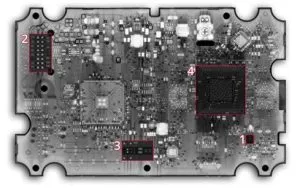
3D Imaging & PCB X-Ray Tomography for Multi-Layer PCB
You cannot see inside multilayer printed circuit boards with your eyes. X-ray 3D imaging reveals hidden traces and vias that persist invisible to cameras and microscopes. Traditional reverse engineering needs destructive layer separation. You dissolve layers with chemicals, abolishing the original board permanently. Manual de-layering takes more time (weeks) and leaves you with nothing to verify your work against. 3D Imaging X-ray tomography provides non-destructive analysis of all internal Printed Circuit Board structures. The technology advanced from simple 2D X-ray inspection in early 2000s to sophisticated 3D CT scanning systems available in 2026. You preserve the original board completely intact. You see all layers simultaneously with micron-level resolution. Analysis that took weeks now completes in hours with better accuracy. This guide describes how X-ray imaging works for printed circuit board analysis. You will learn the fundamentals of technology, understand the 3D imaging process, know when to use X-ray versus conventional

5G Rugged Smartphone Development
A Technical Case Study from Concept to Mass Production Wonderful PCB | 2026 Edition | Engineering Intelligence Series Most 5G rugged smartphone failures don’t start on a job site. They start in a boardroom when someone says ‘we’ll just add a tough case.’ What follows is a hardware development record from Wonderful PCB — covering real failure data, RF engineering traps, procurement conflicts, and the three parts of a rugged 5G program that consistently go wrong: connectors, antenna detuning, and certification re-spins. Project Background & Client Requirements Why Standard Phones Keep Failing in the Field Construction sites, oil rigs, and mining operations share the same verdict on consumer phones: 3 to 6 months, then dead. The failure modes are consistent: Now layer 5G on top of that. Industrial clients want 5G SA/NSA for low-latency machine communication, IoT, and live video. So the hardware brief becomes: design something that handles all
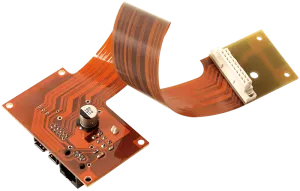
Flexible PCB & Rigid-Flex PCB Cloning: Complete Reverse Engineering Guide
Introduction Flexible printed circuit boards (FPC) and Rigid-Flex printed circuit boards demonstrate advanced circuit board technology that twists, bends and folds to fit unique product designs. You find these bendable circuit boards everywhere in modern electronics, smartphones, wearables, medical devices, and automotive systems. Their ability to adapt to three-dimensional shapes and survive millions of flex cycles makes them irreplaceable in compact, high-reliability applications. Companies need PCB cloning services for several significant reasons. You lost your original design files when a key engineer quit. Your OEM discontinued production, leaving you without replacement boards. Supply chain issues forced you to find alternative manufacturing sources. You need to redesign or upgrade legacy products while maintaining compatibility. These situations demand precise flexible PCB cloning to keep your products in production. Cloning flexible and rigid-flex PCBs needs specialized reverse engineering skills far beyond standard rigid board cloning. The unique materials, complex layer structures, and critical
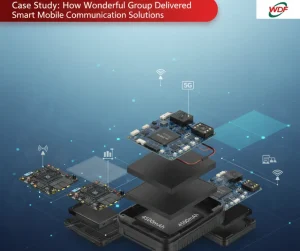
Case Study: How Wonderful Group Delivered Smart Mobile Communication Solutions
A project to build a high-end mobile communication device often feels like a giant puzzle. There are so many tiny pieces that have to fit together. If one part is wrong, the whole thing fails. Wonderful Group took on this challenge and finished a massive project for smart communication equipment. They did not just provide parts. They provided a full path from a simple idea to a finished, working product. This case study looks at how they used their ten years of experience to make this a success. First, you need to see the big picture. Wonderful Group acted as a smart communication equipment solution provider. They did not work alone. They used their status as an official authorized agent for MediaTek to get the best chips. This project focused on using the Dimensity series chips to create a range of powerful devices. Because the project is now complete, we
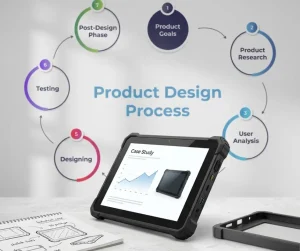
Industrial Tablet PC Case Study
During 2025, the demand for rugged mobile computing has surged as industries digitize their floor operations. Industrial tablets now serve as the backbone for smart warehouses and automated factories. These devices must operate where standard consumer electronics fail. Experts work hard to ensure these tablets withstand extreme vibration, dust, and moisture while maintaining a stable supply chain for long-term deployments. With an average lifecycle of five to seven years, industrial tablets require a hardware foundation that prioritizes longevity over trendy aesthetics. Businesses hope these robust systems will reduce downtime and lower the total cost of ownership. Wonderful PCB provides the specialized engineering required to bridge the gap between complex PCB board design and survival in the field. CUSTOMER CHALLENGES To begin, the client faced significant hurdles when developing their latest rugged tablet. Most off-the-shelf solutions lacked the specific interface density required for modern automation. First, of course, the device needed
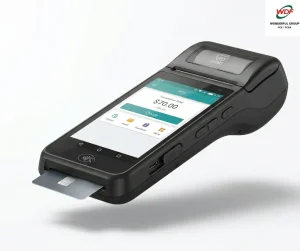
Design & Manufacturing of a Smart POS Terminal
From blank page to 50,000 deployed units — in 14 months. Product Handheld Android Smart POS Terminal Division WonderfulPCB — Product Engineering Scope ID, Hardware, PCB, DFM, QC, Mass Production Status Commercially Deployed — 3 Markets 1. Executive Summary 50,000 units. Three markets. PCI-PTS 6.x cleared on the first submission. That is where smart POS terminal project ended up — but the starting point was considerably messier. WonderfulPCB was brought in as a full engineering partner, not just a board house. The scope covered everything: market research, industrial design, hardware architecture, PCB design, DFM optimization, reliability testing, and mass production ramp. The product? A handheld Android POS terminal with a 5.5-inch touchscreen, 58mm thermal printer, EMV chip and NFC card reader, 5,200mAh battery, and IP54 protection — all in a chassis under 380 grams. The client was a fintech company deploying to street-level retailers and restaurant staff in Southeast Asia,
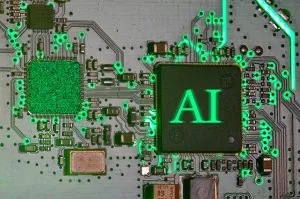
AI Powered PCB Reverse Engineering: Automated Schematic Generation
You spend weeks manually tracing printed circuit board layouts. Artificial intelligence can do it in hours or in less time. Manual PCB reverse engineering is time-consuming, error-prone, and needs expert skills. AI and machine learning automate schematic generation, component detection, and trace routing analysis. You reduce time by 70%, improve accuracy to 90-95%, and lower costs significantly. This guide demonstrates how AI powered PCB automates PCB reverse engineering. You will learn which machine learning techniques work best, when to use AI versus manual methods, and how to implement AI tools in your workflow. What is AI-Powered PCB Reverse Engineering? You use artificial intelligence to automatically evaluate PCB images and generate complete schematics. Machine learning algorithms discover components, identify traces, locate vias, and map electrical connections without manual interference. Neural networks trained on millions of PCB layouts identify patterns and process high-resolution photographs or scans of your PCB. Traditional reverse

Wonderful PCB Is Back to Work After the Spring Festival Holiday
After a joyful and refreshing Chinese New Year holiday, Wonderful PCB is officially back to work! On the first working day, our team returned with energy, smiles, and strong motivation for the year ahead. To celebrate the reopening, we held a simple but meaningful “Back to Work” ceremony at our factory. It was a great moment for everyone to reconnect, share good wishes, and start the new year with confidence. A Fresh Start for 2026 The Spring Festival is not only a time for family and celebration, but also a time to recharge. Now, our production lines are running again, our engineering team is fully ready, and our sales team is back online to support customers worldwide. From PCB manufacturing to PCBA assembly, component sourcing, and electronic design services, all departments are operating normally. We are excited to: Watch Our Back-to-Work Video We have prepared a short video to share
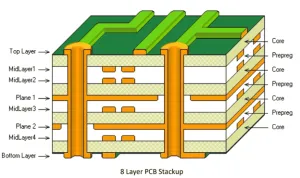
8-Layer PCB Design Guide: Stack-up, Applications, and Cost Analysis
When your electronic design pushes beyond the limits of 6-layer PCBs, you need 8-layer printed circuit boards. An 8-layer PCB comprises of eight conductive copper layers separated by dielectric materials, providing higher signal integrity, electromagnetic shielding and power distribution. These multilayer boards are important for high-performance computing, telecommunications, advanced automotive systems, and aerospace applications where 6-layer designs cannot deliver the required performance. This comprehensive guide facilitates you understand when to enhance from 6-layer to 8-layer PCBs, how to optimize your stack-up configuration, design for high-speed signals, control costs, and ensure manufacturing quality. Whether you design servers, 5G infrastructure, or autonomous vehicle controllers, this article provides the technical knowledge you need. What is an 8-Layer PCB and When Do You Need It? An 8-layer PCB is made up of eight conductive copper layers stacked with insulating dielectric materials between them. You organize these layers as signal layers, ground planes, and power

Comparing hardware and software reverse engineering methods
Compare hardware and software reverse engineering methods, including key techniques, challenges, and use cases to help you select the best approach.
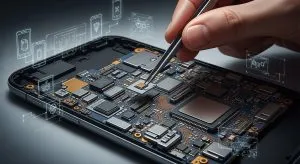
Expert Tips for Designing Mobile PCBs for Future Smartphones
Master mobile PCB design for future smartphones with expert tips on layout, materials, signal integrity, and manufacturability in 2026.

Identifying parts and components on a mobile PCB
Identifying parts on a mobile PCB is easier with visual cues, tools, and schematics. Spot key components and avoid mistakes with these practical tips.

Top mobile PCB manufacturers and suppliers in 2026
See the top mobile PCB manufacturers and suppliers in 2026, compare their strengths, certifications, and services to find the best fit for your project.

Mobile PCB Materials Compared for Performance and Reliability
Compare mobile PCB materials like FR-4, Rogers, PTFE, and ceramic to see which offers the best performance, reliability, and value for mobile devices.
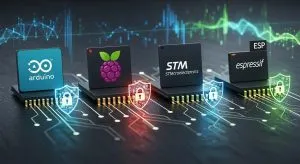
Top Microcontroller Brands and Their Security Features Compared
Compare microcontroller security features, certifications, and vendor support across top brands to choose the best protection for your devices.
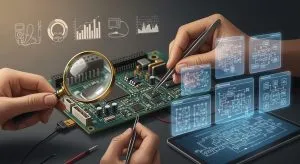
Top PCB Reverse Engineering Services and Tools Compared
Compare leading PCB reverse engineering services and tools for features, accuracy, cost, and support to choose the best solution for your project.

Top 10 hardware reverse engineering tools for 2026
See the top 10 hardware reverse engineering tools for 2026, with features, pricing, and tips to choose the right toolkit for your security projects.
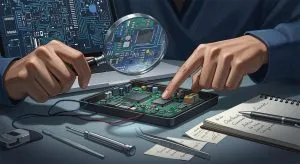
How to get started with hardware reverse engineering for beginners
Start hardware reverse engineering with basic tools, simple devices, and hands-on steps. Build skills safely and document your process as a beginner.
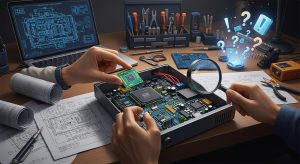
The pros and cons of hardware reverse engineering for product development
Hardware reverse engineering offers faster innovation and cost savings, but poses legal, ethical, and technical risks for product development.

JTAG Explained Simply and Why It Matters
JTAG is a key interface for testing, debugging, and programming electronics, ensuring devices work reliably and efficiently before reaching users.