You use satellite navigation equipment every day to find your way. It helps you get accurate directions and know your exact location. Satellite technology is made with advanced engineering and careful manufacturing. This helps it work very well. Modern satellite navigation equipment uses MEMS GNSS/INS technology, CNC machining, and careful PCB design. Industry standards like ISO 9001, ISO 27001, and ISO 9100 help engineers keep the equipment reliable and precise. The market for satellite navigation systems is growing fast. It will reach $177.24 billion in 2025. New technology keeps making the standards better each year.
Certification | Description |
|---|---|
ISO 9001 | Makes sure there is strong quality control in design, making, and use of satellite systems. This helps products work better. |
ISO 27001 | Sets up a strong system to keep information safe. This is very important for protecting secret data in satellite work. |
ISO 9100 | Focuses on quality control for aerospace. It covers the whole supply chain for satellite systems. |
Key Takeaways
Satellite navigation equipment uses advanced technology like MEMS GNSS/INS. This helps the equipment be accurate and reliable.
Quality control standards like ISO 9001 and ISO 9100 are important. They make sure satellite systems last long and work well.
It is important to know about the parts, like receivers and processors. This helps people use satellite navigation better.
Modular design in satellite manufacturing makes upgrades easier. It also saves money and keeps the quality high.
New technologies, like hybrid positioning systems, will make satellite navigation better in the future.
Satellite Navigation Equipment Components
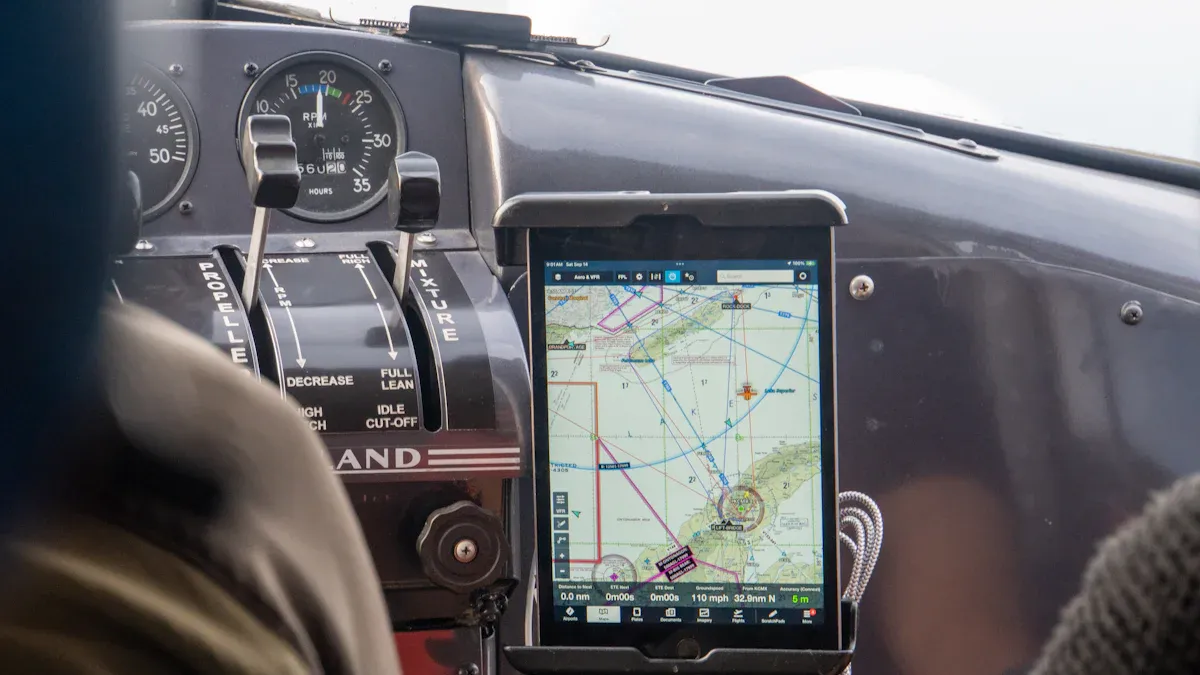
Satellite navigation equipment has many important parts. You need to know how each part works. This helps you understand how satellite systems give accurate results. All these parts work together. They make sure you get good data from space.
Receivers and Antennas
Receivers and antennas are the first parts to get signals from satellites. GNSS antennas catch weak signals from navigation satellites. These parts must be very sensitive and have little noise. They use special filters to help you get clear signals. This is needed for good positioning data. The main things that matter for these parts are:
Support for many satellite constellations
Phase center stability
Antenna gain
Radiation pattern
These things help you get the best accuracy and trust from your satellite systems.
Processors and Power Systems
Processors and power systems are like the brain and battery for your satellite navigation equipment. There are different processors in satellite parts. Each one does a special job. Here is a table with some common processors and their power use:
Processor Name | Description | Power Rating |
|---|---|---|
Lion DPU | Data processing unit for micro and small satellites, using AI. | N/A |
LEON3FT | Fault-tolerant soft processor. | 1.3 W |
CP400.85 | Linux-based platform for running algorithms. | N/A |
CFC-500 | ARM Cortex-A15 processor for LEO operations. | N/A |
CHAMPS | Quad-core APU with power from ~0.6 W to ~12 W. | 0.6 W – 12 W |
FPGA-RPP | Designed for various orbits with radiation correction. | N/A |
You also need strong AC-DC and DC-DC power parts. These give steady and good power to your satellite systems. They help the equipment work well.
Enclosures and Structural Parts
Enclosures and structural parts keep the inside parts safe in your satellite navigation equipment. You must pick the right materials for these parts. Here is a table with the main types:
Material Type | Properties Considered | Advantages | Disadvantages |
|---|---|---|---|
Metallic | Density, strength, toughness | Homogeneous, isotropic | Less tailored to directional loads |
Non-metallic | Thermal expansion, radiation resistance | Tailored properties, lightweight | Inhomogeneous, anisotropic |
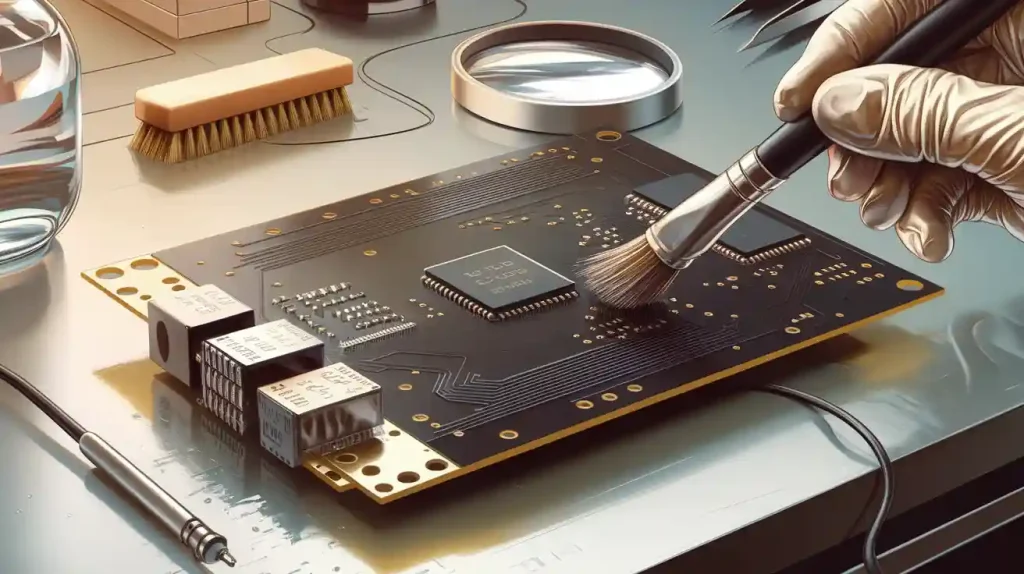
You can use Faraday cages to stop electromagnetic interference. Conductive coatings on PCBs and special shielding enclosures also help protect your parts. Good PCB layout lowers interference and keeps your satellite systems working well.
Each of these satellite parts is important for making satellite systems work right. When you put these parts together, you get strong and accurate navigation equipment.
Design Process Overview
Requirements and System Architecture
You begin by setting clear goals for your satellite navigation equipment. You want it to be reliable, available, and precise. These things help stop problems from big positioning mistakes. You pick parts and designs that stop errors and handle failures. This makes your system safe for travel and other important uses. You also think about how much power your device can use. GNSS devices need to save power but still keep good timing. If timing is wrong, your system loses accuracy and does not work well. Fast timing recovery helps your device work again quickly and stay accurate. You build your system to meet these needs. You choose parts that wake up fast and keep working right.
Tip: Always compare your goals with ISO 9001 and ISO 9100. These rules help you make good engineering choices and reach top precision.
Hardware and PCB Design
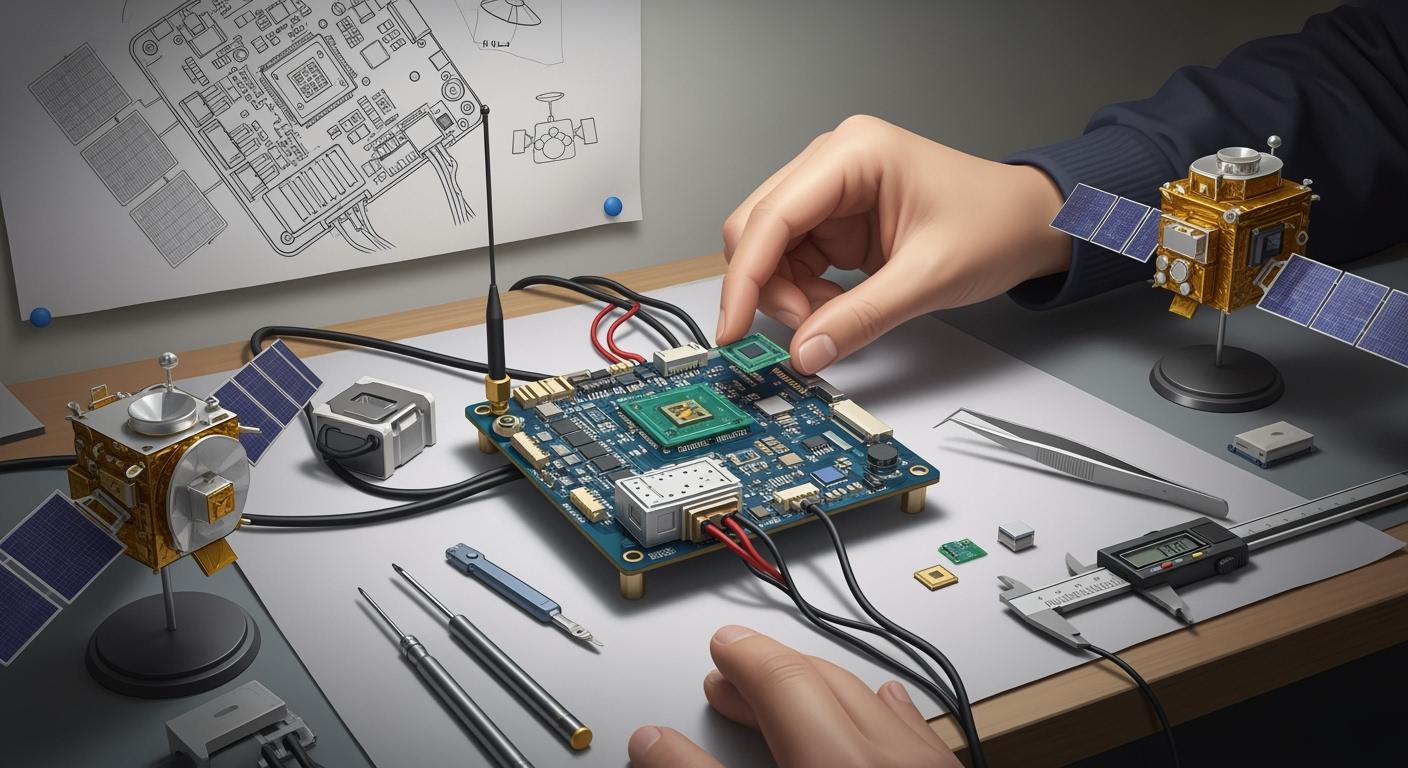
After setting your goals, you work on hardware and PCB design. You pick the best sensors, processors, and power systems. MEMS GNSS/INS technology is very important in new satellite navigation equipment. MEMS sensors are small and use little power. They help you make strong systems that fit size and weight limits. For example, the VN-200 OEM GPS-Aided Inertial Navigation System uses MEMS sensors. You can add this system to your electronics easily. It only needs one power supply and uses common connections.
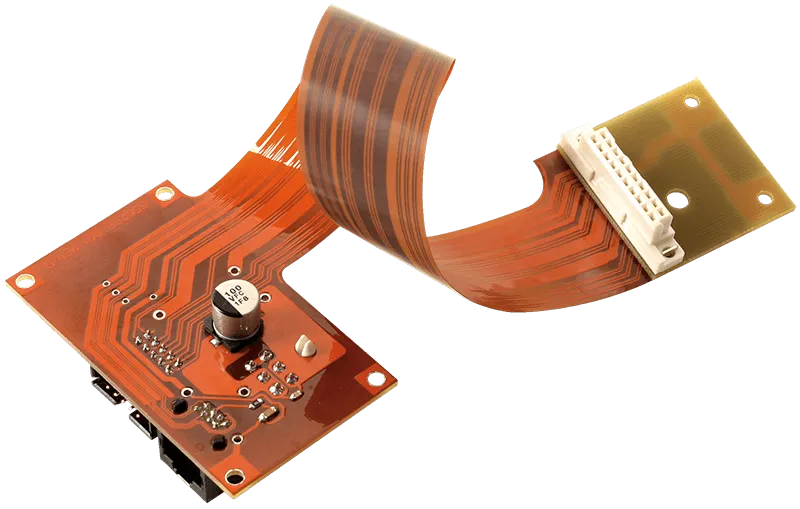
You design your PCB to link all the parts and help them talk to each other. You plan the layout to lower interference and boost accuracy. You add shielding and use special coatings to protect your circuits. You pick materials that last long and keep precision. The choices you make here change how well your satellite navigation system works.
Hardware Design Step | Engineering Focus | Precision Impact |
|---|---|---|
Sensor selection | MEMS GNSS/INS | High |
Signal integrity | High | |
Power system | Stability | High |
Shielding | EMI protection | High |
Software Integration
You must connect your hardware to software so your equipment works. This step brings many engineering challenges. You need to make sure it is reliable and test if it is accurate. You handle tricky signal connections. You watch power use and think about the environment. You keep your system safe from threats.
You work hard to keep tracking accurate.
You follow rules and laws.
You make your software match your hardware for best results.
You test your software to see if it works with every part. You fix any problems that hurt accuracy or reliability. You update your software to meet new rules and make navigation better.
Prototyping and Testing
You build test models before making lots of equipment. You use engineering steps to check if your design meets the rules. You run vibration tests to see if your equipment can handle launch. You use thermal vacuum tests to check if it works in space-like places. You do radiation resistance tests to make sure it lasts in space.
Testing Protocol | Purpose |
|---|---|
Vibration tests | Ensure components survive launch conditions. |
Thermal vacuum tests | Test functionality in space-like environments. |
Radiation resistance tests | Verify durability against space radiation. |
You also use Hardware-in-the-Loop (HIL) testing. This mixes real hardware with fake environments. You see how your system acts in real-life situations. You check for accuracy and reliability. You fix any problems before making many units.
Note: Testing helps you find weak spots in your design. You can improve your engineering and make your satellite navigation equipment more accurate and reliable.
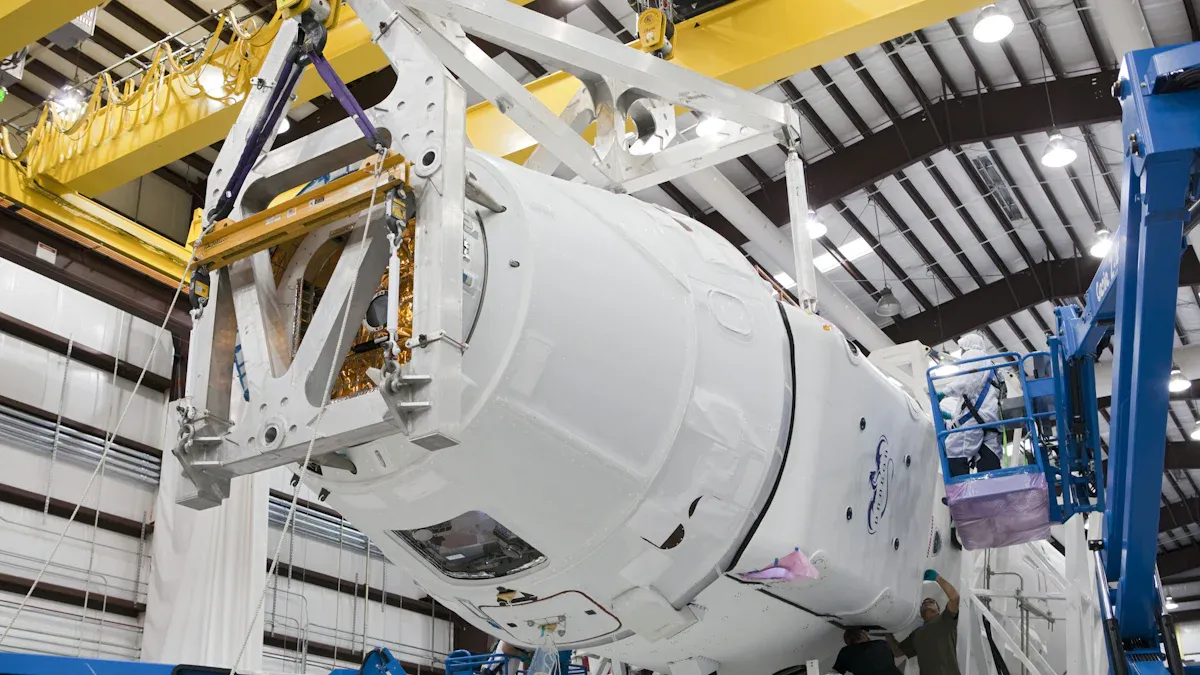
Satellite Manufacturing Process
Material and Component Selection
You begin by picking the best materials and parts. Every step must help the satellite last long and work well. You want materials that pass hard tests in labs and space. You check if they can handle rust and stress. You make sure they stay strong in thermal vacuum places. You also test if they work with rocket fuels and fluids.
Here is a table that shows what you should think about when you pick materials for satellite parts:
Criteria for Material Selection | Description |
|---|---|
Reliability | Use materials that work well in labs and space. |
Corrosion Resistance | Pick materials that do not crack or rust. |
Thermal Vacuum Stability | Make sure materials stay strong in space-like places. |
Compatibility | Choose materials that work with rocket fuels and fluids. |
Chemical Properties | Study chemical and physical data before you choose. |
You also need to watch out for these risks:
Radiation effects
Thermal cycling
Stress corrosion cracking
Galvanic corrosion
Hydrogen embrittlement
Vacuum outgassing
Toxic offgassing
Flammability
Fracture toughness
You must balance cost and quality. Picking the right materials can save up to 30% of costs. Most of your budget goes to materials in satellite making. You need good inventory management to stop waste and keep your schedule on track.
PCB Assembly and Quality Control
After picking materials, you start PCB assembly. Every step must meet strict quality rules. You use machines like AOI and X-ray tools. These help you find soldering problems and parts that are not lined up. High-resolution cameras help you spot missing solder or short circuits. X-ray checks let you see hidden joints and find cracks or empty spots.
You test your PCBs in real-world conditions. You use temperature cycles to make sure your boards work in space. Even one mistake can cause big problems, like wrong positioning or total failure. You focus on quality checks at every stage of satellite part making.
Here is a list of common quality control steps:
Automated Optical Inspection (AOI) with high-resolution cameras
X-ray checks for hidden joints
Functional testing in real-world conditions
You use these steps to make sure your satellite navigation equipment works well and lasts long.
CNC Machining and Structural Assembly
You use CNC machining to make parts with high accuracy. Antennas and RF control systems need tight tolerances. CNC machining helps you avoid signal problems and other issues. You can make parts with tolerances as small as a few microns. This means every piece fits just right in your satellite.
CNC machining lets you make complex shapes. You keep signal quality high. Space is tough, so every small part must work well. CNC machining helps you test and design parts in real-life conditions. You keep the inside structure strong and do not change material properties.
You also need to manage material waste. Up to 90% of material can be removed during machining. Rapid prototyping helps lower scrap rates and cut costs. You keep production downtime low and use materials wisely. You focus on quality and reliability in every step of satellite part making.
Testing, Validation, and Compliance
You test and check every step to meet world standards. You follow rules from ITU-R, MIL-STD-461G, ETSI DVB-S2X, and RTCM SC-104. These standards help you control electromagnetic emissions, improve spectrum use, and keep your data correct.
Here is a table of important standards:
Standard | Description | Key Features |
|---|---|---|
ITU-R Satellite System Standards | Controls spectrum and emission masks for satellite systems. | Channel definition, modulation, spectrum efficiency. |
MIL-STD-461G | Sets rules for electromagnetic emissions and susceptibility. | EMI test methods, performance thresholds. |
ETSI DVB-S2X | European standard for digital satellite communication. | Adaptive coding, error resilience. |
RTCM SC-104 | Ensures real-time GNSS accuracy and integrity. | Centimeter-level accuracy, data checks. |
You also need to meet certifications like AS9100, ISO 9001, ITAR, CMMC Level 2, and DFARs. These help you keep your satellite making process safe and reliable. You protect technical data and follow defense program rules.
You run tests for vibration, thermal vacuum, and radiation resistance. You check every step for quality. You use planned test steps to make sure your equipment meets all needs. You focus on precision and strength in every part of satellite making.
Tip: Always check your process against world standards. This helps you keep your satellite navigation equipment safe, accurate, and ready for space.
Challenges and Solutions in Satellite Communication Systems
Signal Interference and Reliability
There are many problems when you use satellite communication systems. One big problem is signal interference. Cross-polarization interference is always there, but it usually does not cause trouble. Another problem is adjacent satellite interference. This happens when signals from close satellites mix together. You can fix this by moving users to other transponders. You can also change system settings to help. Operators use ground antenna systems to watch the signals. They also use digital signal processors for this job. You should follow the right steps to set up your equipment. These actions help keep your satellite communication systems working well.
Some common failures are signal integrity issues, power problems, and impedance mismatch. You can fix these by making trace routing better. You should use continuous ground planes and shield important areas. It is also good to put decoupling capacitors in the right places. You need to design strong power planes too. These steps make your satellite communication systems more reliable.
Miniaturization and Power Efficiency
You want your satellite communication systems to be small and use less power. New technology helps you do this. MEMS let you build small sensors and actuators. These use less power and fit in tiny spaces. Miniaturized atomic clocks give you better timing. High-efficiency solar cells help your satellite make more power from a small area. Small electronic parts make your system work better and use less power.
You can send smaller and cheaper satellites into space.
You can add more features to your devices.
You make your systems work better and use less space and power.
High-efficiency solar cells, like multi-junction and thin-film types, help you get more power from small spaces. This makes your satellite communication systems last longer and work better.
Environmental Durability
You must keep your satellite communication systems safe from space dangers. Space debris can hit and break your satellite. Launches and reentries put gases in the air. These gases can change the temperature and hurt the ozone layer. Space weather, like solar wind and radiation, can cause problems for your satellite communication systems.
Challenge | Description |
|---|---|
Increase in orbital debris | Debris can hit or break satellites, causing service and security problems. |
Emissions into the atmosphere | Launches and reentries make gases that change temperatures and harm the ozone layer. |
Space weather effects | The Sun and solar wind can cause failures and loss of satellites because of strong radiation. |
Space weather means changes in the Sun and solar wind. These changes can hurt the quality and reliability of your satellite communication systems. You need to design your systems to survive these hard conditions and keep them working well.
Best Practices and Future Trends
Modular Design Approaches
You can make satellite navigation equipment better with modular design. This means you split the equipment into smaller modules. Each module does its own job. You can build and test each module by itself. This makes building faster and easier. You can swap or upgrade one module without changing the whole system. This helps you use new technology and keep quality high.
Here is a table that lists the main benefits of modular design for satellite navigation equipment:
Benefit | Description |
|---|---|
Efficiency in Production | Modular design makes building easier by using standard parts. |
Cost-effectiveness | You save money by using the same modules in many products. |
Flexibility and Customizability | You can make different products by mixing and matching modules. |
Enhanced Product Quality | Each module is tested alone, so the whole system works better. |
Scalability | You can make more products fast because modules are made separately. |
Encouragement of Innovation | You can upgrade one part at a time, so you always improve. |
Tip: Modular design helps you get high quality and lower costs when making satellites.
Automation in Manufacturing
You can use automation to make satellite navigation equipment faster and better. Robots and smart machines help build parts very accurately. Automation cuts down on mistakes and keeps the process steady. Machines can check each part for problems. This helps you find and fix issues early.
Automation also saves time and money. You can make more equipment in less time. The same machines can do many jobs. This makes your factory flexible. You can change what you make quickly if you need a new type of equipment.
Note: Automation helps you keep quality high and meet the growing need for satellite navigation systems.
Emerging Technologies
New technology will change satellite navigation equipment soon. Hybrid positioning systems will use GNSS and other sensors like LiDAR, RADAR, and cameras. This helps you get good coverage, even where signals are weak. Vehicle-to-everything communication lets cars and machines talk to each other and the road. This makes travel safer and smoother.
You will also see new ways to make positioning better. These use both satellites and ground systems. This gives you stronger signals and better accuracy. Here is a table with some important new technologies for satellite navigation equipment:
Technology Type | Description |
|---|---|
Hybrid positioning systems | Uses GNSS with sensors like Inertial Measurement Units, LiDAR, RADAR, and cameras for better coverage in rural areas. |
Vehicle-to-everything communication | Lets self-driving vehicles talk to roads and other vehicles for safety and efficiency. |
Positioning performance enhancements | Uses GNSS with low Earth orbit satellites and ground systems for better accuracy and stronger signals. |
You should watch these trends to keep your satellite navigation equipment top quality. New technology will help you meet future needs and make your manufacturing better.
You help design and build satellite navigation equipment. Advanced electronics let satellites use power well and send data. These electronics also help satellites survive tough places. Careful quality checks make sure each satellite is reliable and accurate.
Good power use and sensitive sensors make satellites work better.
Using the best ways to build, like vertical integration, saves money and speeds up projects.
Advancement Type | Description |
|---|---|
Modernization of Satellite Constellations | New satellites give better accuracy and keep data safer. |
Cybersecurity Enhancements | Satellites now block more cyber attacks. |
You will see new changes that make satellite navigation smarter and safer.
FAQ
What is satellite navigation equipment used for?
You use satellite navigation equipment to know where you are. It helps you find directions and track cars or trucks. People use it for rescue missions too. This technology is also important in flying planes and moving ships.
How does precision engineering improve satellite navigation systems?
Precision engineering gives you better accuracy and trust. It helps you make parts that fit just right. This lowers mistakes and helps your equipment work in hard places.
Why is testing important in satellite equipment design?
Testing makes sure your equipment works in space. Tests check if it can handle shaking, hot and cold, and radiation. This helps stop problems during real missions.
Can satellite navigation be used for defense satellite applications?
You can use satellite navigation for defense jobs. It helps guide military vehicles and track important things. It also helps keep messages safe. This technology makes missions safer and more likely to work.
What makes satellite navigation equipment reliable?
Strong materials, smart design, and careful checks make equipment reliable. These steps help your equipment last longer and work well in space.