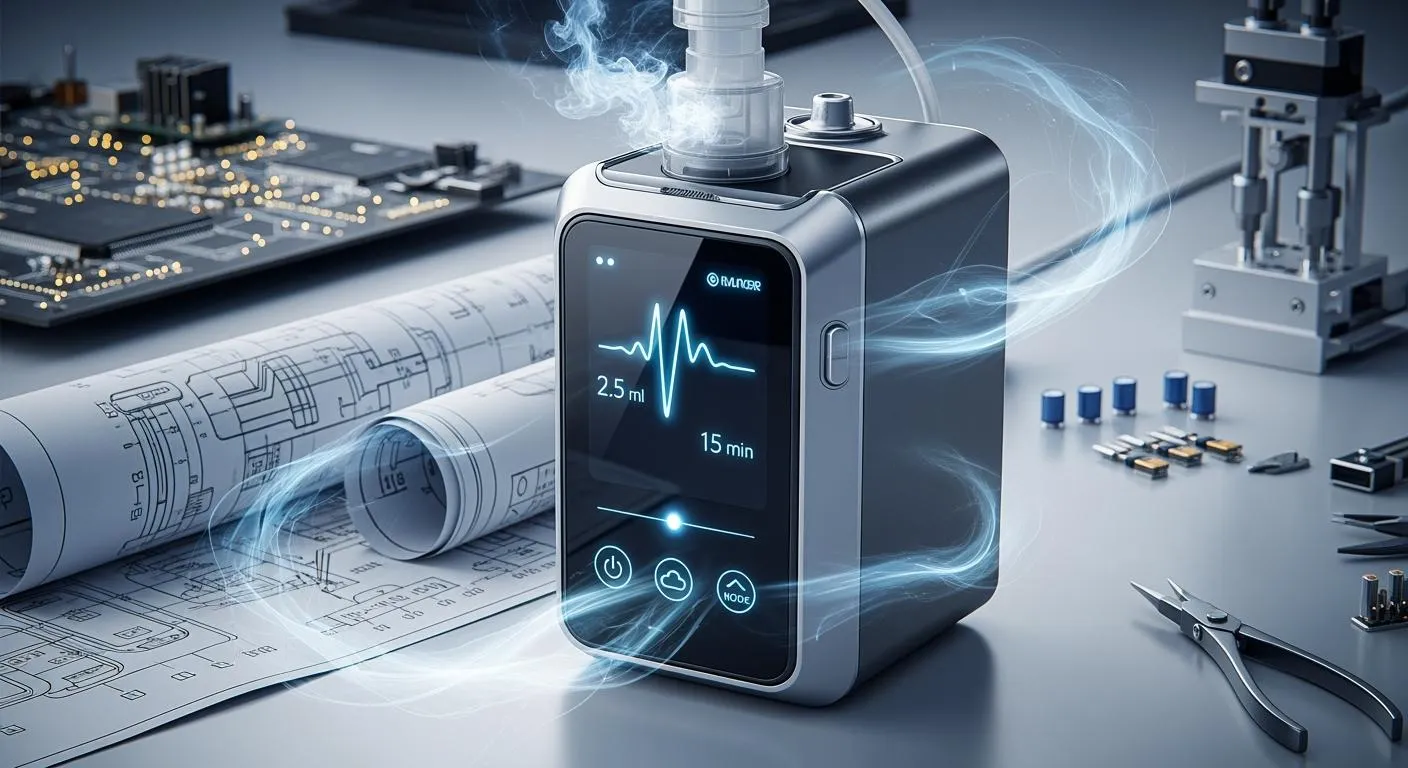
You see smart nebulizers changing how you treat breathing problems. These devices use mesh and piezoelectric technology to make tiny droplets. This helps you get more medicine into your lungs. It also cuts down on waste. The AKITA2 APIXNEB and I-neb match drug delivery to your breathing. This helps patients feel better. PCB design and manufacturing make these features work and keep the product safe. You get digital connectivity and better safety in every device. The market for smart nebulizers is growing quickly, as shown below:
Category | 2025 Estimate (USD) | 2032 Estimate (USD) | CAGR (%) |
|---|---|---|---|
Smart Nebulizers | 361.98 million | 959.11 million | 14.87 |
Traditional Nebulizers | Dominant in market | N/A | N/A |
Key Takeaways
Smart nebulizers use new technology to give medicine better. This helps stop waste and makes treatment work well.
These devices can check things in real time and send reminders. They help patients follow their treatment plans. They also let patients talk to doctors.
It is important for smart nebulizers to be easy to use. This is needed for kids and older people. It helps keep them safe and comfortable.
More people want smart nebulizers now. The market is growing fast. People need better breathing treatments, especially where there is a lot of pollution.
In the future, smart nebulizers will be easier to carry. They will work with digital health tools. They will also give medicine made just for each person. This will make treatment better and easier to get.
What makes smart nebulizers unique
Key features and functions
Smart nebulizers are special because they use new technology. They have a design that is easy for people to use. These devices use mesh and piezoelectric systems to make tiny particles. Most particles are smaller than 5µm, so medicine goes deeper into your lungs. This means you get more medicine and waste less. Smart nebulizers have electronic monitoring systems. These systems check how often you use your device. They remind you when it is time for your next dose. You see feedback about how you breathe in the medicine. This helps you get better results from your treatment. You can share your data with your doctor. Your doctor gives advice that fits your needs. Safety features keep you safe while you use the device. Digital connectivity lets you use a smartphone app to manage your therapy. The product helps you stay healthy and makes treatment simple.
Smart vs. traditional nebulizers
You might ask how smart nebulizers are different from traditional ones. The table below shows the main differences:
Feature | Smart Nebulizers | Traditional Nebulizers |
|---|---|---|
Particle Size | 80% of particles < 5µm | Particles ≥ 7µm |
Efficiency | Higher probability of reaching deeper lungs | Lower efficiency |
Adherence to Therapy | Improved adherence through reminders | No reminders |
Real-time Communication | Yes, via smartphone app | No communication |
Smart nebulizers give you more benefits. They help you follow your treatment plan and control symptoms better than older devices. You get reminders and can talk to your doctor in real time. This makes your treatment work better. Smart nebulizers are made with new methods to help patients. These features help you feel better and make life easier.
Smart nebulizers design process
User needs and usability
When making a smart nebulizer, designers think about what you need. You want a strong device that is simple to use. It should last a long time. These needs help guide how the device is made. The table below shows the most important things users want:
User Need | Importance Score |
|---|---|
Stable structure | 0.1795 |
Status monitoring | 0.1325 |
Extended usage cycle | 0.1134 |
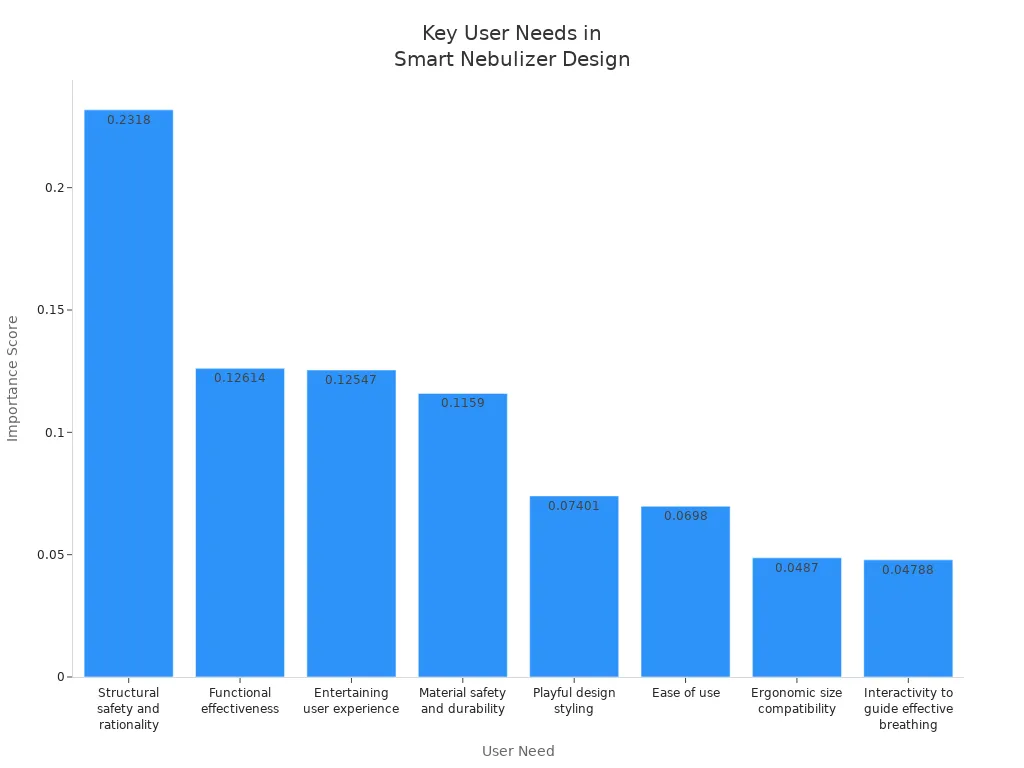
You also want the device to be safe and work well. It should feel good in your hand. The next table lists more things designers focus on:
User Need | Importance Score |
|---|---|
Structural safety and rationality | 0.23180 |
Functional effectiveness | 0.12614 |
Entertaining user experience | 0.12547 |
Material safety and durability | 0.11590 |
Playful design styling | 0.07401 |
Ease of use | 0.06980 |
Ergonomic size compatibility | 0.04870 |
Interactivity to guide effective breathing | 0.04788 |
Usability matters a lot, especially for kids and older people. Studies say you need clear steps and easy buttons. If you help someone at home, you need training to use the device safely. The table below shows what research says about using these devices:
Evidence Source | Summary |
|---|---|
Evaluation of Home Health Care Devices | This study says it is important to know how to use home health care devices. This helps keep people safe, especially kids and older adults. |
Enhancing safe medication use in home care | This research says caregivers need special training. Training helps stop mistakes and makes devices like nebulizers easier to use at home. |
Hardware and software integration
You want your smart nebulizer to work well every time. Engineers put hardware and software together carefully. Hardware has sensors, mesh or piezoelectric systems, and the main board. Software controls the device, tracks use, and sends data to your phone or doctor.
There are some problems to solve in this step. You need to follow safety rules and keep health data private. The table below lists the main problems engineers face:
Challenge Type | Description |
|---|---|
Regulatory Challenges | Following safety and performance rules like ISO and IEC. |
Data Privacy Concerns | Keeping health data safe by following laws like HIPAA. |
Reliability Issues | Making sure parts and software work all the time. |
Security Risks | Stopping others from getting your data or using your device; using encryption. |
Cost Considerations | Using good parts but keeping the price low. |
Engineers must fix these problems so your device is safe, works well, and does not cost too much.
PCB design and assembly
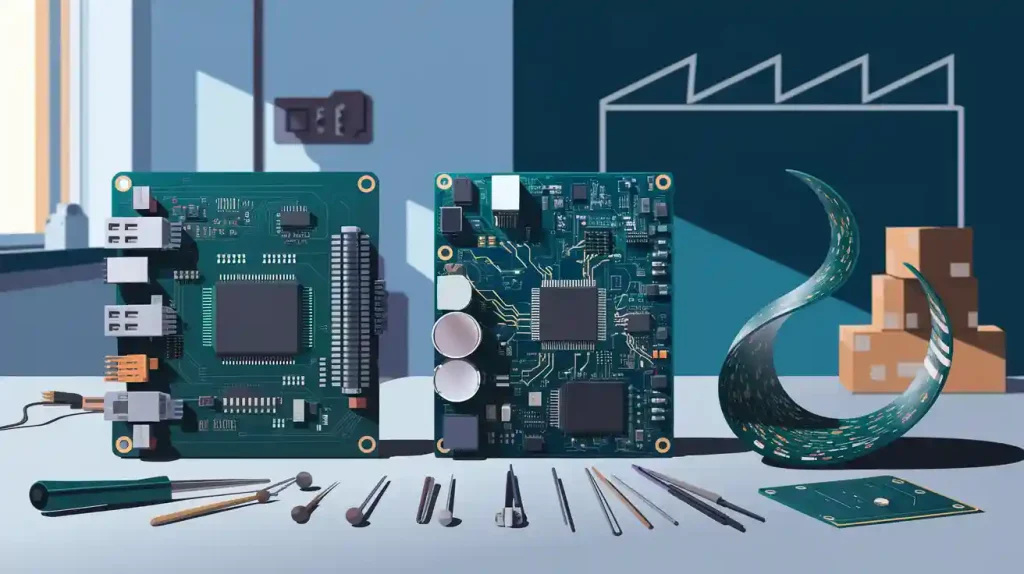
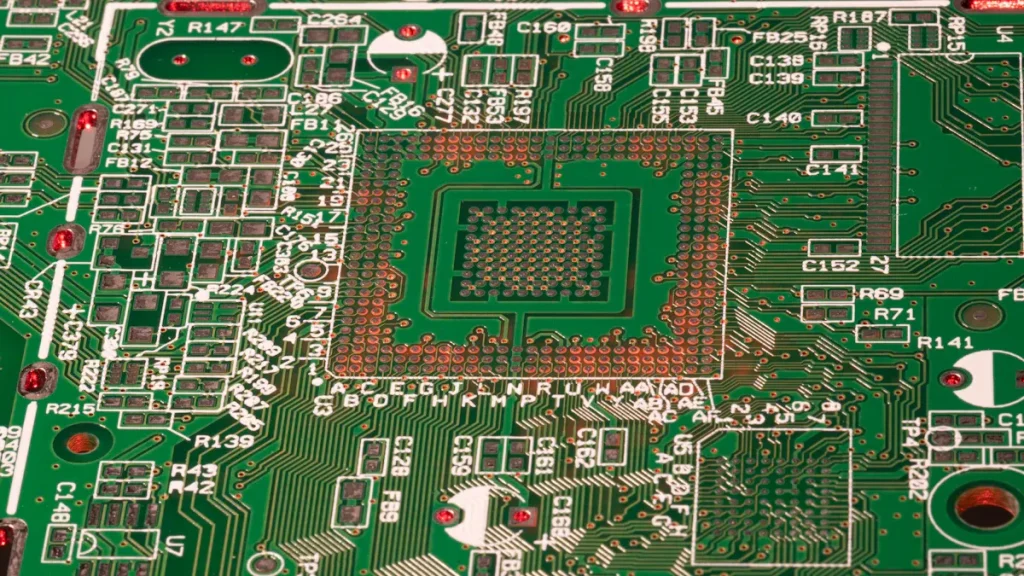
The printed circuit board (PCB) helps your nebulizer do smart things. The PCB is like the brain. It connects all the parts and helps them work together. Good PCB design keeps the device small and light. Multi-layer PCBs make it stronger and protect it from water. This helps your nebulizer last longer and work better.
Engineers put parts close together and use high-density routing. This makes the device easy to carry. Special coatings on the PCB keep water and dust out. You get a device that fits in your pocket or bag and works well.
Safety and connectivity
You want your treatment to be safe and simple. Smart nebulizers have safety features like automatic shut-off and dose tracking. They give alerts if something is wrong. These features help you use the device the right way.
You also get digital connectivity. Your device can send data to your phone or doctor. This helps you and your doctor see how you are doing and change your treatment if needed. Secure connections keep your health data private. You can trust your information is safe while you get care.
Tip: Always make sure your smart nebulizer connects only to safe apps and networks. This keeps your data safe.
Designers and makers of smart nebulizers focus on what you need most. They want you to be safe, use the device easily, and have a product that works well. Every step, from learning what you need to building the PCB, helps make a device that gives you medicine better and makes treatment easier.
Core technologies in nebulizers
Mesh and piezoelectric systems
Mesh and piezoelectric systems have changed nebulizers a lot. Vibrating mesh nebulizers are now used in hospitals and homes. These devices use a piezoelectric transducer to shake a tiny mesh. The mesh has lots of small holes. This makes a fine mist of medicine. The small particles help you get more medicine into your lungs. Most mesh nebulizers send about 60-70% of the medicine to your lungs. This is much better than older nebulizers.
New mesh technology uses stronger vibration. This means the device needs less power and is easy to carry. New piezoelectric systems make the mist smoother. You get the right amount of medicine each time. These features help you trust your nebulizer and make your treatment work better.
Mesh nebulizers use piezoelectric systems to make aerosols for breathing treatments.
They make very tiny aerosols, which help medicine reach your lungs.
Breath-activation technology helps more medicine get to your lungs.
Automation lets you check and fix your device in real time.
Sensors and data analytics
Sensors are important in smart nebulizers. They help you and your doctor see how well the device works. Some sensors check temperature and airflow. These sensors make sure you get the right dose and stay safe.
Sensor Type | Function |
|---|---|
DS18B20 Temperature | Checks the temperature of air you breathe in and out. |
YF-S201 Airflow | Checks how fast air moves using a magnetic sensor. |
Data analytics uses sensor information. You get reminders to take your medicine. Your doctor can change your treatment using your data. This helps you follow your plan and get better results. Smart nebulizers also help kids with asthma by giving reminders and feedback. These tools help you stick to your treatment and feel better.
IoT and mobile integration
IoT and mobile integration make nebulizers smarter. You can connect your device to your phone or tablet. This lets you see your usage right away. Your doctor can look at your data and change your treatment fast. You get quicker answers and better care.
Benefit | Description |
|---|---|
Real-time monitoring | Lets you track how you use your nebulizer right away. |
Personalized patient management | Helps doctors make plans that fit you best. |
Improved adherence | Makes it easier for you to follow your treatment. |
Efficient healthcare access | Doctors can see your data more easily. |
Faster diagnosis | Doctors can find problems faster with better data. |
More efficient treatment | Makes treatment work better for you. |
Manufacturers use strong safety steps to protect your data. They use device checks, data coding, and regular updates. You can trust your information stays private during every part of making and using your nebulizer.
Manufacturing and challenges

Materials and prototyping
Smart nebulizers need strong and safe materials. Most companies use medical-grade plastics and metals that do not rust. These materials make the device light and tough. Rapid prototyping lets you test new ideas fast. You can see how a nebulizer works before making lots of them. This way, you can change designs quickly to fit new needs. It helps lower risks and get products to market faster. Rapid prototyping also helps you follow new rules and give better medicine.
PCB manufacturing
The printed circuit board is the main part of your device. You must do several things to make a good PCB for medical use:
Focus on layout and routing to keep signals clear and stop problems.
Pick base materials that do not soak up water and use finishes that stop rust.
Add real-time monitoring and safety features to protect the device.
These steps help your nebulizer work its best. You make sure it works well in many places.
Quality and compliance
You want your device to be safe and work well. Makers follow strict rules and test every device. The table below shows the main steps for quality and compliance:
Process Step | Description |
|---|---|
Formulation Development | Make drug formulas that work well with smart nebulizers. |
Quality Control Tests | Test each product to meet high standards. |
Regulatory Guidelines | Follow all rules to keep patients safe. |
Risk Management | Check and manage risks during the whole product lifecycle. |
You must keep up with rules for combination products.
Good systems and safe ways to make things are important.
You need to manage risks and follow rules to keep devices safe.
Production challenges and solutions
There are many problems when making nebulizers. The table below lists common problems:
Challenge | Description |
|---|---|
Pricing Transparency | It is hard to set prices without good market data. |
Supply Chain Inefficiencies | Delays and higher costs happen when materials are hard to get. |
Regulatory Barriers | Different rules in each country make selling hard. |
Competition | Many companies make these devices, so profits go down. |
Technological Evolution | New features cost more and slow down new ideas. |
Procurement Challenges | It is hard to find good materials at the right price. |
Market Entry Risks | New markets have risks like politics and culture. |
You can fix these problems with smart tools and teamwork. Use real-time data to find slow spots in your process. Automation helps you work faster and make fewer mistakes. Virtual simulations let you test your assembly line before you build it. This saves money and time. You can balance workloads and keep output steady without hiring more people. These solutions help you make better devices and help patients.
Benefits and trends in smart nebulizers
User and healthcare advantages
Smart nebulizers give you many helpful benefits. They help you get better results from your medicine. The table below shows how they are better than old devices:
Clinical Benefit | Description |
|---|---|
Better Particle Control | Smart nebulizers make the right size droplets and control the flow for good delivery. |
Shorter Treatment Times | These devices often make treatments faster, so it is easier to finish. |
Improved Patient Comfort | They are made to feel comfortable, even for kids and older people. |
Enhanced Drug Absorption | They send medicine right to your lungs, so you get more help and fewer side effects. |
You get reminders and real-time checks with these devices. Your doctor can help you fast if you miss a dose or feel worse. This stops big health problems and keeps you out of the hospital. You save money and feel safer with these tools.
Smart nebulizers help you follow your treatment with reminders.
Doctors can help right away if you miss a dose or feel sick.
This helps stop serious health problems and keeps you out of the hospital, which saves money.
Market opportunities
The smart nebulizer market is growing very fast. In 2024, the market was USD 316.20 million. It should reach USD 361.98 million in 2025. By 2032, it may be USD 949.10 million. The growth rate is 14.72% each year. Asia Pacific is the top place for new nebulizer use. More factories and cities mean more breathing problems. Countries like China and India have lots of people living close together. This makes more people need smart nebulizers and new products.
Asia Pacific will be the best market for smart nebulizers because of more factories and cities.
More people in the region have breathing problems because of smoking and more older people.
The market in Asia Pacific will grow the fastest from 2025 to 2030.
Future trends
New changes are coming to nebulizer technology soon. The table below shows what is new:
Trend Description | Details |
|---|---|
Portable Devices | More nebulizers are small and use batteries. |
Digital Health Integration | They now work with digital health apps. |
IoT Connectivity | IoT lets doctors check your device from far away. |
Personalized Medicine | Devices can be set up just for you. |
Efficient Drug Delivery | New systems help you get medicine better. |
Smart nebulizers now have sensors to watch how you use them. You can use apps to track your medicine and share with your doctor. Some devices let you change the dose to fit your needs. Artificial intelligence looks at your data and gives advice. Telemedicine lets you talk to your doctor from home about your device. These new things make nebulizers work better and help companies make them in new ways.
Note: Smart nebulizers will keep getting better as new features come out. This means you will get better care and easier treatments.
Smart nebulizers are making treatment easier for you. These devices have special features like mesh and breath-synchronized systems. PCB integration keeps your device safe and working well. You get more medicine into your lungs and better results. Makers use strong materials and smart designs. New technology means treatments are faster and you have more control.
Smaller nebulizers work better and waste less medicine.
Easy-to-use products help you and your patient feel good.
In the future, nebulizers will be stronger, deliver medicine in new ways, and be easier for everyone to get.
FAQ
What is a smart nebulizer?
A smart nebulizer uses new technology to give medicine as a mist. You get dose tracking, reminders, and can use an app. These features help you manage your treatment and feel better.
How do you clean a smart nebulizer?
Follow the steps in your device manual. Most times, rinse the medicine cup and mouthpiece with warm water after you use it. Dry every part before you put it back together. This helps your device stay safe and work well.
Can you use a smart nebulizer without a smartphone?
Yes, you can use most smart nebulizers without a smartphone. The device will still give you medicine. But you will not get reminders, data tracking, or app features. Using the app gives you more control and information.
Are smart nebulizers safe for children?
Smart nebulizers are safe for kids if you follow the instructions. Many models have safety features like automatic shut-off and dose control. Always watch children when they use it and ask your doctor for advice.
What should you do if your smart nebulizer stops working?
Tip: First, check the battery and make sure all parts are clean and dry. If it still does not work, look at the troubleshooting guide in your manual. Contact customer support if you need more help.