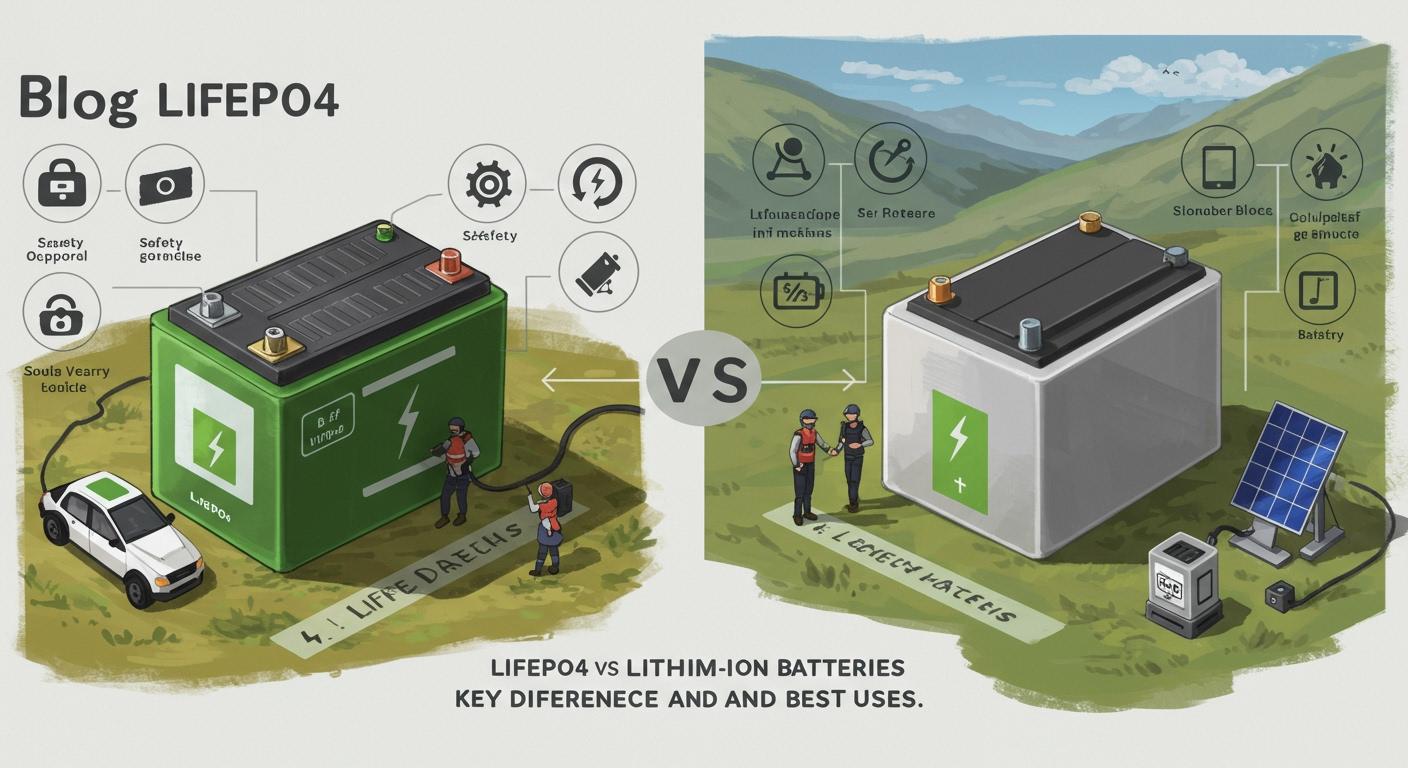
When you look at LiFePO4 vs lithium-ion batteries, you see some significant differences. These differences influence how you utilize each type of battery. Here is a simple table to help you:
Feature | LiFePO4 | Lithium-Ion |
|---|---|---|
Energy Density | Lower | Higher |
Cycle Life | 500–1,000 cycles | |
Safety | High, very stable | Lower, risk of overheating |
Cost | Lower | Higher |
Best Uses | EVs, solar, safe storage | Phones, laptops, power tools |
Understanding these differences between LiFePO4 vs lithium-ion batteries is essential. They assist you in selecting the right battery for your needs. For instance, LiFePO4 batteries are excellent for electric vehicles and energy storage due to their safety and longevity.
Key Takeaways
LiFePO4 batteries are very safe and last a long time. They work well in electric cars and energy storage systems.
Lithium-ion batteries are lighter and hold more energy. They are good for things like phones and laptops.
Both types of batteries need a good battery management system. This helps them work better and last longer.
Pick LiFePO4 if you need safety and long life. Choose lithium-ion if you care about size and weight.
Think about what you need, like safety, energy, and price, before picking a battery.
lifepo4 vs lithium-ion batteries
Key Differences Overview
When you look at lifepo4 and lithium-ion batteries, you see some big differences. These differences change how you use each battery and what you get from them. The inside parts of each battery make them work in special ways.
Lithium iron phosphate, or lifepo4, uses a special part found in 1996. This part gives lifepo4 batteries a strong build and low resistance. They can handle high currents well. These batteries last longer and are safer, even with lots of use. Lithium-ion batteries use other parts, like lithium cobalt oxide. These give more energy but can be less safe.
Here is a simple table to show the main differences:
Attribute | lifepo4 batteries | lithium-ion batteries |
|---|---|---|
Chemistry | LiFePO4 cathode, stable structure | LiCoO2, NMC, or other chemistries |
Energy Density | Lower (less energy per weight) | Higher (up to 260 Wh/kg) |
Cycle Life | Over 2,000 cycles, often up to 10,000 | 500–1,000 cycles, sometimes less |
Safety | High, strong thermal stability | Lower, risk of overheating or fire |
Cost | About 30% lower than NMC types | Higher, due to expensive materials |
Best Uses | EVs, solar storage, long-term systems | Phones, laptops, portable electronics |
You can also remember these main points:
lifepo4 batteries can handle high currents and last a long time.
They are safe and do not get too hot easily.
lithium-ion batteries hold more energy, so they are lighter and smaller.
Both battery types need a good battery management system to work well and last longer.
Main Takeaways
You should pick lifepo4 or lithium-ion batteries based on what you need. If you want a battery that lasts a long time and is safe, lifepo4 is a good choice. These batteries can handle deep cycling and overcharging better than most lithium-ion batteries. They also work well in cold weather and do not need much cooling. This helps in energy storage systems.
lithium-ion batteries give you more energy in a smaller size. This makes them great for things like phones, laptops, and power tools. They cost more at first, but their high energy density is good when you need something light and easy to carry.
Here are the main things to remember:
lifepo4 batteries last longer and are safer, but they are heavier and hold less energy.
lithium-ion batteries are lighter and hold more energy, but they may not last as long and can be less safe.
A good battery management system can help both types last longer and save money.
Pick lifepo4 batteries for electric vehicles, solar storage, and off-grid systems where safety and long life are important.
Choose lithium-ion batteries for portable electronics and when you need something small and light.
Tip: Always choose the battery type that fits your needs. Think about how long you want it to last, how safe it should be, and what you will use it for. This helps you get the best battery for your use.
Chemistry Comparison
lithium iron phosphate
lithium iron phosphate batteries are special because of their chemistry. They use a LiFePO4 cathode, a graphite anode, LiPF6 electrolyte, and a polyethylene separator. Each part helps the battery work well. The cathode holds lithium ions. The anode lets them go. The electrolyte helps lithium ions move between the cathode and anode. The separator keeps the battery safe and stops short circuits.
Component | Formula | Function |
|---|---|---|
Cathode Material | LiFePO4 | Stores lithium ions |
Anode Material | Graphite | Releases lithium ions |
Electrolyte | LiPF6 | Conducts lithium ions |
Separator | Polyethylene | Prevents short-circuiting |
The cathode in lithium iron phosphate batteries has strong chemical bonds. These bonds help the battery keep its shape, even if you overcharge it or have a short circuit. This makes lifepo4 batteries very stable when hot. They do not make much heat and will not catch fire. You can use and store them safely.
lithium iron phosphate batteries stay cool and stable.
They make less heat than other lithium-ion batteries.
You can use them safely in many places.
lithium-ion
lithium-ion batteries use different materials. The most common types are NMC and LCO. These batteries use lithium cobalt oxide or nickel manganese cobalt oxide for the cathode. They give you more energy in a smaller size. This means battery packs can be lighter and smaller. But they do not stay as cool as lithium iron phosphate batteries. They can get hot more easily.
Chemistry Type | Energy Density (Wh/kg) | Cycle Life | Safety |
|---|---|---|---|
LiFePO4 | 90-165 | Moderate | High |
NMC | 100-265 | High | Moderate |
lithium-ion batteries hold more energy in less space.
They are good for things where size and weight matter.
You need to manage them carefully to keep them safe.
Performance Impact
lithium iron phosphate batteries last a long time and are very safe. You can use lifepo4 batteries in solar systems, electric buses, and forklifts. These batteries work for 10 to 15 years and can be charged 2,500 to 5,000 times. They are better for the environment because they do not use metals like cobalt or nickel.
lithium-ion batteries, especially NMC types, are best when you need lots of energy in a small space. You see them in electric cars and portable devices. But you must watch out for overheating and take care of them.
Note: If you want a battery that lasts long, stays cool, and is safe, lithium iron phosphate is a strong choice. If you need a lightweight battery with high energy, lithium-ion batteries may fit your needs better.
Energy and Power
Energy Density
Energy density is a key thing to look at. It shows how much energy a battery can hold for its size or weight. If you want a battery for something small and light, pick one with high energy density. Lithium-ion batteries have higher energy density than LiFePO4 batteries. This means lithium-ion batteries give more power in a smaller and lighter shape.
Battery Type | |
|---|---|
LiFePO4 | 90 – 160 |
Lithium-ion | 200 – 260 |
Lithium-ion batteries are great for phones and laptops. They work well in other portable devices too. LiFePO4 batteries have less energy density. They are bigger and heavier for the same power. If you need a battery for solar systems or electric cars, LiFePO4 can still be a good pick.
Tip: Always look at energy density when you choose a battery. More energy density means more power in less space.
Charge & Discharge Rates
Charge and discharge rates show how fast you can fill or use a battery. Both LiFePO4 and lithium-ion batteries have special ways to charge and discharge. LiFePO4 batteries use a constant current and constant voltage method. Lithium-ion batteries use similar methods, but it can change by brand.
Aspect | LiFePO4 Batteries | Lithium-Ion Batteries (General) |
|---|---|---|
Charge Process | Varies by manufacturer | |
Discharge Process | Constant Current (CC) | Varies by manufacturer |
Internal Resistance (DCIR) | Varies with materials and conditions | Varies with materials and conditions |
Discharge Performance Influence | Lower DCIR indicates better performance | Lower DCIR indicates better performance |
Rest Duration | Not fixed, varies by manufacturer | Not fixed, varies by manufacturer |
A battery with lower internal resistance works better. Both types do well if you use a good battery management system. Always follow the maker’s rules for charging and using your battery. This helps keep the energy density and battery life high.
High-Temperature Performance
Heat changes how your battery works. High temperatures can cause problems for both LiFePO4 and lithium-ion batteries. The problems are not the same for each type. LiFePO4 batteries lose more active material from the negative electrode when hot. This happens because side reactions go faster. A thicker SEI film forms on the negative electrode. This film uses up active lithium and lowers how well the battery works. Keep your batteries at room temperature, about 25°C. Do not let them get hotter than 35°C for best results.
If you use your battery in a hot place, it may lose energy density and not work as well. High energy density batteries like lithium-ion can lose power faster in heat. Always keep your batteries in a cool, dry spot. This helps protect their energy density and how long they last.
Note: High heat can lower energy density and make your battery not last as long. Keep batteries cool for best results.
Life Cycle & Longevity
Cycle Life
You want your battery to last a long time. The life cycle tells you how many times you can charge and use it before it gets weaker. Lifepo4 batteries last much longer than most other batteries. Tests show lifepo4 batteries can be charged and used thousands of times. Look at the table below to see the difference:
Battery Type | Cycle Life Range | Notes |
|---|---|---|
Lifepo4 | 10% less power after 2,000 cycles | |
Lifepo4 | 5,000 shallow cycles | Almost no loss in power |
Lifepo4 | 10,000 shallow cycles | More than 10% less power after this |
If you use your lifepo4 battery for short charges, it will last even longer. This makes lifepo4 a great pick for solar storage, electric cars, and other things that need a battery for many years.
Shelf Life
Shelf life means how long a battery can sit unused and still work well. Lifepo4 batteries have a strong shelf life. You can store them for months and they will not lose much power. This is good if you need backup power or want extra batteries ready. You do not have to worry about your lifepo4 battery losing charge fast. You can trust your battery will work when you need it.
Usage Factors
How you use your battery changes how long it lasts. Lifepo4 batteries last a long time, but you need to take care of them. The table below shows what can change how long your battery works:
Factor | Description |
|---|---|
Temperature | Very hot or cold places can make batteries not last as long. Keep your battery between −10 and 60°C for best results. |
Depth of Discharge (DoD) | Using all the battery’s power every time can make it not last as long. Try to charge it before it is empty. |
Charge/Discharge Rates | Charging or using the battery too fast can make it hot and wear out. Follow the maker’s advice. |
Battery Quality | Good lifepo4 batteries last longer. Pick trusted brands for the best battery life. |
Tip: To help your lifepo4 battery last, keep it cool, do not use all the power each time, and use a good charger. Always choose a good battery for the best results.
You can make your lifepo4 battery last longer by following these tips. Lifepo4 batteries give you long life, strong power, and peace of mind for many years.
Safety & Environment
lifepo4 batteries Safety
You might wonder why lifepo4 batteries are safer. These batteries use lithium iron phosphate chemistry. This chemistry helps stop fires and overheating. Lifepo4 batteries almost never catch fire. Their special chemistry does not let them get too hot or burn easily. They do not release oxygen if they get damaged. Other lithium-ion batteries can catch fire more often, but lifepo4 batteries are safer.
Lifepo4 batteries make less heat than other lithium-ion batteries.
They can handle higher temperatures before thermal runaway starts.
They make more gas if they get too hot, but their strong build keeps you safe.
You can use lifepo4 batteries in solar storage, electric cars, and backup power. Their safety makes them a great pick if you want to worry less.
lithium-ion Safety
Lithium-ion batteries are in many things you use. But you need to be careful with them. They can get too hot, catch fire, or leak chemicals. There are strict rules for shipping lithium-ion batteries. They are called dangerous goods. You should keep them at 30% charge when you move them to lower the risk.
Safety Risks | Mitigation Strategies |
|---|---|
Overcharging and overheating | Use safety devices |
Thermal runaway | Use thermal management |
Chemical exposure | Use cooling systems |
Risk of reignition | Train firefighters |
Ejection of batteries | Make safety zones |
You can make lithium-ion batteries safer by using safety tools and cooling. Always follow the maker’s rules to keep them safe.
Environmental Impact
It is important to think about the earth when picking batteries. Making and throwing away lithium iron phosphate and lithium-ion batteries can hurt nature. Mining for lithium and iron can damage the land. Recycling lifepo4 batteries helps the planet. It means we do not need to dig up as many new materials. This helps keep nature safe. When you recycle lifepo4 batteries, you help the earth.
Tip: Pick lifepo4 batteries if you want better safety and less harm to the planet. Always recycle your batteries to help protect the environment.
Cost & Recycling
Cost Comparison
You want to know how much batteries cost. The price includes what you pay first and later. LiFePO4 batteries cost less at the start than many lithium-ion batteries. You also save money over time because LiFePO4 batteries last longer and need fewer replacements.
Battery Type | Average Upfront Cost (per kWh) | Estimated Lifetime Cost (per kWh) |
|---|---|---|
LiFePO4 | $59 (as of September 2024) | $80 – $200 |
Lithium-ion (NMC) | $68.6 (as of September 2024) | $300 – $600 |
Lithium battery prices keep going down. In 2023, the average price was $139 per kWh. By 2024, it dropped to $115. Experts think prices will go below $100 per kWh soon. By 2030, prices might be as low as $32 per kWh. If you want a battery that saves money over time, LiFePO4 is a good pick.
Recycling Challenges
Recycling batteries helps the earth, but there are problems. Changes in the economy can make recycling cost more. Rules for the environment can make recycling harder. The technology for recycling batteries still needs to get better. Different countries have different recycling rates. Many groups are working to make recycling easier and cheaper.
Changes in the economy can raise recycling costs.
Tough rules can make recycling harder.
Recycling technology still needs to improve.
Recycling batteries is good for the planet, but better systems are needed to make it easier and cheaper.
Value for Applications
You want to choose the best battery for your needs. LiFePO4 batteries work well in electric buses, basic electric cars, and energy storage. You save money because these batteries use cheaper materials and last longer. Lithium-ion batteries are good for sports electric vehicles and fancy electronics. They cost more, but you get better performance and more energy.
Battery Type | Application Type | Cost-Effectiveness Reasoning |
|---|---|---|
LiFePO4 | Electric Buses | |
LiFePO4 | Entry-Level Electric Cars | Good for people who want to save money. |
LiFePO4 | Energy Storage Systems | Great for storing renewable energy at a lower cost. |
Lithium-Ion | Sports Electric Vehicles (EVs) | Higher energy density is worth the higher price for fast vehicles. |
Lithium-Ion | High-End Consumer Electronics | Best for devices that need top performance, even if they cost more. |
Tip: Pick LiFePO4 batteries if you want to save money and have a battery that lasts a long time. Choose lithium-ion batteries if you need high performance and do not mind paying more.
Best Uses
When to Choose lifepo4
Pick lifepo4 batteries if you want safety and long life. These batteries work well when you need to charge them many times. They last for thousands of charges before losing much power. You can use them for home energy storage and big energy systems. These batteries stay cool and do not catch fire easily. They are a good choice for electric vehicles, home energy storage, and machines in factories.
Here is a table to show where lithium iron phosphate batteries do best:
Use Case | Performance | Safety Features | Cost-Effectiveness |
|---|---|---|---|
Electric Vehicles | High efficiency | Excellent safety | Competitive pricing |
Home Energy Storage Systems | Long lifespan | Very reliable | Cost-effective for long-term use |
Industrial Applications | Stable performance | High safety standards | Economical for large scale |
You get strong safety and steady energy storage. Lifepo4 batteries are more stable than other lithium-ion batteries. They have a lower chance of getting too hot. You save money because they last longer.
When to Choose lithium-ion
Pick lithium-ion batteries if you need lots of energy in a small space. These batteries are best for things that must be light and easy to carry. You see them in phones, laptops, and power tools. Lithium-ion batteries give more energy, so your devices last longer without extra weight. They are good for short-term energy storage and when size is more important than long life.
Application Examples
You can find lithium iron phosphate and lithium-ion batteries in many places. Here are some examples:
Electric vehicles use lithium iron phosphate batteries for safety and long life. Some sports electric vehicles use lithium-ion batteries for more energy.
Renewable energy storage uses lithium iron phosphate batteries to store solar and wind power. These batteries keep your home running when the sun is not out.
Recreational vehicles and boats use lithium iron phosphate batteries for steady power. You get a light and reliable energy source.
Home energy storage systems use lithium iron phosphate batteries for backup power during outages. You can trust these batteries for your home.
Tip: Think about what you need most—safety, long life, or high energy. Lithium iron phosphate batteries are great for home energy storage and electric vehicles. Lithium-ion batteries are best for portable devices and when size and weight matter.
You should pick a battery that fits what you need. LiFePO4 batteries are very safe and last a long time. They do not need much care. Lithium-ion batteries are lighter and hold more energy. You can see the differences in this table:
Factor | LiFePO4 Batteries | Lithium-Ion Batteries |
|---|---|---|
Safety | Very high | Moderate |
Lifespan | Hundreds of cycles | |
Energy Density | Moderate | High |
Cost | Higher upfront | Lower upfront |
LiFePO4 is best if you want safety and long use. Lithium-ion is good for small, light things and lots of power. Think about what you need, how big it should be, and how much you want to spend.
FAQ
What makes LiFePO4 batteries safer than other lithium-ion batteries?
LiFePO4 batteries have a very steady chemistry. You do not have to worry much about fires or getting too hot. These batteries stay cool and work well, even if you use them a lot.
Can you use LiFePO4 batteries in cold weather?
Yes, you can use LiFePO4 batteries when it is cold outside. They work better than many lithium-ion batteries in low temperatures. You get steady power, but charging can be slower if it is freezing.
How long do lithium-ion batteries last compared to LiFePO4?
LiFePO4 batteries last a lot longer. You can use them for up to 10,000 cycles. Most lithium-ion batteries only last for 500 to 1,000 cycles. Using LiFePO4 saves you money over time.
Are LiFePO4 batteries good for solar energy storage?
Yes! LiFePO4 batteries are great for solar energy storage. They last a long time and are safe to use. You get backup power you can trust for your home or business.
Do lithium-ion batteries need special care?
You should use a battery management system with lithium-ion batteries. This helps keep them safe and makes them last longer. Always follow the maker’s rules for charging and storing them.