You use 4G/5G Wireless Routers for quick and steady connections. These routers work well in hard places. Many businesses need these routers for remote monitoring and connecting mobile devices. They also use them in rough conditions.
Application Type | Key Requirements |
|---|---|
Remote Monitoring | Data must move all the time in oil fields, wind farms, or faraway places. |
Mobile Device Connectivity | Data comes back right away for trucks or work vehicles. |
Environmental Considerations | Routers must work in certain temperatures and humidity. They must handle stress. |
The need for these routers is rising quickly. In 2023, 5G wireless routers were worth $1.5 billion. By 2032, they may reach $12 billion. Industrial router sales were $9.2 billion in 2024. Experts think sales will keep growing.
Key Takeaways
4G/5G wireless routers help keep connections strong. They work well in hard places. They support remote monitoring and connect mobile devices.
Rugged hardware design helps routers handle very hot or cold weather. They also resist dust and water. This makes them good for factories and other tough jobs.
Smart software lets users control routers from one place. It helps people watch routers in real time. This makes it easier to manage many routers and stop problems fast.
Security features like data encryption keep information safe. Dual authentication stops people who should not get in.
In the future, routers will have better security. They will use AI and save more energy. This will make networks faster and more reliable.
4G/5G Wireless Routers Design Principles
Hardware Architecture
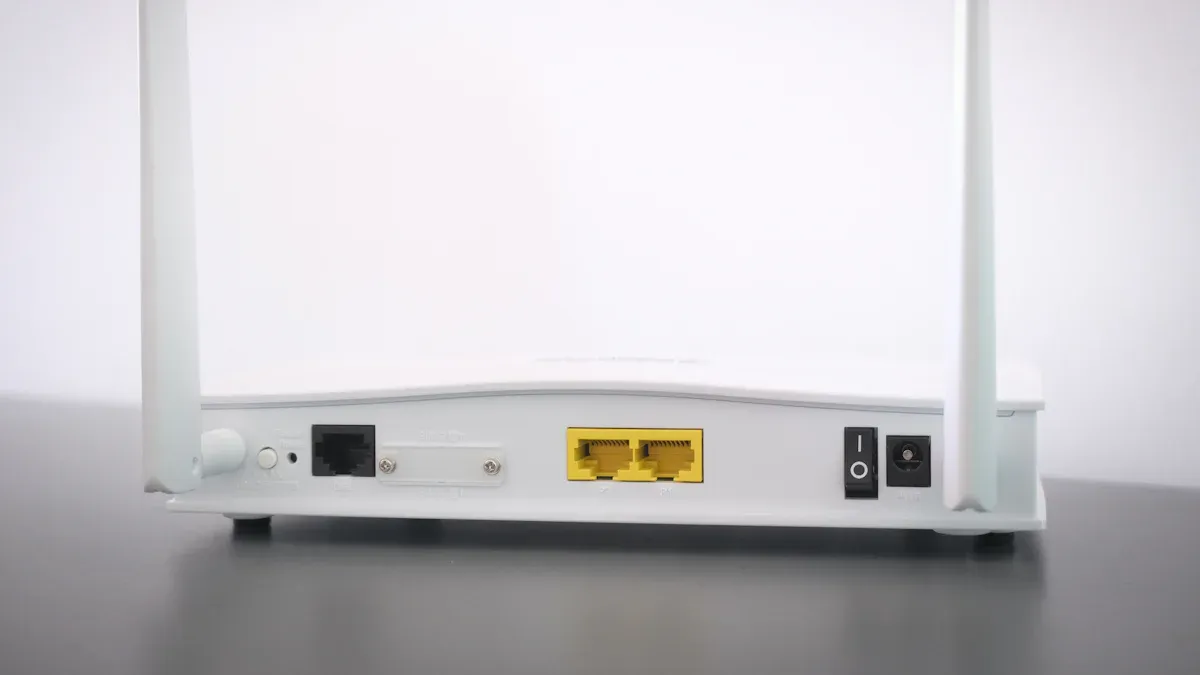
4G/5G Wireless Routers need tough hardware to work well in hard places. Industrial routers have special parts that can handle heat, cold, dust, and water. These routers work in very hot or cold weather, from -40°C to 70°C. They keep working even if they get bumped or shaken. The table below shows the main features:
Key Factors | Description |
|---|---|
Hardware Quality and Stability | Industrial-grade parts, wide temperature range, dust and waterproof, vibration resistance |
Network Compatibility | Works with many networks, supports different SIM cards, backward compatible, multi-band |
Performance Parameters | High speed, low delay, strong processor, large memory |
Security and Protection | VPN support, firewall, access control, data encryption |
Service and Support | Technical help, good after-sales service, warranty |
Ruggedized hardware makes these routers more reliable. They can handle shock, vibration, dust, and water. Many routers have IP66 certification, so they block water and dust. Some routers have two SIM slots and extra power inputs. If one SIM or power fails, the other keeps the router working. You can use these routers in factories, trucks, or outside.
Routers stay stable in very hot or cold weather.
Anti-interference features protect against noise from other devices.
Anti-vibration design helps routers work in moving vehicles or machines.
Software and Security
Smart software helps you manage your 4G/5G Wireless Routers. You can control many routers from one place. You can check if they are healthy, update them, and fix problems without going there. This saves time and money. Real-time monitoring lets you know if a router has trouble. You get alerts right away, so you can fix things fast.
Feature | Benefit |
|---|---|
Centralized Control | Makes it easy to set up and manage many routers at once |
Real-Time Monitoring | Lets you see device health and performance all the time |
Automated Updates | Sends new settings and security patches without visiting each site |
Robust Security | Uses strong login checks, VPNs, and location alerts to keep devices safe |
Security is very important for these routers. They use data encryption to keep your information private. Each user gets a special ID and strong keys to protect data. Dual authentication checks that only the right people connect. Firewalls and intrusion detection systems stop hackers. Newer 5G routers add more security. They check both your device and the network to stop fraud and keep your identity safe.
Security Feature | Description |
|---|---|
Data Encryption | Keeps your data safe from leaks |
Subscriber Permanent ID | Gives each user a unique number |
Dual Authentication (AKA) | Checks both sides before allowing access |
Security Edge Proxy (SEPP) | Protects the network edge from outside threats |
Encryption Keys | Makes sure data stays correct and private |
The main benefit of industrial routers is their ability to send data safely and steadily between faraway machines and control centers. This lets people watch, control, and study data in real time. It helps workers make smart choices and improve how things run.
Connectivity and Performance
You want your 4G/5G Wireless Routers to stay connected and fast. Good routers give you high data speeds and low delays. This is important for robots or machines that need quick commands. Even a small delay can cause problems in factories or on the road.
Metric Type | Description |
|---|---|
Network Reliability | Keeps your connection steady and reduces downtime |
Security Mechanisms | Protects your network from advanced threats |
Management Methods | Lets you control and fix routers from far away |
Core Functions | Makes sure important data never gets lost, even in critical jobs |
You can make routers work better by using strong parts and smart software. Routers with good processors and memory can handle more data. Good routing software keeps delays low. Some routers use simple network setups and backup links. If one path fails, another takes over. This keeps your data moving.
Good hardware design makes routers more reliable and cuts down interference.
Smart software and routing help reduce delays.
Simple networks and backup links help routers recover from problems.
High bandwidth gives you faster data speeds.
Low latency means less waiting for data to move.
Real-time features help routers meet the needs of automation and control.
You get the best results when you use strong hardware, smart software, and careful design. This makes your 4G/5G Wireless Routers ready for any job, from city offices to faraway oil fields.
Manufacturing Process Overview
Component Sourcing
You pick the right parts for your 4G/5G Wireless Routers. Good parts help routers last longer and work well in hard places. You want parts that support wireless technology and give steady bandwidth. These parts should also be easy to get for many years. The antenna is very important if you need strong signals far away. Top suppliers like ZBT give you good products and strong help. They test their products in outside labs and have ISO 9001 certificates. The table below shows what to look for when picking parts:
Criteria | Description |
|---|---|
Support for wireless technology | Focus on availability and latency. Different LTE categories fit different data needs. |
Selection of external antenna | Antenna choice and installation boost reception in remote locations. |
Bandwidth requirements | Reliability and availability matter more than high data speeds. |
Long-term availability | Components and software must last 10 to 15 years. |
Tip: Always check if your supplier gives you help and many products. This makes it easier to fix problems fast.
Assembly and Quality Control
You build the routers in a factory with strict rules. Each part is checked before you put it in the router. Special machines help make sure every router is made right. ISO-certified factories help stop bad parts and keep routers safe. Every router is tested to see if it works well and lasts long. Routers must work in hot, cold, dusty, or wet places. The table below shows the main steps for checking quality:
Quality Control Measure | Description |
|---|---|
ISO-Certified Production | Follows global standards from start to finish. |
End-to-End Performance Testing | Tests routers under many conditions for stable operation. |
Industrial-Grade Reliability | Checks if routers can handle harsh environments. |
Factory Capabilities & Commitment | Uses advanced tech for precise inspection. |
Testing and Certification
You test routers to make sure they follow world rules. Early testing helps you find problems before selling. Product tests check if routers are safe and follow network rules. You get papers ready for certification and talk to rule makers if needed. Routers need certificates like RED 2014/53/EU for safety and radio use, EN 18031 for network and privacy, and RoHS for safe materials. The table below lists the main certificates:
Certification | Description |
|---|---|
RED 2014/53/EU | Checks safety, electromagnetic compatibility, and radio spectrum efficiency. |
EN 18031-1 | Protects networks. |
EN 18031-2 | Guards personal data and privacy. |
EN 18031-3 | Prevents fraud. |
RoHS | Limits hazardous materials for environmental safety. |
Note: Certified routers help you feel safe. You know your routers are ready for tough jobs and will work well.
Challenges in 4G/5G Router Production
Technical Barriers
When you make 4G/5G Wireless Routers, you face many problems. New features can cost a lot of money. This makes it hard to add them. Many devices connect at the same time, so safety is a big worry. Some people do not know enough about setting up 5G technology. Other machines can send out radio signals that mess up your router. The table below shows these main problems:
Challenge | Description |
|---|---|
Cost | High-cost reduction requirements in manufacturing limit the adoption of new applications. |
Safety | The presence of numerous connected devices can create hazardous environments for workers. |
Deployment knowledge | Many SMEs lack the resources and technical expertise to effectively implement 5G technologies. |
RF interference | Existing radio communications on factory floors can interfere with new 5G signals. |
You can fix signal problems with MIMO, beam forming, and beam steering. These help your router find the best way for signals to travel. You also need to keep your device cool with good thermal management.
Regulatory Compliance
You must follow strict rules when making routers. Every country has its own laws for wireless devices. You need to test your routers for safety, privacy, and radio use. If you skip these steps, you might not be able to sell your routers in some places. Always check the newest rules before you start making routers.
Cost and Scalability
Making routers can get expensive fast. You pay more for better technology and special parts. Research and new features also cost extra money. Licensing fees and complex designs add to the price. Here are the main things that make costs go up:
Advanced technology and materials
Research and development (R&D) costs
Licensing fees
Enhanced features
Complexity of manufacturing processes
Embedded systems and industrial-grade parts make routers work better, but they also make prices go up. These parts are needed for 5G routers to work well.
If you want to make more routers, you need to watch your costs. New technology, high-category modems, and strong security all make routers cost more.
PCB Design and Manufacturing
You need strong PCBs for fast routers. New changes help your routers work better and last longer. The table below lists some key improvements:
Advancement Type | Benefit Description |
|---|---|
High-frequency laminates | Improves performance at 5G mmWave frequencies (24–47 GHz). |
Multi-layer PCB designs | Enables higher density and better signal integrity. |
Low-loss materials | Critical for maintaining signal integrity at high frequencies. |
You should use controlled impedance design and thermal management to keep your router working well. High-density interconnects, strict impedance control, and good inspection help you avoid mistakes. Careful planning and layout are also important.
Reverse Engineering and Redesign
Sometimes, you need to take apart routers to learn how they work. This helps you check if the software works, make the router better, and test security. You may also need to help old systems keep working. When you redesign, you can add secure boot, network slicing, and better encryption. These changes make your routers safer and faster.
Best Practices and Innovations
Efficiency and Sustainability
You can make 4G/5G wireless router manufacturing better by using some smart steps.
Use 4G for big areas. This helps old devices stay connected. It also lets you move lots of data to 5G radios.
Think about how waves move. Make sure 5G signals can travel straight. This helps stop signals from getting blocked by walls or things.
Plan power later. First, design your network. Then, figure out how to power it for the best coverage.
Mix your network. Use 4G, 5G, WiFi, and more together. This makes your system work better.
Recycling machines that connect to routers help nature. These machines use mobile routers to send data right away. You can use this data to make recycling faster and waste less. This helps the earth by lowering harm.
Companies like MaxLinear try to make routers greener. They make chips that use less power and stay cooler. They also use less water and make less trash. By recycling and saving power, you help cut down on energy use and e-waste.
Tip: When you design routers, think about the earth. Small changes in power or recycling can help a lot.
Future Trends in 4G/5G Wireless Routers
You will see new things in 4G/5G wireless routers.
Better security keeps your network safe from hackers.
Routers will work with AI, edge computing, and augmented reality.
Using less power helps devices last longer and saves energy.
New antenna technology makes routers work better and cover more area.
More 5G networks mean faster and bigger connections.
Artificial intelligence helps make routers smarter.
Aspect | Description |
|---|---|
Performance Optimization | AI helps data move faster and lowers delays. |
Real-time Optimization | AI controls how much data moves at once. |
User Experience | AI lets routers fix problems and gives you a better connection. |
Routers will get faster, safer, and more steady. As tech gets better, your network will get smarter and help the planet more.
You must think about quality, security, and flexibility when making 4G/5G wireless routers. Good routers work well in hard places and keep your data safe. You should add strong security like secure boot and network slicing. Make sure to update your routers often. The table below lists what is important for industrial routers:
Feature | Description |
|---|---|
Reliability | Keeps working in very hot or cold places. |
Security | Stops hackers with firewalls and encryption. |
Scalability | Lets your business grow without problems. |
Flexibility | Works with many devices and uses. |
Compatibility | Connects to different machines and networks. |
Routers that pass tough tests and change with new technology are best. This helps you use them anywhere you need.
FAQ
What makes industrial 4G/5G routers different from home routers?
Industrial routers use stronger parts. You get better protection against dust, water, and heat. These routers work in tough places like factories or trucks. Home routers focus on comfort and easy setup.
How do you keep your wireless router secure?
You set strong passwords. You turn on firewalls and use VPNs. You update your router often. You check for alerts and fix problems quickly. Security features help you block hackers and keep your data safe.
Can you use a 4G/5G router outdoors?
Yes, you can. Many routers have waterproof and dustproof cases. You check the IP rating before you buy. Some routers work in rain, snow, or heat. Outdoor routers help you connect in remote places.
What certifications should you look for in a router?
Certification | Why It Matters |
|---|---|
RED | Safety and radio compliance |
RoHS | No harmful materials |
EN 18031 | Network and privacy safety |
You check these before you buy. Certified routers meet safety rules.
How do you fix connection problems with your router?
Try restarting your router. Move it to a better spot. Check the SIM card and cables. Update the software. If problems stay, contact support. Quick fixes help you get back online fast.