You use microcontrollers used in embedded systems every day, even if you do not know it. These small computers are the brains of many devices. They get information from sensors and control things like motors or lights. When you use a smart device or an automatic system, microcontrollers used inside help everything work well.
Microcontrollers used help things work better and save money in electronics, factories, and healthcare devices.
They give fast control, which helps people do more and spend less.
Different designs let you pick the right speed and price for each job.
New things, like IoT connections and stronger power, help make smart products.
Key Takeaways
Microcontrollers are small computers. They control devices by using data from sensors. They also manage things like motors and lights.
They help save power and money. This makes devices smarter and better in homes, cars, and hospitals.
Embedded microcontrollers are good for one job. Microprocessors do many jobs but need more parts.
Microcontrollers act fast when things happen. This helps devices work right away. This is very important for robots and medical tools.
Using microcontrollers in design makes products smaller and smarter. These products can also use AI and connect to the IoT.
Embedded microcontroller basics

Definition and functions
You can find embedded microcontroller technology in many things. An embedded microcontroller is a tiny computer on one chip. It does one main job inside a device. You see an embedded microcontroller in washing machines, smart thermostats, and toys. This chip has a processor, memory, and input/output parts together. It does not need extra pieces to work.
An embedded microcontroller gets signals from sensors. It makes choices using those signals. Then, it tells other parts, like motors or lights, what to do. You can use an embedded microcontroller to turn on a fan if a room is hot. You can also use it to count steps in a fitness tracker.
Here are some main things an embedded microcontroller does:
It gathers data from sensors.
It handles information fast.
It controls things like displays or alarms.
It keeps small amounts of data.
It runs easy programs to do jobs automatically.
You can trust an embedded microcontroller for quick and steady control. It uses little energy and fits in small places. This makes it great for many smart devices.
Microcontroller vs. microprocessor
You may wonder how an embedded microcontroller is not the same as a microprocessor. Both are important, but they do different things. An embedded microcontroller is a full system on one chip. It is best for doing one job in a device. A microprocessor needs more chips to work. It can do many jobs at the same time, like in a computer.
Tip: If you want to make a device that does one thing well, pick an embedded microcontroller. If you need a system for many hard jobs, use a microprocessor.
Here is a table to help you see how they are different:
Feature | Microcontroller | Microprocessor |
|---|---|---|
Integration | All parts are together in one chip | Needs extra parts to work |
Power Consumption | Uses less power | Uses more power |
Application | Best for special jobs in embedded systems | Good for many jobs in computers |
Architecture | Harvard architecture | von Neumann architecture |
Cost | Costs less | Costs more because of extra parts |
Performance | Good for simple jobs | Good for hard and big jobs |
Examples | Car systems, IoT devices | Home computers, graphics processing |
You use an embedded microcontroller when you want something small, cheap, and that saves energy. You use a microprocessor when you need more power and options. Most smart devices you use need the special features of the embedded microcontroller.
Role of microcontrollers
Processing and control
A microcontroller is like the brain of an embedded system. It controls all the main jobs. When you use a device, the microcontroller runs its program. It reads steps, does math, and makes choices fast. This helps your device work well and answer quickly.
A microcontroller has important parts for its job:
The microprocessor follows steps and does math.
ROM holds the program that gives instructions.
RAM keeps data safe while the device is on.
I/O ports let the microcontroller talk to other parts.
Microcontrollers handle data from sensors and control actuators. In a smart fan, it checks the temperature and turns the fan on or off. In a robot, it moves motors and lights when it senses things. You can count on a microcontroller to keep everything working together.
Managing I/O peripherals
A microcontroller links to many devices. These can be buttons, lights, motors, or sensors. The microcontroller manages these input and output parts. It uses special pins called GPIO to send and get signals. You can set these pins to read or send commands.
Here are ways a microcontroller manages I/O peripherals:
It uses ADCs to read signals from sensors like temperature or light.
Timers help it keep track of time and control actions.
PWM lets it control how much power goes to motors or lights.
Communication interfaces like UART, I²C, SPI, USB, and Ethernet help it share data with other devices.
The microcontroller makes sure all these parts work together. It acts like a traffic manager, sending and getting signals so your device works right.
Responding to events
A microcontroller must act fast when something happens. It uses special tools to handle real-time events. If you press a button, the microcontroller must notice and act right away. It does this by using interrupts and sometimes a real-time operating system.
Here is a table that shows how a microcontroller responds to events:
Mechanism | Description | Key Features |
|---|---|---|
Real-Time Operating Systems | Schedules tasks and manages timing for smooth operation. | Runs many tasks at once, keeps things organized. |
Interrupt-Driven Firmware | Stops what it is doing to handle urgent events fast. | Quick response, handles important signals first. |
Hybrid Bare-Metal + RTOS | Mixes fast hardware control with smart task scheduling. | Handles urgent and regular tasks efficiently. |
When a hardware event happens, like a sensor sees movement, the microcontroller can stop its job and handle the new event. This makes sure your device reacts in real time. For example, in a spacecraft, the microcontroller can move an antenna or a robotic arm as soon as it gets a signal.
Note: Microcontrollers have the CPU, memory, and I/O on one chip. This helps them control devices with low power and high speed. You find them in many things, from home appliances to medical tools.
You depend on the microcontroller to keep your devices smart and quick. It handles data, manages connections, and reacts to changes, all in one small chip.
Microcontrollers used in embedded systems
Integration with hardware
Microcontrollers are in many devices because they connect to hardware easily. When you make an embedded system, the microcontroller must talk to sensors and motors. It also needs to talk to displays. There are different ways to help this work well:
Hardware abstraction lets you control parts without knowing every detail. You write easy code, and the microcontroller does the hard work.
Real-time control helps your device react fast to changes. If a sensor sees movement, the microcontroller can turn on a light right away.
Power management helps your device last longer. The microcontroller saves energy by turning off parts when not needed.
Security features keep your system safe. You can use encryption and authentication so only trusted people can use the device.
Microcontrollers in embedded systems often use all these ways together. This gives you fast, safe, and smart control over hardware. You can make smart gadgets that work well and last a long time.
Software interaction
You need software to make microcontrollers in embedded systems work. The microcontroller runs programs that tell it what to do. It uses memory to keep instructions and data. The microcontroller uses I/O ports to send and get signals.
Here is how microcontrollers work with software:
The microcontroller has a CPU, memory, and I/O ports on one chip. It can do many jobs at once.
You keep data in memory devices. The microcontroller reads and writes data when it needs to.
You use computer buses to move data between sensors and actuators.
Sensors help the microcontroller turn signals into useful data. Actuators let it do what you want.
You often use Embedded C to write programs for microcontrollers. This language lets you control hardware and manage resources well. See the table below for more details:
Concept | Description |
|---|---|
Direct Hardware Interaction | Embedded C lets you control hardware parts with clear commands. |
Low-level Programming | You use simple code to manage memory and hardware well. |
Microcontrollers in embedded systems work best when hardware and software work together. This gives you smart control and good performance in your devices.
Microcontroller applications
Consumer electronics
Microcontrollers are in many things you use at home. They help your microwave cook food the right way. They change the cycles in your washing machine. They keep your air conditioner cool and comfy. These devices use microcontroller-based solutions to read sensors and follow your commands. They also help manage settings for you. Here is a table that shows how microcontrollers work in popular electronics:
Application | Function |
|---|---|
Microwaves | Controls cooking time, power, and gets your choices from buttons or screens. |
Washing Machines | Changes wash cycles, water, and spin speed using your settings and sensors. |
Air Conditioners | Sets temperature, fan speed, and modes while saving energy. |
Microcontroller-based solutions make these devices smaller and cheaper. They also use less power. You get smart features and save money on energy.
Automotive systems
Microcontrollers are inside cars and trucks. They control the engine and powertrain systems. They help keep you safe with airbags and stability control. Microcontroller-based solutions also run music, climate, and lights. Here are some important uses:
Engine control
Powertrain management
Safety systems (airbags, stability control)
Infotainment systems
Climate control
Lighting control
Microcontrollers help cars follow safety rules and check for problems. They use special codes and tests to make sure your car works well for a long time.
Industrial automation
Factories and production lines use microcontrollers. They control robots and machines. They help manage assembly lines too. Microcontroller-based solutions make work faster and better. You need less fixing and less help from people. Microcontrollers help machines work with care and speed.
Control of robots
Management of assembly lines
Operation of other machinery
Medical devices
Microcontrollers help make healthcare better. They control devices like patient monitors and test tools. Microcontroller-based solutions give real-time control and accuracy. Many medical devices use special features for low power and smart work. You see microcontrollers in nebulizers, syringe pumps, and remote monitoring systems.
In a nebulizer, the microcontroller controls power and timing. It keeps the device safe and working well, even without software running all the time.
Microcontroller applications give you smart and reliable technology every day. You get smaller devices, lower power use, and good prices in all areas.
Impact on electronic manufacturing and design
Influence on design processes
Microcontrollers have changed how people design electronics. These small chips help make products smaller and smarter. You can add more features in less space. Some microcontroller series, like XMC and TRAVEO, work fast and use little power. People use them in smart cars and factory machines.
Microcontroller Series | Key Features | Applications |
|---|---|---|
XMC™ Series | High clock frequency, low power consumption | Industrial automation, motion control |
TRAVEO™ Series | Built-in security features | Automotive electronics, smart vehicles |
Now, you can put artificial intelligence in your products. Microcontroller programming lets devices make choices by themselves. Your products get smarter. They can use AI to handle hard data. Devices can react to changes without someone helping.
Products become more intelligent.
Devices can change what they do on their own.
Effects on manufacturing techniques
Microcontrollers also change how electronics are made. People use new ways, like surface mount technology, to place parts. Robots use sensors to work in real time. This makes building things faster and more exact.
Manufacturing Technique | Description |
|---|---|
Advanced Assembly Processes | Surface mount technology for precise part placement |
Automation Technologies | AI-powered robots with IoT sensor communication |
Flexible Manufacturing | Additive manufacturing for flexible electronics |
Devices are tested to make sure they work in hard places. Fewer parts are needed because microcontrollers do many jobs. This makes products stronger and cheaper to build.
AI and IoT make people use special chips and change how they get parts to stay ahead.
Driving innovation and product development
Microcontrollers help people make new products quickly. You can build a model to show your idea works. You can test how it works and show others to get support. Microcontroller programming lets you change your design fast and try new things.
Proof-of-concept models show your idea can work.
Working models test how the product does its job.
Marketing models help you get feedback and money.
Boards like Arduino help test ideas and make changes. This saves time and money. Products get smarter and easier to use. Things like smart plugs and home alarms use microcontrollers to connect to phones and answer fast.
There are some problems too:
It can be hard to use new microcontrollers with old systems.
You need to keep your data safe.
Starting a new project can cost a lot.
Microcontrollers help make products smaller, smarter, and stronger, but you need to plan for new problems when you design and build.
You can find microcontrollers in many places, like smart homes and satellites. These chips help sensors work and control different jobs. They also help machines use AI to make choices. Experts say you need chips that use many protocols and have strong security. They also say using new languages like Rust helps get better results.
Microcontrollers help things work faster and safer in IoT, cars, and healthcare.
They are used more as things like self-driving, edge computing, and smart farming grow.
The market will keep growing because people want more speed, to save energy, and to stay safe.
FAQ
What is the main job of a microcontroller in an embedded system?
A microcontroller runs and controls jobs inside a device. It gets data from sensors and tells other parts what to do. This makes sure your device works how you want.
How does a microcontroller help with the internet of things?
Microcontrollers can connect to networks so devices share data. This helps you make smart systems for the internet of things. You can control things from far away and get helpful info.
Can you program a microcontroller at home?
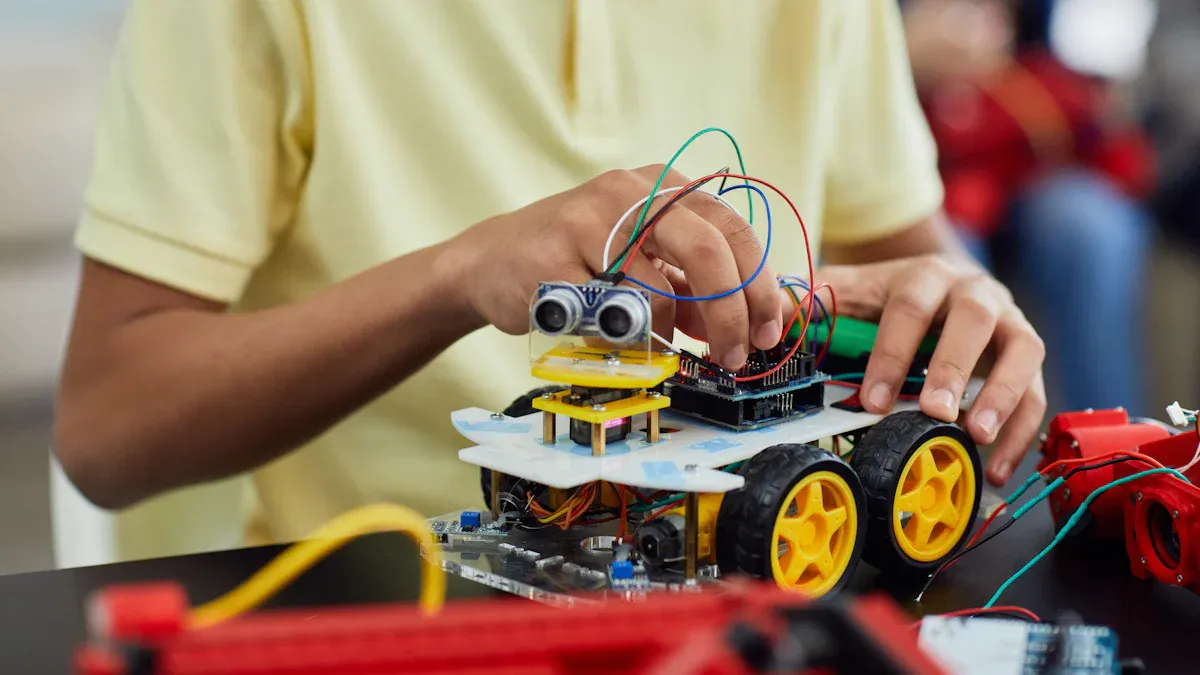
Many microcontrollers can be programmed at home. You use easy tools like Arduino boards and free programs. This lets you learn about devices and make your own projects.
Why do people use microcontrollers in the internet of things?
People use microcontrollers in the internet of things because they are small and save power. They help devices talk and work together. This makes homes and businesses smarter.