
You can think of designing and making a modem as a careful job. It uses new technology and smart ways to build things. Modems help billions of people connect all over the world. There are 1.2 billion modems sent to other countries. These are worth USD 35 billion. The market for mobile broadband modems will grow a lot. It may reach USD 120 billion by 2032.
The move to 5g modem chips and low-power LTE modem design has changed how devices work. Companies now make their own chips. This helps them create new ideas and makes mobile technology better.
Key Takeaways
Modems are important for internet access. They change signals so devices can talk online.
Picking the right modem, like DOCSIS 3.1, can make your internet faster. It can also help your internet work better.
Good modem design needs careful planning. You must think about power use. You also need to connect hardware and software well.
Making modems in a green way helps the environment. It also saves energy.
Learning about new modem trends, like 5G, helps you choose the best devices. This makes sure your devices work for future internet needs.
Modem basics and connectivity
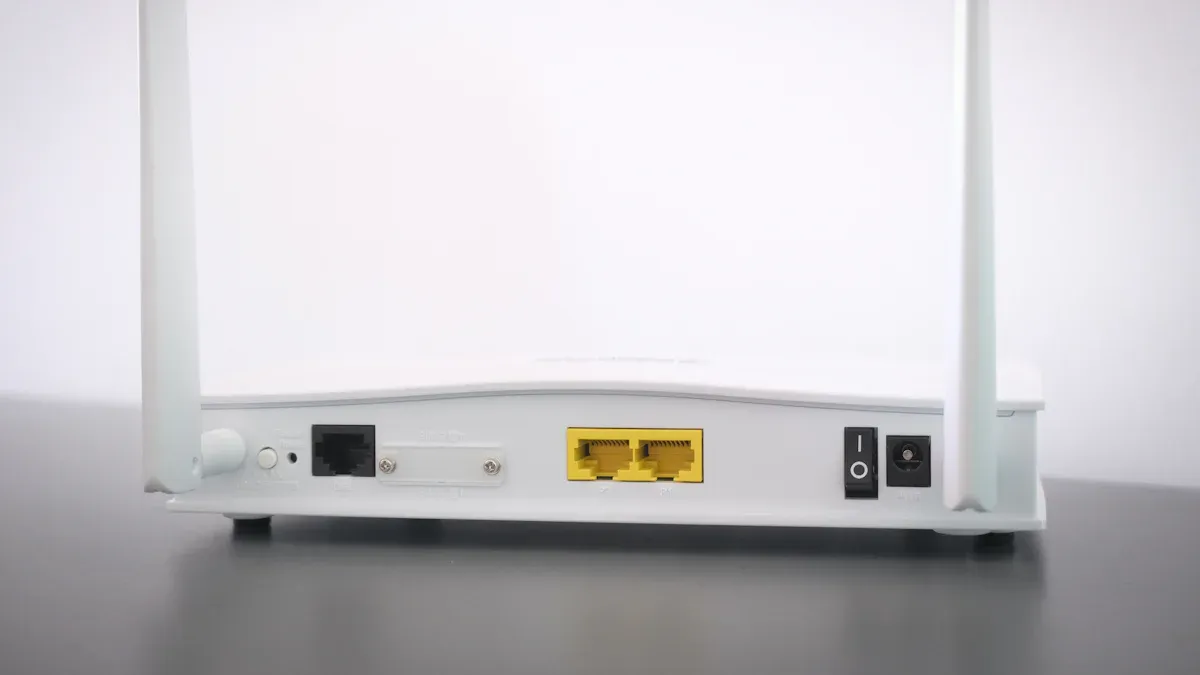
What is a modem
A modem helps your devices get on the internet. It changes signals so computers can send messages far away.
A modem takes analog signals from phone wires and turns them into digital signals your devices can use.
The modem does two things at once. It turns digital data into analog signals. It also changes analog signals back into digital data.
Here are the main parts inside a modem:
Modem controller: This part is like the brain. It tells the other parts what to do.
Digital to analog converter: It turns digital data into analog signals.
Analog to digital converter: It turns analog signals into digital data.
Modem communication
When you send a message or go to a website, your modem talks to your internet service provider (ISP). The modem changes data so your computer can read it.
You get fast and steady internet because the modem does both modulation and demodulation. This means it can send and get data at the same time.
Tip: If your internet is slow, look at your modem. Old modems may not work well with new internet speeds.
Types of modems
There are different types of modems for different uses. Cable modems use the DOCSIS standard. This standard decides how fast your internet can be.
The table below shows how DOCSIS versions are different:
DOCSIS version | SC-QAM channels | OFDM channels | OFDMA channels |
|---|---|---|---|
3.0 | 32 down / 4 Up | – | – |
3.1 | 32 down / 4 Up | 2 | 2 |
3.1 Plus | 32 down / 8 Up | 5 | 2 |
4.0 | 44 down / 8 Up | 5 | 7 |
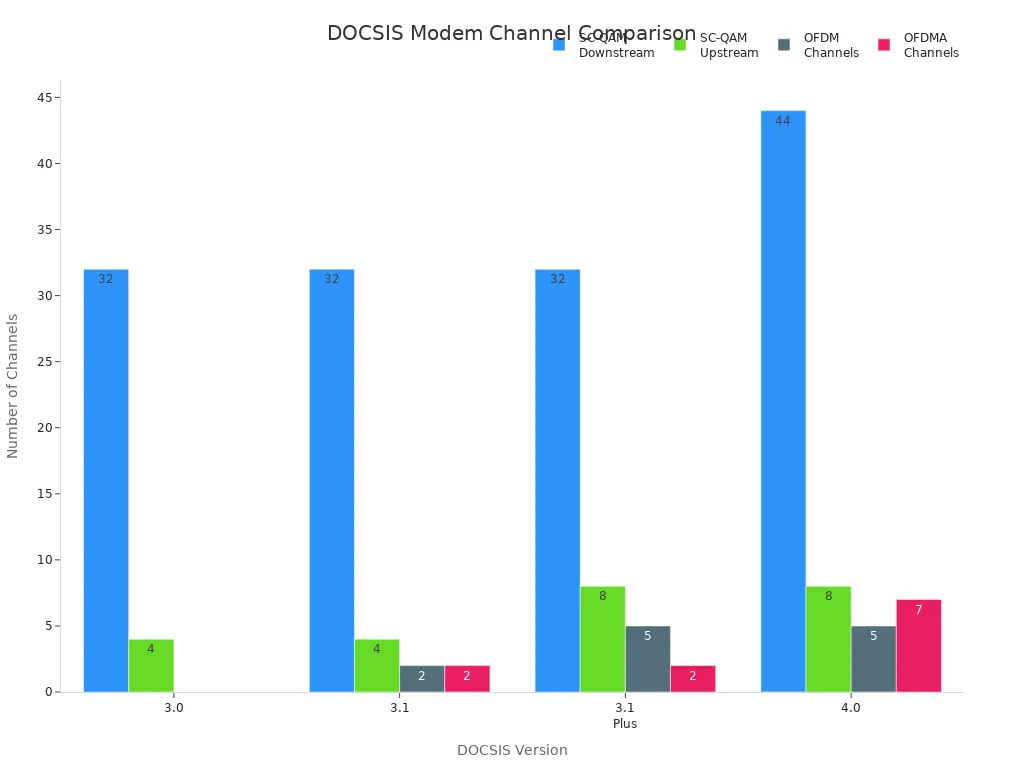
DOCSIS 3.1 modems are faster and work better than old ones. If you have lots of devices, you get more speed. The newest DOCSIS 3.1 standard gives you strong and quick internet, even if you use a lot of data.
Modem design process
Architecture and planning
When you start designing a modem, you first make a plan. You set goals for how much power it will use and how well it will work. The first step is to explore the architecture. You pick how many cores you need. You decide what jobs go to hardware and what jobs go to software. You also plan the memory system. You look at how all the parts will talk to each other. This is called interconnect topology. You have to make sure the modem works well but does not use too much power.
Here are the main steps in this part of the design:
Architectural exploration: You pick the number of cores, plan the memory, and split the work between hardware and software.
Verification of architecture: You test each part to see if it meets your power and performance goals. You use special tools to check if everything works together.
Incorporation of specialized processors: You might add special processors for tasks like error control coding. This helps the modem work better.
Software development acceleration: You make virtual models to help write and fix software faster.
You face many problems during this stage. You must handle power and cooling. You need to keep costs down. You have to follow safety rules. You also need to make sure your design fits in the space you have and works with other systems.
Challenge Type | Description |
|---|---|
Power and Cooling | You need strong power and cooling systems. |
Scalability | Your design must fit in a small space. |
Energy Efficiency | You try to use less energy and add green energy. |
Cost Management | You watch prices and supply chain issues. |
Compliance | You follow safety and security rules. |
Hardware-software integration
Hardware-software integration is a big part of modem design. Hardware engineers, software developers, and product managers work together. They make sure everything works well. For LTE modems, both hardware and software must work together for good results.
Integration helps you finish faster and save money.
You can add new services, like remote monitoring, to make more money.
Teams use models to test and improve hardware and software together.
Good data helps you make quick decisions.
If you do not focus on integration, you can have problems. Parts may not talk to each other well. The system must answer quickly in real time. Fixing problems takes longer if hardware and software do not match.
Tip: Good integration gives you better performance and more reliable modems.
Power management in LTE modems
Power management is very important when you design an LTE modem. You want the modem to use less energy, last longer, and stay cool. Good power management saves money and helps the planet. You see these benefits in many devices, like medical tools and machines in factories.
Technique | Description | Efficiency Evidence |
|---|---|---|
MQTT Protocol | Uses less power than HTTP | 40% lower power use |
CoAP Protocol | Small headers for low-bandwidth devices | Good for devices with few resources |
GZIP Compression | Makes data smaller before sending | 60%-80% less data sent |
Exponential Backoff | Fewer tries to reconnect | Saves energy by waiting longer |
Low-Power Chip Selection | Combines jobs to save power | 30% less power used |
Adaptive Transmit Power | Changes power based on signal strength | 20%-30% energy savings |
Using these ideas gives you better battery life, smaller modems, and less power use. You also get more reliable products that last longer.
You may have power problems, software bugs, broken parts, or trouble from the environment. You fix these by checking power, updating software, changing bad parts, and keeping the modem in a safe place.
Problem Type | Description | Solutions |
|---|---|---|
Power Issues | Bad power can cause outages | Check and fix power lines |
Software Malfunctions | Bad software can cause reboots | Update to the newest software |
Hardware Failures | Broken parts can make the modem unstable | Replace broken parts |
Environmental Factors | Heat or humidity can hurt the modem | Control temperature and humidity |
Preventive Measures | Regular checks stop future problems | Keep up with maintenance and backups |
PCB design for modems
PCB design affects how well your modem works. You must keep impedance steady, stop crosstalk, and make sure power is strong. Early tests help you find problems before you build the modem.
Signal quality is important for fast data. If the signal is bad, you get more mistakes and slower speeds.
You want high performance, low power use, and good connections.
Today, you need to make smaller and thinner PCBs. You see this in phones, wearables, and IoT devices. New tools and high-density designs help you meet new needs. As 5G grows, you need PCBs that can handle more data and keep working well.
Note: Using new PCB tools and AI can help you design a modem for high-end LTE modem uses.
Design verification and testing
Verification and testing make sure your modem works as it should. You run tests to check for interference, speed, and errors. These steps help you find and fix problems early.
Testing Type | Metrics Measured |
|---|---|
Interference Testing | Device sensitivity, Packet Error Rate, Bit Error Rate |
Throughput Tests | Data transfer rates between devices |
You need strong testing to meet your power and performance goals. Testing helps you make reliable products that work well in real life.
Modem manufacturing steps
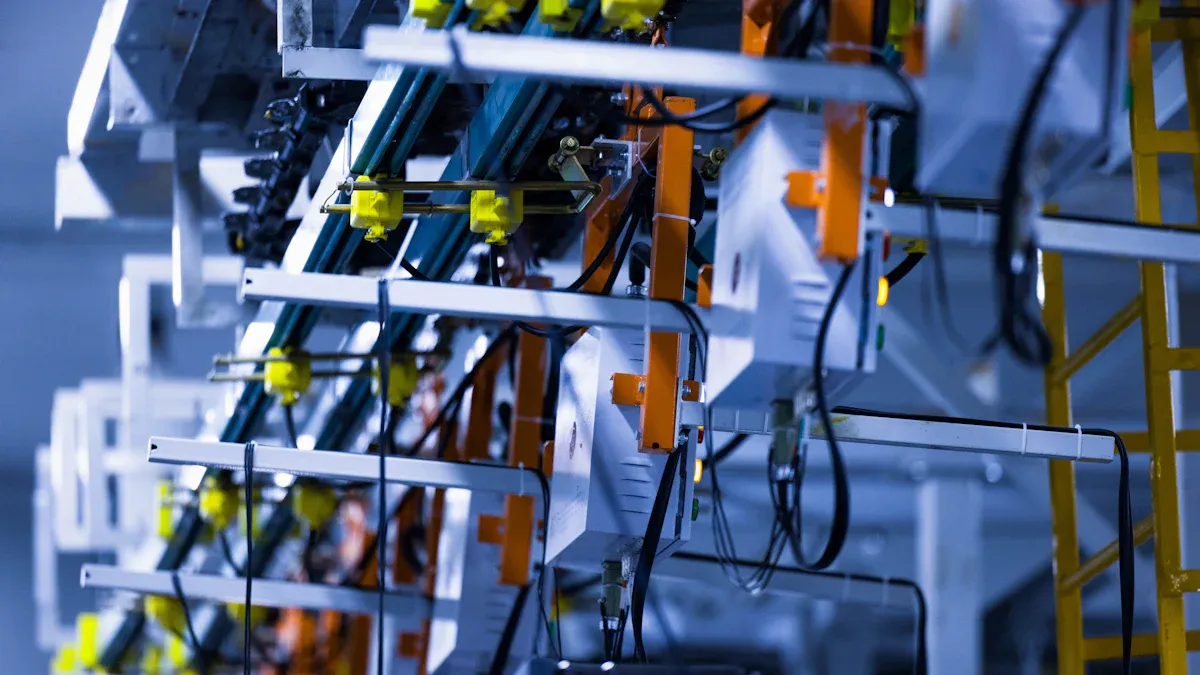
Chip and component selection
You begin by picking the best chips and parts for your modem. You want modem chips that work fast and support 5g modem chips. This gives you better speed and makes your modem more reliable. You test each chip in the whole system to see if it fits your design. You check how much power it uses and how hot it gets. This helps your modem stay cool and work well. You also test how long the chip will last. Chiplet designs are often better than old monolithic chips. They use less material and cost less.
System-level testing
Power and thermal testing
Reliability testing
PCB manufacturing and assembly
After you pick your parts, you start making and putting together the PCB. You use new ways to build so your modem works well. You design the PCB so it is easy to make. This saves money and makes the modem work better. You talk with your manufacturer to match your design to their machines. You pick bigger passive parts so they are easier to place and check. Automated optical inspection (AOI) finds problems fast and keeps the quality high.
Evidence | Description |
|---|---|
DFM Importance | PCB designed for manufacturability lowers costs and improves yield. |
Collaboration with Manufacturer | Tailored designs maximize cost savings. |
Automated Inspection | AOI ensures quality control and reliability. |
Quality control
You need strong quality checks to make sure your modem is good. You watch for defects, first-pass yield, and customer complaints. Sensors and people both look for problems early. You test the products and check the process to keep things running well.
KPI | Description |
|---|---|
Defect rates and types | Measures how often and what kind of defects occur |
First-pass yield | Shows how many modems pass checks the first time |
Scrap and rework rates | Tracks wasted materials and fixes |
Customer complaint rates | Counts complaints from users |
On-time delivery | Checks if products arrive on schedule |
Supply chain strategies
You face many problems when making modems, especially with 5g modem chips. You may have shortages, higher prices, and delays. You can use more suppliers, store extra parts, and use tech to plan better. IoT data helps you find risks and change delivery routes. Companies like China Telecom use bundles and subsidies to save money. Remote work and maintenance can cut labor costs by 80%.
Diversify suppliers
Increase inventory
Use real-time monitoring
Bundle data plans for savings
Green manufacturing
You help the Earth by using green ways to make modems. The ICT industry could make 14% of the world’s greenhouse gases by 2040. You use low-power 4G LTE and 5g modem chips to watch energy use and improve how you make things. You design modems to use less power and fewer materials. You support green IoT by thinking about design, making, using, and throwing away modems. Remote meter reading and leak checks cut waste and need fewer people.
Note: Green manufacturing helps you lower emissions and save resources throughout the modem’s lifecycle.
5G and industry trends
5G modem chips
5g is changing how you use your phone every day. New 5g modem chips make your data much faster. They also help your phone work better. These chips let your phone connect to the internet quickly. You can download videos, play games, and join video calls with less waiting. The table below shows how iPhone 16 and iPhone 16e modems work in different countries. You can see that 5g gives you much faster download speeds.
Modem | Market | Median Download Speed (Mbps) | Carrier Aggregation Support |
|---|---|---|---|
iPhone 16 | Saudi Arabia | 353.49 | 4 |
iPhone 16e | Saudi Arabia | 295.01 | 3 |
iPhone 16 | Spain | 110.38 | 4 |
iPhone 16e | Spain | 139.88 | 3 |
iPhone 16 | U.S. | 317.64 | 4 |
iPhone 16e | U.S. | 252.80 | 3 |

Vertical integration
Vertical integration helps companies make better modems. Companies like Apple, Amazon, and Tesla use this idea. They control how their modems are made and tested. This means you get better phones and faster updates. The table below shows how vertical integration helps these companies.
Company | Benefits of Vertical Integration |
|---|---|
Apple | Control over production, high-quality products, seamless customer experience, increased innovation. |
Amazon | Improved operational efficiency, reduced costs, ability to create own products, increased competitiveness. |
Tesla | Control over production, unique customer experience, increased efficiency, and innovation. |
You get new features and updates faster because companies handle everything.
Innovation in modem design
Modem design gets better every year. New technology helps your phone use less power and last longer. The table below shows some new ideas that make 5g and mobile technology better.
Innovation | Description |
|---|---|
Power Architecture | Optimizes I/O power consumption by 60% and reduces power supply circuit size by 45%. |
Vibration Energy Harvesting | Generates 0.3W of electricity from industrial equipment vibrations, extending battery life from 18 months to 10 years. |
Machine Learning Models | Dynamically adjust CPU frequencies and RF power, reducing power consumption from 2.3W to 18mW, and energy consumption during transmission by 82%. |
5G RedCap | Streamlined processing and optimized signaling enhance energy efficiency, enabling multi-year battery operation for remote IoT devices. |
5g RedCap lets devices run on batteries for many years. This helps you use your phone in places without plugs.
Future directions
Modem technology will keep growing. The market for cable modems will get bigger as people want new technology. You will see more smart and green products. The wireless data radio modem market will grow from USD 1.05 billion in 2024 to USD 1.55 billion by 2032. More automation and AI will be used in mobile networks. Governments will help make internet faster and safer. You will see new things like DOCSIS 4.0, better supply chains, and eco-friendly designs. People will want faster and more reliable phones for work and fun.
You help shape the future of 5g and mobile technology by picking devices with better features.
New technology like DOCSIS 4.0 makes internet faster and more reliable.
New rules and laws make your devices safer.
Better supply chains help you get new products quickly.
Green designs help the planet.
People want faster internet, so companies make better modems.
Global trade and rules change how companies build and ship modems.
You need to follow some key steps when making a modem. The table below shows what experts think is most important:
Step | Description |
|---|---|
Market Analysis | You look at trends and find new chances for your modem. |
Process Flow | You plan how to build and test each part. |
Project Requirements | You set clear goals for your modem and how you will make it. |
5g modem chips and LTE modem design make devices faster and help them connect better. Companies make new chips because people want fast internet and smart devices. More people are streaming, playing games, and using IoT. This makes companies work hard to improve modem technology. The government helps and new cable modem designs also change the market.
Tip: When you pick a modem, check both its features and what is popular in the market. This helps you choose the best one for you.
FAQ
What does a modem do?
A modem lets your devices talk to the internet. It changes signals so you can send and receive data. You need a modem for online games, streaming, and browsing.
How can you tell if your modem is working well?
You can check the lights on your modem. Fast internet and no error messages mean your modem works well. If you see slow speeds or dropped connections, you may need to restart or replace it.
What is the difference between LTE and 5G modems?
Feature | LTE Modem | 5G Modem |
|---|---|---|
Speed | Up to 100 Mbps | Up to 10 Gbps |
Power Use | Lower | Higher |
Coverage | Wide | Growing |
How do you keep your modem safe?
You should update your modem’s software often. Use strong passwords. Place your modem in a safe spot away from heat and water. This helps protect your device and your data.