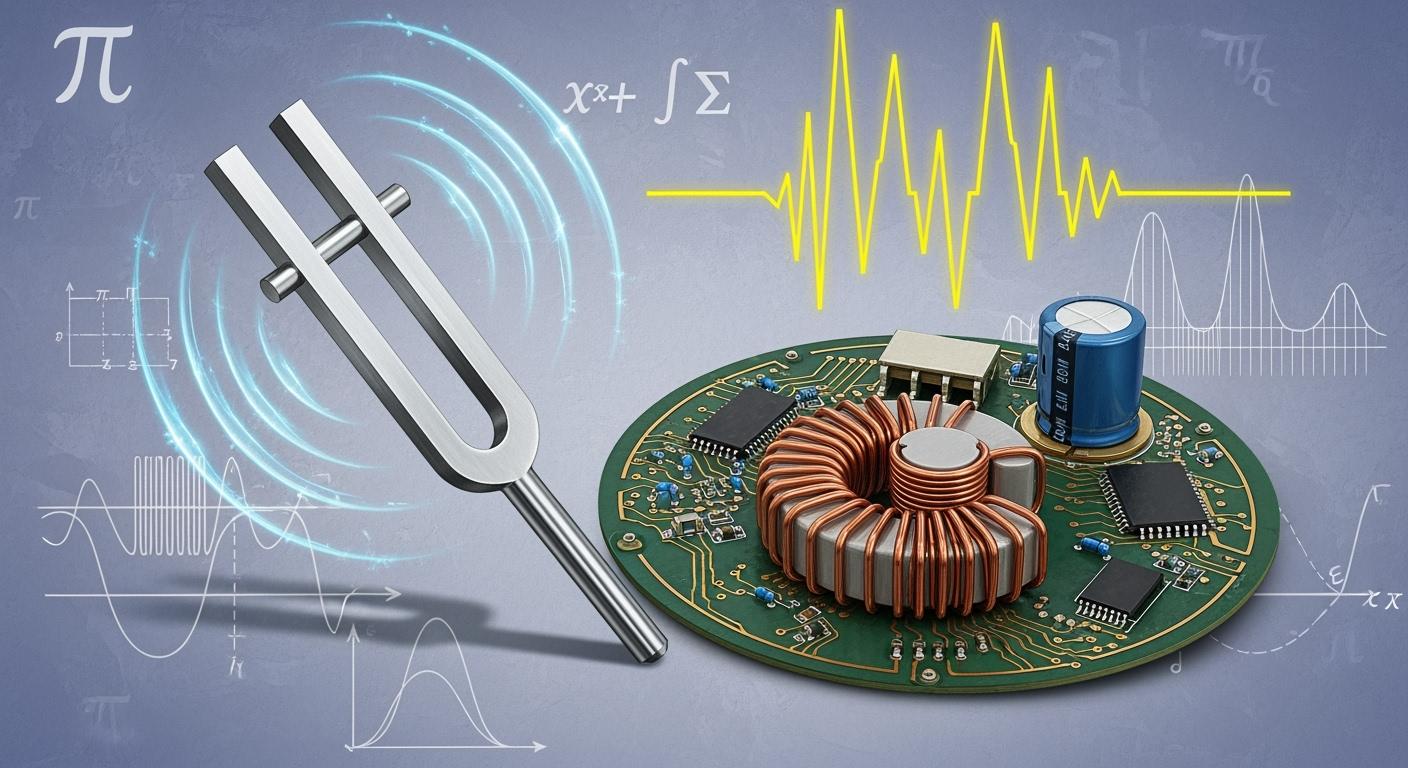
You see resonant frequency when something shakes at its own speed. This can make big things happen, like a glass breaking or a bridge moving. Resonant frequency in machines can cause real problems, such as:
Pipelines can break if they shake too much.
Pumps or compressors can stop working from too much movement.
Drilling tools can snap while being used.
Offshore platforms can get damaged.
Resonant frequency in audio systems changes the sounds you hear. In electronics, an oscillator and a parallel rlc circuit both use resonance. You can find ways to figure out these frequencies to make systems safer and better.
Key Takeaways
Resonant frequency is the speed things shake best at. Knowing this helps people make safer buildings and machines.
In electronics, resonant frequency makes signals clearer and stronger. It helps radios, TVs, and other devices work better.
Controlling resonance stops harm in buildings and machines. Engineers think about natural frequencies to keep things safe.
You see resonance in musical instruments and bridges. Seeing these examples helps you know how resonance works in life.
Use the formula f₀ = 1 / (2π√(L * C)) to find resonant frequency in circuits. This helps people make better electronic designs.
What Is Resonant Frequency?
Definition and Key Concepts
Resonant frequency is the speed something shakes the strongest. When you tap a glass or pluck a guitar string, it starts to move. If you use the right frequency, it shakes even more. Scientists call this the natural frequency. It is when something moves with its biggest strength. In physics, a glass can shake so much it breaks.
If you push at the resonant frequency, the object takes in energy better. This makes it move more or sound louder.
Resonant frequency is found in many things. In physics, it means something shakes without help. In electronics, it helps circuits pick or boost signals. It is important because energy moves best at certain speeds.
Some main ideas about resonant frequency are:
It is the natural speed where things shake the most.
At this speed, waves join together and make bigger moves.
Resonant frequency helps you learn how things share energy and move together.
Resonance Explained
Resonance happens when something shakes at its resonant frequency from an outside push. You can see this in real life. For example:
The Tacoma Narrows Bridge fell because wind matched its resonant frequency.
A singer can break a glass by singing the right note.
People walking on a bridge can make it sway if their steps match the bridge’s natural speed.
Resonance is not just for big events. You use it every day. Playing an instrument uses resonance to make sounds louder and richer. In electronics, resonant frequency helps you tune radios and pick channels. It helps devices work better by moving energy at the right speed.
Resonance matters because it helps energy move and work better. In instruments, resonance makes sounds clear and strong. In electronics, it helps you find and boost signals. Sometimes, resonance can break things or hurt buildings. You need to control resonance to keep things safe and working.
Resonant frequency is a strong idea. It shows why things shake, how energy moves, and why you hear sounds or see effects in machines and buildings.
You see resonant frequency in both physical and electronic things. It helps you know why bridges move, why glasses break, and why radios work. Learning about resonant frequency helps you make safer buildings, better electronics, and stronger machines.
How Resonance Works
Natural Oscillation Principles
When you watch a swing go back and forth, you see natural oscillation. The swing moves at its own special speed. This is called its natural frequency. If you push the swing at just the right time, you match this speed. The swing goes higher and higher, even if your pushes are small.
Natural frequency means how fast something vibrates by itself.
Resonance happens when you add energy at the same speed as the natural frequency. This makes the movement much bigger.
Every swing has a certain length. This length gives it a special time to swing back and forth. When you push someone on a swing, you push at the right moment. You do this when the swing is just past its highest point and moving away from you. Even small pushes make the swing go much higher.
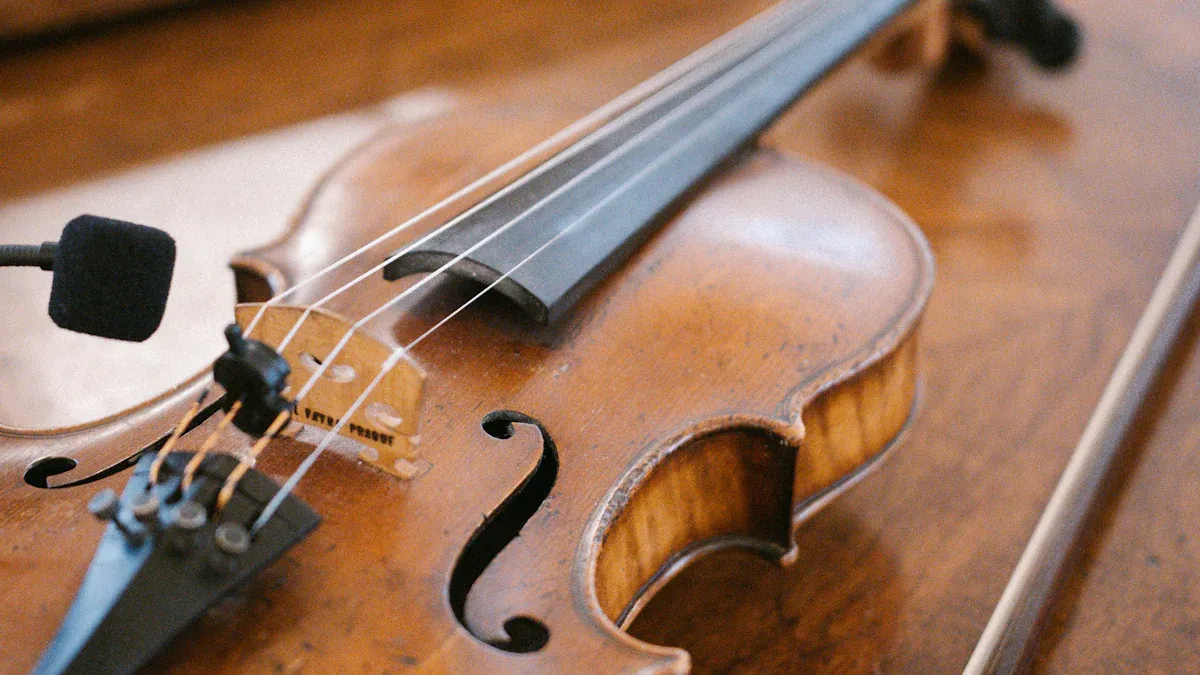
You can find resonant frequency in many things. When you pluck a guitar string, it shakes at its natural frequency. If you play a note that matches a glass’s resonant frequency, the glass can shake or even break. Resonance lets energy build up and cause strong effects.
Factors Affecting Resonant Frequency
Many things can change the resonant frequency of something. These things help explain why objects vibrate in different ways.
The mass of an object changes how fast it vibrates. Heavier things usually have a lower resonant frequency.
The shape of an object changes how it moves and vibrates.
How stretchy an object is can change its natural frequency.
In electrical circuits, inductance and capacitance set the resonant frequency.
If you change the mass or shape, you change the resonant frequency. In circuits, changing inductance or capacitance also changes the resonant frequency. People use these ideas to make safe buildings, strong bridges, and better electronics. When you know about resonant frequency, you can control how things move and work.
Importance of Resonant Frequency
Applications in Science and Engineering
Resonant frequency is used in many areas. Engineers use it to make buildings and bridges safer. Knowing how things shake helps protect them from wind or earthquakes. Machines like motors and swings need resonant frequency to work well. If you ignore it, things might not work right or could break.
Tip: You can save energy by matching systems to their natural vibration speed. This helps power grids and factories waste less energy.
Resonant frequency helps stop problems in cars and planes. Designers check parts so vibrations do not break them. Electric cars use this idea to keep parts working. Medical devices use resonant frequency for pictures and tests. This gives better images and safer checks.
Here are some ways resonant frequency is used today:
Radios and TVs use resonant circuits to get clear signals.
Communication systems use fiber optics and resonance for fast data.
Voltage magnification boosts signals in AC circuits without more power.
Induction heating uses resonance to heat things quickly.
Oscillator circuits make exact frequencies for clocks and electronics.
Resonant frequency helps make technology safer, smarter, and more efficient.
Everyday Examples
Resonant frequency changes things you do every day. You might notice it when you sing in the shower or tune a radio. The table below shows some examples and how resonant frequency works:
Example | Description |
|---|---|
Singer Breaking A Wine Glass | A singer can break a glass by singing its resonant frequency. Energy moves into the glass and makes it shatter. |
Bridge Vibrations | Soldiers marching can shake a bridge if their steps match its natural frequency. This can hurt the bridge. |
Music System | Loud music can make furniture shake if the beats match their natural frequency. |
Singing in Shower | Singing in a shower sounds louder because sound waves bounce off the walls and resonate. |
Tuning a Radio | Turning a radio changes its natural frequency to match the station. This lets you hear clearly. |
Microwave Oven | Microwaves heat food by making water and fat molecules shake at their own frequency. This causes heating. |
You see resonant frequency in music, cooking, and relaxing at home. When you know how it works, you understand why things shake, sound louder, or break.
Calculating Resonant Frequency
Resonant Frequency Formula
You can figure out the resonant frequency of an rlc circuit with a simple formula. This formula shows the exact spot where the circuit vibrates the most. To start, you need to know the values for the inductor (L) and the capacitor (C).
Here is a table with the main formulas you will use:
Formula Type | Formula |
|---|---|
Resonant Angular Frequency | ω₀ = 1/√(LC) |
Resonant Frequency in Hertz | f₀ = 1/(2π√(LC)) |
These formulas help you find the resonant frequency for any rlc circuit. The unit for L is henries (H). The unit for C is farads (F). The answer for f₀ is in hertz (Hz).
You also need to know about reactance. Inductive reactance (XL) and capacitive reactance (XC) change when the frequency changes. At the resonant frequency, XL and XC are the same. This means the circuit is balanced, and the total reactance is zero. This is important for understanding resonance in an rlc circuit.
Series and Parallel Resonant Circuits
There are two main types of rlc circuits: series rlc circuit and parallel rlc circuit. Each type acts differently at resonance.
Here is a table that shows the main differences:
Basis of Difference | Series Resonance | Parallel Resonance |
|---|---|---|
Impedance | Minimum | Maximum |
Current | Maximum | Minimum |
Behavior of Circuit | Accepter circuit | Rejector circuit |
Applications | Tuning, oscillators, voltage amplifiers | Current amplifiers, induction heating, RF amplifiers |
In a series rlc circuit, the impedance gets very low at the resonant frequency. This means the current gets very high. You use this type in radios and oscillators. It helps you pick one frequency from many.
In a parallel rlc circuit, the impedance gets very high at resonance. The current in the main line gets very low. You use this type in devices that block some frequencies or in RF amplifiers.
When you want to calculate resonant frequency, you must know if you have a series rlc circuit or a parallel rlc circuit. This helps you guess how the circuit will act and what results you will get.
Tip: Always check your values for L and C before you calculate resonant frequency. This makes your answers more correct and helps your rlc circuit work as you want.
Calculating resonant frequency lets you design better circuits and fix real problems in electronics.
Effects in Resonant Circuits
Impedance at Resonance
When you look at resonant circuits, you notice big changes. Impedance and current change a lot at the resonant frequency. In a series circuit, inductive and capacitive reactances cancel each other. This makes the total impedance drop to just the resistance. The circuit acts like a simple resistor now. You get the lowest impedance here. The current becomes the highest it can be. The circuit does not waste energy in the inductor or capacitor. This effect lets the most current flow at one special frequency.
In a parallel resonant circuit, things are different. The impedance gets very high at the resonant frequency. The main line current drops to its lowest point. The circuit blocks signals at this frequency. It lets other signals pass through. You can use parallel resonant circuits to filter out unwanted signals or noise.
In a series circuit at resonance, impedance is lowest.
In a parallel circuit at resonance, impedance is highest.
Current is highest in series and lowest in parallel at the resonant frequency.
Measuring Resonant Frequency
You can measure resonant frequency in electronic circuits in different ways. One common way is using a frequency counter. This tool counts how many cycles happen each second. It uses a gate counter, a pulse counter, and a reference clock. You get a digital readout of the frequency.
Another way uses a Quartz Crystal Microbalance with Dissipation Monitoring (QCM-D). This tool measures both the resonant frequency and how much energy is lost. It works well for checking changes during tests.
You can also use simple systems with oscillators and feedback amplifiers. These setups help you find the resonant frequency without spending much money. But they may not be as accurate as advanced tools.
Use a frequency counter for digital measurement.
Try QCM-D for detailed monitoring.
Use oscillator circuits for low-cost measuring resonant frequency.
When you measure resonant frequency, you can tune circuits. You can fix problems and design better devices. Accurate measuring helps you get the best performance from your resonant circuits.
Resonant Frequencies in Real Life
Electronics and Circuits
You can find resonant frequency in electronics all the time. It helps you tune radios and set clocks. It also helps filter out signals you do not want. Different oscillators use resonant frequency to make steady signals:
RC oscillators use resistors and capacitors for low sounds. These are in audio devices.
LC oscillators use coils and capacitors for radio waves. Radios and TV stations need these.
Crystal oscillators use a small crystal for a steady frequency. You find these in computers and phones.
Resonant frequency lets you choose one signal from many. Filters use it to block noise and let good signals through. When you build circuits, you use resonant frequency to make sure things work right. It also keeps timing correct in watches and communication tools.
Tip: Always check the resonant frequency when you work on electronics. This helps you stop problems with noise or wrong signals.
Audio and Music
Resonant frequency changes the way things sound. Every instrument has its own resonant frequency. This gives each one a special sound. When you play a guitar or blow a flute, it vibrates at its main frequency and at higher notes called harmonics.
Resonant frequencies make some notes louder and fuller.
If resonance is not controlled, music can sound bad.
Speaker makers design boxes to control resonance. Bigger boxes make deeper sounds. Heavy materials stop shaking.
When you listen to music, you hear resonant frequency at work. Audio engineers use it to make speakers sound clear. They also use it to stop feedback and noise at concerts and in recordings.
Structures and Engineering
Resonant frequency changes how buildings and bridges move. If a building shakes at its resonant frequency, the shaking can get worse and cause damage. The London Millennium Footbridge swayed too much when people walked on it. Engineers had to add dampers to stop the shaking.
Resonance can make cracks and damage in bridges and tall buildings.
Too much shaking breaks parts faster and costs more to fix.
Engineers change shapes or add supports to stop dangerous resonance.
Sometimes, people walk out of step on bridges to avoid matching the resonant frequency.
Note: NASA uses new ways to stop shaking in rockets and space stations. They use special designs to react to shaking and keep things safe.
When you learn about resonant frequency, you see why engineers work to keep buildings and machines safe. You also see why musicians and audio experts care about how things vibrate.
Applications of Resonant Frequency
Oscillators and RF Receivers
Resonant frequency is used in lots of electronics you use daily. Oscillators and RF receivers need this to work right. When you tune a radio or use wireless gadgets, resonance helps pick the correct signals.
Transmitters and receivers use oscillators to make carrier signals. These signals send and get information.
Oscillators let you change frequencies up or down. This is important for tuning and talking between devices.
You use oscillators to set the exact frequency for each device.
Crystal oscillators are very important in many circuits. They use a quartz piece that vibrates when voltage is added. The quartz’s size and shape decide the frequency. The circuit takes the quartz’s signal, makes it stronger, and sends it back. This keeps the signal steady and correct. Crystal oscillators are found in clocks, computers, and radios. They give you steady signals for simple and very exact jobs.
Note: An oscillator works best when its frequency is steady and noise is low. This gives you clear signals in your devices.
Wireless systems also use resonant frequency to work better. The right frequency helps send power and information well. The coil’s design and the material used can change how good the system is. Picking the best frequency makes wireless charging and data move faster and more reliably.
Circuit Design Tools
When you build circuits, you need tools to help with resonance. The Sierra Circuits RLC Resonant Frequency and Impedance Calculator helps you find the best frequency and impedance. This tool makes sure your circuit works as you want.
Advanced PCB tools like Allegro and InspectAR help you design and test circuits with resonance. These tools let you see how your circuit will act before you build it. You can change parts and watch the resonant frequency move. This saves time and helps you avoid mistakes.
Tool Name | Main Use |
|---|---|
Sierra Calculator | Finds resonant frequency and impedance |
Allegro | Designs and tests PCB layouts |
InspectAR | Visualizes and checks circuit behavior |
Tip: The right design tools help you make safer and better circuits. You can find problems early and make smarter choices for your project.
Resonance Misconceptions
Resonance vs. Forced Vibration
Some people think resonance and forced vibration are the same. They are not. Forced vibration happens when something pushes or pulls an object again and again. This can happen at any speed. Resonance only happens if the push matches the object’s special shaking speed.
Here is a table that shows the difference:
Concept | Description |
|---|---|
Forced Vibrations | An outside force makes something move, no matter how fast the push is. |
Resonance | The push matches the object’s natural speed, so the movement gets much bigger. |
Forced vibrations can happen at any speed.
Resonance needs the push to match the object’s own speed.
Resonance makes the object move much more than forced vibration.
When two things shake at the same speed, energy moves between them easily. This can make the shaking very strong. You can see this in bridges, swings, and musical instruments.
Safety and Myths
Many people believe wrong things about resonance. Some think it always breaks things or is always dangerous. You need to know the facts to stay safe and use resonance the right way.
Here are some common myths and the truth:
Misconception | Explanation |
|---|---|
Amplitude behavior | The shaking gets bigger when the push matches the object’s special speed. |
Fixed natural frequency | The object’s shape and size decide its special speed, like a swing or guitar string. |
Off-resonance effects | If the push does not match the object’s speed, the shaking gets much smaller. |
Note: Resonance does not always cause disasters. Engineers make buildings, bridges, and machines to handle resonance safely. You can see resonance in safe places, like musical instruments or radios.
You do not need to worry about resonance every day. Most things will not break unless the force is very strong and matches their special speed. When you learn how resonance works, you can use it to make things better and safer.
You now know resonant frequency is a special speed. It is the speed where things vibrate the most. You can use the formula f₀ = 1 / (2π√(L * C)) to find it in circuits. When you learn this, you can make electronics work better. You can also help keep buildings safe.
Resonant frequency helps you make signals stronger. It also helps stop shaking that you do not want.
You can stop damage by controlling how things vibrate in machines and buildings.
To make engineering safer, follow these steps:
Find natural frequencies by testing or using computer models.
Check the working speeds of your system.
Make sure the working speed is at least two times the lowest natural frequency.
Add damping if you need it.
Test your design in real life.
Resonant frequency helps you build safer and smarter systems. It also helps make things work better and last longer.
FAQ
What is the difference between resonant frequency and natural frequency?
Natural frequency means how something shakes on its own. Resonant frequency happens when you add energy at that same speed. In simple things, both words can mean almost the same.
How do you find the resonant frequency in a circuit?
Use this formula:f₀ = 1 / (2π√(L * C))
L stands for inductance measured in henries. C stands for capacitance measured in farads. Put your numbers in the formula to get the answer in hertz.
Why does resonance sometimes cause damage?
Resonance makes shaking much stronger. If you match the resonant frequency, energy builds up quickly. This can break glass, hurt bridges, or damage machines. You must control resonance to keep things safe.
Where do you see resonant frequency in daily life?
You hear it in music, see it in bridges, and use it in radios.
Example | How Resonance Appears |
|---|---|
Singing | Louder sound in the shower |
Radios | Tuning to clear stations |
Bridges | Swaying from walking |