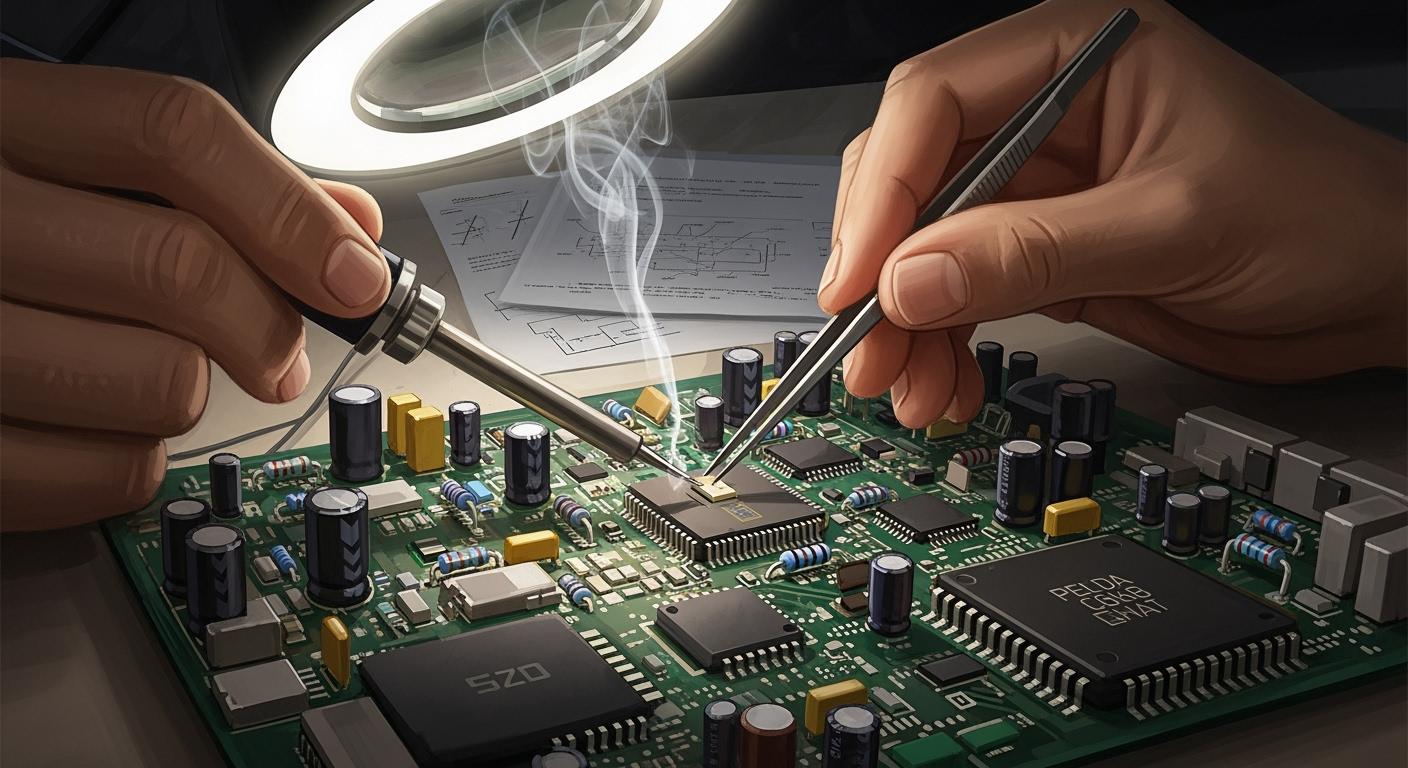
You use the IPC j-std-001 standard to follow strict soldering rules for electronics. This standard helps you pick the right materials, control your work, check your results, and learn about product classes. You look at each step to make sure your assemblies work well. You follow these rules by using approved tools and ways of working.
Key Takeaways
Follow the IPC J-STD-001 standard for good soldering. This makes strong and dependable electronic connections.
Use only approved materials and tools each time you solder. This lowers mistakes and makes your work more even.
Check every solder joint closely. Look for smooth and shiny spots to show good quality and stop problems.
Know the product class for your work. Each class has its own rules for checking and testing soldering.
Keep clear records of your steps and checks. Good notes help show you followed rules and help you do better next time.
J-STD-001 Requirement Categories
When you use the j-std-001 standard, you follow clear groups that help you solder. These groups show you how to pick materials, use good ways to work, and check your work with set rules. You also learn to sort your products by class. This changes how you look at and test them.
Materials and Processes
First, you pick approved materials and use the right steps. The j-std-001 standard tells you which solder alloys and fluxes are allowed. You must use certain soldering ways for each part. This helps you make strong and safe connections.
Always use approved soldering steps for each job.
Pick solder and flux that fit the rules.
Look at your solder joints to see if they are clean and strong.
Follow the rules for good work to keep your jobs neat and high-quality.
Tip: Good control of your steps makes things last longer. When you use the right materials and steps, your work is better and lasts more.
Workmanship Standards
Workmanship standards help you do your job well. You need the right tools and must use good soldering ways. Training is important so you know what good work looks like. Checking and testing help you find problems early. Quality control helps you see how well you are doing.
Key Areas of Focus | Description |
|---|---|
Workmanship Standards | Shows how to solder, what training you need, and which tools you can use. |
Inspection & Testing | Tells you how to check your work and what to look for. |
Quality Control Statistics | Explains how often to check, what limits to use, and how to sort problems. |
When you follow these rules, you get fewer mistakes. You also make sure every product is the same good quality.
Product Classes
You need to know which product class your work is in. The j-std-001 standard puts products into three classes. Each class has its own rules for checking and testing. Class 3 has the hardest rules. Class 1 is the easiest.
Product Class | Description | Examples |
|---|---|---|
Class 1 | General Electronics Products with the lowest quality needs, usually for simple jobs and short use. | LED lights, toys, TV remote controls |
Class 2 | Dedicated Service Electronics Products that last longer and need better work, with strict rules. | Smartphones, laptops, communication equipment |
Class 3 | High-Reliability Electronics Products that must always work and often face tough places. | Military devices, support systems, electronic manufacturing systems |
The class you pick changes how you check your work. For example, Class 3 needs the best quality. Some things that are okay in Class 2 may not be okay in Class 3. You must always check your product’s class before you start.
Note: Picking the right class helps you set the right checks and tests. This makes sure your work fits what it will be used for.
You make your work more reliable when you follow all these groups. The j-std-001 standard gives you a full plan to make sure your soldering is always right.
Soldering Criteria and Methods
Acceptable Solder Joints
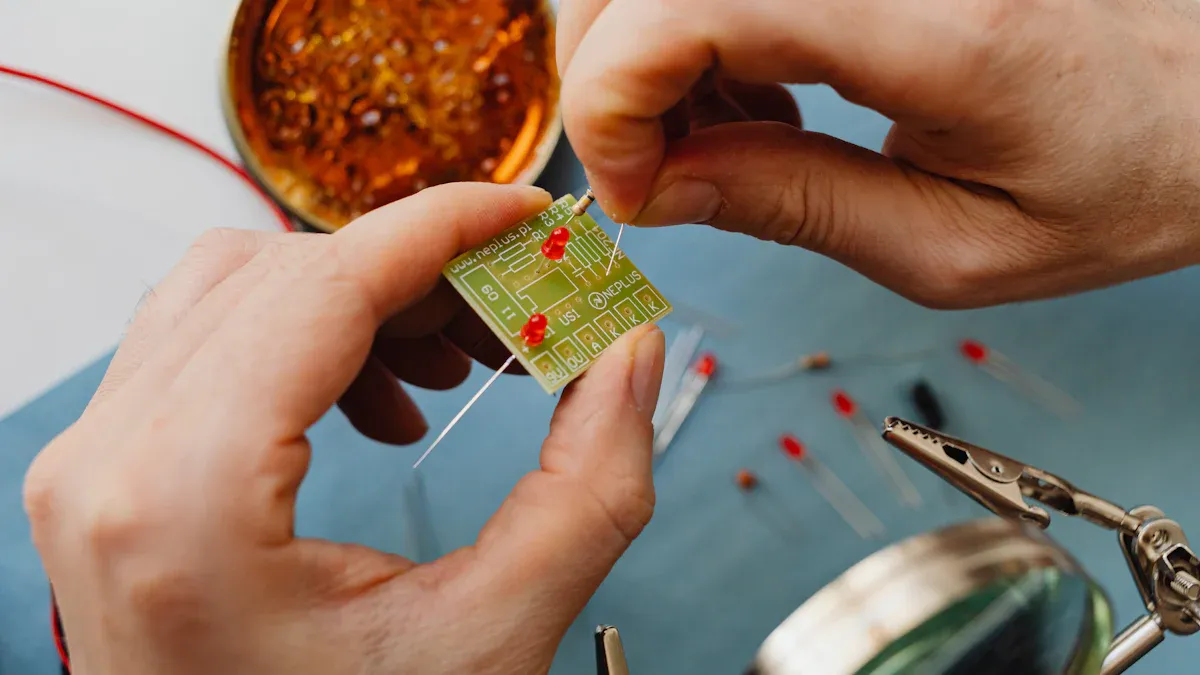
You have to check each solder joint. It must meet the j-std-001 standard. The rules change for each connection type. Look at the table to see what is needed:
Connection Type | Acceptable Criteria |
|---|---|
Through-hole Components | PTH must be completely filled with solder. |
Surface Mount Packages | Requires visual inspection, including X-Ray or AOI, and alignment of area array components in X & Y directions. |
Wire & Lead Ends | Leads should not extend over the terminal by more than one lead diameter, and electrical clearance must be met. |
Follow these rules to make good solder joints. When you check your work, look for smooth and shiny spots. Make sure there are no cracks or gaps. Good solder joints help your products last longer. They also help them work better.
Tip: Always look at your solder joints from different sides. Use a magnifier or X-ray for hidden spots.
Soldering Techniques: Hand, Wave, Reflow
You can use different ways to solder your assemblies. The j-std-001 standard covers hand, wave, and reflow soldering. Each way has steps you need to follow.
Clean the PCB and parts before you start. Remove dust, oil, and dirt.
Control the heat. Use a soldering iron that lets you change the temperature.
Heat the pad and the lead at the same time. Put solder right on the joint.
Take away old solder with a braid or vacuum tool if you need to fix it.
Be careful with heat. Do not get the area or nearby parts too hot.
Pick the right way for your assembly type. Hand soldering is good for small jobs and repairs. Wave soldering works for many through-hole parts at once. Reflow soldering is best for surface mount parts. When you follow these steps, you make strong connections.
Approved Materials and Tools
You must use approved materials and tools for the j-std-001 standard. The right solder, flux, and equipment help you avoid problems. They also keep your work the same every time. The table shows why using IPC-approved materials and tools is good:
Benefit Description |
|---|
Visual assistance documents provide examples of the proper use of IPC standards. |
Proven methodologies remove inconsistency and inefficiencies in manufacturing. |
Acceptance criteria ensure high quality and reliability defined by industry experts. |
IPC standards provide confidence in sourcing and ensure product consistency. |
Performance-based quality ensures materials perform reliably over time. |
Proven procedures make rework and repair more efficient and effective. |
Always check that your solder and flux fit the rules. Use tools that let you control heat and where you put things. Using approved materials makes soldering easier. It also makes your results better.
Note: Using the right materials and tools helps you avoid mistakes. It also makes fixing things faster.
Inspection and Quality Assurance (see: protoexpress.com)
Visual and X-Ray Inspection
You must check every solder joint to meet IPC J-STD-001 rules. Most joints are checked by looking at them. You want the joints to look smooth and shiny. They should also show good wetting. Automated Optical Inspection uses cameras to spot problems in how things work and look. For joints you cannot see, like under BGAs, you use X-ray inspection. X-rays help you find missing or broken solder joints that eyes cannot see. New X-ray machines can find very small problems, even tiny ones. You can also use 3D CT X-ray to make a model. This helps you see defects like head-in-pillow issues.
Standard | Inspection Type | Description |
|---|---|---|
J-STD-001 | Visual Inspection | Guidelines for visual inspection of solder joints to ensure quality and reliability. |
IPC-A-610 | Visual Inspection | Standards for product acceptability and workmanship in PCB assemblies. |
J-STD-001 | Automated Optical Inspection | Uses cameras to autonomously inspect for flaws in functionality and quality. |
J-STD-001 | Automatic X-ray Inspection | Inspects solder joints hidden under components, identifying flaws not visible through optical means. |
Tip: Use X-ray inspection for joints you cannot see. This helps you find problems that looking alone may miss.
Common Defects
You might find problems when you check your work. The most common ones are:
Cold Solder Joints: These look dull and rough. They happen if you do not use enough heat or if the joint is dirty.
Solder Bridges: These form when too much solder connects pads or leads that should not touch. Bad alignment can also cause this.
You can stop these problems by working with your PCB maker to set strict rules. Keep boards in a safe place. Make sure your reflow oven is set right and use nitrogen if you worry about oxidation. Always ask for solderability tests before you start assembly.
Verification and Documentation
You must check each joint and keep good records. For Class 3 products, you need at least 75% fill in plated through holes. You check for circular wetting—270° on the component side and 330° on the solder side. Use both looking and X-ray checks for hidden joints.
Requirement | Class 3 Specification |
|---|---|
Minimum PTH fill | 75% |
Circular wetting (component side) | 270° |
Circular wetting (solder side) | 330° |
Inspection method | Visual and X-ray for hidden connections |
You should keep records of where your materials come from, what steps you took, and what you found during checks. This helps you show you followed the rules and makes your process better.
For more details, visit IPC J-STD-001 standard soldering requirements.
Compliance Tips for J-STD-001
Practical Steps for Compliance
You can follow j-std-001 rules by doing simple things each day. Use approved materials and tools for every job you do. Check your solder joints to make sure they meet the standard. Keep your workspace clean so parts stay safe. Control static electricity to protect sensitive components. Write down what you do and track each batch of parts. Watch out for common mistakes that can cause trouble. The table below lists some problems you should avoid:
Compliance Pitfall | Description |
|---|---|
Documentation & Compliance Gaps | Missing certificates and not tracking lots can cause issues. |
Counterfeit Parts | Fake or bad parts may show up, and you need special tests to find them. |
Human Error | People can make mistakes when tired or if they read rules wrong. |
ESD Protocol Violations | Not following ESD rules can hurt your parts. |
Tip: You can make fewer mistakes by checking your work twice and using written steps. Use checklists so you do not forget anything.
Training and Certification
You need good training to meet industry rules. The IPC J-STD-001 course teaches you how to solder and check assemblies. The class takes 2 to 5 days, and your certificate lasts two years. You learn by listening, practicing, and taking written tests. The program has five parts:
Module | Description | Open Book | Required |
|---|---|---|---|
#1 | Specification Review | Yes | No |
#2 | Wire Preparation & Terminals | Yes | Yes |
#3 | Through-hole Printed Wiring Board | Yes | Yes |
#4 | SMT Printed Wiring Board | Yes | Yes |
#5 | Inspection & Process Control | Yes | No |
You can join the class if you are an operator, inspector, technician, engineer, or manager. The course helps you learn what makes good soldering. You get skills that help your work and make products last longer. When you finish, you know how to follow the standard and meet all the rules.
Note: Certified IPC Trainers teach you about safety, ESD, assembly, and inspection. You learn the best ways to work and how to avoid mistakes.
Impact on PCB and Electronics Manufacturing
Enhanced Product Quality and Reliability
Reduction of soldering defects
When you follow IPC J-STD-001, your products get better. You see fewer problems with soldering in your work. Good solder joints help things last longer and not break in use. This means you do not have to fix or recall products as much. The table shows how following the rules helps your business:
Benefit | Description |
|---|---|
Fewer Warranty Claims | Reliable products mean fewer returns and repairs. |
Better Brand Reputation | High-quality products build trust with customers. |
Lower Product Liability | Fewer failures reduce business risks and costs. |
Improved long-term performance
Your products last longer when you solder well. Strong connections stay good for many years. Customers trust your products because they keep working.
Standardization of Manufacturing Processes
Consistent assembly procedures
You use the same steps every time you make something. Clear rules help your team know what to do. You make fewer mistakes and your products look the same. Here are some benefits you get:
Your products last longer and work safely.
You waste less material because you make fewer errors.
Clients trust you because you meet world standards.
Your team knows their jobs and works together well.
Facilitates global supply chain integration
You work with suppliers and partners from all over. IPC J-STD-001 gives everyone the same rules to follow. It is easier to work with other companies because you all know what is needed. The newest version uses ideas from many countries, so it works everywhere.
Influence on Production Costs and Efficiency
Minimization of rework and scrap
You save money by making fewer mistakes. Less waste means you do not have to redo work or throw things away. You pick the right product class to control your costs. The table shows how each class changes your costs:
Class | Focus | Cost Implications |
|---|---|---|
Class 1 | Economy-driven | Focus on throughput, lower costs |
Class 2 | Balanced | Includes QA checkpoints, moderate costs |
Class 3 | Precision-driven | Higher costs due to tracking and testing |
Streamlined inspection and quality control
You check products faster and more easily. Using the same process makes checking simple. You do not waste time or money by making things too strict.
Driving Industry Compliance and Certification
Alignment with international standards
You meet world rules when you use IPC J-STD-001. Customers and regulators know your products are safe and reliable.
Supports customer and regulatory requirements
You make customers happy by giving them good products. You also meet industry rules, so you get more business and avoid legal trouble.
You make your soldering better by following IPC J-STD-001 rules. These rules help you pick the right materials. They show you how to use good ways to work. You check your work to make sure it is done well. This helps your products stay strong and last longer.
Use tools and materials that are approved.
Look at every solder joint to check it.
Write down what you do for each step.
Remember: If you always follow the same steps and check your work often, you will make good assemblies every time. The standard helps you do your best work.
FAQ
What is the main purpose of IPC J-STD-001?
You use this standard to help you do soldering work. It gives rules for materials, steps, and checking your work. You follow these rules so your products match what the industry wants.
How do you know if your solder joints meet the criteria?
You check each joint using the standard’s rules. Look for smooth and shiny spots with enough solder.
Where can you find approved materials and tools for soldering?
You find approved materials and tools by reading the standard. The rules tell you what you need for soldering and assembly. Use these resources to make sure you follow the rules.