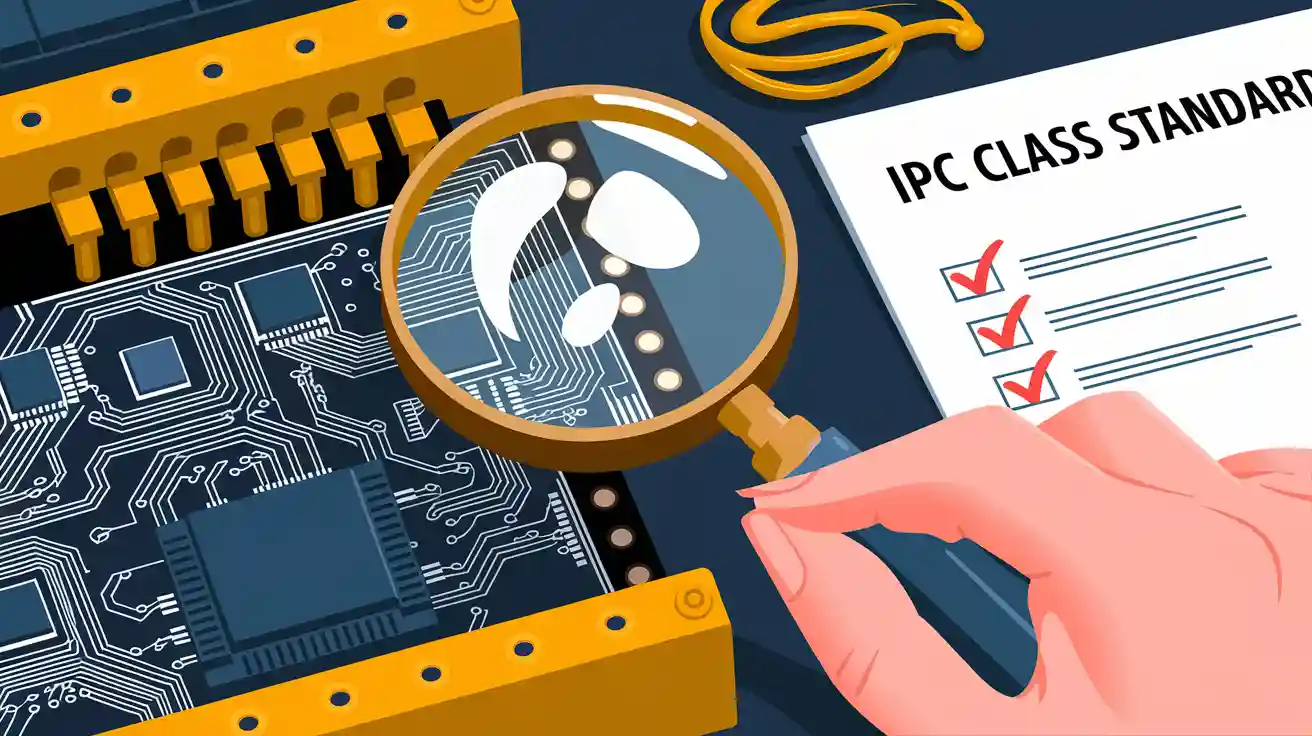
IPC class standards for PCBs set the basic rules for quality and reliability in electronics. These standards help make and check printed circuit boards used everywhere. IPC standards help makers get the same results and have fewer problems in PCBs. For example:
A recall for airbag units went down from 400,000 to just 990 cars by using IPC-1782 traceability. This shows how these standards help control defects.
Medical device makers found one bad unit out of 1,000 important PCBs. This saved time and money.
Engineers, buyers, and makers use IPC class definitions to pick the right class for each job. With over 10,000 defect cases in IPC-approved data, the electronics industry trusts these standards to keep products good and reliable.
Key Takeaways
IPC class standards give clear rules to make sure printed circuit boards (PCBs) are made the same way every time and work well.
Different IPC classes fit different jobs: Class 1 is for simple gadgets, Class 2 is for things we use every day, and Class 3 is for important devices like medical tools and space machines.
When companies follow IPC standards, they have fewer mistakes, spend less money, and customers trust them more because their PCBs last longer and work better.
IPC standards help with every part of making a PCB, like design, picking materials, testing, and checking, so products reach their quality goals.
Picking the right IPC class for a product helps it work well where it is used and makes sure it meets what the industry and customers want.
IPC Class Standards for PCBs
IPC Overview
IPC is a group that makes rules for electronics. They help companies design, build, and check printed circuit boards. IPC rules cover every step, like picking materials and checking the final product. These rules help makers keep their work the same and make good products. IPC class standards for PCBs give clear rules for design, spacing, and heat control. They also help with picking materials and testing the boards. When companies follow IPC rules, they make fewer mistakes and their boards last longer.
IPC rules help companies follow the same laws everywhere. Many electronics companies want their suppliers to use these rules. This makes sure PCBs are good quality no matter where they are made. IPC rules also help test materials by checking how they handle heat and stress. These tests look at glass transition temperature (Tg), decomposition temperature (Td), and coefficient of thermal expansion (CTE).
Role in PCB Quality
IPC class standards for PCBs help make sure boards are good and last long. These rules say what is okay for each type of PCB, from simple gadgets to important space machines. IPC rules like IPC-J-STD-001 have strict steps for soldering, putting parts together, and checking boards. They tell companies to use the right tools, keep the work area clean, and train workers well. IPC-A-610 gives clear pictures to help people check if boards look right.
Failure Mode Type | Specific Failure Mode | Impact on Reliability |
|---|---|---|
Undercure of Prepreg | Excess smear / interconnect defects | Affects both short-term and long-term reliability |
Undercure of Prepreg | Delamination | Affects short-term reliability |
Overcure of Prepreg | Rough hole wall | Affects both short-term and long-term reliability |
Overcure of Prepreg | Surface embrittlement | Affects short-term reliability |
Using IPC rules helps companies stop these problems from happening. The rules say to check and test boards often. This means fewer mistakes, lower costs, and happy customers. Companies that use IPC rules often get jobs from big electronics brands. These rules help them make the best boards for any job.
IPC Class Requirements
Key Terms in IPC Standards
IPC standards use many important words. These words help everyone know the rules in electronics manufacturing. You can find these words in documents and guides. They help set the base for quality and reliability. Here are some common terms:
Acceptance test: This checks if a PCB meets all needs before moving on.
Assembly: This means putting electronic parts on a PCB.
Anti-corrosive agent: This is a material that keeps PCBs safe from rust or harm.
The table below lists main IPC standards and what they cover:
IPC Standard | Scope / What It Covers | Primary Application |
|---|---|---|
IPC-A-610 | Sets rules for checking electronic assemblies. It includes looking at quality and classes. | Used to check finished PCB assemblies. It shows how to do acceptance tests and what good quality is. |
IPC-2221 | Gives basic design rules for PCBs. It covers materials, trace shapes, spacing, and layout. | Designers use it to make sure boards can be made well and last long. It supports assembly steps. |
IPC-6012 | Lists rules for how rigid PCBs should perform. It covers materials, work quality, and reliability. | Makers and buyers use it to check bare board quality before adding parts. |
IPC-A-600 | Shows what bare printed boards should look like. It works with IPC-6012. | Used to check bare PCBs when they arrive. This makes sure they are good before adding parts. |
IPC-7711/7721 | Gives steps for fixing, reworking, or changing electronic assemblies. | Repair workers use it to fix boards the right way without hurting quality. |
These rules help everyone follow the same steps. They also help meet what customers want in electronics manufacturing.
Manufacturing and Inspection
Each IPC class has its own rules for making and checking PCBs. Class 2 and Class 3 have different rules for hole size, plating, and solder joints. The table below shows some of these differences:
Parameter | IPC Class 2 Requirements | IPC Class 3 Requirements |
|---|---|---|
Minimum Dielectric Thickness | At least 38 microns | At least 50 microns |
Through-Hole Plating Thickness | At least 20 microns | At least 25 microns |
Barrel Fill (Single-Sided PTH) | At least 50% fill | At least 75% fill |
Solder Joint Width (Ultra-Fine) | At least 50% land width or 0.15mm | At least 75% land width or 0.25mm |
Annular Ring Size (External) | At least 0.05 mm (0.002 in) | At least 0.076 mm (0.003 in) |
Drill Breakout Allowance (External) | Up to 90° is okay | Not allowed |
Class 3 boards must pass harder checks and tests. They need more checks, tighter rules, and better cleaning. IPC guides like IPC-J-STD-001 G and IPC-7350 Series set rules for soldering and land patterns. These rules help make sure electronics are top quality and reliable. Class 3 is for things that cannot fail, like space or medical devices. Class 2 is used in most everyday electronics. The rules are not as strict, but still help the boards last longer.
Tip: Using IPC rules helps companies meet standards and what customers want for quality and reliability.
IPC Classes and Applications
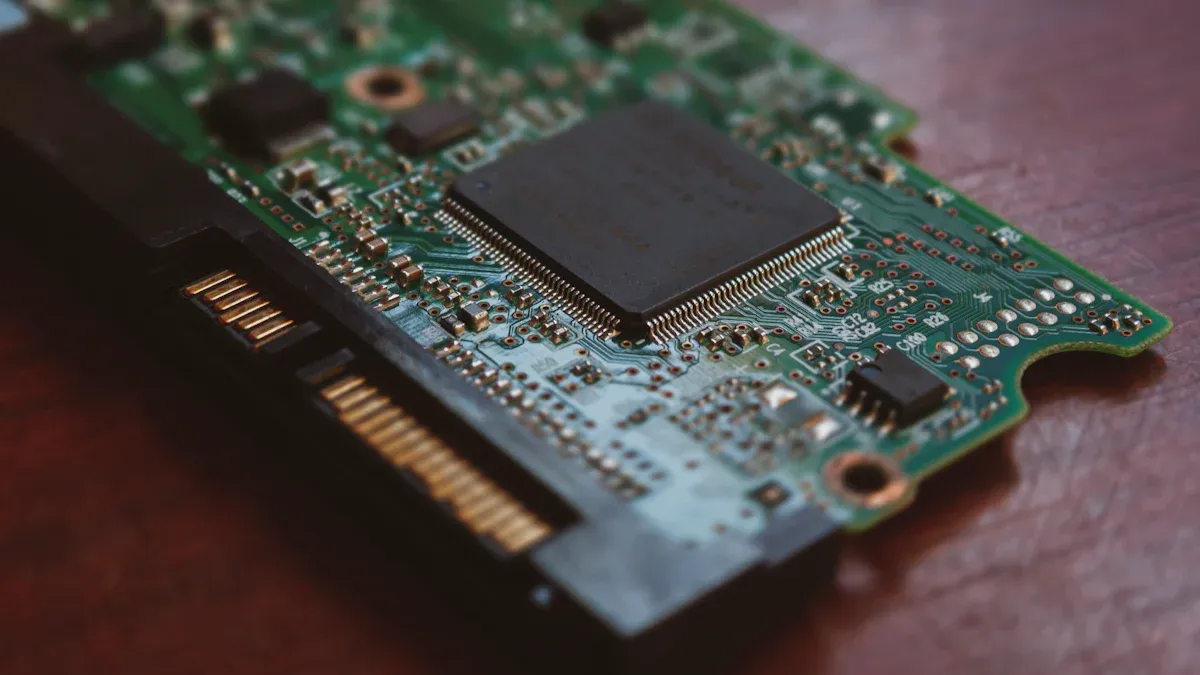
Class 1 PCB
Class 1 PCBs are used in regular electronics. These boards have the lowest quality rules. Makers use them in things that do not need to last long. They are also used in places that are not rough. Class 1 electronics are toys, simple gadgets, and cheap items.
Class 1 PCBs are found in many cheap products.
These boards do not last a long time.
The quality rules are simple, so they may fail more.
Problems can happen from design errors or bad part placement.
Heat and dust can also cause issues.
Class 1 electronics do not need to be very reliable.
Note: Class 1 PCBs are good when price is more important than how long they last.
Class 2 PCB
Class 2 PCBs are for special service electronics. These boards must follow better quality and reliability rules than Class 1. Most home and office electronics use Class 2 PCBs. Some examples are computers, TVs, and home machines.
Class 2 electronics should work well most of the time. A few failures are okay. Class 2 rules focus on better soldering, cleaner building, and more tests. These boards last longer and can handle more stress than Class 1.
Application Area | Example Products |
|---|---|
Consumer Electronics | Laptops, printers, TVs |
Office Equipment | Copiers, telephones |
Automotive | Dashboard controls |
Class 3 PCB
Class 3 PCBs are for top-level electronics. These boards must meet the hardest rules for quality and reliability. Class 3 electronics are used in medical devices, space controls, and military systems. These products cannot stop working.
Makers follow strict steps from design to checking. Class 3 PCBs use the best parts and need perfect soldering. Workers check these boards many times to make sure they are right. Class 3 electronics must work in tough places and last for years.
Tip: Class 3 PCBs are best for life-saving or very important jobs.
Class 4 and Special Classes
Some PCBs need even more care. Class 4 and other special classes are for boards with unique or extreme jobs. These include bendable circuits, high-speed boards, and boards for space or nuclear use. The rules for these classes are even stricter than normal IPC classes.
Makers and customers work together to set special rules for these PCBs. They might use special parts or test steps. These boards must meet the highest quality and reliability rules.
Special Class Type | Typical Applications |
|---|---|
Flexible/Rigid-Flex PCBs | Wearable devices, foldable phones |
High-Frequency PCBs | Radar, satellite communications |
Space/Nuclear PCBs | Satellites, nuclear control systems |
IPC class standards for PCBs help everyone choose the right board for each job. Picking the right class makes sure the product meets its quality and reliability needs.
IPC Standards in Industries
IPC standards tell companies how to make and check electronics. These rules help every kind of product, from toys to important machines. When companies use IPC standards, their products work well and last longer.
Quality and Reliability Requirements by IPC Class
Class 1 – General Electronic Products
Class 1 electronics follow simple rules. Toys and small gadgets are in this group. They only need easy checks for problems. The main goal is to keep costs low and make sure things work.
Class 2 – Dedicated Service Electronic Products
Class 2 electronics have harder rules. Computers and office tools are in this group. They need better soldering and more careful checks. These products should work well for a long time.
Class 3 – High-Performance Electronic Products
Class 3 electronics must be the best. Medical and space machines use these boards. They need perfect soldering and must be very clean. Workers use microscopes and write reports to check each board.
The table below shows how each class has different rules for quality and reliability:
Quality/Reliability Aspect | Class 1 (Basic) | Class 2 (Moderate Reliability) | Class 3 (High Reliability) |
|---|---|---|---|
Visual Inspection | Basic check | Detailed check | Highly detailed |
Measurement and Testing | Basic | Tighter tolerances | Most stringent |
Solder Joint Inspection | Acceptable | Better fillet formation | Flawless required |
Cleanliness and Surface Finish | Basic | Higher standards | Strictest |
Documentation and Reporting | Basic | More detailed | Comprehensive |
Training and Certification | Basic | Increased | Highest level |
Consumer and Service Electronics
Companies that make home electronics use IPC rules. These rules help them design better products and make fewer mistakes. Training helps workers do a better job. Fewer mistakes mean fewer broken products. Using IPC rules also helps companies follow laws and makes customers trust them.
IPC rules help make products stronger and last longer.
They let companies make more products and improve them.
Certification shows a company cares about safety and quality.
Automotive, Medical, and Aerospace
Cars, medical tools, and space machines need Class 3 boards. These jobs cannot have any failures. IPC rules say to test, track, and write down everything. Heavy copper boards made with IPC rules work better in tough places.
Industrial Equipment
Machines in factories need strong boards. IPC rules help pick good materials and test them. This keeps machines safe and working for many years.
Telecommunications
Phones and internet equipment use Class 2 boards. IPC rules help these products work well for a long time. Certification helps companies make sure their products are good.
Military and Defense
Military electronics must follow the hardest rules. IPC 6012 Class 3 says how thick copper should be and how to test boards. These rules work with military laws to keep people safe.
IPC rules stop problems like bad plating or parts not fitting.
Design programs use IPC rules to help engineers make good boards.
Renewable Energy
Solar and wind power need strong boards. IPC rules, especially for heavy copper, help these boards handle lots of power and last longer.
Using IPC rules helps companies sell products around the world and meet what customers want. Each class has its own rules for quality and reliability, so products do their job well.
IPC class standards help decide how good and reliable a PCB is. These rules tell companies which class to use for each job. This can be for toys or even for space machines. In aerospace, Class 3 rules are very strict. They make sure boards work well in hard places. Companies that use IPC standards get many good things:
Products are better and last longer.
Making things costs less money.
Results are the same every time, so customers trust them.
The company looks better to others.
Everyone in the supply chain understands each other.
Picking the right IPC class helps products do well everywhere.
FAQ
What does IPC stand for in electronics?
IPC stands for the Institute for Printed Circuits. This group creates rules and standards for making and checking printed circuit boards. Many companies around the world follow these rules to make sure their products work well.
Why do companies use IPC class standards?
Companies use IPC class standards to make sure their PCBs meet quality and reliability needs. These standards help reduce mistakes, improve product life, and build trust with customers. Many industries require IPC compliance for safety and performance.
How does IPC Class 3 differ from Class 2?
Class 3 PCBs must meet stricter rules than Class 2. They need better materials, tighter checks, and perfect soldering. Class 3 boards go into critical products like medical devices or aerospace systems. Class 2 boards work in most home and office electronics.
Can a PCB meet more than one IPC class?
A PCB cannot meet more than one class at the same time. Each class has its own set of rules. The designer and manufacturer must pick the right class for the product’s needs.
Who decides which IPC class to use for a project?
The project team, including engineers and buyers, decides the IPC class. They look at how the product will be used and what risks it faces. They choose the class that matches the product’s quality and reliability needs.