You can use smart rings to check your health, open devices, or pay for things with a quick hand move. Making a smart ring means putting small sensors and batteries into a tiny ring you can wear. Engineers have problems like making batteries small but still strong and keeping the ring working well. Picking the right materials and putting the ring together carefully makes it last longer and look better. Companies think the market will grow a lot, as you can see below:
Year | Market Size (USD) | CAGR (%) |
|---|---|---|
2024 | N/A | |
2030 | 1,101.60 million | 21.1 |
You can find new ideas at every step, from making things smaller to building the final ring.
Key Takeaways
Smart rings are small gadgets that help you check your health, pay for things, and control other devices with easy hand movements.
Engineers have problems making smart rings comfy, strong, and work well. They use special materials and very small sensors.
The smart ring market will get much bigger. Companies listen to users to make products that people really want.
Smart rings use Bluetooth to link to your phone. This lets you get alerts and check your health simply.
Future smart rings will have better sensors, green materials, and nicer user experiences. This will make them even more helpful.
Smart Rings: Components and Materials
Sensor Technology in Smart Rings
Every smart ring has special sensors inside. These sensors help you check your health and what you do each day. Engineers make the sensors tiny so they fit in the ring. The ring does not feel big or heavy. You can use smart rings to see your heart rate, how you move, and your skin temperature. The sensors work together to give you good data. Optical sensors check your heart rate and how it changes. Some smart rings have pulse oximetry sensors like those in hospitals. These sensors check your blood oxygen level. The ring can warn you if your health changes.
Here is a table that lists the main sensors and their jobs:
Sensor Type | Function |
|---|---|
Photoplethysmography (PPG) | Measures blood volume changes to estimate heart rate, heart rate variability, and more. |
Motion Sensors | Includes accelerometers and gyroscopes to monitor movement patterns and activities. |
Temperature Sensors | Monitors skin temperature to track health indicators and changes in body status. |
These sensors collect data right away. You can wear your smart ring all the time and still get good results.
Battery Design and Power Solutions
Smart rings need a battery that lasts long and fits in a small space. Engineers use lithium polymer batteries because they are thin and light. You do not need to charge your smart ring every day. Most batteries last at least three days with normal use. The battery gives power to all the sensors and keeps the ring working.
Here is a table that shows battery size and how long it lasts for different smart rings:
Type of Smart Ring | Typical Battery Capacity | Lifespan |
|---|---|---|
Health Monitoring Smart Rings | 15 to 30mAh | At least 3 days |
Notification & Interaction Smart Rings | 10 to 20mAh | Varies |
Payment and Identity Authentication Rings | Low capacity, specifics not detailed | Varies |
Multi-Function Smart Rings | Over 30mAh | Varies |
A bigger battery means more features, but the ring stays small and comfy. The battery design lets you use your smart ring for health, paying for things, and getting alerts without worrying about power.
Flexible Materials and Durability
You want your smart ring to feel nice and last a long time. Makers use strong and bendy materials so the ring does not break or scratch. Many smart rings use advanced ceramics, titanium alloys, silicone, and polymer composites. These materials keep the ring light and easy to wear.
Here is a table that shows common materials and what they do:
Material | Properties |
|---|---|
Advanced Ceramics | Durable, lightweight, scratch-resistant |
Titanium Alloys | Durable, lightweight, wear-resistant |
Silicone | Comfortable, adaptable to finger sizes |
Polymer Composites | Affordable, flexible for comfort |
Flexible Materials | Adaptable, enhances comfort for extended wear |
These materials make the ring bendy and comfy. The ring can bend without hurting the electronics inside. You can wear your smart ring all day, even when you play sports or sleep.
Makes the ring flexible and comfy
Gives good electrical performance and works well
Lets the ring bend without hurting the inside parts
Smart rings also keep out water and handle daily use. You do not have to worry about sweat, rain, or washing your hands. The table below shows how smart rings stay safe in different situations:
Feature | Description |
|---|---|
Waterproof Rating | IP68-rated, ensuring complete protection from moisture during various activities. |
Daily Wear | Can withstand sweat, rain, and underwater activities, making it suitable for sports and daily life. |
Versatility | Allows for use during exercise, washing hands, and in rainy conditions without affecting functionality. |
Your smart ring works in many places. The design uses strong and bendy materials to keep the ring safe and comfy for you.
Smart Ring Design Process

System Overview and Requirements
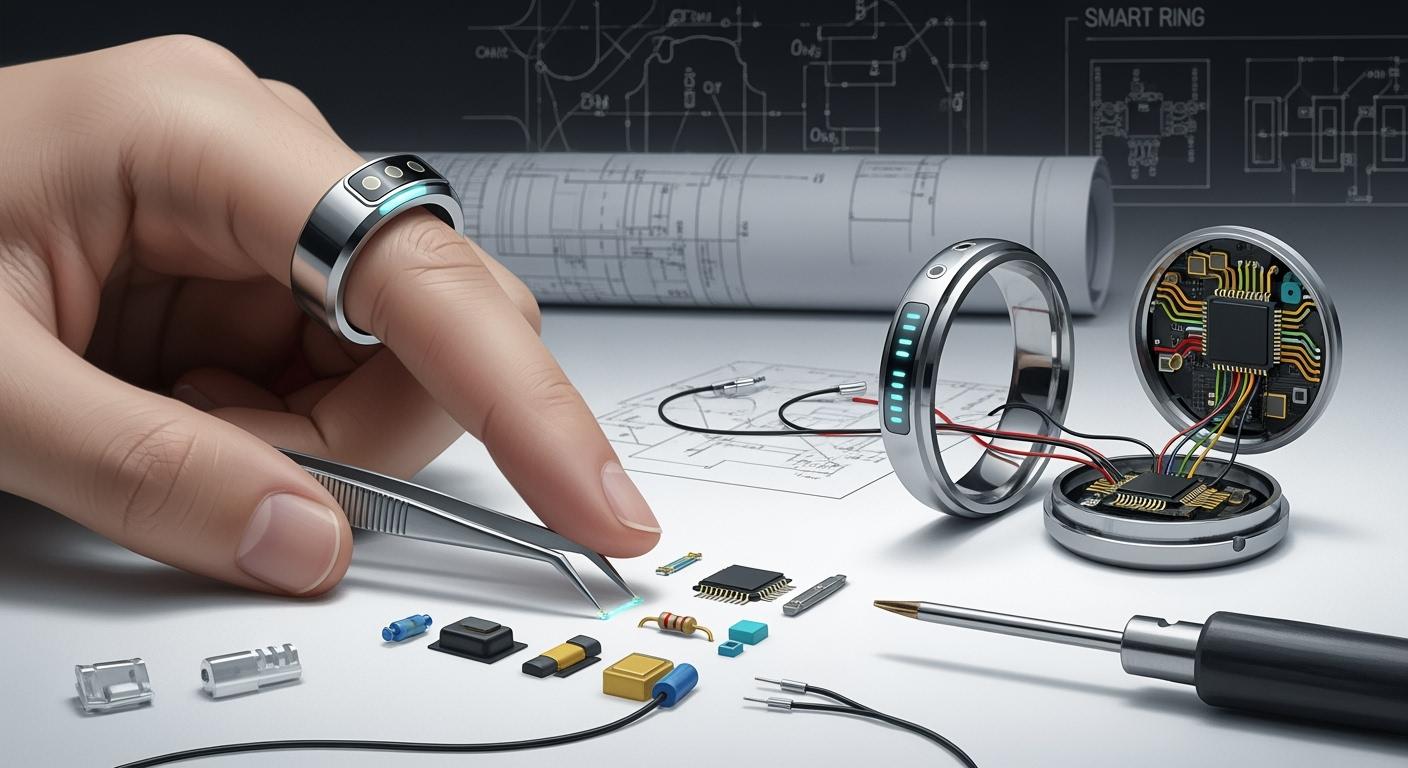
You start the smart ring journey by deciding what you want your ring to do. You choose features like heart rate monitoring, motion tracking, and payment options. You set clear goals for battery life, comfort, and durability. You make a list of what the smart ring must have and what would be nice to add later. This step helps you focus on product design and guides every choice you make.
Tip: Write down your main goals before you begin. This helps you stay on track and avoid missing important features.
Here is a simple list of steps you follow from idea to working prototype:
Define what you want your smart ring to do.
Design a flexible PCB that fits inside the ring.
Assemble all parts and check how they work together.
Develop firmware to control sensors and collect data.
Add activity tracking and motion tracking features.
Connect the ring to your phone for easy data viewing.
Plan for future updates and new features.
PCB and CAD Design
You need a flexible PCB to fit all the electronics inside the small ring. Flexible and rigid-flex PCBs let you use tight spaces and unique shapes. These PCBs make your smart ring strong and reliable. You can add more sensors for better fitness tracking and motion tracking. The flexible PCB supports complex sensor arrays, so you get more features in a tiny device.
You use CAD tools to model the ring and make sure everything fits. DesignSpark Mechanical helps you create the shape and test how the parts fit together. You check the design for comfort and style. You make sure the electronics do not get in the way of wearing the ring.
Flexible PCBs fit inside small rings.
CAD tools help you model and test the design.
You add sensors for fitness tracking and motion tracking.
Assembly and Fabrication
You put all the parts together in the assembly process. You face challenges like making sure the battery fits and the sensors work. You test each step to avoid problems later. You watch out for issues like shrinkage, which can break the ring or cause poor signals. You check for tooling drift, which can slow down production. You make sure the battery bonds well, so it lasts longer.
Here is a table that shows common challenges in making smart rings:
Challenge | Description |
|---|---|
Sample Success | Early samples look good but may hide future problems. |
Tooling Drift | Small changes in tools can cause big delays. |
Shrinkage | Tiny changes in size can break signals and battery seating. |
SMT Issues | Placing modules is harder at ring scale than in other devices. |
Battery Bonding | Most battery problems come from early assembly, not user mistakes. |
Production Testing | Final tests reveal hidden problems. |
You test each ring to make sure it works well. You fix problems before making many rings. You want every smart ring to be strong and reliable.
Firmware and Activity Tracking
You write firmware to control the sensors and collect data. You use advanced sensors for better tracking. You use low-power Bluetooth to send data to your phone. You add medical-grade AI algorithms to give you better health insights. Embedded systems let your smart ring process data in real time. You get instant feedback on your fitness tracking and health.
Note: Real-time data helps you see your progress and make healthy choices.
You focus on activity tracking to help you reach your goals. You track steps, sleep, and heart rate. You use motion tracking to see how you move during the day. You get alerts if something changes in your health. You use the smart ring to improve your fitness and stay healthy.
Integration and Connectivity
Mobile Device Pairing
You can link your smart ring to your phone without wires. Bluetooth is the main way to do this. It lets your ring and phone talk when they are close. You can get alerts, play music, or unlock your phone with a tap. The Bluetooth chip inside the ring sends signals to your phone. This makes the connection quick and steady.
Bluetooth helps you get alerts and use your devices.
The chip in the ring keeps the link strong.
App Ecosystem and User Experience
A special app helps you use your smart ring better. The app shows your health and activity in simple graphs. You can see your steps, sleep, and pay for things without cash. The app lets you pick what alerts you want to see on your ring.
Feature | Description |
|---|---|
Fitness Tracking | Counts your steps, calories, and how long you move. |
Sleep Tracking | Shows how you sleep and gives you a score. |
Contactless Payments | Lets you pay fast by tapping your ring. |
Notification Management | Makes your ring buzz so you know about alerts. |
Gesture Controls | Lets you move your finger to control smart things. |
The app and ring work together for a smooth experience. You can check your progress and use all the features easily.
Data Security
You want your data to be safe. Smart rings use strong codes to keep your info safe when sent to your phone. Some rings use your fingerprint so only you can see your data. You can make a strong password and turn on two-step checks for more safety.
Companies say they will not sell your data.
Many smart rings follow strict privacy rules like GDPR.
The ring only takes the data it needs to keep you safe.
Tip: Always update your app and ring for the best security.
Smart Ring Market and Strategy
Product/Market Fit
You need to make sure your smart ring matches what people want. Companies like Oura do not guess what users like. They test ideas with real users and collect data before making big decisions. You can follow this approach by starting with user testing. Ask people to try your smart ring and share their feedback. This helps you learn what features matter most. You avoid building a product that nobody wants. You also make changes early, which saves time and money.
Start with user testing and gather feedback.
Use real data to guide your product development.
Focus on features that solve real problems.
Value Models
You can see how smart rings stand out from other wearables. They are small and easy to wear. Many people like them because they do not look like gadgets. You can use a smart ring to track your health without drawing attention. Some smart rings give better results for heart rate and temperature. You should know what you want from your device before you buy one.
Feature | Smart Rings | Traditional Wearables |
|---|---|---|
Size | Smaller, more discreet | Larger, more noticeable |
Tracking Capabilities | Limited (heart rate, temperature) | Extensive (multiple health metrics) |
User Appeal | Aesthetic, discreet | Functional, with screens |
User Demographics | Appeals to those who dislike watches | General population |
Cost of Features | Premium features may cost extra | Usually includes more features |
Today, companies offer both one-time purchases and subscriptions. This gives you more choices and lets you unlock extra features if you want them.
Product Development Strategy
You can see the smart ring market changing fast. Many brands use smart rings to add new services and create new categories. They do not just copy old products. They look for ways to make your life easier and safer. You can find smart rings that work with other devices for a full health and fitness system. Companies use these steps for a successful smart ring:
Research what users need and study other products.
Use ready-made software libraries to speed up product development.
Test early and often to fix problems quickly.
Build a go-to-market plan after you finish your design.
The smart ring market now includes stylish designs and new materials. You can find rings that look like jewelry but work like high-tech tools. This mix of fashion and technology shows how innovation shapes the future of wearables.
Future Trends in Smart Rings
Emerging Technologies
Smart rings will soon have new technology. Companies are adding better sensors for health tracking and heart rate checks. Gesture control will get more accurate. You can use your ring to control things with simple hand moves. Some smart rings will have tiny chips that work faster and use less power. You might see rings that check blood pressure or glucose levels. These features help you watch your health every day.
Smart rings will use AI to give you health advice. You will get tips that fit your needs.
Sustainability
You want to help the planet. Smart ring makers now use eco-friendly materials and processes. They pick parts that can be recycled and try to use less energy when making rings. Companies want to lower their carbon footprint. They follow rules for the environment, people, and good business. This helps brands earn your trust and helps the world stay clean.
You can choose a smart ring made from recycled materials.
Companies work to make production better for the earth.
You help the planet when you pick eco-friendly products.
User Experience Enhancements
You will see big changes in how you use smart rings. New models will have better health checks and be easier to use. The table below shows some features you might get:
Feature | Description |
|---|---|
AI Wellness Assistant | Kira+ gives you health tips that match your life. |
Health Monitoring | You get Afib checks, better ECG, and new blood pressure and glucose tests. |
Design Improvements | Rings last longer and come with wireless charging cases. |
App Experience | Apps look nicer and work faster, but some bugs may still be there. |
You will find smart rings that feel good and look cool. You can use gesture control to work with your devices. The app will show your health data in a way that is easy to read. You will like using your smart ring every day.
Making smart rings means they must be comfy and small. They also need to save power so they last longer. The table below lists the main things designers think about:
Design Factor | Description |
|---|---|
Flexibility | Needed for comfort and daily use |
Miniaturization | Fits all parts into a small ring |
Power Efficiency | Keeps the ring working longer |
Wireless Connectivity | Connects to your devices easily |
New ideas help make sensors better and add smart features. Companies use new technology to make rings that fit your needs. They want their rings to be different from others. In the future, smart rings will get easier to use and more helpful. This happens because people keep coming up with new ideas.
FAQ
How do you charge a smart ring?
Most smart rings use a wireless charging dock. You place your ring on the dock. Charging usually takes about one hour. Some rings show a light when charging finishes.
Can you wear a smart ring while swimming?
You can wear many smart rings in water. Most have waterproof ratings like IP68. You can swim, shower, or wash your hands without worry.
What data does a smart ring collect?
Your smart ring tracks steps, heart rate, sleep, and temperature. Some rings also record payments and device unlocks. You control what data your ring collects in the app.
Is your personal data safe with a smart ring?
Smart rings use encryption to protect your data. You can set up passwords and two-factor authentication. Companies follow privacy rules like GDPR to keep your information safe.
Can you use a smart ring with any smartphone?
You can connect most smart rings to Android and iOS phones. You download the app, pair your ring with Bluetooth, and start using features. Some rings may need newer phone models.