Feature phones are made to do basic things. Makers use tough materials so phones stay good longer. They make these phones cheap, so more people can buy them. Easy menus help users find things fast. Many older people and travelers like feature phones. They trust them because they work well and the battery lasts long. Now, more people pick these phones for their easy use and strong build.
Key Takeaways
Feature phones cost less and are tough. They are good for people who want a device that works well but is not expensive. Simple menus and real buttons help people use feature phones easily. This is helpful for older adults and kids. Manufacturers use strong materials and simple features. This helps feature phones last longer and break less often. Prototyping and validation help make sure phones work well. These steps check what users need and test quality before making many phones. Picking a feature phone can help you spend less time on screens. It can help you live healthier and is better for the environment too.
Feature Phones Concept & Market Research
User Needs & Demographics
Feature phones are important in many places. People in growing countries use them to join the digital world. These phones help you talk to others, even if you do not know much about technology. You get a phone that is cheap and strong. Many older people and travelers pick feature phones because they want something easy and that works well. Parents like these phones for kids, since they block internet use and keep kids safer. You also do not get tired or stressed from too much screen time, which can happen with smartphones.
Tip: If you want a phone that lasts long and does not distract you, feature phones are a smart choice.
Here is a table showing the main user needs:
User Need | Description |
|---|---|
Affordability | You spend less money on feature phones, so they are easy to buy. |
Durability | You get tough phones with batteries that last long, good for places with power problems. |
Ease of Use | You use simple menus and buttons, so you do not need to know a lot about technology. |
Digital Skills | You learn basic digital skills, which helps you use better devices later. |
Essential Features Selection
Feature phones are made for simple talking and texting. You get real buttons, clear sound for calls, and a light phone. You do not have to see lots of alerts or social media. This makes feature phones different from smartphones. The table below shows how they compare:
Feature Phones | Smartphones |
|---|---|
Cheap and easy to use | Many features and apps |
Made for simple talking | Internet and many apps |
Real buttons for typing | Touchscreen keyboards |
Good sound for calls | Fancy sound systems |
Small and light | Big and heavy |
Few distractions (no social media) | Lots of alerts and apps |
New feature phones have better batteries and some basic internet, but they stay simple.
Market Trends Analysis
The market for feature phones is about being cheap, easy, and strong. Companies sell them to people with less money and older people. Makers add simple internet and better cameras to help you. There are many brands, so you see new phones often. Strong designs help people in places where phones need to last.
The world market for feature phones may get smaller, but phones for people with less money are selling more.
Old-style “candy bar” phones are getting popular again.
Companies make new phones to fit what you want.
You get more choices and better features, but phones stay easy to use.
Feature Phones Design & Development
Hardware Design
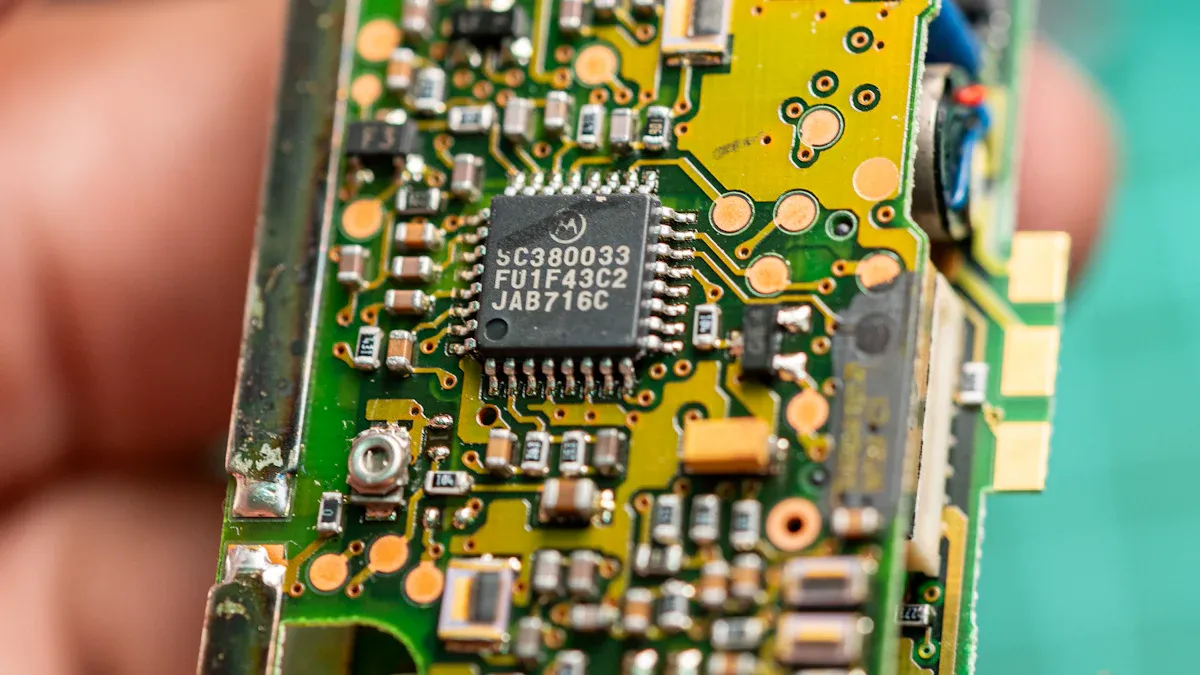
Hardware is the main part of feature phones. Designers pick each piece so your phone works well. They want your phone to last a long time. The shell is strong and made from materials like polycarbonate, aluminum, stainless steel, titanium, Gorilla Glass, or Ceramic Shield. These materials help protect your phone from drops and scratches.
Inside, you find many important parts. Here is a table that shows what goes into a feature phone and why each part is needed:
Component | Description |
|---|---|
Application processor | CMOS system-on-a-chip for fast and simple tasks |
Flash memory | Stores your contacts and messages |
Cellular modem | Lets you make calls and send texts |
RF transceiver | Handles wireless signals |
Phone camera image sensor | Takes basic photos |
Power management integrated circuit | Keeps battery use low |
Display driver | Runs the LCD or LED screen |
Wireless communication chips | Adds Wi-Fi, Bluetooth, or GPS |
Sound chip | Makes calls clear and loud |
Gyroscope | Detects motion and orientation |
Capacitive touchscreen controller | Reads touch input (if present) |
RF power amplifier | Boosts signal strength |
A printed circuit board (PCB) connects all the parts. Companies like Wonderful PCB make these boards. They use smart ways to keep costs low and quality high. Your phone works well and does not break easily.
Note: Simple hardware design means fewer things can go wrong. Your phone lasts longer and needs less fixing.
Software Design
You use software when you press buttons or read messages. Designers make easy menus so you find things fast. You do not see many apps or hard settings. This keeps your phone simple and safe.
Feature phones use special operating systems. Here is a table that shows the most common ones and what they do:
Operating System | Advantages |
|---|---|
KaiOS | Lets you use basic apps and internet, made for feature phones |
Tizen | Gives you a friendly menu, used by Samsung phones |
HarmonyOS | Works well with other Huawei devices |
You get a simple user interface. You can call, text, and sometimes use basic apps. Designers focus on what you need most. You do not get lost in menus or settings.
Tip: If you want a phone that is easy to use, pick one with a simple operating system.
Durability & Affordability Focus
You want a phone that lasts and does not cost much. Designers pick strong materials and simple parts. This makes your phone tough and keeps the price low. Here is a list of materials that help your phone stay strong:
Polycarbonate: Light and resists impacts
Aluminum: Strong and does not bend easily
Stainless Steel: Does not rust and stays strong
Titanium: Very strong but light
Gorilla Glass: Resists scratches and cracks
Ceramic Shield: Extra strong glass with nano-ceramic crystals
Designers use smart ideas to keep prices low. You see phones like the TCL Flip 3 for $29.99. Some models, like Minimal Phone, use eInk displays and cost more, but most feature phones are cheap.
Model | Price | Features |
|---|---|---|
Minimal Phone | $399 | eInk display, Android 14 |
Sunbeam F1 Horizon | N/A | 5G/LTE, USB-C, Waze navigation |
TCL Flip 3 | $29.99 | Budget-friendly flip phone |
You get a phone that fits your budget and lasts a long time. Simple design means fewer things break. You do not need to buy a new phone often.
Designers face many problems. They must keep up with new technology, handle price pressure, and find good materials. Here is a table that shows some problems they solve:
Challenge | Description |
|---|---|
Rapidly changing technology | You need updates to avoid old phones |
Short product life cycles | Phones get outdated fast |
Increasing competition | Many brands make similar phones |
Price pressure | Companies must keep prices low |
Access to raw materials | Hard to find good materials sometimes |
Environmental regulations | Must follow rules for safe manufacturing |
Changing consumer preferences | People want new features often |
Supply chain disruptions | Delays can happen in making and shipping phones |
Sustainability | Need to use eco-friendly methods |
Designers use new ideas to solve these problems. They pick better materials, use smart ways to make phones, and keep designs simple. This gives you a phone that works well and costs less.
Feature Phones Manufacturing Process
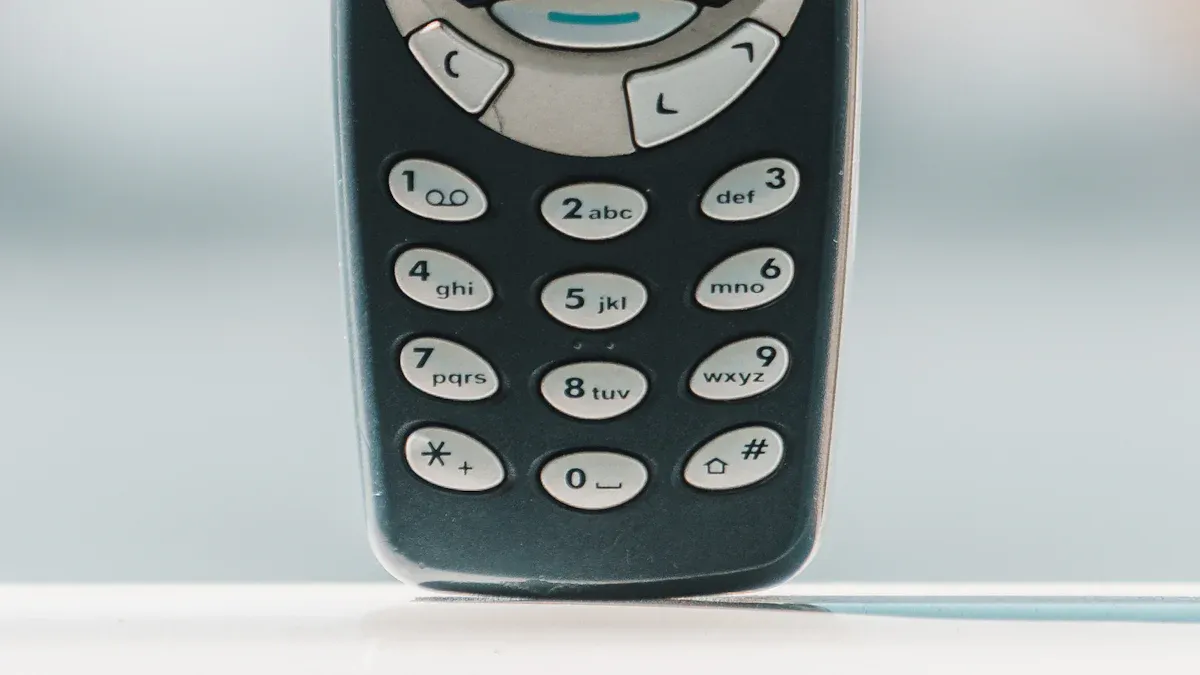
Making feature phones is simple. The steps are easier than making smartphones. The process focuses on important features and strong design. This helps your phone work well and last long.
Prototyping & Validation
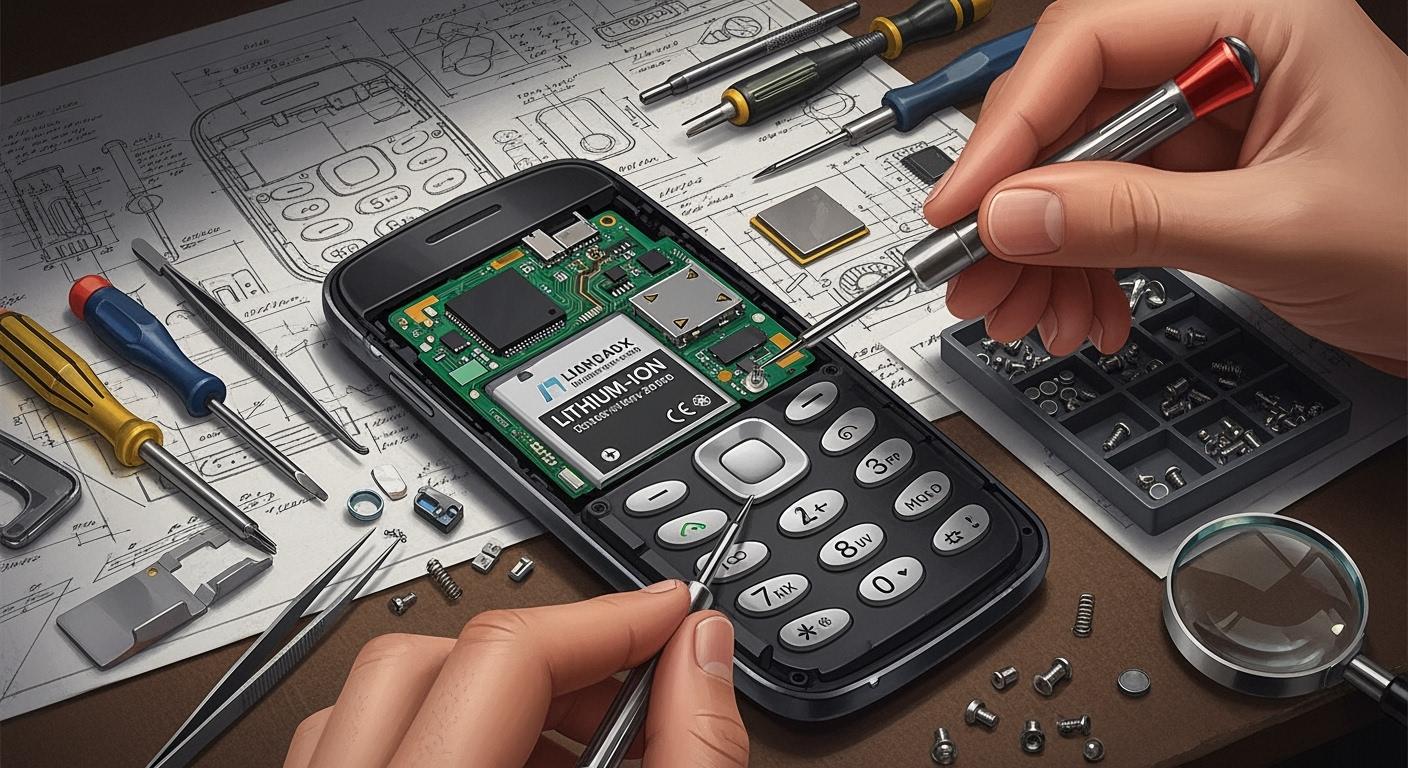
Prototyping is the first step. It turns ideas into real products. Here is how it works:
Engineers learn what users need and what problems they have.
They pick the most important features and decide what to fix.
They draw the first design of the phone.
They choose a tool to build the first model.
They make the first version of the phone.
They test the model with users and listen to feedback.
Engineers use these steps to make sure the phone is easy to use and strong. They check if the design matches what you want. Careful work helps you get a phone that fits your needs.
During validation, engineers build working models. They test these phones to see if they work well. Engineers check how the phone performs and how tough it is. They run many tests to make sure the phone is ready for production. They set up supply chains and quality rules. This helps you get a phone that works every time. Companies plan how to launch the phone so you can buy it easily.
Note: Prototyping and validation help you get a phone you can trust. Engineers fix problems early, so you see fewer issues.
Manufacturing Setup
After validation, companies get ready to build many phones. They train workers to use new machines and software. Training helps workers build phones faster and make fewer mistakes.
Manufacturers look at costs before buying new machines. They want to save money over time. Production lines can change if you want new features or if more people want phones. This helps companies keep up with trends.
Wonderful PCB is important in mobile phone pcb design and manufacturing. They use smart ways to make printed circuit boards. These boards connect all the parts inside your phone. Their skills help you get a phone that works well and costs less. You see boards that last longer and support all the features you need.
Tip: Flexible production lines help companies make changes quickly. You get new models and features without waiting long.
Quality Control & Certification
Strict quality checks make sure your phone works well. Manufacturers use important steps to keep quality high. Here is a table that shows how companies do this:
Quality Control Measures | Description |
|---|---|
Product inspection and testing | Phones are tested at every stage to make sure they work. |
Process monitoring and control | Workers watch the process to catch mistakes early. |
Documentation and reporting | Companies keep records of tests and results for every phone. |
Corrective action implementation | If a problem appears, workers fix it right away. |
Statistical analysis of quality data | Engineers study data to find ways to improve quality. |
Adherence to international standards | Companies follow rules like ISO 9001:2015 and Six Sigma for consistent quality. |
Every phone goes through these steps before leaving the factory. This keeps problems low and quality high.
Before you buy a feature phone, it must pass certification. There are three main certifications:
FCC certification is needed in the United States. It checks safety and radio signals.
PTCRB certification is needed for North America. It makes sure your phone works on wireless networks.
GCF certification is needed in Europe. It checks if your phone meets local rules.
These certifications make sure your phone is safe and works everywhere.
Manufacturers care about the environment too. They design phones to last longer and be easy to fix. Companies use recycled materials and make phones you can repair. They use clean energy and try to lower pollution during production. Here is a table that shows how companies help the environment:
Strategy | Description |
|---|---|
Sustainable Product Design | Phones use less energy and make less waste. |
Responsible Supply Chain Management | Companies make sure every part follows green rules. |
Transparency in Operations | You can learn how companies protect the environment. |
Reducing Greenhouse Gas Emissions | Factories use cleaner energy and make less pollution. |
Using Renewable Energy | Companies use solar or wind power to build phones. |
Designing for Longevity and Repairability | Phones last longer and are easy to fix. |
Improving Recycling Processes | You can recycle your old phone easily. |
💡 You help the planet when you pick a phone that lasts longer and is easy to fix.
You see a clear process from idea to finished product. Companies focus on quality, safety, and the environment. You get a feature phone that is reliable, safe, and better for the world.
Final Assembly & Shipping
Assembly Line Steps
The assembly line has many clear steps. Workers and machines follow a set plan to build each feature phone. First, the design is finished after lots of checking. Next, all the parts like the processor, memory, display, and mobile phone pcb design are put together. Then, the operating system is loaded onto the phone. After that, workers test each phone to make sure it works right. When the phone passes all tests, factories start making many phones at once. The phones are then packed up for shipping. Last, the finished phones are sent to stores and customers.
Factories use the same parts and steps for every phone. This helps keep quality high and waste low. Each worker does one job, so things move faster. The assembly line keeps going with few stops, which saves time. Machines help do some jobs, so there are fewer mistakes and less work for people.
Characteristic | Description |
|---|---|
Standardization | Using the same parts and steps keeps quality good and waste low. |
Division of Labor | Each worker does one job, so phones are made faster. |
Continuous Flow | The line keeps moving, so phones are built quickly. |
Automation Integration | Machines help do jobs better and cost less. |
Wonderful PCB is important in mobile phone pcb design. Their skills help make sure the inside parts connect well and the phones are easy to build.
Final Testing
Before you get your phone, companies test it to make sure it is strong and works well. They check if the phone can handle drops, scratches, and if the battery lasts long. Some phones have IP67 or IP68 ratings, so they can handle water and dust. Phones also get software updates to help them last longer.
Strong phones use good parts.
Drop and water tests show the phone is tough.
Scratch and battery tests give extra safety.
Software updates keep your phone working well.
These tests make sure your phone is good before it is shipped.
Packaging & Distribution
Packaging keeps your phone safe when it is shipped or stored. There are different ways to pack phones so they do not get damaged:
Packaging Method | Description |
|---|---|
Rigid Boxes | Hard boxes stop phones from getting crushed. |
Padded Mailers | Soft mailers are light and good for short trips. |
Plastic Clamshells or Blister Packs | Clear plastic packs show the phone and stop tampering. |
Protective Films and Sleeves | Thin covers stop scratches when phones move. |
Custom Inserts or Foam Cutouts | Foam or inserts hold phones of different sizes tight. |
Internal Padding (Bubble Wrap) | Bubble wrap gives extra safety from bumps. |
Heat-Sealing for Plastic Packaging | Sealed plastic keeps out dirt and water. |
Eco-Friendly Options | Green packs use recycled or earth-friendly stuff. |
After packing, companies send the phones to stores and sellers. You get a phone that is safe and ready to use.
You notice feature phones are special because of their different looks and ways to type. The table below shows what makes them stand out:
Unique Aspects of Feature Phones | Description |
|---|---|
Variety of Form Factors | Candybars, clamshells, sliders give you options. |
Input Methods | Numeric keypads and QWERTY layouts are simple to use. |
Bold Designs | Phones like Motorola RAZR and Nokia are easy to remember. |
Feature phones are still liked because they are simple, strong, and cheap. Many people pick them to take a break from screens and feel better. You also help the earth when you choose a phone that lasts and can be fixed. More people want these useful phones, so sales keep going up.
FAQ
What makes feature phones different from smartphones?
Feature phones look simple. They do not have many apps. They are made for calling and texting. The bodies are strong because of cnc machining. These phones last a long time. They cost less money. Many use eco-friendly materials to help the earth.
How do manufacturers keep feature phones affordable?
Companies use cnc to make parts fast. This saves money. They choose only basic features. They do not add extras. Wonderful PCB uses cnc machining for printed circuit boards. This keeps costs low. It also helps phones stay eco-friendly.
Why do feature phones last longer than most smartphones?
Feature phones have tough shells made with cnc machining. Makers use cnc to build strong frames. Phones are tested for drops and scratches. Eco-friendly designs help them last longer. You see less waste and need fewer repairs.
How does Wonderful PCB help in feature phone manufacturing?
Wonderful PCB uses cnc machining well. They build printed circuit boards with cnc. Their way supports eco-friendly production. You get phones that work well and stay strong.
Are feature phones eco-friendly?
Many feature phones have eco-friendly parts. Makers use cnc and cnc machining to cut waste. They pick recycled materials. Phones are made for easy repair. This helps protect the environment.