A power supply IC manages and gives the correct power to devices. It works like a traffic cop who keeps electricity moving safely. If power is not steady, devices get hot and act strangely. Research shows that too much heat can damage your devices over time. Using a power supply IC helps stop these issues and lets your electronics last longer.
Think of the power supply IC as a smart guard. It always checks and changes the flow of electricity so every part gets enough.
Key Takeaways
A power supply IC gives devices safe and steady electricity. It helps stop overheating and damage. Power supply ICs change input power into stable output. This makes devices work well and last longer. There are different power supply ICs, like linear and switching regulators. Each type helps with different power needs. Using a power supply IC makes designs simpler. It lowers the number of parts and makes devices more reliable. Picking the right power supply IC is very important for how a device works. You should think about voltage, current, and cooling needs.
What is a power supply IC?
Basic definition
You use electronic devices every day. Each device needs steady electricity to work. A power supply IC is a special chip. You find it in phones, computers, and toys. This chip controls how electricity moves inside your device. It gets power from a battery or wall outlet. Then, it changes the power for each part of the device.
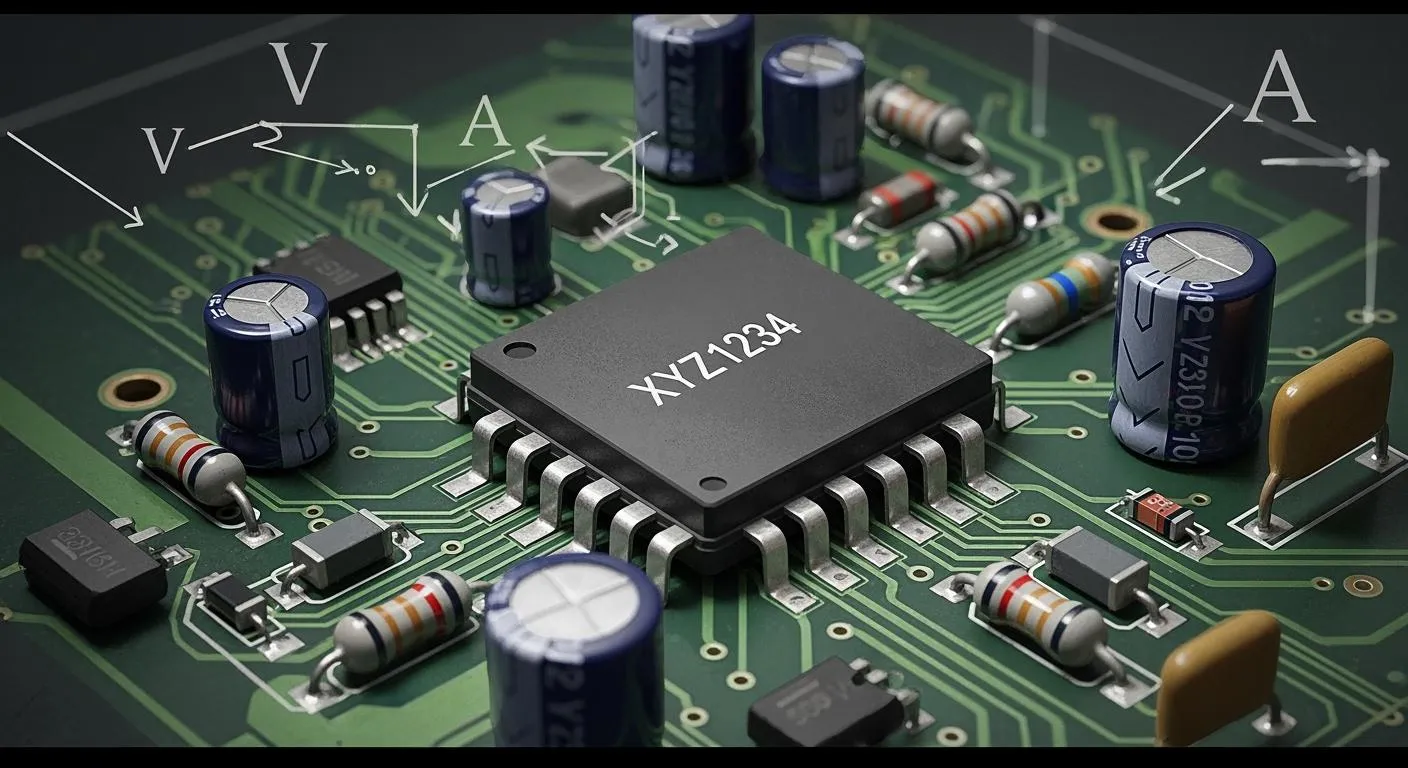
An integrated circuit is a tiny chip made from silicon. Engineers design it with many small parts. These parts include transistors and resistors. They work together to manage electricity. When you look at an integrated circuit, you see a small black square. It has metal legs. Inside, the parts do important jobs. They help your device run safely and smoothly.
Role in circuits
You can think of an integrated circuit as the brain of the power system. It watches the flow of electricity. If voltage is too high or low, the IC fixes it. This keeps your device safe.
Imagine the integrated circuit as a smart referee. It makes sure every player gets enough energy to play.
The integrated circuit does more than control voltage. It checks for problems too. If something goes wrong, the IC can shut down the device. It can also send a warning. This helps stop overheating and other failures.
Here are some ways integrated circuits keep your devices safe:
Integrated circuits watch voltage levels to keep things safe.
They find failures and help your device recover fast.
Supervisory devices mix power supply monitoring with watchdog timers.
Integrated circuits help manage different failure types.
They help devices follow safety rules by checking failure rates.
You see integrated circuits in almost every electronic device. They make sure your phone does not get too hot. They help your computer start up right. You depend on integrated circuits to keep your devices working every day.
How a power supply IC works
Input and output process
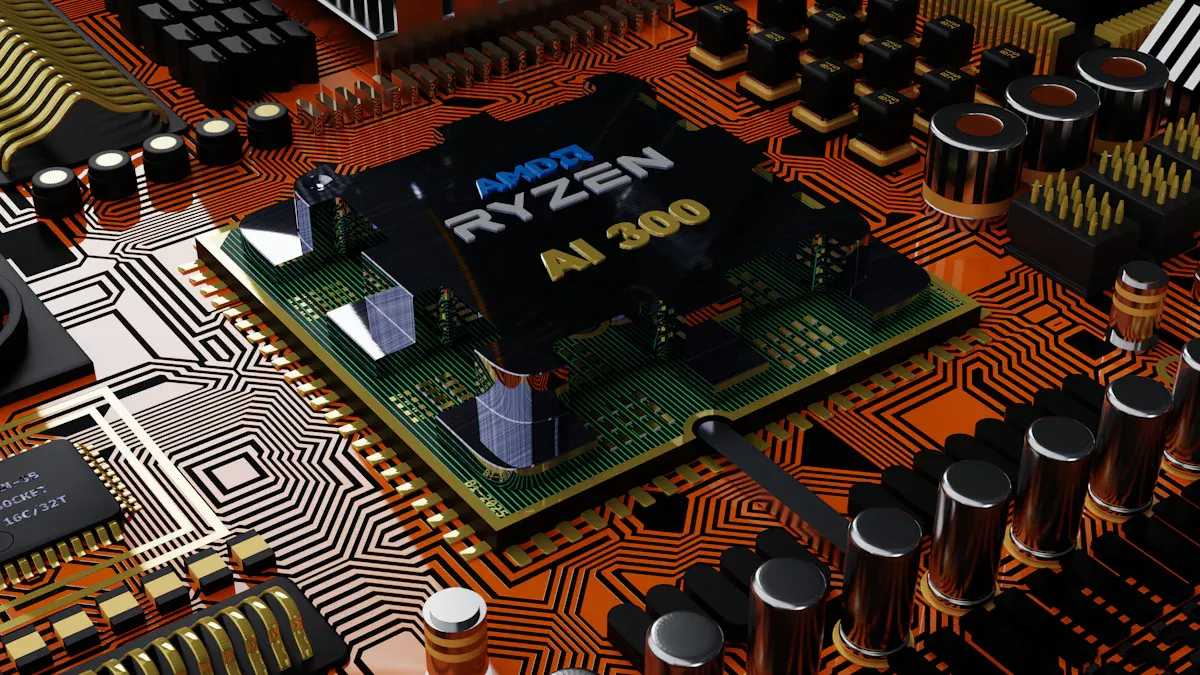
When you use a device, it needs electricity. This electricity comes from a battery or wall outlet. We call this the input. The input is not always safe or steady for your device. The power supply IC changes the input into a stable output.
Here is an easy way to see how a power supply IC works:
You plug your device into the wall. The power supply IC takes the AC input. It uses a transformer to make the voltage lower.
The IC uses diodes to turn AC into DC. This is called rectification.
The IC uses a capacitor to smooth the DC. This step makes the output more steady.
The IC controls the voltage. It gives your device a steady output.
Many devices use different input and output voltages. The table below shows some common voltages and where you find them:
Voltage Level | Application/Notes |
|---|---|
5V | Used in many electronics |
12V | Found in cars and factories |
28V | Used in special devices |
48V | Found in some power supplies |
60V | High spikes in cars, needs protection |
3.3V | Used with TTL logic, follows JESD8 standard |
4.2V | Comes from lithium-ion batteries |
Tip: The power supply IC is like a water filter. The input is dirty water. The IC cleans and controls the flow. The output is clean and safe for your device.
Voltage regulation principle
Your device needs steady voltage to work well. The power supply IC uses a smart system to keep the voltage steady, even if the input changes.
Here is how the IC keeps the voltage steady:
The IC has a reference voltage source. This gives a set voltage to compare.
The IC has an error amplifier. It checks the output voltage and compares it to the reference.
The IC makes an error signal. This tells the control part to change the power.
The IC uses a feedback network. This sends some output voltage back to the amplifier.
This system helps the IC keep the voltage steady. If the input goes up or down, the IC fixes the output fast. Your device gets safe and steady power.
Note: The IC is like a thermostat in your house. If the temperature changes, the thermostat fixes it. The IC does the same for voltage.
Monitoring and adjustment
Your device needs to be safe from sudden voltage changes. The power supply IC watches the input and output all the time. It uses special ways to keep your device safe.
Here are some common features in power supply ICs:
Mechanism | Description |
|---|---|
Voltage Monitoring | The IC checks if voltage is too high or low. |
Power On Reset | The IC makes sure your device starts safely. |
Battery Life Extension | The IC checks battery voltage to stop problems when the battery is weak. |
Overvoltage Detection | The IC finds high voltage spikes and protects your device. |
The IC also uses design tricks to keep voltage steady when the load changes. You see feedback loops, switching topologies, and careful PCB layout. These help the IC control the output and lower noise.
Callout: The power supply IC is like a guard at a gate. It checks every input and output. Only safe electricity gets through.
Switching regulators use fast switches to control input and output. This helps the IC save power and keep voltage steady. Many new devices use switching because it works with many voltages.
When you use a power supply IC, you get steady voltage and safe power. Your device lasts longer. You do not need to worry about sudden changes. The IC takes care of everything.
Power supply IC types
There are different kinds of regulators in a power supply IC. Each kind has its own way to control voltage and current. Let’s learn about the main types you will find in most circuits.
Linear regulators
Linear regulators are the easiest to understand. You use them when you want clean and steady voltage. These regulators get rid of extra voltage by turning it into heat. That is why linear regulators can feel warm when working. Too much heat can hurt parts if you do not cool them. Linear regulators are cheap and have only a few parts. You see them a lot in small gadgets and audio devices.
Linear regulators make little noise and are easy to use.
You can use them for circuits that do not need much power.
Linear regulators waste more energy because of heat.
Switching regulators
Switching regulators work in a different way. They turn the input on and off very quickly. This helps them save energy and not make much heat. You find switching regulators in things that need more power or use batteries. These regulators have more parts and cost more than linear regulators.
Switching regulators stay cooler than linear regulators.
You can use them for circuits that need a lot of power.
Switching regulators are good for computers and phones.
Here is a table to show how efficient they are:
Aspect | Linear Power Supply | Switching Power Supply (SMPS) |
|---|---|---|
Efficiency | Usually low, with a lot of heat loss | High, often over 90% |
Buck and boost converters
There are special switching regulators called dc-dc converter. The most common ones are buck, boost, and buck-boost.
Buck converter makes voltage lower. Use it when your device needs less voltage than what comes in.
Boost converter makes voltage higher. Use it when your device needs more voltage than what comes in.
Buck-boost converter can make voltage go up or down. It is harder to use but gives you more choices.
You see dc-dc converter types in portable devices, LED drivers, and battery systems. These converters help you get the right voltage and save energy.
Tip: Pick the best regulator by thinking about heat, how well it works, and price. Each regulator type has its own job in your circuit.
Major Power Supply IC Manufacturers
Many companies make power supply ICs for things you use every day. These companies are important leaders in the market. They make sure their products are good and new. Here are some big names you should know.
Texas Instruments (TI)
Texas Instruments is a top company for power supply ICs. You can find their chips in phones and cars. TI uses special ways to make their chips, like CMOS and BCD. These ways help the ICs work well and last long. Their power management chips often use switching regulator designs. This means they can be very efficient, sometimes over 90%. TI puts many features on one chip. This saves space and means you need fewer extra parts. They also use new materials, like gallium nitride. This helps devices handle more power and heat. You can trust TI for home and work devices.
Analog Devices
Analog Devices makes many kinds of power supply ICs. They help with both home and work needs. You can use their ADI Power Studio Planner to design your power system. It helps you check how well your system works. The ADI Power Studio Designer helps you pick the right parts for your circuit. These tools make it easy to plan and build safe systems. Analog Devices works with many markets, like factories and smart devices.
ON Semiconductor
ON Semiconductor makes ICs for many power systems. You can find their chips in lamp dimmers and motor drives. They are also in medical machines like CT and X-ray machines. They help with induction cookers, welders, and backup power supplies. ON Semiconductor helps you build strong systems for home and work. Their ICs work well where you need steady and safe power.
Infineon Technologies
Infineon Technologies is a leader in new power supply ICs. They work with other companies to make better packaging and more power in small spaces. Their SiC top cooling platform helps double power and makes cooling easier. Infineon’s chips give you more choices and help you design flexible systems. You see their ICs in things that need a lot of power, like electric cars and big machines.
STMicroelectronics
STMicroelectronics makes many types of power supply ICs. You can find their chips in electronics, cars, and tools. They focus on making ICs that save energy and work well everywhere. STMicroelectronics helps with both simple and hard systems. Their products help you keep your designs safe and efficient.
Note: You see these brands in many things you use, like phones and factory machines. They help your electronics stay safe and work well.
Internal structure and components
Key IC components
You find several important parts inside a power supply IC. Each part has a special job. These parts work together to keep your device safe and running smoothly. Here is a table that shows the main components and what they do:
Component Type | Description |
|---|---|
Transformers | Change AC to DC power and help control output voltages. |
Capacitors | Filter the output and keep it smooth. |
Diodes | Turn the transformer’s output into DC power. |
Control ICs | Act as the brain, controlling switches and regulating output. |
Inductors | Help filter the output voltage. |
Tip: You can think of these parts like a team. Each member has a role, and together they make sure electricity flows safely.
How components work together
You see these components working as a group inside the IC. The control IC acts like a coach. It tells the switches when to turn on and off. FET switches move electricity quickly. Inductors and capacitors help shape and smooth the voltage. Diodes make sure the power flows in the right direction.
In a buck converter, the FET switch controls how the inductor charges and discharges. This action changes the output voltage. If you use a boost converter, the inductor steps up the voltage when the switch turns on. The control IC uses pulse-width modulation (PWM) to adjust how long the switches stay on. This keeps the output steady, even if the input or load changes.
Note: You get safe and steady power because all these parts work together. The IC watches the input and output, making quick changes to protect your device.
You depend on these tiny parts every time you use your phone or computer. They work behind the scenes, making sure your device gets the right power.
Applications, advantages, and limitations
Common uses
Power supply ICs are in lots of things you use. Phones, laptops, and tablets need these chips for steady power. Cars and smart home gadgets use power supply ICs to work safely. Medical equipment, like heart monitors and X-ray machines, need these chips to work well. You also find them in big machines, robots, and toys. Power supply ICs help devices stay safe and last longer.
Tip: If your device uses a battery or plugs in, it likely has a power supply IC inside.
Benefits
Power supply ICs are better than old designs with many separate parts. Devices are smaller because the IC does many jobs in one chip. This makes phones and tablets thinner and lighter. The IC keeps your device safe from too much current or voltage. This helps stop damage. You can make circuits for different needs since the IC works with many voltages and currents. Fewer parts mean less can break, so your device lasts longer.
Here is a table that shows the main benefits:
Advantage | Description |
|---|---|
Integration | Many jobs in one chip, so fewer extra parts. |
Protection Features | Built-in safety like over-current and over-voltage protection. |
Space Savings | Small design helps make tiny devices. |
Reliability | Less parts means less things break and longer life. |
Design Flexibility | Works with many voltages and currents for different designs. |
Modern electronics are getting smaller. Integrated circuits make devices tiny by doing more jobs. High-frequency switching lets you use smaller transformers and inductors. New semiconductor devices, like MOSFETs, help you build small designs with lots of power.
Drawbacks
Power supply ICs have some problems, especially with high-power devices. You need extra parts, like capacitors and inductors, which make designs harder. These chips can make electrical noise and ripples. This can cause trouble in sensitive devices. You must check for EMI and follow strict rules, which takes more time. Switching regulators cost more than linear ones, so you need to think about your budget.
You need extra passive parts, which makes designs harder.
Power supply ICs can make noise and ripples.
EMI rules mean more testing and checking.
Switching regulators cost more than linear regulators.
Note: Pick the right power supply IC by thinking about size, cost, and how much power you need.
You need a power supply IC to keep devices safe. These chips control voltage and stop problems. They help your electronics last longer.
Picking good parts and keeping them cool helps devices live longer.
Using strong parts and cooling them stops things from breaking.
When you build or fix electronics, think about the power supply. Good choices here help your devices work well and last a long time.
FAQ
What does a power supply IC do in my device?
You get steady and safe power from a power supply IC. It controls voltage and current so your device works well. You avoid overheating and damage because the IC keeps everything in balance.
Can I use one power supply IC for different devices?
You can use some power supply ICs in many devices. You must check the voltage and current needs first. Each device may need a different type of IC for best results.
Why do power supply ICs get warm?
You notice heat when the IC changes extra voltage into heat. This happens most with linear regulators. You should keep the IC cool to help your device last longer.
How do power supply ICs help with power management circuits?
You use power supply ICs to control and monitor power management circuits. These ICs help you keep voltage steady and protect your device from spikes or drops.
What problems can happen if I pick the wrong power supply IC?
You may see your device overheat, shut down, or fail to start. You must choose the right IC for your device’s voltage and current needs to avoid these problems.