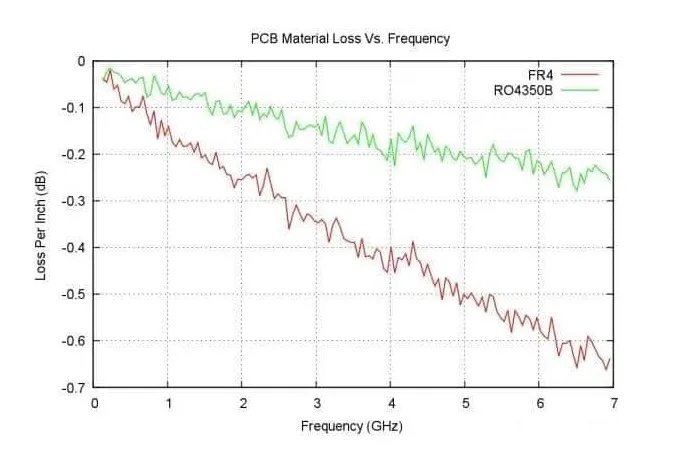
High-frequency PCBs are very important for new communication systems. They are used a lot in 5G and radar. These PCBs work in the GHz range. This is much higher than what old electronics can do. The table below shows how special materials help. PTFE and ceramic composites keep signal loss low at over 10 GHz. This helps radar and 5G work well.
PCB Material | Dielectric Constant (Dk) | Dissipation Factor (Df) | Suitable Frequency Range |
|---|---|---|---|
FR4 | ~4.2–4.8 | 0.02–0.05 | Up to 10 GHz |
PTFE-based Laminates | ~3.0–3.5 | <0.002 | 10–50 GHz |
Ceramic Composites | ~2.8–3.2 | <0.001 | Above 20 GHz |
Engineers use these high-frequency designs to keep signals strong. They also help make electronics smaller. As technology changes, high-frequency PCBs help us connect better. They also help us sense things in new ways in electronics.
Key Takeaways
High-frequency PCBs use special materials like PTFE and ceramic composites. These materials help signals stay strong and clear at high speeds. This is very important for 5G and radar systems.
Advanced PCB designs have solid ground planes and controlled impedance traces. They also use careful spacing. These features help lower noise, interference, and signal loss.
High-frequency PCBs let data move faster. They help make devices smaller. They also improve how well things work in 5G networks, automotive radar, aerospace, and healthcare.
Making these PCBs means solving problems like signal integrity and miniaturization. Heat management is also a challenge. Designers use advanced tools and materials to help.
New trends like AI-assisted design and sustainable materials are making PCBs better. These trends help the environment too. They are helping new technologies like 6G and flexible electronics.
High-Frequency PCBs
Key Properties
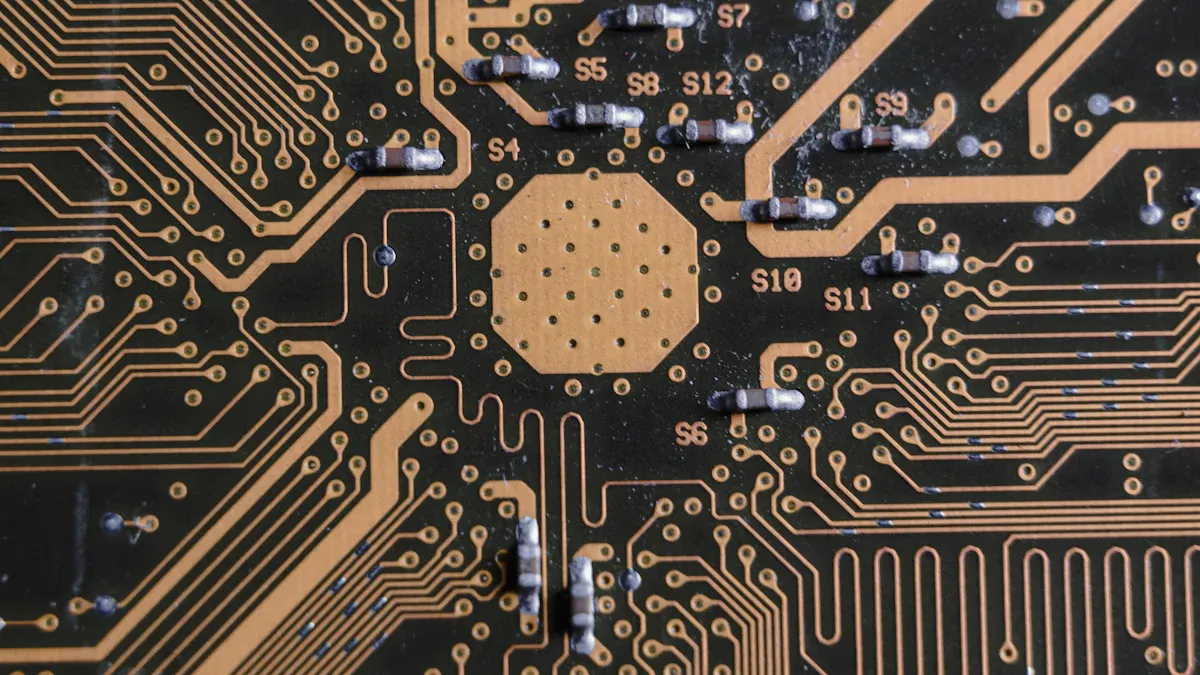
High-frequency PCBs are special because of their materials and design. Engineers pick PTFE and ceramic composites for their low dielectric constant. These materials also have a low dissipation factor. This helps signals move with less loss, even above 10 GHz. Advanced PCBs use solid ground planes to keep noise low. They also have controlled impedance traces to keep signals clear. Designers space traces carefully and use special ends to stop crosstalk and reflections.
A high-frequency PCB usually has:
PTFE or ceramic composites that lose little signal
Solid ground planes to lower noise and give a steady base
Controlled impedance traces for steady signals
Careful trace paths and spacing to stop interference
Decoupling capacitors close to power and ground pins
These features make high-frequency PCBs important for radar and other strong electronics. They help signals stay strong and correct, even in tough places.
Why They Matter
High-frequency PCBs are very important in today’s electronics. In radar, they help find things fast and accurately by keeping signals clear. In 5G, they let data move quickly with little delay. If you use low-frequency PCBs, big problems can happen. Signals can get messed up, crosstalk and reflections can show up, and ground bounce can occur. These problems come from bad materials and poor design for high frequencies.
When designers use advanced PCBs, they avoid these problems. They get good results in radar and other sensitive electronics. High-frequency PCBs also help make devices smaller by fitting more inside. This helps new ideas in car radar, planes, and phones. Strong PCBs make sure systems work right, even when things get hard. As people want better and faster electronics, advanced PCBs will keep leading the way.
High-Frequency Applications
High-frequency applications are changing electronics, communication, and sensing. These uses need advanced PCB technology for fast and steady performance. More industries want high-frequency PCBs for better connections and smarter systems.
Note: The table below shows the main areas where high-frequency applications are needed most and how they affect the market.
Application Area | Description / Importance | Market Share / Growth Indicator |
|---|---|---|
Communication (Telecom) | Includes 5G infrastructure and advanced telecom technologies | Largest market share at 38% (2023) |
Consumer Electronics | Smartphones, laptops, tablets, IoT, wearable devices | Second largest market share at 25% (2023); largest share in 2024 |
Automotive | Advanced driver assistance systems (ADAS), radar, V2X | Fastest growing segment; high CAGR |
Aerospace and Defense | Military, satellite communication, radar, electronic warfare | Significant share; fastest growing in aerospace with 12% CAGR |
Healthcare | Medical imaging, diagnostic equipment | Growing importance; significant application area |
Industrial Automation | Control and monitoring of industrial processes | Substantial growth opportunities |
Military | Defense applications, radar, communication systems | Niche but important market segment |
5G Networks
5G technology changes how people connect and share data. High-frequency applications in 5G need very fast wireless links and low wait times. They also need to move lots of data. High-frequency PCBs help by supporting special features like Massive MIMO and mmWave.
High-frequency PCBs work at mmWave frequencies above 24 GHz. This is needed for 5G telecom.
Engineers use PTFE and ceramic-filled substrates to cut signal loss and keep performance steady.
High-frequency laminates like Rogers and Isola make circuits more reliable at high frequencies.
Designers use exact impedance control and high-density interconnects, like microvias and blind or buried vias, to build small and strong antenna arrays.
These things help with beamforming and signal direction, which are key for Massive MIMO and mmWave in 5G.
5G also helps the Internet of Things (IoT) by linking billions of devices. High-frequency applications here need fast, steady signals and little signal loss. High-frequency PCBs give the electrical power and small size needed for these hard systems.
Radar Systems
Radar is very important in today’s electronics, especially in cars, planes, and defense. High-frequency applications in radar need clear signals and strong performance, even in tough places.
Car radar systems use high-frequency PCBs in ADAS to spot objects and avoid crashes.
These PCBs must keep signal loss low, control impedance, and stay stable in rough conditions.
Substrate materials like Rogers RO4350B are popular in car radar because they balance cost and performance.
Engineers focus on controlled impedance, via design, copper finish, and grounding to stop signal loss and electromagnetic interference.
Careful manufacturing makes sure radar systems give correct and steady results, which is very important for safety.
High-frequency radar is also used in planes and satellites. Good radar systems need advanced PCB design for wide bandwidth, strong signals, and fast data. These things help with real-time sensing, navigation, and watching.
Tip: Good high-frequency communication and radar need careful PCB material choice and design.
High-frequency applications are growing as more industries use smarter and faster electronics. High-frequency PCBs are at the heart of these new ideas, making 5G, radar, and more possible.
Design Challenges
Signal Integrity
Signal integrity is a big worry in high-frequency PCB design. This is very true for radar and advanced electronics. Engineers deal with problems like electromagnetic interference and crosstalk. They also face ground bounce and impedance mismatch. These issues can mess up signals and make devices less reliable.
Electromagnetic interference can mess up radar signals.
Crosstalk happens when one trace’s signal affects another. This can cause mistakes.
Impedance mismatch makes signals bounce back and get weaker.
Ground bounce adds noise and can hurt sensitive circuits.
Designers use simulation tools like Ansys EMC Plus to find and fix these problems early. They add shielding and improve current return paths. Guard traces help block interference. Making traces farther apart and picking low-dielectric materials, like PTFE or Rogers RO4350B, can cut crosstalk by up to 90%. These steps help radar systems keep signals strong and clear.
Good signal integrity helps radar and other high-frequency electronics work well in real life.
Miniaturization
Miniaturization means making radar and electronics smaller and stronger. But shrinking PCBs brings new problems.
Signal integrity gets worse as traces get closer. This raises the chance of crosstalk and electromagnetic interference.
Making PCBs needs tiny drills and very thin traces, sometimes only 3 mils wide.
Putting small parts on the board must be very exact, with little room for error.
Special materials and small parts must still work well at high frequencies.
Fixing things is harder because parts are packed tight, so there is not much space to repair.
Small PCBs also have trouble with heat. Parts close together make more heat. Engineers use heat sinks, thermal vias, and good heat-moving materials to help. X-ray inspection checks that everything works right. In radar, these steps keep systems safe and working well.
Advanced Materials
Picking the right material changes how much high-frequency and small PCBs cost and work. The table below shows how different materials compare:
Category | Dielectric Loss & Dk Behavior | Frequency Range | Cost Impact | Performance Impact | Example Material |
|---|---|---|---|---|---|
Normal speed and loss | Higher loss, non-flat Dk | Up to a few GHz | Low | Limited high-frequency suitability | Isola 370HR |
Medium speed, medium loss | Flatter Dk, about half dielectric loss | Up to ~10 GHz | Moderate | Better signal integrity | Nelco N7000-2 HT |
High speed, low loss | Flatter Dk, low loss, less noise | Up to ~60 GHz | Higher | Improved signal integrity | Isola I-Speed |
Very high speed, very low loss | Flattest Dk, minimal loss | Up to ~100 GHz+ | Highest | Best for RF/microwave | Isola Tachyon 100G |

When frequency goes up, advanced PCBs need materials with lower dielectric loss and flatter Dk. These materials cost more but give the performance radar and high-frequency electronics need. Engineers must think about cost, performance, and the environment when picking materials for small PCBs.
Innovation and Trends
AI in Design
Artificial intelligence is changing how engineers make high-frequency PCBs for radar and 6g. AI tools help with many parts of the design. These tools can do a lot of things. They can change PCB layouts by making trace width and spacing better. This helps keep signals strong. AI uses models to check designs faster and save money. It can also do jobs like putting parts on the board and drawing paths for traces. This saves time for engineers. AI can guess what comes next in the design, so work goes faster and is more correct. It can test different ideas to find mistakes early. This makes the design work better and use less power. AI also checks for problems before making the boards. With AI, engineers build radar systems and 6g tech faster. They make fewer mistakes and make telecom better.
Sustainability
Sustainability is now very important in making high-frequency PCBs. Companies use new materials and ways to help the planet. Some changes are happening. They use recyclable materials like Recyclad and bio-based ones like Soluboard. They try paper, bamboo, and wood-based PCBs as green choices. Companies use bio-based epoxy resins for safer chemistry. They follow rules like RoHS and REACH to stop bad chemicals. Companies move away from PFAS and PTFE because of health and earth worries. They get better at recycling and can get back up to 95% of metals from old PCBs. They use models to check and lower harm to the environment. These steps help make radar and 6g devices safer for people and nature.
Future Outlook
The future for high-frequency PCB design looks good. Some trends will change radar and 6g tech soon. Miniaturization and HDI PCBs will let more parts fit in small spaces. This is needed for new electronics. Flexible and rigid-flex PCBs will help foldable gadgets and wearables. This will let high-frequency PCBs be used in more ways. Putting parts inside the board will make things work better and lose less signal. This is great for 6g and IoT. New materials like ceramics and Teflon will help with heat and keep signals clear for radar and telecom. SiP and MCM will put many chips together, making PCBs smaller and stronger. 3D printed electronics and photonic circuits will move data faster and allow new ideas. AI and green ways will keep changing how PCBs are made.
As 6g, radar, and smart electronics grow, high-frequency PCB ideas will lead wireless communication and sensing.
High-frequency PCBs help 5G and radar work better. They let data move fast and stay reliable. These PCBs use special materials and smart designs. This keeps signals clear in radar, medical imaging, and factories. Engineers use things like controlled impedance and shielding. These features help radar send real-time data.
AI helps design better boards. Flexible boards and smaller parts make radar systems smarter and smaller.
Sensors inside the board and fast materials help radar sense better and connect faster.
New ideas in radar will help high-frequency PCBs do even more. This will change how we use real-time data and smart electronics.
FAQ
What makes high-frequency PCBs different from standard PCBs?
High-frequency PCBs use PTFE and ceramic materials. These materials help stop signal loss at fast speeds. Engineers design these boards to keep signals strong. They also help stop interference.
Why do 5G and radar systems need advanced PCB materials?
5G and radar send signals very fast. Normal materials lose too much signal. Ceramic composites help signals stay strong and clear.
How do engineers control signal integrity in high-frequency PCBs?
Engineers use controlled impedance traces and solid ground planes. They space traces carefully and add shielding. Decoupling capacitors also help keep signals clean.
Are high-frequency PCBs more expensive to produce?
Yes, these PCBs cost more to make. Special materials and careful work raise the price. But these boards work better for advanced systems.
Can high-frequency PCBs be recycled?
Many high-frequency PCBs use materials that can be recycled. Companies now use eco-friendly resins and laminates. Recycling helps get metals back and cuts down on waste.