You must follow strict consumer electronics certification requirements in the US and EU. Planning early helps you avoid costly changes and late launches. Many electronics have rules to keep people and the environment safe. If you are a business owner, product manager, or engineer, you need to understand consumer electronics certification requirements. Meeting these requirements is essential to sell your electronics safely and legally.
Key Takeaways
You must get certifications like FCC in the US and CE marking in the EU to sell electronics legally and safely.
You can use extra certifications like UL or Energy Star to help people trust your product and make it special in the market.
Start planning for certification early so you do not have delays, extra tests, or legal trouble.
Test your products well with inside tests, official tests, and market tests to make sure they are safe and follow the rules.
Keep good records and learn about new rules to stay compliant and protect your brand.
Consumer Electronics Certification Requirements
Mandatory and Voluntary Certifications
You should know the difference between mandatory and voluntary certifications before selling electronics in the US or EU. Mandatory certifications are required by law. You cannot sell electronics without them. Voluntary certifications are not required by law. They show your product meets higher standards or special industry needs.
In the US, you must follow rules like FCC 47 CFR Part 15. This rule controls radio frequency emissions from electronics. If you skip fcc certification, you could get fines, recalls, or bans. Other rules include energy conservation, safety standards, and labeling. The Consumer Product Safety Commission (CPSC) enforces these rules. These requirements keep people and the environment safe.
In the EU, CE marking is required for most electronics. You cannot sell your product in the EU without it. CE marking shows your electronics meet strict safety, health, and environmental rules. Directives like RoHS, REACH, and WEEE add more rules. These rules limit harmful substances and require recycling plans. If you do not meet these requirements, you could get fines, recalls, or customs seizures. CE marking also helps people compare products and trust their safety.
Voluntary certifications, like UL or Energy Star, are not required by law. They show your electronics meet extra safety or performance standards. Many stores and buyers look for these marks. Voluntary certifications can help your product stand out.
Tip: Always check which certifications are required before you design your electronics. Planning early helps you avoid expensive changes and delays.
Regulatory Authorities
Many important regulatory authorities watch over consumer electronics certification in the US and EU. Each authority has a job to make sure your electronics meet all requirements.
FCC (Federal Communications Commission):
The FCC controls radio frequency emissions in the US. You need fcc certification for devices that use radio waves, like Wi-Fi, Bluetooth, or cellular. The FCC sets strict fcc certification rules to stop interference and protect users. Without fcc certification, you cannot legally sell electronics in the US.CE (Conformité Européenne):
The CE mark is needed for electronics in the EU. It shows your product meets all EU safety, health, and environmental rules. CE certification covers many directives, like RoHS and REACH. You must test your electronics and keep records to prove they are safe.UL (Underwriters Laboratories):
UL is a global safety certification company. In the US, UL certification is voluntary, but many stores want it. UL tests electronics for fire, shock, and other dangers. UL certification helps buyers trust your product’s safety.RoHS (Restriction of Hazardous Substances):
RoHS is an EU rule that limits harmful materials in electronics. You must meet RoHS rules to get CE certification. RoHS keeps people and the environment safe from dangerous chemicals.REACH (Registration, Evaluation, Authorization, and Restriction of Chemicals):
REACH is another EU rule. It controls chemicals used in electronics. You must register some substances and show your electronics are safe for people and the environment.CPSC (Consumer Product Safety Commission):
The CPSC enforces safety rules for electronics in the US. The agency can recall unsafe products and give fines for breaking rules.
Regulatory Authority | Region | Main Role |
|---|---|---|
FCC | US | Controls radio frequency emissions, enforces fcc certification requirements |
CE | EU | Ensures compliance with safety, health, and environmental regulations |
UL | US/EU | Provides voluntary safety certification for electronics |
RoHS | EU | Limits hazardous substances in electronics |
REACH | EU | Controls chemicals in electronics, protects consumers and environment |
CPSC | US | Enforces safety standards, recalls unsafe electronics |
You must follow the rules from these authorities to get regulatory compliance and regulatory approval. Meeting all consumer electronics certification requirements helps you avoid legal problems and builds trust with buyers. If you ignore these rules, you risk fines, recalls, and bans on your electronics.
Note: Certification is not just something you do once. You need to keep up with new rules and update your electronics when needed. Staying informed helps you keep regulatory compliance and keep your products for sale.
Products Requiring Certification
Product Categories
Many kinds of consumer electronics need certification before selling. These rules help keep users safe and make sure products work well. Some common product types are:
Wireless devices like smartphones, Bluetooth speakers, and Wi-Fi routers
Wearables such as smart watches, fitness trackers, and biosensors
Consumer IoT devices, like smart home hubs, connected thermostats, and security cameras
The market for these electronics is very large. For example, there could be 3.5 billion cellular IoT connections in 2023. This big number shows why certification matters. You must follow strict rules for safety, electromagnetic compatibility, and radio frequency exposure. Wearable electronics, like hearing aids and smart clothing, sometimes must follow medical device rules in some places. These rules can include EMC and SAR testing to keep users safe.
Here is a table that lists important certification rules for popular product types:
Product Category | Regulatory Initiative / Standard | Key Certification Requirements |
|---|---|---|
Wireless Devices & Wearables | Radio Equipment Directive (EU) | Cybersecurity safeguards before EU market sale |
Consumer IoT Devices | Cyber Resilience Act (EU) | Cybersecurity requirements for confidentiality, integrity, and safety |
IoT Devices | Matter Protocol | Certification for interoperability across vendors |
IoT Wireless Technologies | Wi-Fi, Bluetooth, Zigbee, etc. | Certification for compliance with wireless protocols |
Cellular IoT | 2G-5G Networks | Certification for evolving cellular standards |
Tip: Always check which rules apply to your electronics before you design or make them.
Radiator Types
You need to know how regulators sort electronics by how they give off radio frequency (RF) energy. This helps you see which rules fit your product. Regulators put electronics into three radiator types:
Radiator Type | Definition | Certification Requirements | Examples |
|---|---|---|---|
Incidental Radiator | Gives off RF energy by accident, not on purpose | No equipment authorization needed | Electrical motors, mechanical switches |
Unintentional Radiator | Makes RF energy but not for talking to other devices | Supplier’s Declaration of Conformity (SDoC) | LED lighting, USB sticks, wired mice |
Intentional Radiator | Made to send out RF energy for communication | Full certification process | Bluetooth speakers, smartphones, routers |
Incidental radiators do not need official certification, but you should use good engineering. Unintentional radiators need testing and a statement that they follow the rules. Intentional radiators, like wireless electronics, need full certification. You must test these in approved labs and put the right label on them.
Following all rules for your consumer electronics helps you avoid fines and keeps users safe.
Key Certification Types

Knowing about the main consumer electronics certification types helps you plan. These certifications help you sell electronics safely and legally in the US and EU. Each one has a different job. Some are required by law. Others are wanted by stores or buyers. Here is a simple table to compare them:
Certification | Geographic Scope | Mandatory Status | Scope and Focus |
|---|---|---|---|
FCC | USA | Mandatory | Stops electronics from causing bad electromagnetic interference. |
CE | EEA | Mandatory | Proves electronics follow EU safety, health, and environmental rules. |
UL | Global | Market-driven | Checks electronics for safety, strength, and how well they work. |
RoHS | EU/Global | Mandatory (EU) | Limits dangerous substances in electronics. |
REACH | EU | Mandatory | Controls chemicals in electronics to protect health and the environment. |
FCC Certification
Most electronics sold in the US need fcc certification. This checks that your electronics do not cause bad electromagnetic interference. The fcc has strict rules for consumer electronics certification. You must test your product for EMC. If your product is portable, you may need SAR testing too. The fcc certification process has lab tests, paperwork, and filing with the fcc. If you skip fcc certification, you can get fines or your product can be banned. This certification is always needed for electronics with radio features.
CE Certification
To sell electronics in the European Economic Area, you must get ce certification. The ce mark shows your electronics meet EU safety, health, and environmental rules. This certification covers many rules, like rohs and reach. You must test your product and keep records. Sometimes you need a notified body. The ce mark is required to sell in the EU. Without ce certification, customs can stop your electronics.
UL Certification
UL certification is not always required by law. But many stores and buyers want it. This certification checks electronics for fire, shock, and other dangers. UL certification needs lab tests, factory checks, and regular inspections. Meeting ul certification rules shows your electronics are safe and reliable. UL certification helps people trust your product and can help you sell in more places.
RoHS
RoHS means restriction of hazardous substances. This rule is part of consumer electronics certification in the EU. RoHS limits dangerous materials like lead, mercury, and cadmium in electronics. You must follow rohs rules to get ce certification. Many countries outside the EU also use rohs. This certification is required in the EU. It helps protect people and the environment from harmful chemicals.
REACH
REACH is another important part of consumer electronics certification in the EU. This rule controls chemicals used in electronics. You must register some substances and show your electronics are safe for people and the environment. REACH stands for Registration, Evaluation, Authorization, and Restriction of Chemicals. This certification is required for electronics sold in the EU. REACH works with rohs and ce to keep electronics safe and eco-friendly.
Tip: Always check which consumer electronics certification types your product needs before you design or make it. Planning early saves time and money.
Certification Costs
Cost Ranges
You should think about certification costs early when you design electronics. Each certification type has its own price. For example, fcc certification for electronics with radio features usually costs $3,000 to $5,000. If your product uses a wireless module, it may cost more. CE marking is needed for electronics in the EU and often includes rohs and reach. These environmental certifications do not have set prices, but you must pay for testing and paperwork. UL certification prices can change a lot. Some products only need simple safety checks. Others need more tests. UL certification can cost a few thousand dollars or over $25,000 for complex electronics.
Here is a table to help you see common certification costs:
Certification | Typical Cost Range | Notes |
|---|---|---|
FCC Certification | $3,000 – $5,000+ | Needed for electronics with RF features |
UL Certification | Varies, $1,500 – $25,000+ | Not mandatory, but many stores require it |
CE (with RoHS/REACH) | Testing and admin fees | Mandatory for EU, includes rohs and reach |
Certification costs keep going up. Small companies often have trouble paying these costs, especially when testing is harder.
Cost Factors
Many things can change how much certification costs. The kind of electronics you make matters. Products with wireless features need more fcc certification tests. If you want to sell in both the US and EU, you must meet both fcc and ce rules. This means more tests and higher costs. The number of ul certification tests depends on your product’s safety risks. RoHS and reach add extra steps for chemical safety, which can raise your total cost.
You can save money by planning your certification process. Try to test for fcc certification and other standards at the same time. This helps you avoid doing the same work twice. Use pre-certified modules in your electronics if you can. This can lower your fcc and ul certification costs. Always keep good records for rohs and reach. This helps you avoid retesting and extra fees.
Testing, inspection, and certification need skilled workers and special machines. This makes the process expensive.
Rules change often, so you must update your electronics and repeat some tests.
Some companies skip steps to save money, but this can lead to fines or bans.
Tip: Plan early and make smart choices to control certification costs and get your electronics to market faster.
Testing Methods

You need to know the main ways to test electronics. These testing methods help show your products are safe and work well. Each method checks for a different problem. You must use the right tests to meet ce and other rules.
EMC Testing
EMC testing checks if your electronics work without causing or getting bad signals. You must pass emc testing for FCC, ce, and other rules. EMC testing has two main parts: emissions and immunity. Emissions testing checks how much energy your product gives off. Immunity testing checks if your product can handle outside signals.
The emc testing market is growing because more electronics need it. North America is the top area for emc testing. This shows how important emc testing is for following the rules.
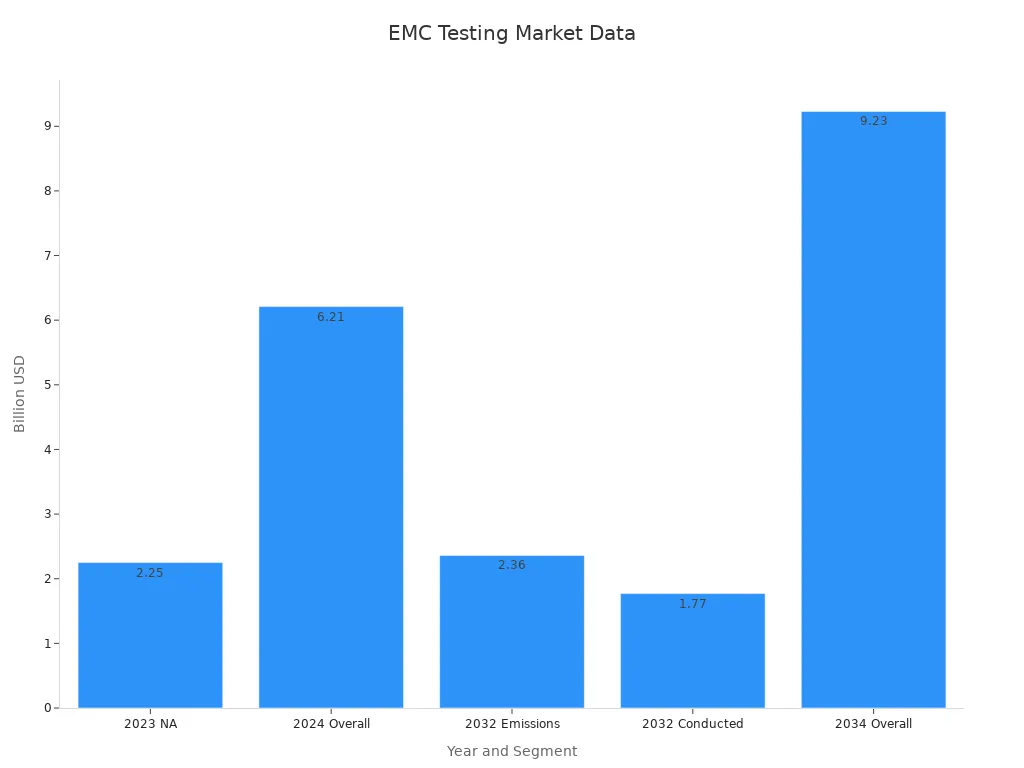
You must use emc testing to meet standards like IEC 61000 and UL 60950-1. These rules help stop interference and keep your products working well.
ESD Testing
ESD testing checks if your electronics can handle static electricity. Static can break small parts and make products fail. You need ESD testing to lower the chance of returns and repairs. Many studies show ESD testing helps make more good products and fewer broken ones.
Study / Company | Key Findings | ROI / Impact Metrics |
|---|---|---|
Western Electric Denver Works | Yield went up by as much as 10.73% | ROI between 900% and 2300% |
Western Electric North Andover | Defects dropped by three times | ROI up to 950% |
Lockheed Missiles and Space Co. | Saved almost $2 million each year | Big cost savings |
Factory studies (1990s) | More good products with strong ESD programs | ROI ratios between 3:1 and 11:1 |
You should use ESD testing to protect your brand and save money.
CE RED Testing
CE RED testing is needed for wireless products in the EU. The Radio Equipment Directive sets rules for safety and signals. You must use ce red testing to show your product meets these rules. CE RED testing checks radio signals, emc, and safety. Passing these tests lets you put the ce mark on your product and sell it in the EU.
Tip: Always plan your testing early. Using the right tests helps you avoid delays and extra costs.
Compliance Process
You must follow steps to meet certification rules for electronics. Each step helps you follow the law and avoid mistakes. Here is how you go from picking a market to finishing your paperwork.
Market Determination
First, pick where you want to sell your product. Each place has its own rules and needs. Look at what people want and how they buy things:
Some places care about price and paying more for better devices.
People want products that are cheap but have cool features.
In the USA, UK, and China, many people shop online.
More people want products that save energy and help the planet.
Smart home gadgets, wearables, and fast devices are getting more popular.
Knowing these things helps you plan for the right rules and tests.
Standards Review
Next, check all the rules your product must follow. Look at both required and extra standards, like fcc certification, ul certification, and CE marking. Make a list of every rule you need to follow. This helps you not miss any important rules and keeps your product safe and working well.
Design for Compliance
Design your product to follow the rules from the start. Use your checklist and share it with your team. Make sure everyone knows what rules to follow. Work with labs early to plan for tests and certification. A Compliance Management System can help you keep track of dates and papers. Planning for different rules in each place stops delays and changes later.
Internal Testing
Before you do official tests, test your product yourself. About half of electronics do not pass EMC testing the first time. Testing early helps you find and fix problems. This lowers the chance of failing the real test and helps you sell faster. Use your checklist to make sure you follow all the rules.
Formal Testing
After your own tests, send your product to a lab for real testing. These labs check if your product works well and is safe. They also check if it follows all the rules. Formal testing includes steps for fcc certification and other standards. Passing these tests lets you sell your product and makes buyers trust you.
Step | Purpose |
|---|---|
Testing | Checks if your product works and is strong |
Inspection | Makes sure your factory follows the rules |
Certification | Shows you followed the rules so you can sell |
Documentation
Keep good records for every step you take. Good paperwork shows you followed the rules and helps if you get checked. Keep design plans, test results, risk checks, and label papers. This helps you avoid breaking rules and keeps your good name. Good records also help you change fast if rules change.
Tip: Doing each step in the right order helps you follow the rules, avoid waiting, and keep your products safe and legal.
Streamlining Certification
Pre-Certified Modules
You can save both time and money by using pre-certified modules. These modules have already passed many tests. You do not need to repeat all the tests. For example, if you use a Wi-Fi or Bluetooth module with FCC and CE approval, you only need to test how your product uses the module. This way, you skip extra testing and get your product ready faster. Many companies do this to lower risk and cut down on testing.
Timing Strategies
Plan your testing schedule early in your project. Start testing as soon as you have a working prototype. Book lab time for formal testing before your design is finished. This helps you avoid waiting for busy labs. If you test early, you can fix problems before they cost more. Some companies use a “test early, test often” plan. They do small tests at each step of making the product. This helps you find problems before they get bigger.
Internal Testing Tips
Make a simple testing area in your workspace. Use basic tools to check for common problems like electromagnetic interference. Use checklists so you do not forget any steps. If you find problems, you can fix them before formal testing. This saves money and helps you pass official tests the first time. Many engineers say early testing helped them avoid expensive changes.
Market Testing
Test your product with real users before you sell it. Market testing finds problems that lab tests might miss. Ask users to try your product in different places and tell you about any issues. This feedback helps you make your product better before final testing. Some companies found problems with wireless range or battery life during market testing. These problems did not show up in the lab. Fixing these issues early helps you avoid delays and extra testing costs.
Tip: Use a mix of internal, formal, and market testing to make your certification process easier and faster.
If you plan for certification early, you help keep people safe. You also avoid expensive mistakes. Adding compliance to your product plans helps you find risks sooner. It lets you make smarter choices. This keeps your electronics safe and working well. You can also save money and stop supply chain issues. Many experts use trusted ways to lower risks and make products better. If you want to do well, start planning for compliance early or ask an expert for help. This helps you give better products to everyone.
FAQ
What happens if you skip required certifications?
You risk fines, product recalls, or bans. Authorities can stop your sales. Buyers may lose trust in your brand. Always check rules before you launch.
How long does the certification process take?
Most certifications take 4 to 12 weeks. Complex products may need more time. Start early to avoid delays.
Can you use the same certification for both the US and EU?
No, you need separate certifications. FCC covers the US. CE covers the EU. Each region has its own rules.
Do you need to retest if you change your product?
Yes, you must retest if you change key parts or add new features. Even small changes can affect compliance.
What documents should you keep for compliance?
Keep test reports, design files, user manuals, and certificates. Good records help you prove compliance if authorities ask.